
Mechanical Seals — Advanced Shaft Sealing for Pumps & Rotating Equipment
What / Why — Mechanical seals provide reliable, low-leakage sealing for rotating shafts across pumps, compressors and mixers. They reduce maintenance, control emissions and extend mean time between failures for critical rotating equipment. Ideal for customers searching "Mechanical seal manufacturers" or "Pump mechanical seal types".
Executive Summary
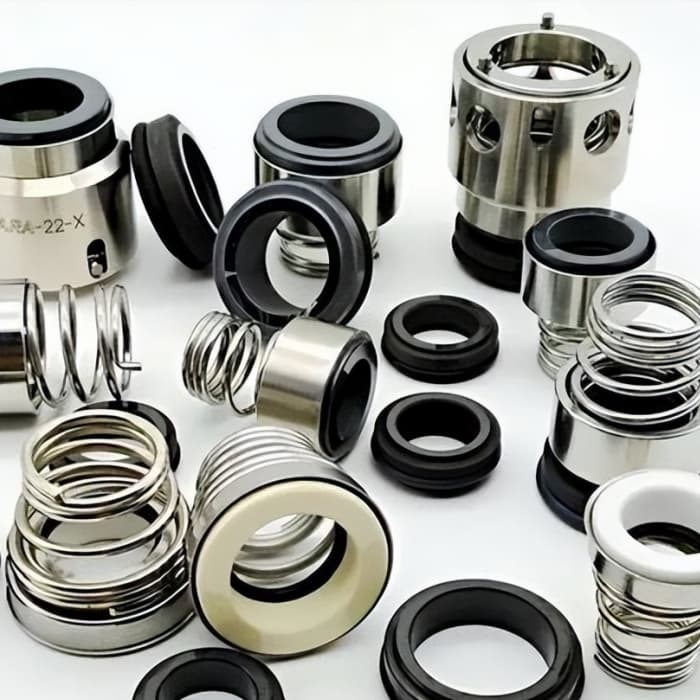
Mechanical seals are engineered devices that seal rotating shafts using mating faces, springs and secondary elastomeric elements. This pillar covers major mechanical seals types, quick selection guidance, comparison tables suitable for quoting and procurement, industry standards (e.g., API 682, ISO 21049, EN 12756) and common HS code references for B2B export/import trust.
What is a Mechanical Seal?
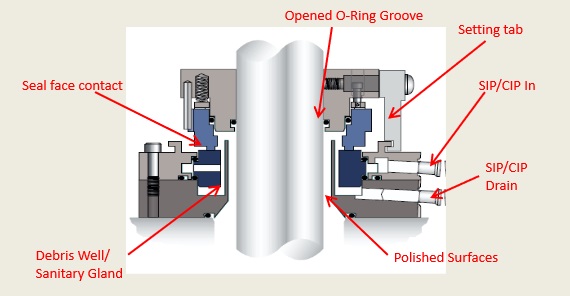
Mechanical seals prevent fluid leakage by using precision lapped rotating and stationary faces, supported by springs or bellows plus secondary seals (O-rings, gaskets). They are widely used in centrifugal & rotary pumps, mixers and compressors where leakage control, emissions reduction and extended MTBF are priorities.
Types & Overview — Quick list with short intro and links
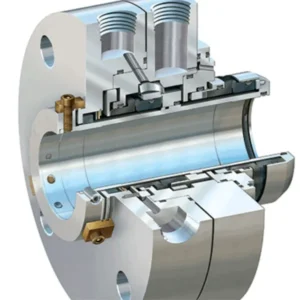
Cartridge mechanical seal
Prefabricated cartridge units include gland, seal faces and sleeve for fast, mistake-free installation. Widely used for quick replacement and controlled face pre-load. Learn more →
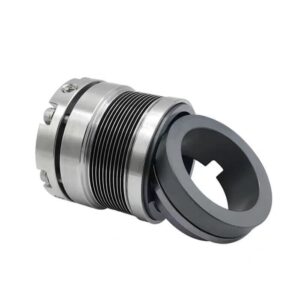
Bellows mechanical seal
Bellows seals use a metal or elastomeric bellows to transmit spring load while eliminating dynamic O-rings at the rotating face—ideal for corrosive or abrasive fluids. Learn more →
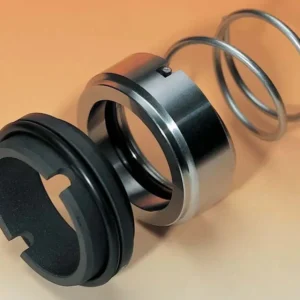
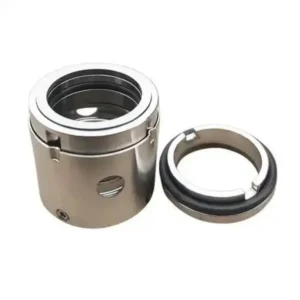
Single mechanical seal
Single seals have one pair of sealing faces and are suitable for many general-purpose pumps where a simple, cost-effective seal is acceptable. Learn more →
Double (tandem/dual) mechanical seal
Double seals use two sets of faces with a barrier or buffer fluid between them—used for hazardous, toxic, or high-value media to reduce emissions and increase safety. Learn more →
Balanced / Unbalanced mechanical seal
Balanced seals have reduced face loading for high pressure service; unbalanced seals are simpler and suitable for lower pressures. Selection depends on system pressure and heat dissipation. Learn more →
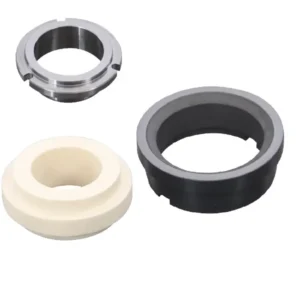
Stationary Seal Rings
Stationary rings (mating rings) are precision components matched to rotating rings—materials include carbon, ceramic, and silicon carbide for various services. Learn more →
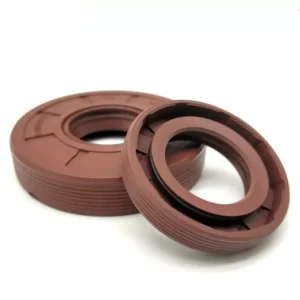
Rotary Shaft Seals
Rotary shaft seals combine primary lip seals with backup hardware; used where full mechanical seal assemblies are not required or as secondary containment. Learn more →
Seal spring
Seal springs (single, multiple, wave springs) control face loading and come in various geometries for compact cartridge designs and variable shaft misalignment. Learn more →
Search terms (long-tail)
Use these when researching or optimizing: Mechanical seal manufacturers, Mechanical seals types, Mechanical seals pdf, Pump mechanical seal types.
Selection Guide — How to pick the right mechanical seal
- Process fluid & compatibility: Identify chemistry, pH, solids content and lubricity—choose face and elastomer materials (carbon/ceramic/SiC/TC / Viton / EPDM / Chemraz) accordingly.
- Pressure & temperature: Select balanced vs unbalanced and appropriate face materials for pressure and heat capacity. For high temperature or pressure consult manufacturer data.
- Shaft speed & runout: Confirm allowable shaft speed (rpm) and misalignment; cartridge seals reduce installation variance risk.
- Emissions & safety: For hazardous fluids use double/tandem seals with barrier fluid and support system per API 682 recommendations.
- Installation & maintenance: Provide stuffing box dimensions, shaft diameter & finish, pump model and service cycles for a fast, accurate quote.
Quick tip: When requesting quotes include shaft diameter, rpm, temperature & pressure, media description and any required certifications (API 682, ISO 21049, ATEX, etc.).
Mechanical Seals — Model & Material Comparison Table
Use this comparison when preparing procurement or technical specifications. Values are typical ranges — always confirm with vendor datasheets.
| Type / Model | Typical Application | Temp Range | Pressure Rating | Common Face Materials | Key Advantages |
|---|---|---|---|---|---|
| Cartridge (single) | Centrifugal pumps (general service) | -40 → +200°C | ≤ 16 bar (varies) | Carbon / Ceramic / SiC | Easy install, reduced assembly error |
| Bellows (metal) | Corrosive / abrasive fluids | -40 → +200°C | ≤ 10–16 bar | Carbon / SiC / TC | No dynamic O-ring; corrosion resistant |
| Double (tandem) | Hazardous / toxic services | -40 → +200°C | ≤ 40 bar (with support) | SiC / TC / Ceramic | High safety, emissions control |
| Balanced (high pressure) | High pressure pumps | -40 → +220°C | > 16 bar | SiC / TC / Carbon | Lower face load, improved life at pressure |
| Rotary shaft seal (lip) | Low-cost secondary sealing | -30 → +120°C | Low pressure | Elastomeric lips | Cost-effective for non-critical service |
-
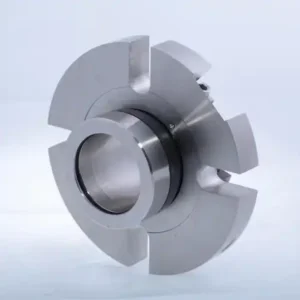
 Double (tandem/dual) mechanical seal
Back to Back Double Seal
-
Balanced / Unbalanced mechanical seal
Balanced Mechanical Seal
-
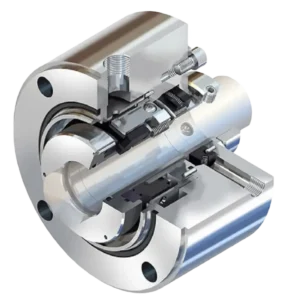
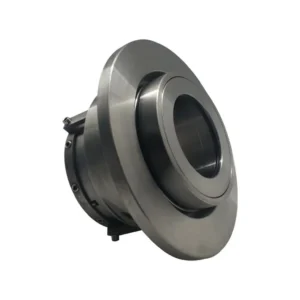
Cartridge mechanical seal
Double Cartridge Mechanical Seal
-
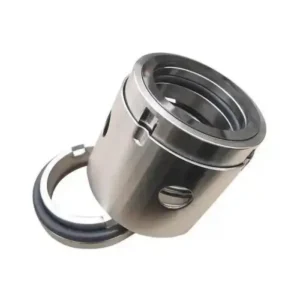
Bellows mechanical seal
Elastomer Rubber Bellows Seal
-
Rotary Shaft Seals
High Pressure Rotary Shaft Seals
-
Bellows mechanical seal
Metal bellows seal
-
Balanced / Unbalanced mechanical seal
Non Pusher Mechanical Seal
-
Balanced / Unbalanced mechanical seal
Pusher Mechanical Seal
-
Cartridge mechanical seal
Single cartridge mechanical seal
-
Single mechanical seal
Single Mechanical Seal Parts
-
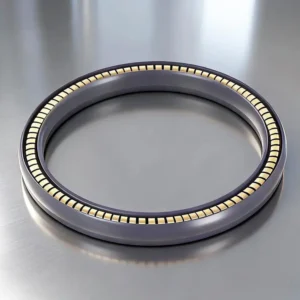
Seal spring
Spring Energized Seals
-
Stationary Seal Rings
Stationary Seal Seats for Mechanical Seals
-
Double (tandem/dual) mechanical seal
Tandem Seals
-
Balanced / Unbalanced mechanical seal
Unbalanced mechanical seal
Downloads & Datasheets
Installation & Best Practices
- Prepare the cavity: clean stuffing box, inspect shaft and sleeve; remove corrosion and nicks.
- Confirm fitment: check seal face orientation, spring preload and correct gland/sleeve length per supplier drawing.
- Run-in: follow vendor run-in procedure (slow speed, controlled pressure build-up) to seat faces and avoid overheating.
- Support systems: for double/tandem seals implement barrier or buffer systems per API 682 where required.
- Testing: pressure test assembled seals where required (e.g., assembly integrity tests per API 682 recommendations).
Application Industries & Case Examples
- Oil & gas — refinery pumps and compressors
- Chemical & petrochemical — corrosive transfer pumps
- Power generation — feedwater and boiler pumps
- Water & wastewater — submersible and large pumps
- Pharma & food — hygienic seals and compliance
Industry Standards & Common HS Codes
Key standards to reference when specifying mechanical seals and support systems:- API 682 — Shaft sealing systems for centrifugal and rotary pumps (widely used in petroleum, gas and chemical industries).
- ISO 21049 — Pumps — Shaft sealing systems for centrifugal and rotary pumps
- EN / DIN EN 12756 — Principal dimensions, designation and material codes for mechanical seals.
FAQ — Quick Answers for Procurement & Maintenance
- Q: What is the maximum fluid temperature for common mechanical seals?
- A: Depends on materials. Elastomers limit temperature more than hard faces; typical service up to ~200–260°C for metal/carbon/ceramic combinations. For extreme temperatures consult vendor datasheets.
- Q: How is a balanced seal different from an unbalanced seal?
- A: A balanced seal reduces the net closing force on the faces, lowering wear and heat in higher pressure applications; choose balanced designs when pressure or temperature demands exceed unbalanced capabilities.
- Q: Can I retrofit a cartridge seal into an older pump?
- A: Often yes if stuffing box dimensions allow; cartridge seals simplify installation but confirm axial space, shaft sleeve and centering requirements with the vendor.
- Q: How many springs should a seal have?
- A: Spring count/geometry depends on the design (single coil, multiple coil, single wave, multi-spring) — multiple spring elements can improve face loading distribution and misalignment tolerance.
- Q: What documents should I request with a purchase?
- A: Request datasheets, materials certificates (e.g., EN/ASTM numbers), test certificates, assembly integrity test results and recommended spare parts list.
More FAQs
How many seal rings are typically supplied with a mechanical seal kit?
Most kits include the rotating and stationary rings, secondary seals, springs and installation instructions; some manufacturers supply additional O-rings or backup rings as spares.
Is API 682 required for all refinery pumps?
API 682 is the industry standard for many hydrocarbon services; buyers and EPCs often require API 682 or equivalent compliance for critical sealing systems.
Can mechanical seals handle solids-laden fluids?
Solids reduce seal life; consider hardened faces (SiC), special flush plans or separators, and robust support systems to minimize abrasion.