
Hydraulic Seals — Reliable Sealing for Cylinders & Actuators
What / Why — Hydraulic seals maintain pressure, prevent fluid loss and exclude contaminants in hydraulic cylinders and actuators. Proper seal selection and correct gland design directly affect system efficiency, service life and maintenance intervals. Common search queries: hydraulic seals types, hydraulic seals pdf, piston seal manufacturers.
Executive Summary
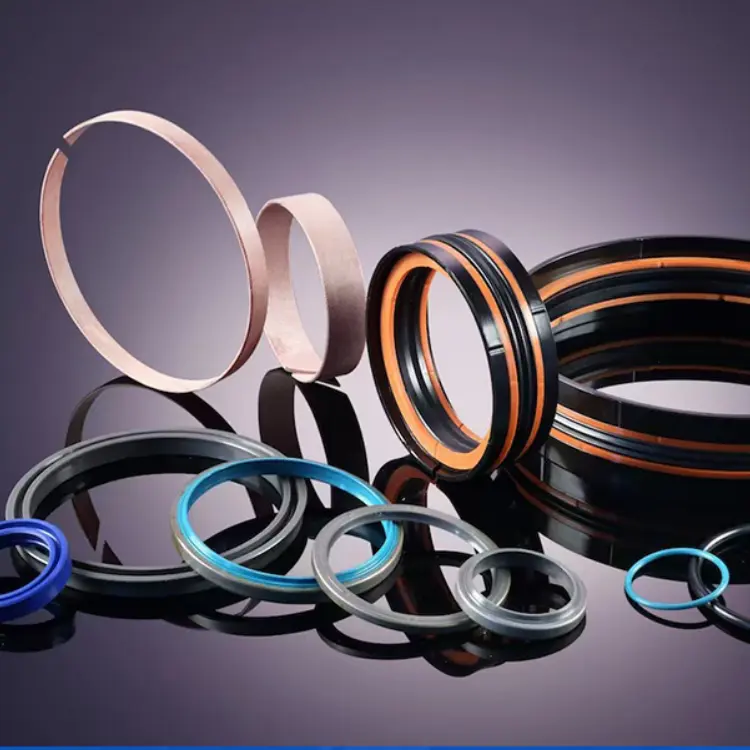
Hydraulic seals — including piston seals, rod seals, wipers, guide rings, elastomeric seals and PTFE composite seals — are engineered to control pressure, reduce leakage and protect cylinder internals. This pillar provides type overviews, a comparison table for specification and procurement, selection guidance, installation best practices and a FAQ designed for engineers and buyers.
What are Hydraulic Seals?
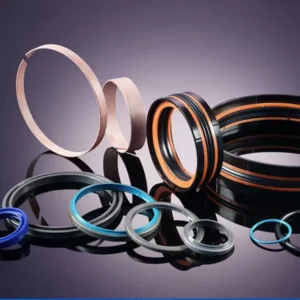
Hydraulic seals are components designed to retain hydraulic fluid inside cylinders and actuators and to exclude contaminants. They include dynamic seals (piston, rod, wipers) and supporting components (guide rings, back-up elements). Effective hydraulic sealing reduces downtime, improves energy efficiency and extends component life.
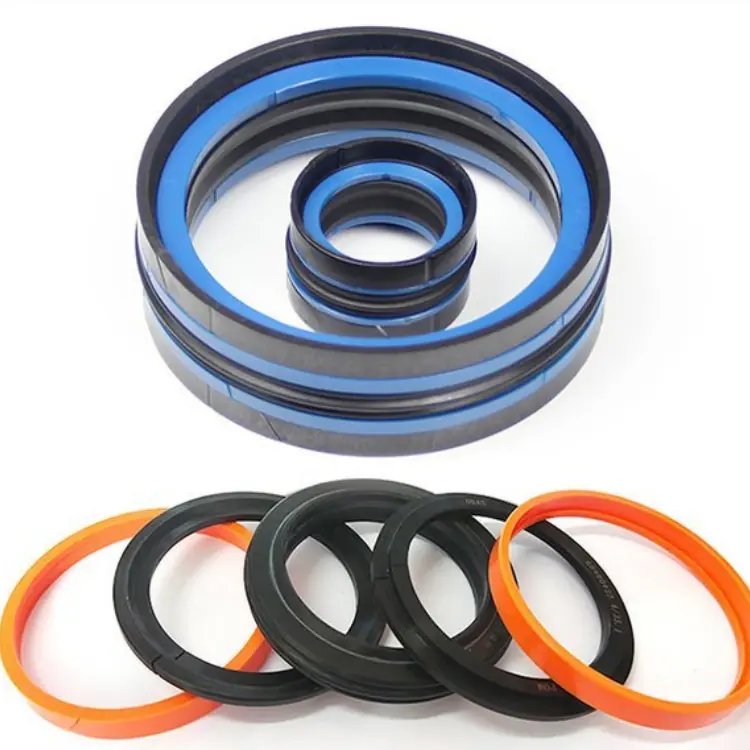
Types & Overview — Quick list with short intros and links
Piston seals
Piston seals maintain pressure differential across the piston and prevent internal bypass. Commonly made from polyurethane, PTFE composites or elastomers with energizers to sustain pressure under dynamic reciprocating motion. Learn more →
Rod seals
Rod seals prevent external leakage along the piston rod and are exposed to sliding contact and environmental contaminants. Designs often include multi-lip geometries and robust elastomers or PTFE faces. Learn more →
Wipers
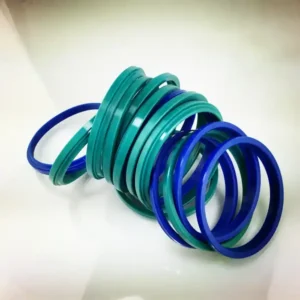
Wipers (scrapers) remove dirt, moisture and particles from the rod before re-entry, protecting internal seals and extending service life. They are critical for outdoor and mobile hydraulics. Learn more →
Guide rings
Guide rings or wear rings stabilize the piston and rod, prevent metal-to-metal contact and absorb side loads to protect seals. Materials include PTFE, phenolic or composite laminates. Learn more →
Elastomeric seals
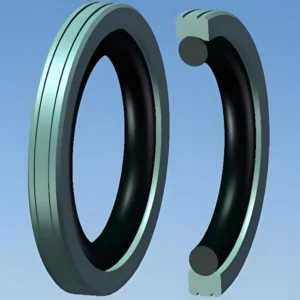
Elastomeric seals (NBR, HNBR, FKM, PU) offer good elasticity and sealing performance in many hydraulic fluids and temperature ranges; chosen based on fluid compatibility and dynamic wear requirements. Learn more →
PTFE composite seals
PTFE composite seals combine low friction and chemical resistance with energizing elements for demanding applications — ideal for high-speed or chemically aggressive fluids. Learn more →
Search & Long-tail Keywords
Useful search terms: hydraulic seals types, hydraulic seals pdf, piston seal manufacturers, rod seal suppliers.
Selection Guide — How to select hydraulic seals
- Hydraulic fluid compatibility: Confirm chemical compatibility with seal materials (NBR/HNBR for mineral oils; FKM for higher temperature/chemicals; PTFE composites for aggressive fluids).
- Operating pressure & speed: Use materials and geometries rated for your peak pressure and rod/piston speed; include anti-extrusion measures for high pressure.
- Temperature range: Select materials that remain elastic and resist compression set across expected temperature extremes.
- Contamination & environment: Use effective wipers and select robust rod seal geometries for dirty environments or mobile equipment.
- Side loads & guidance: Include guide rings where side loads or misalignment risk piston/rod contact to protect sealing elements.
Quick tip: For a fast quote, provide rod diameter, bore diameter, seal cross-section (or drawing), operating pressure, temperature, fluid type and expected stroke speed.
Hydraulic Seal Comparison Table
Reference comparison for specification and procurement. Confirm exact ratings with vendor datasheets before final selection.
| Type | Typical Application | Temp Range (°C) | Pressure Rating | Common Materials | Key Advantages |
|---|---|---|---|---|---|
| Piston seals | Cylinder pistons (pressure retention) | -30 → +120 | Up to 350 bar (design dependent) | Polyurethane, PTFE composite, HNBR | High wear resistance, low leakage |
| Rod seals | Rod sealing (external leakage prevention) | -30 → +150 | Up to 400 bar (with backup) | NBR, HNBR, FKM, PTFE-faced | Robust sliding contact, contamination resistance |
| Wipers | Rod contamination exclusion | -40 → +120 | Low pressure | Polyurethane, NBR, PTFE | Protects internal seals, low cost |
| Guide rings | Axial guidance and wear protection | -40 → +150 | — | PTFE, phenolic, composite | Prevents metal contact, absorbs side load |
| PTFE composite seals | High-speed or chemically aggressive fluids | -50 → +200 | High (depends on energizer) | PTFE filled, fabric-reinforced, energizer metal/spring | Low friction, chemical resistance |
Standard Cross-sections & Packaging
| Item | Typical Sizes / Formats | Packaging |
|---|---|---|
| Piston & rod seal kits | Per bore/rod diameter, metric & imperial cross-sections | Sealed kits, blister packs, boxed sets |
| Wipers & guide rings | Split or one-piece profiles to match rod/bore | Bulk / unit packs |
| Custom PTFE composite | Machined to drawing | Per order |
-
 Hydraulic Seals
Hydraulic Cylinder Wiper Seals
-
Hydraulic Seals
Hydraulic Guide Ring
-
Hydraulic Seals
Hydraulic Piston Seal
-
Hydraulic Seals
Hydraulic Rod Seal
-
Hydraulic Seals
PTFE Seals
-
Hydraulic Seals
PU Oil Seals

Datasheets & Installation Guides
Installation, Gland Design & Best Practices
- Inspect components: check bore finish, rod surface (hardness & finish) and remove burrs or damage before assembly.
- Use correct lubrication: apply compatible assembly lube to avoid dry running and reduce installation damage.
- Control extrusion gaps: use guide rings and back-up rings on high-pressure or large-gap applications.
- Follow vendor run-in: gentle initial operation prevents heat buildup and seating damage for piston seals.
- Replace as kit: replace seals as a matched kit to ensure compatible wear and fit.
Application Industries & Case Examples
- Mobile hydraulics — excavators, loaders
- Industrial hydraulics — presses, injection molding machines
- Agricultural equipment — cylinders for implements
- Marine hydraulics — steering and deck machinery
- Renewable energy — blade pitch actuators
Standards & Common HS Codes
Standards commonly referenced when specifying hydraulic seals and components:- ISO 3320 / ISO 3601 — Dimensions and tolerances relevant to sealing elements and O-rings where applicable.
- ISO 11933 — Hydraulic fluid power — sealing elements — test methods (example reference for material testing).
- DIN / ASTM — Surface finish, material test standards and elastomer property references.
FAQ — Common Questions for Procurement & Maintenance
- Q: What causes rod seal leakage?
- A: Leakage can be caused by rod surface damage, incorrect seal gland, extrusion due to high pressure, chemical incompatibility or worn wipers allowing contaminants to reach the seal.
- Q: How do I prevent extrusion at high pressure?
- A: Use back-up rings, select higher durometer materials or PTFE composite seals, and ensure gland clearances meet manufacturer recommendations.
- Q: Are PTFE composite seals better for high-speed applications?
- A: PTFE composites offer low friction and good wear resistance at higher speeds; use reinforced or fabric-filled grades with appropriate energizers for optimal life.
- Q: When should guide rings be specified?
- A: Specify guide rings when side loads, misalignment, or bending moments risk metal-to-metal contact or premature seal wear.
- Q: What information should I include to get an accurate quote?
- A: Provide rod & bore diameters, stroke length, operating pressure & temperature, hydraulic fluid type, expected speed, environment (dust/water) and any special certifications required.
More FAQs
How often should hydraulic seals be inspected?
Inspection intervals depend on duty cycle and environment; mobile equipment in abrasive conditions should be inspected more frequently. Include seal checks in routine maintenance intervals.
Can I retrofit polyurethane piston seals with PTFE composites?
Often yes — but verify piston groove dimensions, gland depth and preload as composite seals may require different groove tolerances and energizer arrangements.
Do seal kits include wipers and guide rings?
Many manufacturers offer complete cylinder seal kits including piston seals, rod seals, wipers, guide rings and installation instructions for convenience and compatibility assurance.