
Seal Springs — Spring Elements for Mechanical & Rotary Seals
What / Why — Seal springs supply the axial force and energy storage required to maintain contact between seal faces and to ensure reliable sealing across pressure, temperature and wear. Proper spring selection impacts seal life, face loading, and performance under dynamic conditions. Long-tail keywords: seal spring manufacturers, seal springs types, mechanical seal spring, garter spring, pusher spring.
Executive Summary
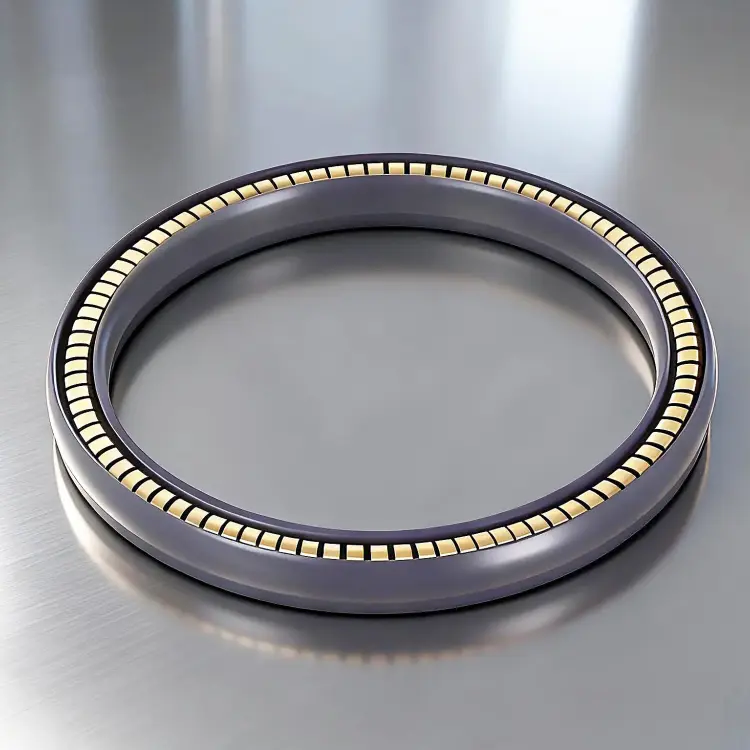
Seal springs are critical components in mechanical and rotary sealing systems. This pillar outlines common spring types (garter / coil, pusher springs, wave springs, Belleville washers, split rings), material choices, selection criteria, fatigue and corrosion considerations, typical specifications and procurement-friendly comparison tables.
What is a Seal Spring?
A seal spring is a mechanical element that applies and maintains axial force on sealing faces or sealing lips. In mechanical seals springs take up wear, thermal expansion and compensate for small axial movement; in rotary lip seals garter springs energize the lip. Springs must provide consistent preload, fatigue resistance and corrosion resistance suited to service conditions.
Types & Classification — concise overviews (30–80 words)
Garter (Coil) Springs
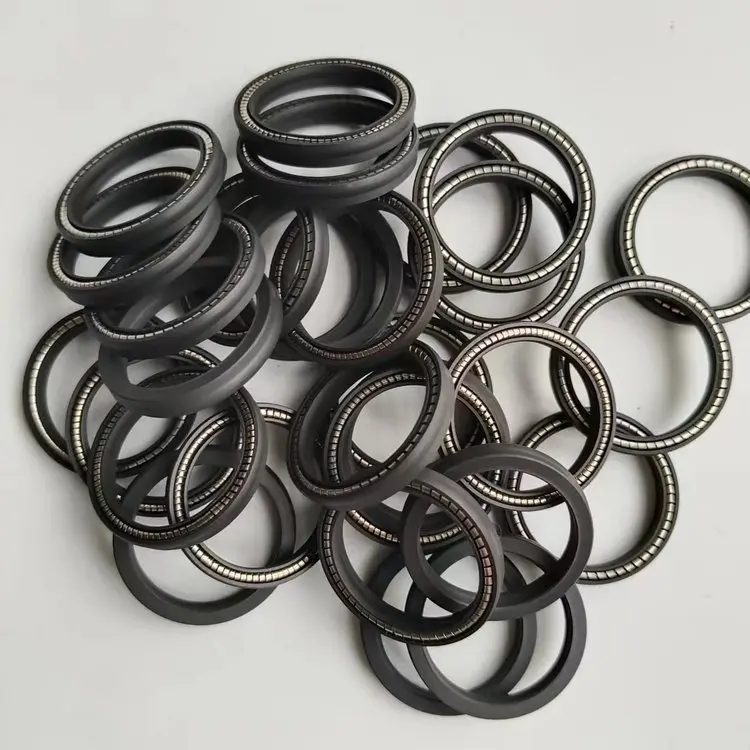
Commonly used in radial lip seals and some non-pusher mechanical seals, garter springs are circular coil springs that sit in a spring groove to energize sealing lips. They are compact and provide uniform radial force around the shaft.
Pusher Coil Springs
Pusher springs are used in pusher-type mechanical seals; they transmit axial load from the spring pack to the seal face via a pusher element, enabling simple face replacement and compensating for wear.
Wave (Conical) Springs
Wave springs (single or multi-turn) save axial space and provide controlled axial force; they are used where limited installation depth is available and where consistent preload is needed.
Belleville (Disc) Springs
Belleville washers (coned disc springs) deliver high load in a small stack height and can be stacked in series or parallel to tune stiffness—commonly used in heavy-duty seal packs and high preload applications.
Split Rings & C-Washers
Split rings, C-washers and custom formed rings provide secure location and energizing function where full rings are impractical—useful in retrofit or large-diameter applications.
Custom & Specialty Springs
Includes corrosion-resistant alloys, coating options, and engineered geometries for extreme temperatures, radiation, or hygiene-critical services. Often produced to drawing for OEM and aftermarket needs.
Search & Long-tail Keywords
Suggested long-tail keywords: seal spring manufacturers, seal springs types, mechanical seal spring, garter spring, pusher spring, wave spring for seals.
Selection Guide — How to choose the correct seal spring
- Define seal type: Identify whether the seal is pusher, non-pusher, lip seal or cartridge seal—spring function differs between types.
- Required preload & face load: Determine necessary axial/radial preload to keep faces/lips in working contact without excessive friction; consult seal face material load limits.
- Axial space constraints: If installation depth is limited, prefer wave springs or Belleville stacks which save axial space.
- Material compatibility & corrosion resistance: Select spring alloy (SS316, 17-7 PH, Inconel, Hastelloy, Elgiloy) or coatings (PTFE, Ni, DLC) per fluid chemistry and temperature.
- Fatigue life & cycle count: For high-cycle pumps or reciprocating motion choose springs with high fatigue resistance (proper alloy and shot-peened finishes) and conservative stress ranges.
- Manufacturing tolerances & quality: Check spring free length, solid height, spring rate, and that springs meet relevant ASTM/EN tolerances for performance and interchangeability.
Quick tip: When requesting a quote include seal type, shaft diameter, axial space available, required preload or face load, operating temperature, corrosive media and expected cycle frequency.
Seal Springs — Typical Specs & Comparison Table
Reference values — always confirm with spring manufacturer and seal vendor for final selection.
| Spring Type | Typical Application | Axial / Radial Space | Typical Materials | Fatigue / Cycle Suitability | Key Advantages |
|---|---|---|---|---|---|
| Garter (coil) spring | Radial lip seals, non-pusher seals | Low radial height | Stainless steel 302/316, Inconel | Good for moderate cycles | Uniform radial preload, low cost |
| Pusher coil spring | Pusher mechanical seals | Moderate axial height | 17-7 PH, 316 SS, Elgiloy | Good — designed for face wear compensation | Direct axial preload, easy to replace |
| Wave spring | Limited axial space, cartridge seals | Very low axial height | 17-7 PH, 316 SS, Inconel | Good with proper material | Saves space, consistent preload |
| Belleville (disc) spring | High preload stacks, heavy-duty seals | Low to moderate stack height | 17-7 PH, 316 SS, Inconel | Excellent for static preload and many cycles | High load with small height, tunable |
| Split rings / C-washers | Large diameter seals, retrofit | Varies | Stainless / coated steels | Suitable for moderate cycles | Easy retrofit, secure location |
Typical Spring Parameters & Packaging
| Parameter | Typical Range / Notes | Packaging |
|---|---|---|
| Wire diameter | 0.2 mm — 3.0 mm (dependent on spring type) | Bagged / boxed |
| Free diameter / ring size | Custom to shaft diameter; standard small sizes available | Inner-boxed sets |
| Spring rate | Specified per application (N/mm or N/mm^2) | Labelled & tested per batch |
-
 Seal spring
Spring Energized Seals
Datasheets & Material Guides
Installation & Handling Best Practices
- Clean assembly: avoid nicks or contamination on springs; lint-free handling prevents debris that may accelerate wear or corrosion.
- Correct orientation: install springs in the intended groove or pusher pocket; incorrect seating changes preload distribution and face loading.
- Use protective tools: use mandrels or installation jigs for garter springs or split rings to avoid overstretch or deformation during fitment.
- Avoid overstressing: do not exceed recommended deflection or overload during assembly; springs that are deformed may have reduced fatigue life.
- Inspection: inspect springs for corrosion, cracking or loss of torsion/shape during routine seal maintenance and replace as needed.
Industries & Typical Applications
- Chemical & petrochemical — corrosive services requiring alloy springs
- Water & wastewater — robust, low-cost garter springs for lip seals
- Power & utilities — high-preload Belleville stacks in heavy-duty seals
- Food & pharma — sanitary, coated or PTFE-wrapped springs for hygienic seals
- Hydraulics & pneumatics — pusher springs in cartridge and rod seals
Standards, Testing & HS Code Guidance
Standards and testing relevant to springs and spring materials:- ASTM A313 / A276 — Stainless spring wire and bar specifications for certain alloys.
- EN 10270 / ISO 6930 — Spring steel wire and stainless spring wire specifications.
- Fatigue testing — Request batch fatigue test records and shot-peening/finish details for high-cycle springs.
FAQ — Common Questions on Seal Springs
- Q: How do I know if a spring has lost preload?
- A: Signs include increased leakage, visible gap between faces, or spring deformation. Measure spring free length or compare to a new sample; springs with permanent set should be replaced.
- Q: Are garter springs reusable?
- A: Garter springs can be reused if undamaged and within free length tolerance, but replacement is recommended during seal overhaul to ensure consistent preload and avoid unexpected failures.
- Q: Which spring material is best for seawater service?
- A: For seawater or chloride-containing environments select high-alloy materials such as Inconel, Hastelloy, or suitably coated stainless steels to resist chloride-induced corrosion and stress-corrosion cracking.
- Q: How often should I replace springs during seal overhaul?
- A: For critical equipment replace springs each major overhaul or if any signs of fatigue/corrosion exist. For less critical equipment follow vendor guidance; proactive replacement reduces unscheduled failures.
- Q: Can wave springs replace coil springs in cartridge seals?
- A: Yes — wave springs often substitute where axial space is limited and can provide similar preload characteristics when properly specified for material, turn count and thickness.
More FAQs
How does temperature affect spring choice?
Higher temperatures reduce yield strength and fatigue life for many alloys. For elevated temperatures choose high-temperature alloys (Inconel, Hastelloy) and verify relaxation/creep properties at service temperature.
Can springs be coated for hygiene?
Yes — PTFE or other inert coatings, passivation and electropolishing are common for hygienic applications, but coating thickness and adhesion must be controlled to avoid altering spring geometry.
What tests should I request from spring suppliers?
Request material certificates, hardness, wire dimension tolerances, spring rate tests and fatigue cycle test reports for high-cycle applications.