
Cartridge Mechanical Seals — Fast, Reliable Seal Packages for Pumps
What / Why — Cartridge mechanical seals are pre-assembled seal units that simplify installation and service. They minimize assembly errors, ensure correct face alignment and preload, and are widely used in chemical, petrochemical, power and water industries. Long-tail keywords included: cartridge mechanical seal, cartridge seal types, cartridge seal pdf, pump cartridge seals.
Executive Summary
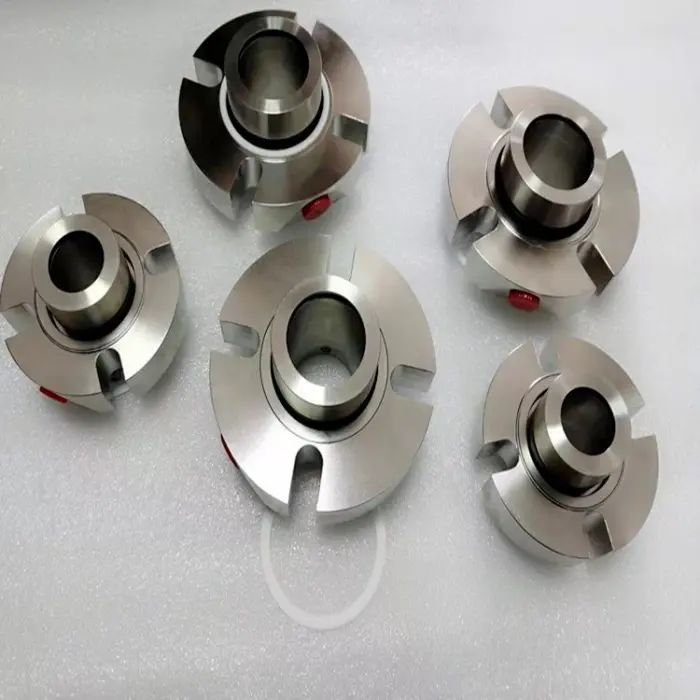
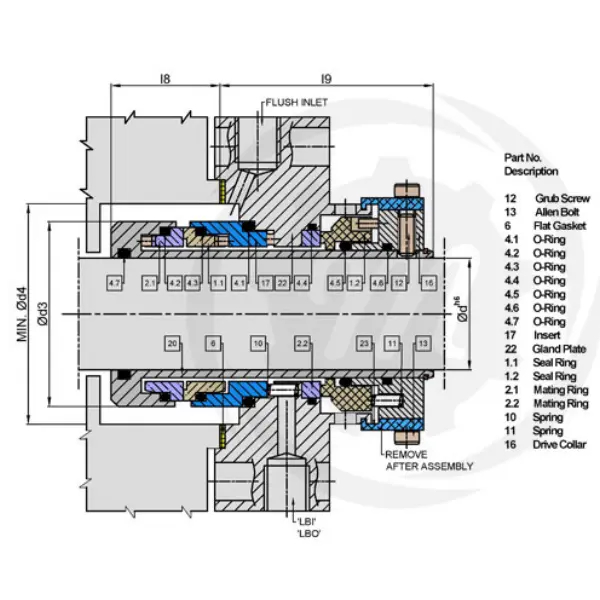
Cartridge mechanical seals package sealing faces, springs, secondary seals and gland in a single pre-set unit. They reduce installation time and risk, improve repeatability across maintenance events, and are available in single and dual arrangements, balanced designs and specialized corrosion/temperature-resistant variants.
What is a Cartridge Mechanical Seal?
A cartridge mechanical seal is a factory-assembled module that installs into the pump without requiring manual assembly of faces and springs inside the stuffing box. The cartridge ensures correct face pre-load, concentricity and anti-rotation features, reducing human error and shortening mean time to repair.
Types & Classification — concise overviews (30–80 words)
Unitized Single Cartridge Seals
Pre-assembled single-face cartridge seals for general-purpose pumps. They are compact, easy to install and suitable for many non-hazardous services where single seal leakage control is acceptable.
Cartridge Double / Tandem Seals
Double/tandem cartridge seals integrate two face sets in a single cartridge body and typically operate with a buffer or barrier fluid to meet emissions and safety requirements in hazardous services.
Balanced Cartridge Seals
Balanced cartridge seals reduce net face load to improve performance at elevated pressures and temperatures. Cartridge balanced designs maintain correct balance ratio and preload across replacements.
Bellows & Spring-Loaded Cartridge Options
Cartridge seals may use metal bellows (elastomer-free dynamic interface) or conventional spring packs depending on chemical compatibility and cyclic requirements—bellows cartridges are preferred for corrosive or elastomer-incompatible services.
API 682 Cartridge Packages
API 682-compliant cartridge seals are pre-engineered to meet defined piping plans and seal support systems—commonly used in refineries and chemical plants where standardized support is required.
Split / Retrofit Cartridges
Split or semi-cartridge designs allow retrofit into pumps with limited axial space or where full cartridge clearance is constrained, enabling many pumps to benefit from cartridge convenience.
Search & Long-tail Keywords
Include these in specs and SEO: cartridge mechanical seal, cartridge seal types, cartridge seal pdf, pump cartridge seals.
Selection Guide — How to choose the right cartridge seal
- Service & fluid compatibility: Identify fluid chemistry, solids content and lubrication—choose face and secondary materials (SiC, TC, ceramic, carbon; elastomers or PTFE) accordingly.
- Pressure & temperature: Use balanced cartridge designs for higher pressures; verify material thermal limits and cooling requirements for hot services.
- API / compliance needs: For hazardous or standardized plants request API 682 cartridge options and specify piping plan (Plan 11/21/53B etc.).
- Shaft sleeve & space: Check shaft sleeve condition and axial space for cartridge insertion—consider split or retrofit cartridges where full axial space is limited.
- Maintenance & spare strategy: Keep spare cartridge assemblies or face kits for critical pumps; cartridges simplify exchange and reduce downtime.
Quick tip: For fast quotes provide pump make/model, shaft diameter & sleeve condition, stuffing box depth, media, temperature & pressure, rpm and any required certifications.
Cartridge Mechanical Seal — Comparison Table
Reference comparison for procurement and specification. Confirm exact ratings with supplier datasheets.
| Cartridge Type | Typical Application | Temp Range (°C) | Pressure Rating | Common Face Materials | Key Benefits |
|---|---|---|---|---|---|
| Unitized single cartridge | General-purpose centrifugal pumps | -40 → +200 | ≤ 16 bar (varies by design) | Carbon / Ceramic / SiC | Quick install, low assembly error |
| Double / tandem cartridge | Hazardous fluids, emissions control | -40 → +220 | Higher effective containment with barrier system | SiC / TC / Ceramic | Enhanced safety and emissions reduction |
| Bellows cartridge | Corrosive or elastomer-incompatible media | -50 → +250 (material dependent) | Low–medium (check vendor) | Metal bellows; PTFE-lined faces | Elastomer-free dynamic interface |
| API 682 cartridge | Refinery & critical process pumps | Per selected materials | Per API arrangement | Vendor-specified | Standardised support & documentation |
Packaging & Spares
| Item | Typical Offerings | Packaging |
|---|---|---|
| Complete cartridge | Pre-assembled unit, face set, O-rings, gland | Boxed with installation instructions |
| Face & seal kits | Spare faces, O-rings, springs | Kitted per model |
| API documentation kit | Material certificates, test reports | Included with API-classified cartridges |
-
 Cartridge mechanical seal
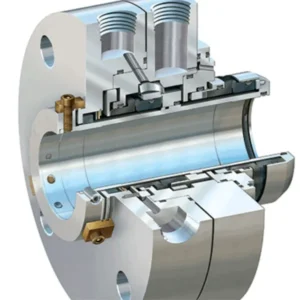
Double Cartridge Mechanical Seal
-
Cartridge mechanical seal
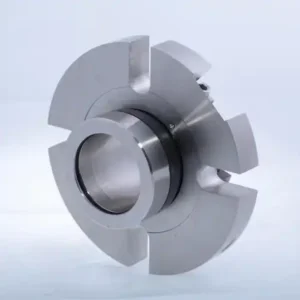
Single cartridge mechanical seal
Downloads & Datasheets
Installation & Best Practices
- Verify fit & sleeve: check shaft sleeve condition and axial space for cartridge insertion; replace or fit sleeve if worn.
- Follow cartridge orientation: install the cartridge per supplier instructions — cartridges are typically pre-lapped and require correct axial seating only.
- Tightening & torque: torque gland bolts evenly; do not disassemble pre-assembled cartridge components during installation.
- Run-in & monitoring: follow vendor run-in guidance; monitor leakage during initial operation and verify support system integrity for double cartridges.
- Spare strategy: keep a spare cartridge or face kit for critical pumps to minimize downtime — replacement is often a simple swap-out operation.
Industries & Case Examples
- Chemical & petrochemical — standardized cartridge seals for critical pumps
- Power generation — boiler feed and condensate pumps
- Water & wastewater — quick maintenance for large pump fleets
- Pharmaceutical & food — hygienic cartridges and PTFE-lined options
- Refinery & offshore — API 682-compliant cartridge packages
Standards & HS Code Guidance
Standards often referenced for cartridge seals and support systems:- API 682 — Pump shaft sealing systems for centrifugal pumps (specify arrangement and piping plan for cartridge packages).
- ISO 21049 — Pump shaft sealing systems guidance for selection and application.
- Material certificates — Request EN/ASTM numbers and mill reports for wetted metals and faces for traceability.
FAQ — Practical Questions for Buyers & Maintenance
- Q: Can cartridge seals be retrofitted into existing pumps?
- A: Many pumps can accept cartridge seals either directly or with simple adapter sleeves. Confirm stuffing box axial space, shaft sleeve condition and pump model compatibility before ordering retrofit cartridges.
- Q: Are cartridge seals serviceable in the field?
- A: Cartridges are designed to be replaced as a unit; some manufacturers offer cartridge refurbishment services. Face sets and O-rings can often be replaced in a clean workshop environment if detailed instructions are followed.
- Q: How do cartridge seals simplify API 682 compliance?
- A: Cartridge seals pre-configured to API 682 arrangements reduce shop and field assembly errors and ensure the correct face configuration and piping plan interfaces required by the standard.
- Q: What are common failure modes for cartridge seals?
- A: Causes include incorrect material selection for the process, worn shaft sleeves, dry running, abrasive solids in the fluid and improper support system for double cartridges. Proper selection and monitoring mitigate these risks.
- Q: What information is required for specifying a cartridge seal?
- A: Provide pump model/serial, shaft diameter & sleeve condition, stuffing box depth, fluid details, temperature & pressure ranges, rpm, and any required certifications or piping plans.
More FAQs
Is a cartridge seal more expensive than a component seal?
Initial cost is typically higher, but reduced downtime, fewer installation errors and faster maintenance generally justify the investment for critical equipment.
Do cartridges require special storage?
Store cartridges in a clean, dry environment and avoid disassembling them. Follow supplier shelf-life and handling instructions to preserve face flats and elastomer integrity.
Can I service double cartridge seals on-site?
Some double cartridge seals can be serviced on-site by trained technicians; however, handling buffer/barrier fluids and verifying support system integrity often requires workshop-level facilities and procedures.