Product overview
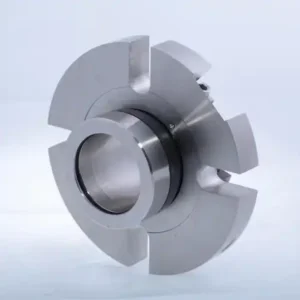
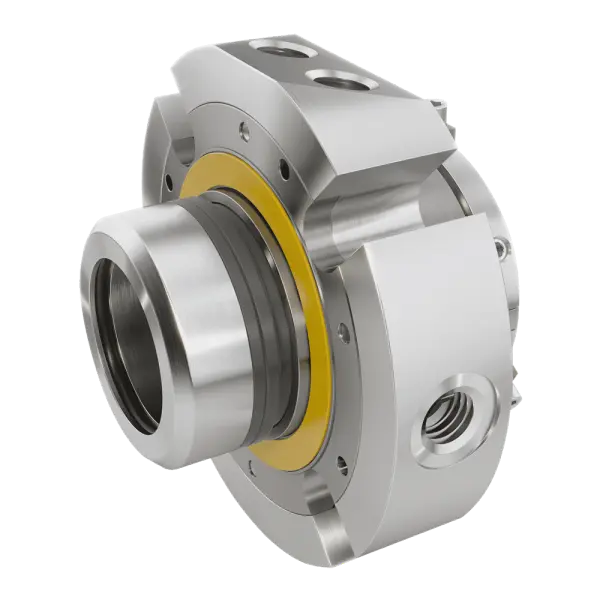
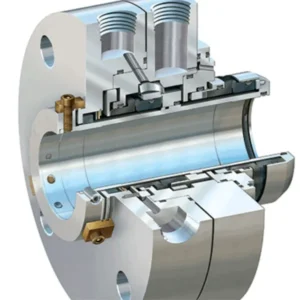
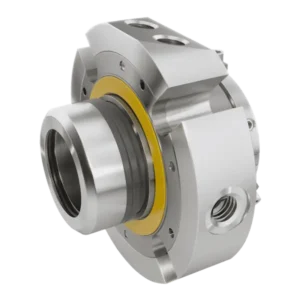
A Double cartridge mechanical seal integrates two sealing face pairs within a single cartridge assembly (tandem, back-to-back or double arrangement) to provide redundant sealing, reliable barrier fluid control, and minimized fugitive emissions. The cartridge format reduces installation error and maintenance time while meeting stringent environmental and safety requirements in chemical, petrochemical and refinery applications.
Key features (at-a-glance)
-
Dual-face cartridge: tandem / back-to-back arrangements available.
-
Stock shaft diameter range: 25–127 mm (1.0″–5.0″).
-
Typical standard pressure capability: up to 25 bar (363 psi); engineered pressurised/barrier designs available to ~40 bar depending on configuration.
-
Typical temperature range: –40 °C to +220 °C (dependent on selected elastomer/face materials).
-
Face material options: Carbon, Ceramic, Silicon Carbide (SiC), Tungsten Carbide (WC).
-
Elastomers: NBR, FKM (Viton®), EPDM, FFKM (perfluoroelastomer).
-
Metal components: 316L stainless steel standard; Hastelloy, Alloy 20, Duplex as options.
-
API-ready configurations and common piping-plan compatibility for critical services.
How it works — concise explanation
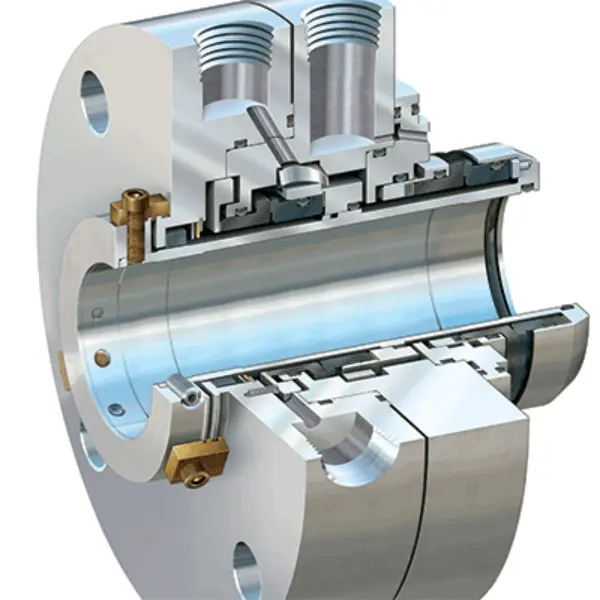
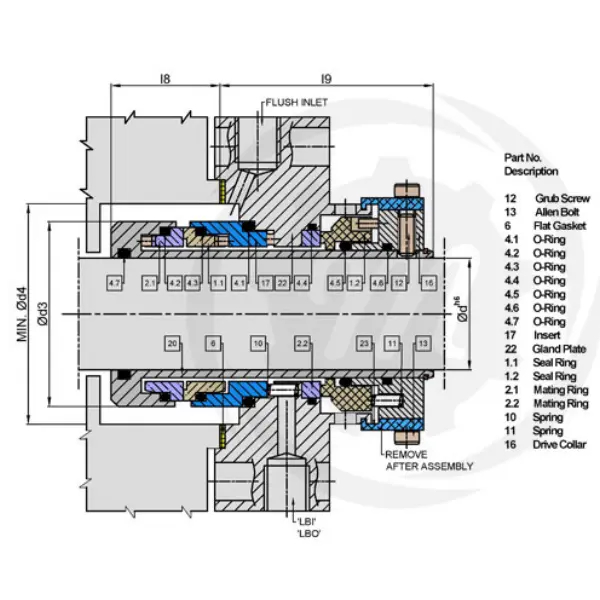
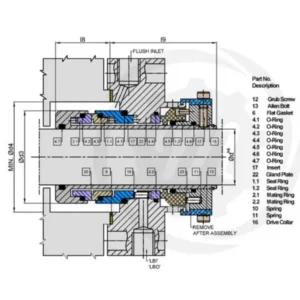
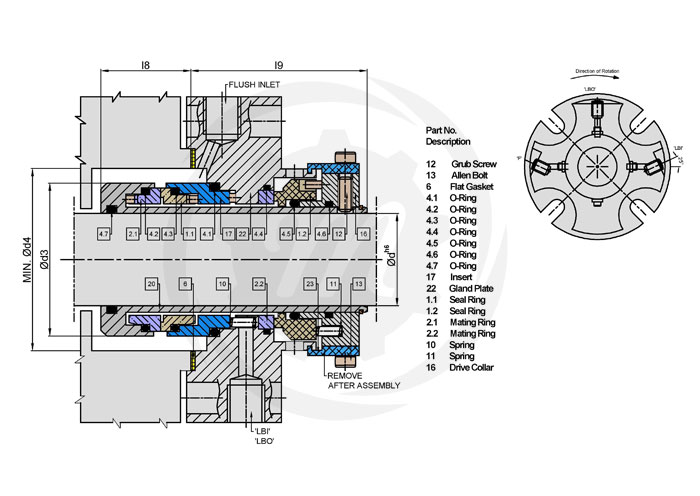
A double cartridge seal contains two independent sealing pairs arranged as tandem (in series) or back-to-back (opposed faces). A controlled barrier fluid (buffer or barrier) is supplied between face pairs to lubricate and cool the faces, prevent process fluid leakage, and provide a monitored intermediary for hazardous fluids. The cartridge houses pre-set face alignment, drives, springs and secondary seals for fast, error-free replacement.
Detailed product description
Our double cartridge mechanical seal family offers balanced, single-acting dual-face cartridges engineered for pumps handling toxic, volatile or abrasive fluids where environmental compliance and process safety are priorities. Typical cartridge types include:
-
Tandem cartridge (double seal, unpressurised buffer): process fluid on primary face, buffer fluid between faces; buffer is at lower pressure than process.
-
Back-to-back cartridge (double seal, pressurised barrier): barrier fluid is pressurised to greater than process pressure to ensure any leaked fluid is directed to a safe containment; common for toxic or highly volatile services.
-
Double tandem / dual cartridge variants: for very high-reliability applications with enhanced monitoring.
Each cartridge is factory pre-assembled with drive features and a dedicated gland/sleeve to ensure concentricity and eliminate complex field adjustments.
Typical construction elements
-
Rotary & stationary faces: combinations of Carbon / Ceramic / SiC / WC depending on service.
-
Secondary seals: O-rings, bellows or chevron packs in NBR/FKM/EPDM/FFKM.
-
Barrier chamber: integrated or external pressurised barrier connections; flush and quench options supported.
-
Drive & retention: torque transmission by drive pins or keyways; stainless steel springs or wave springs.
-
Housing materials: 316L standard; exotic alloys available for corrosive services.
Applications
-
Chemical & petrochemical process pumps handling toxic or volatile fluids
-
Refinery fractionation and hydrocarbon service pumps
-
Pharmaceutical and specialty-chemicals where emissions control is required
-
Offshore / FPSO pumps requiring low-emission barriers
-
High-pressure boiler feed and utility pumps with barrier fluid requirements
-
Any service demanding monitored barrier or dual-redundant sealing
Technical specifications
These are standard procurement parameters. For project-critical orders, provide pump tag, operating conditions and preferred piping plan.
| Parameter | Typical value / range |
|---|---|
| Shaft diameter (stock) | 25 mm – 127 mm (1.0″ – 5.0″) |
| Standard pressure rating | Up to 25 bar (363 psi) for standard double cartridges |
| Engineered barrier/pressurised options | Up to ~40 bar depending on design and barrier fluid selection |
| Temperature range | –40 °C to +220 °C (material dependent) |
| Sliding velocity (vg) | 10–20 m/s (dependent on face materials and barrier cooling) |
| Face material options | Carbon, Ceramic, Silicon Carbide (SiC), Tungsten Carbide (WC) |
| Elastomer options | NBR, FKM (Viton®), EPDM, FFKM |
| Metal standard | 316L stainless steel; Hastelloy, Duplex optional |
| Balance type | Balanced faces (preferred for high-pressure operation) |
| Barrier fluid compatibility | Water glycol, light hydrocarbons, compatible hydrocarbon-based fluids, or customer-specified fluids |
Common shaft sizes & SKUs
Common stocked shaft diameters: 25, 28, 30, 32, 35, 38, 40, 45, 50, 55, 60, 65, 70, 75, 80, 85, 90, 95, 100, 105, 110, 115, 120, 125, 127 mm.
Sample ordering code: DCS-050-316L-SiC-FKM-TB
(DCS = Double Cartridge Seal; 050 = shaft 50 mm; 316L = body; SiC = face; FKM = elastomer; TB = Tandem Backing/Barrier type)
Performance notes & selection guidance
-
Pressure vs. barrier selection: Standard tandem configurations suit moderate pressures; choose pressurised barrier/back-to-back designs for volatile or toxic fluids and higher pressure duties (engineer to confirm exact pressure capability).
-
Barrier fluid selection: use compatible, low-vapor-pressure barrier fluids specified for the process; barrier fluid pressure must be controlled via appropriate plan plumbing.
-
Dry-run & start-up: double seals reduce process leakage risk during start-up; however face material choice and barrier strategy are critical for dry-run protection.
-
Abrasive slurries: select SiC or WC faces and consider filtration or external recirculation to protect barrier fluid.
Advantages — buyer-focused
-
Redundant sealing for hazardous fluids: minimizes fugitive emissions and protects personnel & environment.
-
Pre-assembled cartridge reduces MTTR: factory pre-set alignment and drive cut field adjustments and installation errors.
-
Compliant with industrial piping plans: supports API piping-plan compatibility for monitored barrier systems.
-
Flexible material selection: face and elastomer options for harsh chemistries and high wear.
-
Monitoring & serviceability: barrier ports and sensor integration options for leakage detection and preventive maintenance.
Face & material selection — quick decision guide
-
Carbon faces: good conformability and dry-start tolerance; suitable for many buffer applications.
-
Ceramic: cost-effective alternative for clean services, good wear resistance.
-
Silicon Carbide (SiC): high hardness and excellent chemical resistance; preferred for abrasive/long-life services.
-
Tungsten Carbide (WC): best for severe abrasion and erosive environments; higher cost.
Material comparison table
| Property / Use | Carbon | Ceramic | Silicon Carbide (SiC) | Tungsten Carbide (WC) |
|---|---|---|---|---|
| Hardness | Low–Medium | High | Very high | Very high |
| Abrasion resistance | Low | Medium–High | Very high | Excellent |
| Chemical resistance | Good | Good | Excellent | Excellent |
| Dry-run tolerance | Best | Low | Low–Medium | Low |
| Typical cost | Low | Medium | High | High |
| Best for | Dry-run risk, conforming surfaces | Clean services | Abrasive/chemical services | Severe abrasion/erosion |
Double vs Dual vs Single — quick comparison
-
Single cartridge seal: economical, simpler systems where single containment is acceptable.
-
Double cartridge seal / Dual cartridge seal (this product): redundant sealing with barrier/buffer control — required for toxic, high-emission or safety-critical services.
-
Dual cartridge (term often used interchangeably): may refer to paired cartridge assemblies; confirm wording with supplier. Use the terms Double cartridge seal and Dual cartridge seal within procurement documentation to match supplier SKUs.
FAQ (procurement & technical)
Q1 — What information is required to quote a double cartridge seal?
A: Pump make & model (or pump tag), shaft diameter & runout, operating temperature & pressure, process fluid (chemistry, concentration), solids content, desired piping plan (API plan if required), barrier fluid specification if known.
Q2 — What is the purpose of the barrier fluid?
A: To lubricate and cool the intermediate faces, prevent process fluid leakage to atmosphere, and provide a monitored layer for leak detection. Barrier pressure and fluid selection are specified per piping plan.
Q3 — Can you supply API-compliant double cartridge seals?
A: Yes. API-ready configurations, piping-plan compatibility and test documentation can be provided upon request.
Q4 — Lead times and spares?
A: Stock sizes commonly ship in 3–10 business days depending on inventory; engineered or exotic-material cartridges vary (typically 3–6 weeks). Spare face kits, O-rings and gland kits are available per SKU.
Q5 — Do double cartridge seals require special installation?
A: Installation is simplified by the cartridge design, but correct barrier plumbing, pressure regulation and commissioning procedures must be followed. Provide an installation checklist and commissioning support where required.
E-E-T-A
Include the following elements on the live product page to lift buyer confidence and improve conversion for technical procurement teams:
-
Engineer-signed datasheet: include revision date, engineer name and signature line.
-
Factory test report badge: list factory hydrostatic and leak test acceptance criteria for each SKU.
-
Material certificates: EN 10204 3.1 or equivalent available on request for metallic components.
-
Short case study: 1–2 sentence real-world example showing reduced emissions or MTTR improvement after replacing with a double cartridge solution.
-
Installation video & step-by-step PDF: authored by your field engineer demonstrating cartridge drop-in replacement and barrier commissioning.
-
Warranty & aftermarket policy: clearly state warranty term (e.g., 12 months) and spare part availability guarantees.
Downloads — product catalog & datasheets
-
Full Mechanical Seals Catalogue — Datasheet (PDF) — Download:
https://www.aohongglobal.com/download/full-mechanical-seals-catalogue.pdf -
Double Cartridge Mechanical Seal Technical Data Sheet (PDF) — Download:
https://www.aohongglobal.com/download/double-cartridge-mechanical-seal-technical-data-sheet.pdf. -
Double Cartridge Mechanical Seal Specifications (PDF) — Download:
https://www.aohongglobal.com/download/double-cartridge-mechanical-seal-specifications.pdf.
Aftermarket & support
We provide spare kits, face exchange services, barrier fluid selection support and on-site commissioning assistance. Service-level agreements (SLA) for critical operations are available on request to ensure minimal downtime.
Ordering & lead times
-
Stock SKUs: typically 3–10 business days depending on size and region.
-
Custom / exotic material builds: lead time varies (typically 3–6 weeks).
-
Emergency shipping: regional stocking programs available; discuss MOQ and stocking strategy with sales.
Purchase call to action
To request a technical quote, CAD model or datasheet tailored to your pump tag, contact our sales engineering team and include pump tag and operating conditions.
Hengshui Aohong — Sealing & Special Materials Division
-
Email: sales@aohongglobal.com (for datasheet requests and fast quotes)
-
Phone: +(86) 153 7318 1024 (please replace with your official number)
Please provide pump make/model, shaft diameter, operating pressure/temperature and pumped fluid when requesting a quote to accelerate correct SKU selection.