Product Overview
What is a Non Pusher Mechanical Seal?
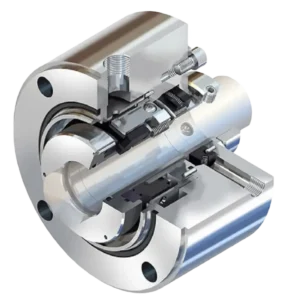
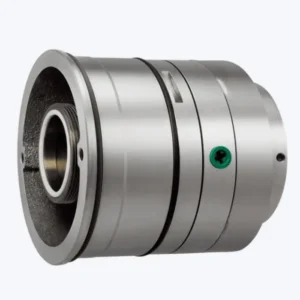
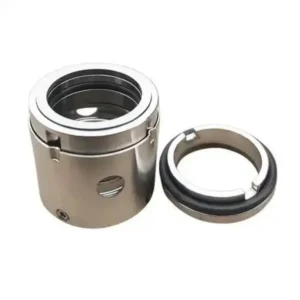
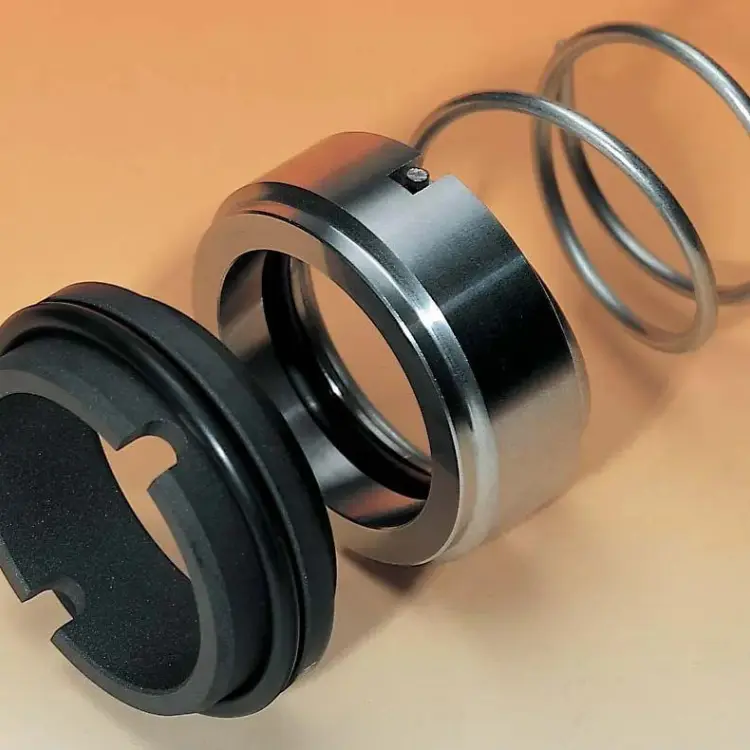
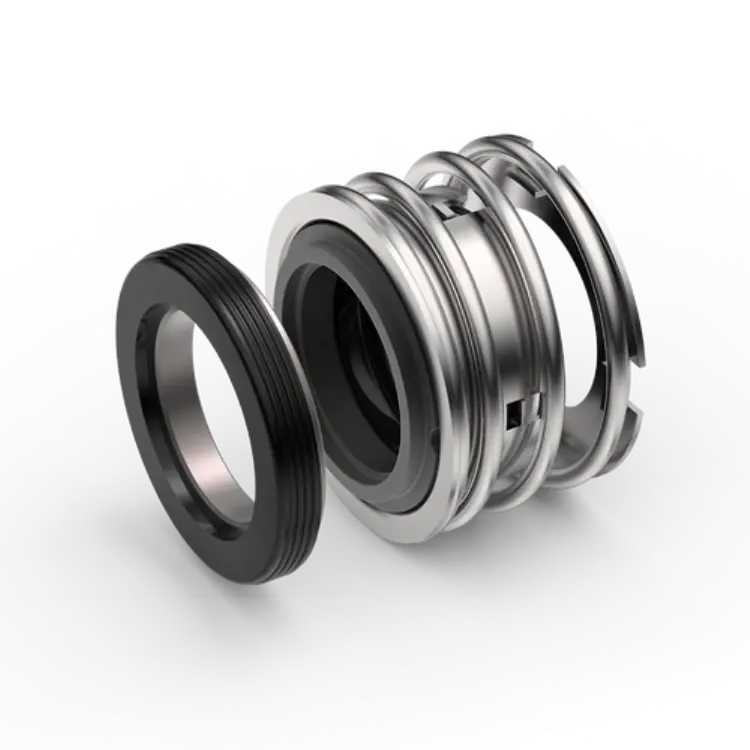
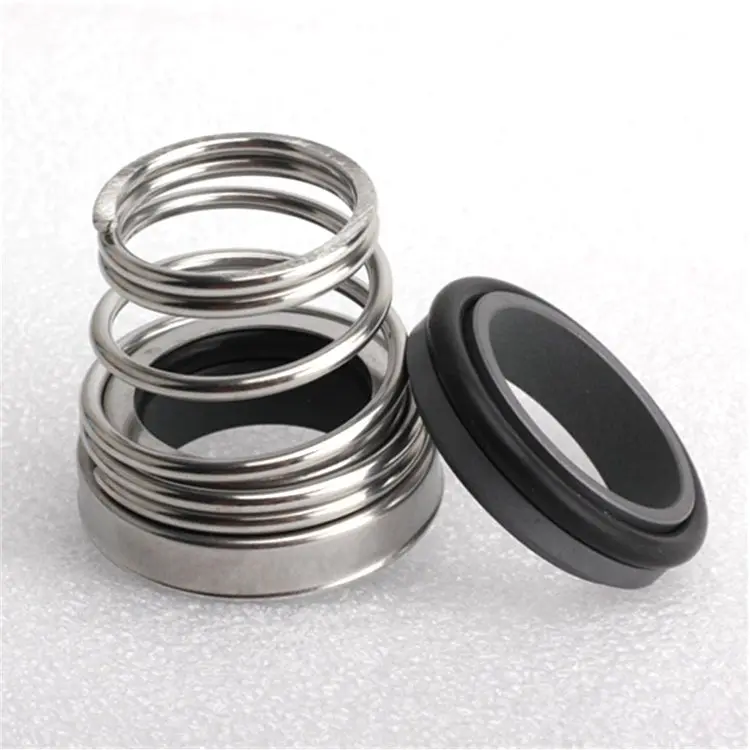
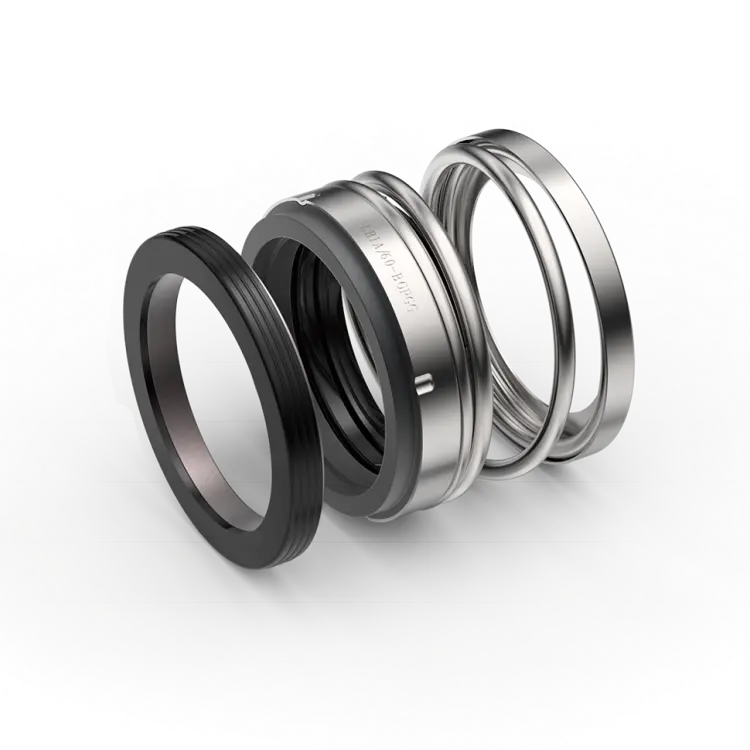
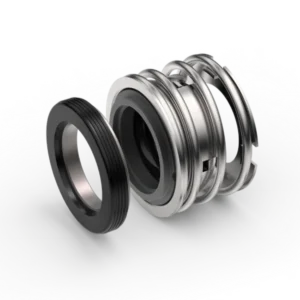
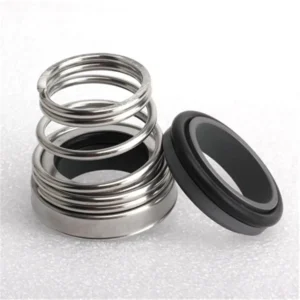
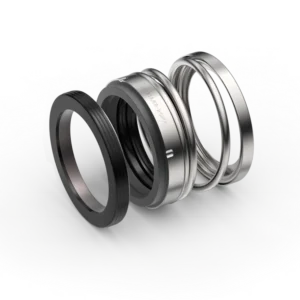
A Non Pusher Mechanical Seal (commonly called a bellows seal or Non Pusher Seal) uses a static secondary seal and either an elastomer or metal bellows to accommodate axial movement and face wear. Unlike pusher (spring-loaded) designs, the secondary sealing element does not slide axially during operation, reducing the risk of seal hang-up and extrusion in many services. Non pusher seals are widely used where reliable static sealing, chemical compatibility and compact installation are required.
Common aliases (use across the page): Non Pusher Seal, bellows mechanical seal, bellows seal, non pusher bellows seal.
Key Features & Design Options
Core features
-
Static secondary seal (non sliding): reduces extrusion and hang-up risk in many fluids.
-
Bellows compensation: elastomer bellows or metal bellows provide axial compliance and spring force without a dynamic O-ring.
-
Elastomer and metal bellows variants: elastomer bellows for cost-effective general service; metal bellows for higher temperature, higher pressure or aggressive fluids.
-
Component and cartridge formats: cartridge versions speed installation and reduce alignment errors.
-
Modular replaceable face sets and elastomer kits for fast maintenance.
Typical Technical Specifications
Final selection must be confirmed by seal drawing and application data. Values below are typical design envelopes used for quotation and stock selection.
-
Seal type: Non pusher seal — elastomer bellows / metal bellows.
-
Stock shaft diameters: 12, 16, 20, 25, 32, 40, 50, 63, 80, 100, 125, 130 mm (others available by request).
-
Recommended maximum dynamic pressure:
-
Elastomer bellows: up to ≈ 8–10 bar (0.8–1.0 MPa) depending on face pairing and application.
-
Metal bellows: up to 20–40 bar depending on bellows design and metallurgy (consult engineering).
-
-
Temperature range:
-
Elastomer bellows (typical elastomers): −40 °C to +150 °C (specific elastomer limits vary: EPDM, NBR, FKM/Viton, HNBR).
-
Metal bellows: −40 °C to +300 °C depending on alloy and face materials.
-
-
Rotational speed (typical): up to 15–20 m/s surface speed for standard face pairs; verify for high-speed duties.
-
Face materials: Carbon / Silica-based ceramics / Silicon carbide (SiC) / Tungsten carbide (TC) — chosen per media abrasiveness and lubrication.
-
Elastomers: NBR, FKM (Viton), EPDM, HNBR, per media compatibility.
-
Shaft finish & tolerance: ground to pump OEM recommended finish (typical Ra ≤ 0.8 μm); verify sleeve/hardness prior to installation.
Common Sizes & Selection Guide
Common stocked shaft diameters (mm → inch approx.)
| Shaft dia (mm) | Inch (approx.) |
|---|---|
| 12 | 0.47″ |
| 16 | 0.63″ |
| 20 | 0.79″ |
| 25 | 0.98″ (1″) |
| 32 | 1.26″ |
| 40 | 1.57″ |
| 50 | 1.97″ |
| 63 | 2.48″ |
| 80 | 3.15″ |
| 100 | 3.94″ |
| 125 | 4.92″ |
| 130 | 5.12″ |
Selection checklist for a firm quote: shaft diameter, pump make/model, stuffing box dimensions or existing seal part number, process fluid, operating temperature, operating and test pressures, shaft speed (RPM), solids content, preferred face/elastomer materials, and whether cartridge or component style is required.
Materials & Face Combinations
-
Carbon (rotor) / SiC (stationary): economical run-in and good for many liquid services.
-
SiC / SiC: highest wear resistance — recommended for abrasive or solids-laden fluids.
-
TC / Carbon: heavy wear resistance for abrasive slurries.
-
Ceramic / Carbon: good corrosion resistance with moderate wear.
Elastomer selection guidelines:
-
NBR (Buna-N): petroleum-based fluids, moderate temperature.
-
FKM (Viton): broad chemical resistance and higher temperature capability.
-
EPDM: hot water and many alkaline environments.
-
HNBR: improved heat and oil resistance over NBR.
Typical Applications & Pump Types
Industries
-

Municipal water & wastewater treatment
-
Chemical processing (corrosive and solvent services with metal bellows)
-
Petrochemical (selected face/elastomer combinations)
-
HVAC, district heating and cooling circuits
-
Food & beverage (with compliant materials on request)
-
Pulp & paper, mining (metal bellows + hard faces for abrasive services)
Pump types
-
End-suction centrifugal pumps (ISO/ANSI)
-
Close-coupled and frame-mounted pumps
-
Vertical and submersible designs (where bellows geometry permits)
-
Rotary equipment that benefits from static secondary sealing
Performance, Installation & Maintenance
-
Installation: Cartridge bellows seals are recommended to eliminate errors in axial set and simplify field swaps. Follow OEM torque and set height instructions when installing component seals.
-
Lubrication / flush plans: For high temperature, vaporous or solids-laden services use an appropriate plan (flush, quench or buffer) to maintain film lubrication and prevent dry running.
-
Maintenance: Keep face sets, bellows kits and elastomer spares for common shaft sizes. Inspect shaft sleeves for scoring and correct hardness before installing a new seal.
-
Common failure modes: dry running, abrasive wear from solids, chemical attack on elastomers, bellows fatigue from thermal cycling — mitigate by selecting correct materials and support plans.
Advantages of Non Pusher Mechanical Seals
-
Static secondary sealing reduces extrusion/hang-up risk compared to pusher seals in many fluid types.
-
Simplified axial compensation (bellows provides springing action without moving secondary O-rings).
-
Better chemical compatibility in metal bellows variants for aggressive media and elevated temperatures.
-
Compact compactness and reliability for applications where a moving secondary seal is undesirable.
-
Cartridge options offer fast swap and minimal alignment adjustments.
Non Pusher vs Pusher vs Other Sealing Options
| Characteristic | Non Pusher (Bellows) | Pusher (Spring) | Packed Gland |
|---|---|---|---|
| Secondary seal motion | Static (no axial sliding) | Dynamic (O-ring slides) | Static (packing) |
| Best for | Services where hang-up or extrusion risk exists; chemical/high-temp (metal bellows) | Serviceable field repairs; wide availability | Low CAPEX; frequent maintenance |
| Pressure capability | Elastomer bellows: up to ~8–10 bar; Metal bellows: higher (20–40 bar design dependent) | Many designs up to ~17 bar (application dependent) | Low pressure; dependent on packing type |
| Temperature capability | Elastomer bellows limited by elastomer; metal bellows to ~300 °C | Dependent on elastomer & face choices | Limited by packing material |
| Serviceability | Cartridge versions available; face replacement straightforward | Very serviceable; springs simplify wear compensation | Requires regular adjustment; higher leakage |
| Typical use case | Corrosive, vaporous, or high-temperature fluids | General industrial & wastewater where serviceability needed | Low-cost, low-speed, non-critical services |
Downloadable Resources
-
Download: Non Pusher Mechanical Seal Technical Data Sheet (PDF)
- Download: Non Pusher Mechanical Seal Specifications (PDF)
FAQ
Q1: When should I select a Non Pusher seal instead of a pusher seal?
A: Choose a Non Pusher Seal when you require a static secondary seal to avoid axial sliding (reduces extrusion/hang-up), when chemical compatibility or elevated temperature dictates metal bellows, or when a compact bellows solution fits the stuffing box. Provide pump details for confirmation.
Q2: What information do you need to provide an accurate quote?
A: Shaft diameter, pump OEM & model or existing seal part number, stuffing-box dimensions, process fluid, operating temperature, working and hydrostatic test pressures, RPM, solids content, preferred face and elastomer materials, and required delivery.
Q3: Are elastomer bellows suitable for wastewater with solids present?
A: Elastomer bellows can be used for some wastewater services but have lower abrasion tolerance than metal bellows. For solids-laden or highly abrasive streams we recommend hard face materials (SiC/TC) and consider metal bellows designs or appropriate flush plans.
Q4: Do you offer cartridge bellows seals for fast replacement?
A: Yes. Cartridge configurations for popular ISO/ANSI pumps are available to speed installation and minimize field errors.
Q5: What testing and documentation accompany each seal?
A: Each shipment includes dimensional drawings, material declarations and QA test records; test certificates and inspection reports can be provided per purchase order.
E-E-T-A
To strengthen buyer confidence and satisfy search quality expectations include concrete, verifiable E-E-T-A content on your published page:
-
Experience (Example copy to adapt): “Our rotating-seal group has supplied bellows and cartridge solutions for municipal and process plants for 20 years, delivering retrofit and OEM contracts worldwide.”
-
Expertise: “Seal selections are validated by our engineering team using pump OEM cross-reference checks, dimensional verification and application review to ensure correct material pairing and support-plan selection.”
-
Authoritativeness: “Products are produced and inspected under documented QA procedures; material certificates and dimensional drawings accompany each order.”
-
Transparency: “We disclose material compositions, typical working envelopes and service limitations before purchase. For critical duties we provide engineering recommendations and on-site support options.”
Why choose our Non Pusher Mechanical Seals
-
Stock for common shaft sizes (12–130 mm) for rapid dispatch.
-
Elastomer and metal bellows options to match operating envelopes.
-
Cartridge and component choices for retrofit or OEM fitments.
-
Technical support: application review, dimensional confirmation and on-site troubleshooting.
-
Spare kits (face sets, bellows and elastomer kits) available to reduce mean time to repair.
Contact & Ordering
Hengshui Aohong — Seals Division
-
Email: sales@aohongglobal.com (for datasheet requests and fast quotes)
-
Phone: +(86) 153 7318 1024 (please replace with your official number)