
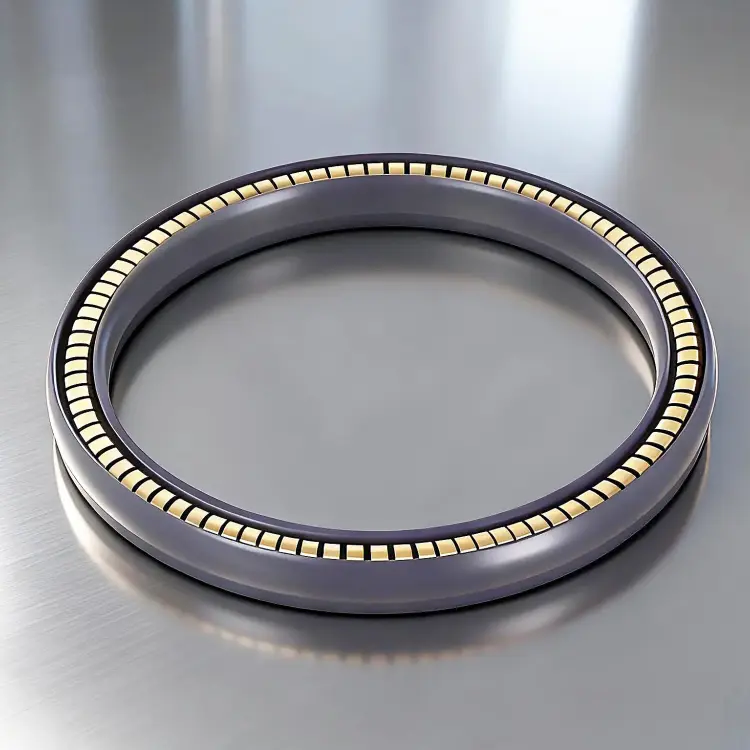
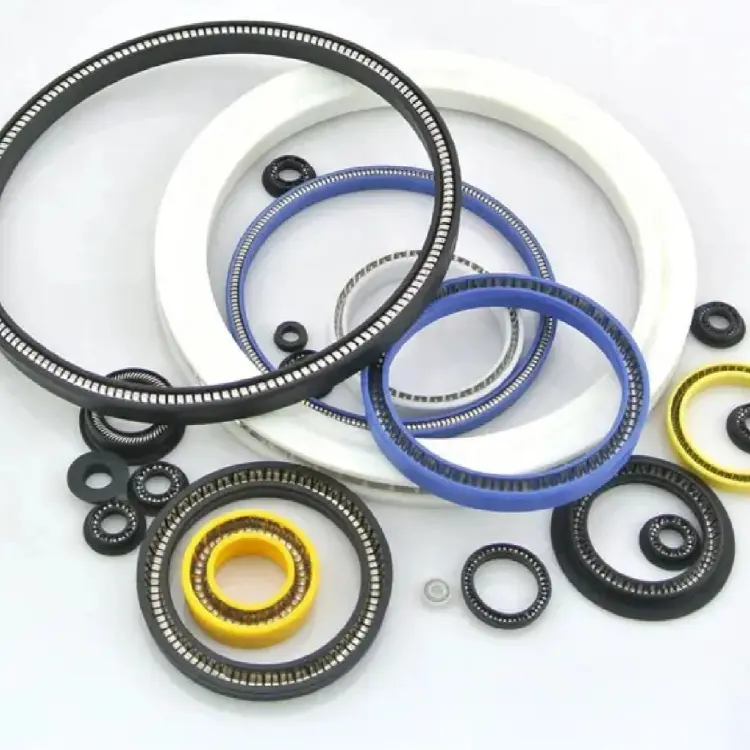
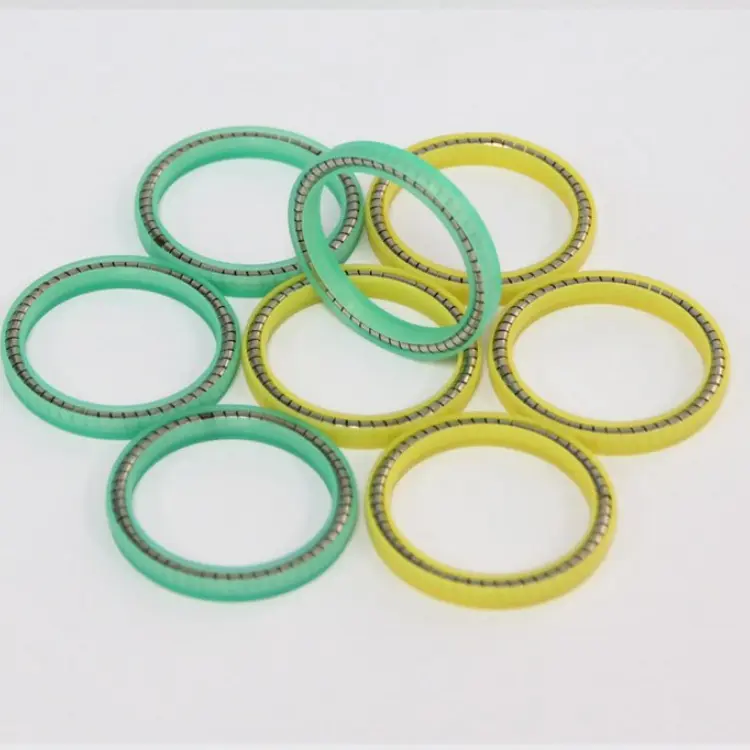
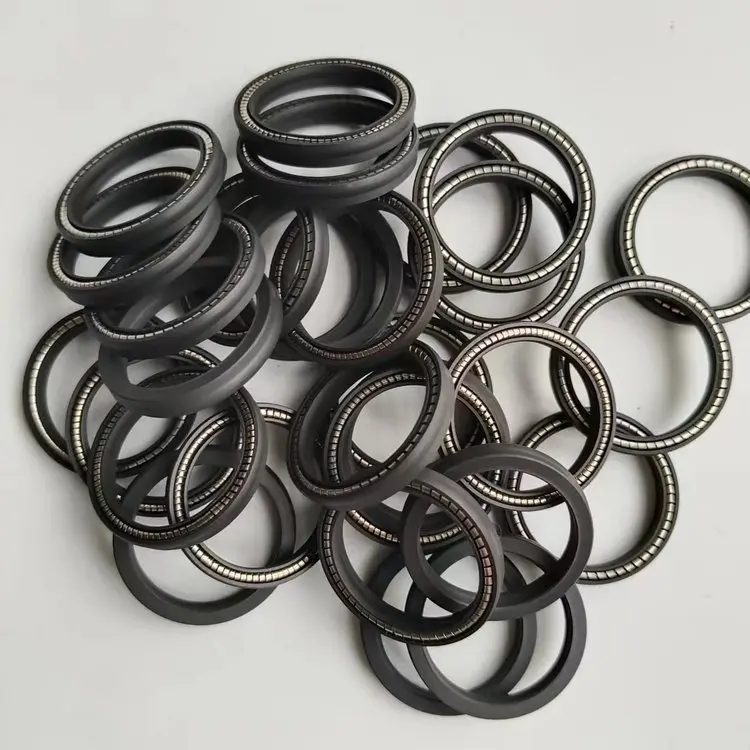
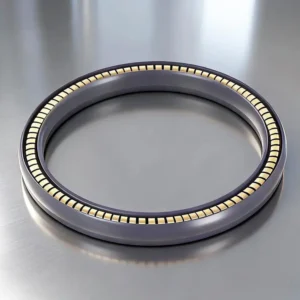
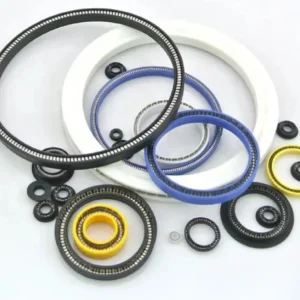
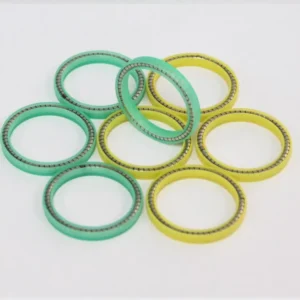
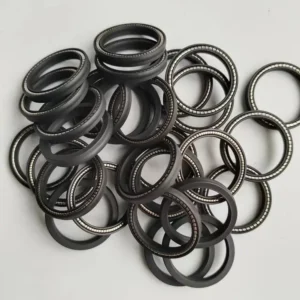
Product overview — what are spring energized seals?
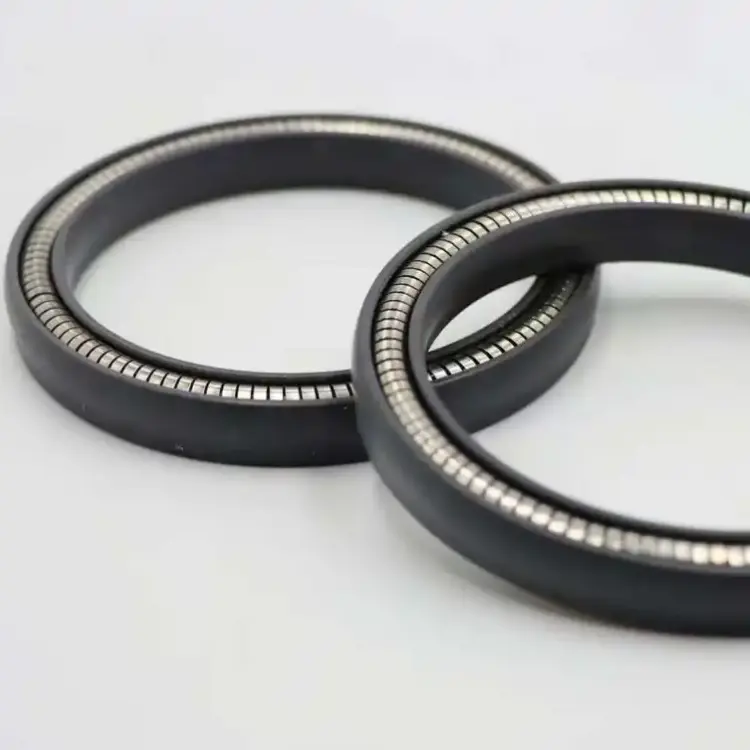
Spring energized seals are composite seals made from a polymer jacket (commonly PTFE or filled-PTFE) mechanically held and energized by a metal spring (helical, ribbon, cantilever, V-spring, etc.). The energizer maintains contact pressure under thermal cycling, low pressures and shrinkage, enabling sealing across a far broader temperature and chemical range than elastomeric seals. Typical jacket materials include virgin PTFE, carbon-filled PTFE, glass-filled PTFE and specialty fluoropolymers. Typical energizer alloys range from stainless steels to high-performance alloys (Inconel, Elgiloy, Hastelloy) depending on corrosion and temperature requirements.
Typical operating envelope
-
Temperature: −200°C (cryogenic) up to +260°C (approx. −328°F to +500°F) depending on jacket compound.
-
Pressure: Seal designs are available for low vacuum up to very high pressures — in engineered solutions pressure capability can reach ~10,000 psi (≈690 bar) with appropriate materials and geometry.
-
Surface speed / velocity: Linear and rotary seals depend on jacket and hardware; typical published values show linear up to ~10 m/s (33 ft/s) and rotary up to ~6 m/s (20 ft/s) for select designs; P-V limits must be respected for long life.
-
Hardware finish: Recommended mating surface finish is in the range ~3–12 µin (0.075–0.30 µm Ra) (optimal range varies by media and temperature). Surface hardness and coatings (chromium, tungsten carbide) improve life in abrasive systems.
Note for designers: Pressure can supply the sealing load above roughly 100 psi in many designs — under low pressure the spring provides the sealing force. Always verify PV curve for the chosen jacket/spring combination.
Key benefits — why choose spring energized seals?
-
Wide temperature range (cryogenic to high-temperature) — suitable where elastomers cannot perform.
-
Superior chemical compatibility — PTFE jackets resist most chemicals and solvents.
-
Low friction & long life — polymer transfer film and engineered lip geometry reduce wear in dynamic service.
-
High pressure capability — engineered spring designs and filled PTFE compounds enable high-pressure sealing.
-
Unlimited shelf life compared with elastomers; consistent performance under thermal cycling.
Typical applications
-
Rotating equipment: pumps, mixers, agitators, rotary shafts and drives.
-
Reciprocating systems: hydraulic/pneumatic rods, pistons, valve stems.
-
Aerospace & cryogenics: fuel systems, cryogenic transfer lines, low-temperature actuators.
-
Oil & gas: subsea valves, wellhead actuators, high-pressure compressors.
-
Process & chemical: chemical pumps, reactors, metering devices where aggressive media or high temp exist.
Each application should specify media, pressure, surface speed and expected temperature cycle to select the correct jacket fill and energizer alloy.
Specifications
These baseline values are representative. Final selection requires confirmation against your operating conditions and full test data.
| Parameter | Typical range / value |
|---|---|
| Jacket materials | PTFE, carbon-filled PTFE, glass-filled PTFE, PCTFE, specialty fluoropolymers. |
| Energizer (spring) materials | 301/302/304/316 SS, 17-7PH, Elgiloy, Inconel, Hastelloy (select by corrosion/temp). |
| Temperature range | −200°C to +260°C (dependent on jacket material). |
| Pressure capability | Vacuum to ~10,000 psi (690 bar) for engineered designs. |
| Surface speed (recommended) | Linear up to 10 m/s (33 ft/s); rotary up to 6 m/s (20 ft/s) for specific designs — check P-V limits. |
| Hardware surface finish | ~3–12 µin (0.075–0.30 µm Ra) recommended; smoother for gases/cryogenics. |
| Typical cross sections | 1.6 mm – 6.0 mm cross-section (special thin lip rotary profiles from 0.8 mm up). See product family. |
| Typical lifetimes | Application dependent — high PV and abrasive media shorten life. Check test data. |
Common sizes
Use these as quick-quote prompts. Exact groove geometry and tolerances will be provided on request.
Metric (shaft diameter examples): 6 mm, 8 mm, 10 mm, 12 mm, 16 mm, 20 mm, 25 mm, 30 mm, 40 mm, 50 mm, 65 mm, 80 mm, 100 mm.
Imperial (shaft diameter examples): 1/4″, 5/16″, 3/8″, 1/2″, 5/8″, 3/4″, 1″, 1-1/4″, 1-1/2″, 2″, 2-1/2″, 3″, 4″.
For rotary flanged profiles, typical cross-section (examples from stocked items): cross-section 0.063″ (1.6 mm) with shaft/bore pairings starting 0.750″ / 0.875″ (0.75″/0.875″) and larger. Exact counterbore/groove widths provided on drawing.
Advantages vs other sealing solutions
PTFE spring energized seals vs elastomer (NBR/FKM) seals
-
Temperature & chemical resistance: PTFE seals win (much wider range).
-
Creep & permeation: PTFE lower permeation for aggressive media; elastomers may swell.
-
Cost: Elastomers often cheaper initially; PTFE spring seals provide longer life in hard service.
PTFE spring energized seals vs metal C-rings / metal O-rings
-
Friction & dynamic service: PTFE jackets are lower friction and better for dynamic shafts.
-
High pressure / face sealing: Metal seals excel in ultra-high pressure face seals and metal-to-metal contact; spring-energized provide better sealing for sliding surfaces and where low leakage and low torque are required.
| Feature | Spring energized PTFE | Elastomeric lip seals | Metal seals (C-ring) |
|---|---|---|---|
| Temp range | Very wide (cryogenic → high T) | Moderate (−40 → +150°C typical) | Very wide (depends on metal) |
| Chemical resistance | Excellent | Variable | Excellent (but rigid) |
| Dynamic friction | Low | Moderate–high | High (metal contact) |
| Shelf life | Excellent | Limited (ageing) | Excellent |
Design & installation notes
-
Specify shaft/bore tolerances, surface finish, hardness, operating pressure, surface speed, and media at inquiry. These parameters determine jacket compound and spring alloy.
-
For sealing gases and cryogenic systems, request specialized low-temperature grade jackets and suitable spring alloys (17-7PH, Elgiloy).
-
Ask for PV curve for the selected jacket to confirm long-term performance at your speed/pressure combination.
Downloadable resources
E-E-T-A statement
Experience: Our sealing team has hands-on design and testing experience across rotating and reciprocating applications (replace with your company’s years/credentials).
Expertise: We apply engineering selection (PV analysis, surface finish, spring alloy selection) and provide material certificates and test reports on request.
Authoritativeness: Product engineering notes and profile drawings are created by our in-house sealing engineers; custom R&D available for atypical operating conditions.
Trustworthiness: Material traceability, batch test records, and factory inspection reports are available on quote. For cryogenic, fugitive emissions or API/NACE requirements, request documented test evidence with your RFQ.
Frequently Asked Questions
Q1: What is a spring-energized seal and when should I specify it?
A: A spring-energized seal combines a polymer jacket (often PTFE) with a metal spring energizer. Specify it when elastomers fail due to temperature, chemicals, or when long shelf life and low friction are required.
Q2: Can spring-energized seals handle high pressure?
A: Yes — engineered spring energized seals are used up to thousands of psi; some designs can be rated near 10,000 psi in static/face applications. Confirm the required pressure and we will recommend the appropriate jacket/spring combination.
Q3: What surface finish do I need on shafts/bores?
A: Typical guidance is ~3–12 µin (0.075–0.30 µm Ra); very smooth finishes are required for gas/cryogenic service and tougher finishes for liquid applications — we supply detailed hardware guidelines on request.
Q4: Do you offer stocked sizes or custom manufacture?
A: We provide common stocked sizes for quick delivery and full custom machining for unique diameters, materials and groove geometries. Specify shaft, bore, groove and operating conditions in your RFQ.
Q5: How do I request a quotation or test sample?
A: Include shaft diameter, bore diameter (or application hardware drawing), operating temperature, pressure, media and surface speed. We will provide a quote, lead time and recommended sample options.
Call to action / Contact & ordering
To request a quote, CAD drawings or sample kits, please contact our sales engineering team:
Hengshui Aohong— Mechanical Seals Division
-
Email: sales@aohongglobal.com (for datasheet requests and fast quotes)
-
Phone: +(86) 153 7318 1024 (please replace with your official number)