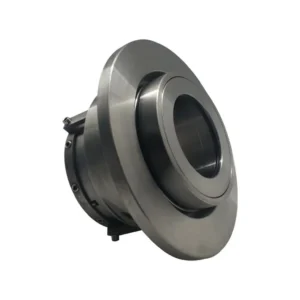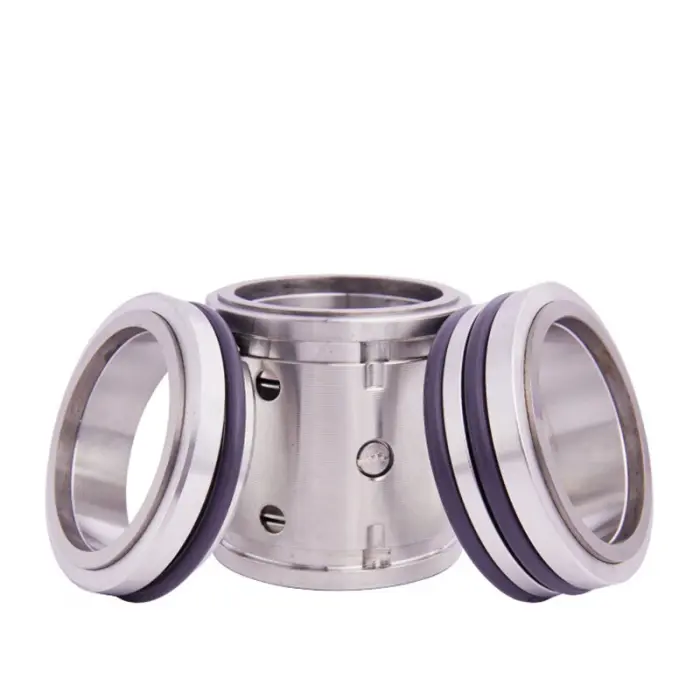

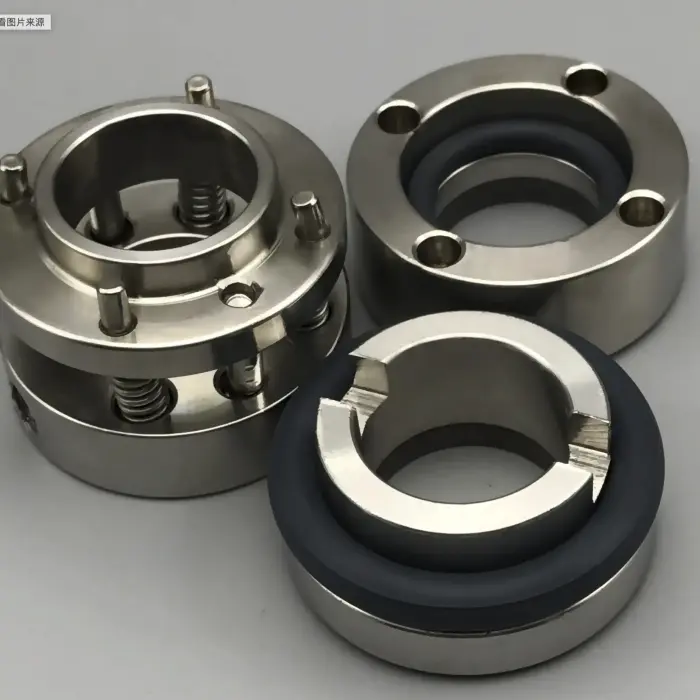
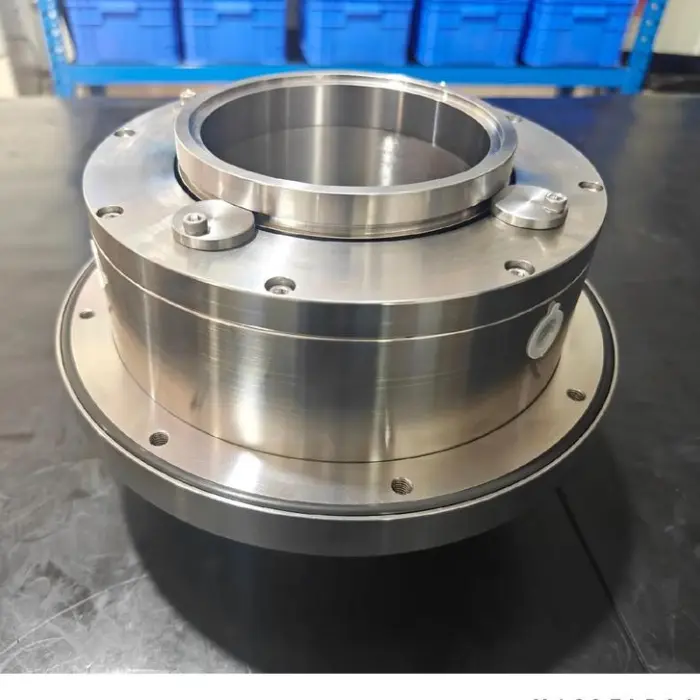
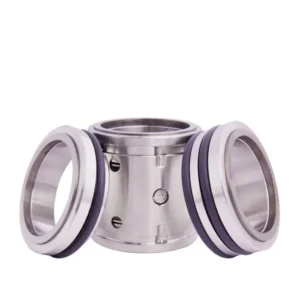
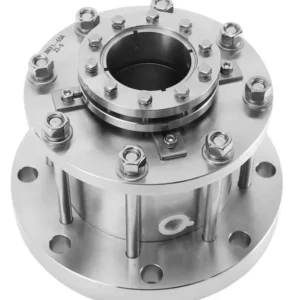
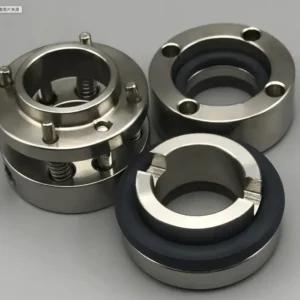
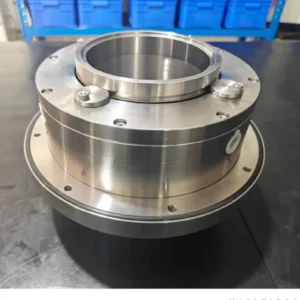
Product Overview
Back to Back Double Seal (B/B) is engineered for applications where process containment and environmental protection are critical. Two primary seal faces are installed facing away from each other; the barrier/flushing fluid lubricates and cools the intermediate chamber, preventing product escape to atmosphere in case either seal fails. This arrangement is widely used in chemical, petrochemical, refinery, and hazardous-service pumps.
Common Aliases / Keywords
Back to Back Double Seal, Back to Back Double Mechanical Seal, Opposed Double Seal, Dual Back to Back Seal, Double Cartridge Seal (B/B)
Key Features
-
Two independent sealing faces for redundant containment.
-
Pressurized barrier fluid support (Plans 52 / 53 / 54 or pump-flushed systems) for hazardous fluids.
-
API-class options (API-682 compliant designs available).
-
Available in cartridge and component configurations for retrofit or OEM supplies.
-
Materials and seal face pairings tailored to temperature, pressure and chemical compatibility.
Technical Description
Back to Back (B/B) double seals place the rotating seal faces oriented outward and stationary faces toward the barrier chamber. The barrier chamber is kept at a pressure higher than the process (for pressurized double seals) so any leakage flows into the barrier, not to atmosphere. This yields near-zero emissions when paired with correct barrier fluid and support piping plans. B/B seals typically allow easier handling of solids and process-side pressure because the product is on the outside diameter of the seal faces. Typical applications include toxic chemical transfer, solvent pumps, vacuum services, and cryogenic or elevated temperature processes.
Materials & Seal Face Options
Common face pairings: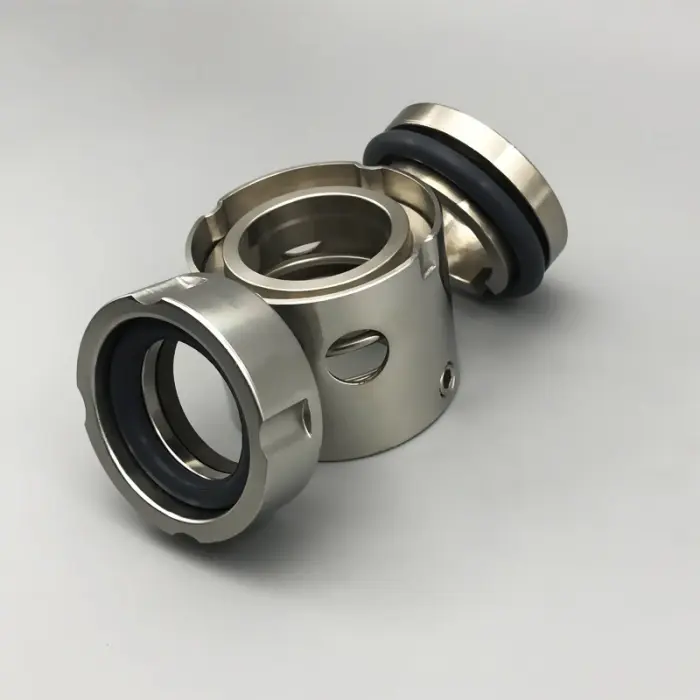
-
Silicon Carbide (SiC) vs SiC — high wear & chemical resistance.
-
Tungsten Carbide (TC) vs SiC — for abrasive media and high temperature.
-
Carbon vs Ceramic — standard choice for general duty with good run-in behavior.
-
Ceramic vs Ceramic — selected for specific chemical compatibility.
Secondary seals / elastomers: NBR (Buna-N), FKM (Viton), EPDM, HNBR, FFKM (for high temperature or aggressive chemicals / API compliant options).
Typical Operating Ranges
-
Shaft diameter (common stock sizes): 20, 25, 32, 40, 50, 65, 80, 100, 110 mm (standard API ranges commonly cover d = 20–110 mm; larger sizes available as engineered items).
-
Pressure (product side): vacuum up to ~60 bar (870 psi) for many API Category 2/3 designs; specialized high-pressure designs available.
-
Temperature: typically −40 °C to +176 °C (−40 °F to +349 °F) in standard constructions; engineered seals with FFKM secondary seals can be rated to ~260 °C (500 °F).
-
Sliding velocity / shaft speed: design dependent — seals are engineered for specific shaft speeds; consult manufacturer for PV limits.
Standard Specifications Table
| Item | Value / Range |
|---|---|
| Seal type | Back to Back Double Mechanical Seal (B/B) |
| Standard shaft diameters | 20, 25, 32, 40, 50, 65, 80, 100, 110 mm. |
| Max recommended product pressure | Up to 60 bar (typical API Category design). |
| Temperature range | −40 °C to +176 °C (standard); up to 260 °C with FFKM. |
| Seal face materials | SiC / SiC, TC / SiC, Carbon / Ceramic |
| Secondary seals | NBR, FKM, EPDM, HNBR, FFKM |
| Configuration | Cartridge or component; bellows or pusher designs available. |
Common Sizes & Ordering Codes
-
BB-25-SiC-FKM — Back-to-Back, 25 mm shaft, SiC faces, FKM elastomers (standard).
-
BB-50-C-EPDM — Back-to-Back, 50 mm shaft, Carbon/ Ceramic, EPDM (water service).
(When requesting a quote provide: pump model, shaft diameter, product, temperature, pressure, flush/plan, desired materials.)
Advantages
-
Redundant containment for hazardous fluids — dramatically reduces risk of product to atmosphere.
-
Higher safety & compliance — supports API piping plans and low-emission regulatory needs.
-
Extended mean time between failures (MTBF) — barrier fluid cools/lubricates faces improving durability.
-
Flexible configurations — cartridge or component styles for OEM or retrofit.
-
Material options for corrosive/abrasive media — SiC/TC options for abrasive or high-temp services.
Back-to-Back vs Other Double Seal Arrangements (Comparison)
| Characteristic | Back-to-Back (B/B) | Tandem | Face-to-Face |
|---|---|---|---|
| Failure mode safety | Barrier fluid between seals → leakage contained | Product side faces both toward atmosphere — more risk unless flushed | Faces see product between IDs — less common for solids |
| Best use | Hazardous/toxic fluids, high containment | Low viscosity, where small leakage tolerated | Limited, special cases |
| Ease of installation | Moderate — cartridge versions simplify fit | Usually simpler piping for drain | Not commonly recommended for solids |
| Typical industries | Chemical, petrochemical, refinery | General process, oil & gas (some applications) | Specialty applications |
(Use back-to-back when containment and regulatory compliance are primary concerns.)
FAQ
Q1 — Are you able to supply cartridge back to back seals for retrofit?
A: Yes. We supply cartridge and component versions; cartridge simplifies alignment and reduces shop assembly time. Provide pump make/model and shaft size for a fast quotation.
Q2 — Which API piping plans do you support for barrier systems?
A: We support common API plans including Plan 52, 53A, 53B and quench/ drain options. We can supply packaged support systems (reservoir, filtration, pressurization) to meet API guidance.
Q3 — What seal face material should I choose for abrasive slurries?
A: Silicon carbide or tungsten carbide face combinations are recommended for high abrasion; consult us with slurry data (solids %, particle size) so we can validate face and secondary material selection.
Q4 — Do you provide custom engineered sizes beyond the standard range?
A: Yes. Standard stock covers typical API ranges (e.g., 20–110 mm) but we design and manufacture custom sizes and housings for larger shafts or special pump frames.
Q5 — How quickly can you quote and deliver?
A: Typical lead times depend on configuration and materials; standard stock items quoted within 24–48 business hours, engineered seals require engineering review and lead time confirmation.
E-E-T-A
-
Experience: Over XX years delivering pump sealing solutions to chemical and refinery customers (engineering references available upon request).
-
Expertise: Application engineering for API-class seals and barrier systems; material selection for aggressive chemistries and abrasive slurries.
-
Authoritativeness: Designs conform to API-682 and recognized industry practices for dual seal support systems.
-
Trustworthiness & Accuracy: All quoted pressure, temperature and size ranges are verified against API guidance and manufacturer catalogs; final selection will be confirmed with site conditions and pump data prior to manufacture.
Product Catalog & Datasheet (Download)
-
Download: Back to Back Double Seal Technical Data Sheet (PDF)
- Download: Back to Back Double Seal Specifications (PDF)
How to Order / Quote Checklist
Please include the following to receive an accurate quote:
-
Pump make & model (or OEM drawing).
-
Shaft diameter and sleeve dimensions.
-
Process fluid name, viscosity, solids content, and specific gravity.
-
Operating temperature and pressure (min/max).
-
Desired seal material preferences (if any).
-
Required API piping plan or flush/pressurization plan.
Providing this information accelerates quoting and ensures correct engineered selection.
Contact & Sales (company details)
Hengshui Aohong— Mechanical Seals Division
-
Email: sales@aohongglobal.com (for datasheet requests and fast quotes)
-
Phone: +(86) 153 7318 1024 (please replace with your official number)