
High Temperature Exhaust Gasket for Automotive, Marine & Industrial Engine Sealing
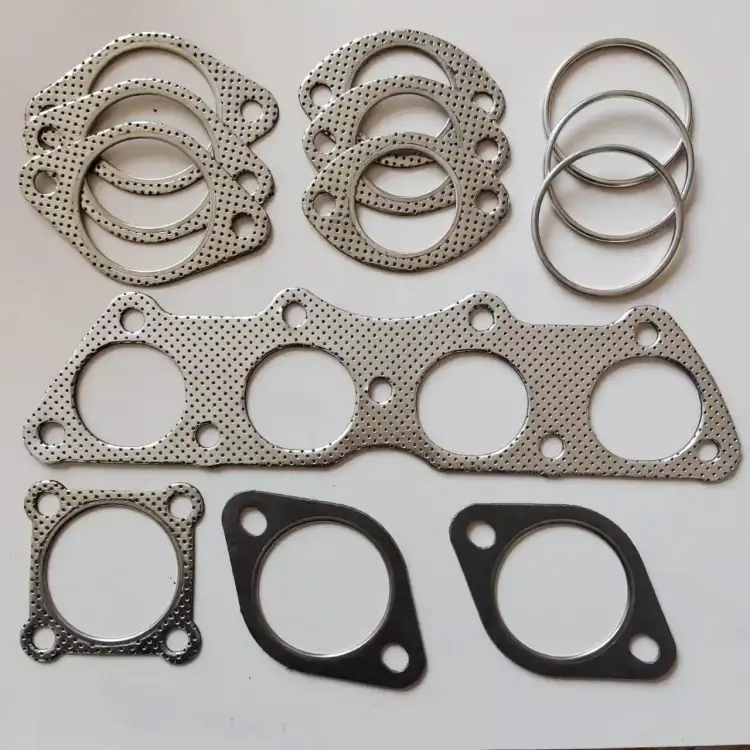
Premium exhaust gaskets manufactured from high-performance materials including multi-layer steel (MLS), graphite composite, stainless steel reinforced graphite, copper, and non-asbestos fiber. Engineered for exceptional heat resistance, thermal cycling stability, and reliable sealing in exhaust manifolds, turbochargers, EGR systems, and industrial engine applications. Available in custom die-cut sizes, thicknesses, and configurations for global OEM and aftermarket supply.
Recommended Products
Exhaust Gasket Types & Material Configurations
-
 Exhaust Gasket
Exhaust Manifold Gasket
-
Exhaust Gasket
Turbocharger Gasket
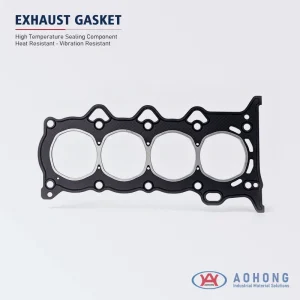
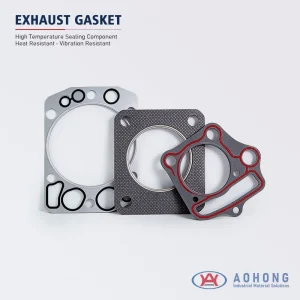
Exhaust Gasket Technical Specifications
Manufactured from high-performance materials engineered for extreme temperature resistance, thermal cycling stability, and reliable sealing in automotive, marine, and industrial engine exhaust systems.
📋 Product Parameters
| Available Materials | Multi-Layer Steel (MLS), Graphite Composite, SS Reinforced Graphite, Copper, Non-Asbestos Fiber |
| Metal Layer Options | SS304, SS316, SS321, Carbon Steel, Copper, Aluminum Coated Steel |
| Thickness | 0.2mm – 3.0mm (MLS: 0.5mm – 2.5mm; Graphite Composite: 1.0mm – 3.0mm) |
| Die-Cut Custom Sizes | Any diameter, bolt hole configuration, or irregular shape |
| Manufacturing Method | Die-Cutting, Laser Cutting, CNC Machining, Embossing |
| Packaging | Individually boxed or bulk in export cartons / wooden crates |
🔬 Performance Characteristics
| Temperature Resistance (MLS) | -60°C to +600°C (continuous) / up to +800°C (intermittent) |
| Temperature Resistance (Graphite Composite) | -200°C to +450°C (oxidizing) / up to +500°C (with SS reinforcement) |
| Temperature Resistance (Copper) | -50°C to +400°C (continuous) / up to +500°C (intermittent) |
| Thermal Cycling Stability | MLS: Excellent – designed for extreme thermal cycling |
| Pressure Resistance | Up to 30 bar (3.0 MPa) depending on gasket design |
| Applications | Exhaust manifolds, turbochargers, EGR systems, cylinder heads, industrial engines |
💡 Custom Exhaust Gasket Solutions
We provide customized exhaust gasket solutions including special dimensions, bolt hole patterns, material combinations, and embossed configurations. Send your engine specifications, exhaust system drawings, or technical requirements for professional evaluation and tailored recommendations. Our engineers will help you select the optimal material and design for maximum durability in high-temperature service.
Why Choose Our Exhaust Gaskets
Reliable high-temperature sealing solutions designed for automotive, marine, and industrial engine applications. We don't just manufacture — we engineer sealing solutions that meet the rigorous standards of global OEM and aftermarket buyers.
High Temperature Resistance
Our exhaust gaskets are engineered to withstand continuous temperatures up to +600°C and intermittent temperatures up to +800°C, maintaining reliable sealing in extreme engine exhaust conditions.
Thermal Cycling Stability
MLS and reinforced graphite gaskets are specifically designed to handle rapid temperature fluctuations and thermal cycling without losing sealing integrity or developing leaks.
Corrosion & Abrasion Resistant
Materials selected for resistance to exhaust gas corrosion, high-temperature oxidation, and mechanical stress, ensuring long service life in harsh engine environments.
Precision Die-Cutting & Embossing
Advanced CNC die-cutting, laser cutting, and embossing technology ensure accurate dimensions, clean edges, and consistent bolt hole alignment for easy installation.
Application-Specific Engineering
We analyze your engine type, exhaust temperature, pressure, and flange design to recommend the optimal material and gasket configuration for your specific application.
OEM & Global Export Supply
Flexible production capability for automotive, marine, and industrial engine manufacturers worldwide. Professional export packaging and documentation.
Exhaust Gasket Applications
Our exhaust gasket products are widely used in automotive, marine, and industrial engine applications across global markets. We provide tailored solutions for each specific operating condition and engine type.
Automotive Exhaust Systems
Exhaust manifold gaskets, downpipe gaskets, and catalytic converter seals for passenger vehicles, trucks, and commercial vehicles.
Marine Engine Exhaust
Exhaust manifold and turbocharger gaskets for marine diesel engines, outboard motors, and ship propulsion systems.
Industrial Generator Sets
Exhaust system gaskets for diesel and gas generator sets, standby power systems, and industrial engine applications.
Heavy Equipment & Agricultural
Exhaust gaskets for tractors, excavators, bulldozers, and other heavy machinery operating in demanding environments.
Turbocharger Systems
Turbocharger mounting gaskets, oil drain gaskets, and turbine housing seals requiring high-temperature resistance and durability.
EGR Systems
Exhaust Gas Recirculation gaskets for emissions control systems in automotive and industrial engines.
Motorcycle & Powersports
Exhaust header gaskets, manifold seals, and muffler gaskets for motorcycles, ATVs, and powersports vehicles.
OEM Engine Manufacturing
Custom exhaust gaskets supplied to automotive, marine, and industrial engine manufacturers as original equipment components.
Why Choose Hongwo Sealing Solutions
A trusted manufacturing and engineering partner serving global automotive, marine, and industrial buyers with high-performance exhaust gasket solutions. We combine direct factory pricing, technical expertise, and reliable export logistics.
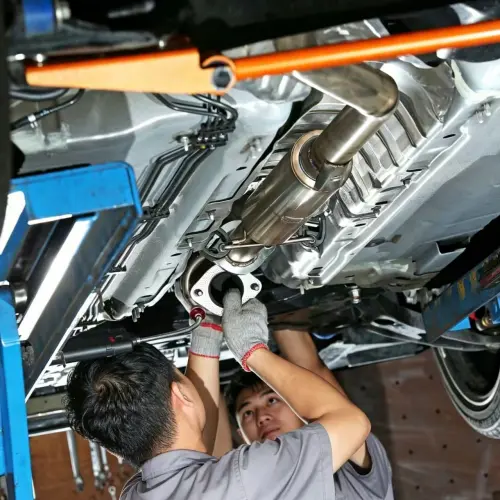
- ✓ Direct Factory Manufacturing — Own production capability ensures stable quality, competitive pricing, and reliable supply for exhaust gasket products.
- ✓ Multi-Material Expertise — We work with MLS, graphite composite, copper, and non-asbestos materials to match your specific temperature, pressure, and engine requirements.
- ✓ Application Engineering Support — Our technical team evaluates your engine type, exhaust temperature, and flange design to recommend the optimal material and gasket configuration.
- ✓ Advanced Die-Cutting & Embossing — CNC die-cutting, laser cutting, and embossing machines ensure precise dimensions and consistent quality for all custom gasket configurations.
- ✓ OEM Custom Solutions — Manufacture exhaust gaskets according to customer drawings, dimensions, and specific technical requirements for engine manufacturers and aftermarket suppliers.
- ✓ Strict Quality Inspection — Inspection of material thickness, tensile strength, dimensional accuracy, and surface finish on every batch.
- ✓ Global Export Experience — Professional export packaging, documentation, and international logistics support for customers in over 50 countries.
Quality Control & Manufacturing Standards
Every exhaust gasket product is manufactured and inspected according to strict ISO 9001 quality management procedures, ensuring consistent performance and reliability for global automotive and industrial buyers.
ISO 9001:2015
Certified Quality Management
IATF 16949
Automotive Quality Standard
Material Testing
Tensile, Hardness & Heat Resistance
Dimension Control
Thickness, ID/OD & Bolt Hole Precision
Export Packaging
Safe International Delivery
Frequently Asked Questions
Common questions from international buyers about exhaust gasket selection, customization, and global supply.
Get Your Exhaust Gasket Quote Today
Tell us your engine specifications and sealing requirements. Our engineers will provide a tailored exhaust gasket solution with competitive factory-direct pricing.
- Factory direct quotation
- MLS / Graphite / Copper options
- Custom die-cut dimensions
- OEM & aftermarket supply
- Worldwide export service
Request Your Quote
We'll get back to you within 3 hours.
🔒 Your information is secure. We never share your data with third parties.