
O-Rings — Materials, Sizes & Selection Guide
What / Why — O-rings provide a simple, cost-effective sealing solution across static and dynamic applications. Proper material selection, correct gland design and accurate sizing ensure long service life and reliable sealing performance. Common search terms: O-rings suppliers, O-rings types, O-rings pdf, Food grade O-rings.
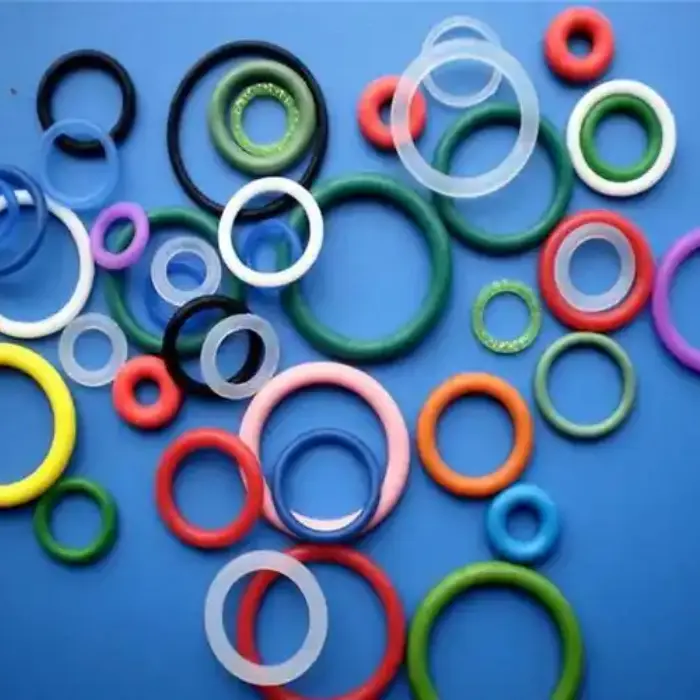
Executive Summary
O-rings are circular cross-section seals available in many elastomers and engineered plastics. This pillar covers major O-ring types (food grade, metal O-rings, NBR, FKM, EPDM, Silicone, HNBR, FFKM, PTFE, Fluorosilicone, medical/FDA, composite), selection guidance, standard size references (AS568 / ISO 3601), specifications and frequently asked questions for procurement and engineering.
What is an O-Ring?
An O-ring is a toroidal sealing element commonly used to prevent fluid or gas leakage. O-rings can function in static seals (face, flange) and dynamic applications (rod, piston). Their simplicity, broad material availability and standardized sizes (AS568/ISO) make them the default choice for many sealing tasks.
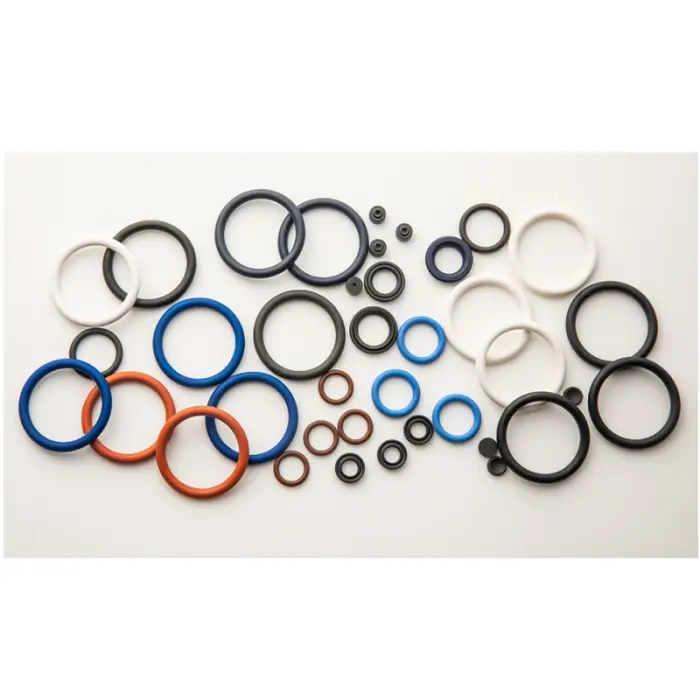
Types & Overview — Quick list with short intros and links
Food Grade O-Rings
Compounds formulated for food and beverage contact (FDA, EU 1935/2004 compatible) — commonly silicone, EPDM or PTFE-filled compounds for low extractables and hygienic service. Learn more →
Metal O-Rings
Metallic sealing rings (e.g., metal C-rings, spring-energized metal O-rings) provide high-temperature and high-pressure sealing where elastomers are unsuitable. Used in aerospace and high-temp process equipment. Learn more →
NBR (Nitrile / Buna-N) O-rings
Good general-purpose elastomer with excellent resistance to petroleum oils and fuels; typical temperature range -40°C to +120°C and wide use in hydraulics.
FKM (Viton®) O-rings
Fluoroelastomers excel at high temperature and chemical resistance (fuels, oils, many chemicals); typical range up to ~200°C depending on grade.
EPDM O-rings
Excellent for steam, hot water and polar solvents; poor resistance to hydrocarbons. Widely used in water, HVAC and automotive cooling systems.
Silicone (VMQ) O-rings
Outstanding low-temperature flexibility and biocompatibility for food & medical; limited resistance to hydrocarbons. Typical range -60°C to +200°C.
HNBR (Hydrogenated NBR) O-rings
Improved heat, ozone and wear resistance vs NBR; excellent for dynamic hydraulic sealing and higher temperature oil services.
FFKM (Perfluoroelastomer / Kalrez®) O-rings
Top-tier chemical and thermal resistance for aggressive chemistries and semiconductor fabs; premium cost but unmatched performance in extreme services.
PTFE (Teflon®) O-rings
PTFE or PTFE-encapsulated O-rings offer excellent chemical resistance and low friction; often used where elastomer compatibility fails.
Fluorosilicone (FVMQ) O-rings
Combines silicone low-temp properties with improved hydrocarbon resistance — chosen where silicone alone is insufficient.
Medical-grade / FDA-compliant O-rings
Compounds certified for medical and pharmaceutical contact (USP, FDA, ISO 10993) — materials include silicone, EPDM and specific FKM/FFKM grades.
Composite / Reinforced O-rings
Reinforced constructions (PTFE with elastomer core, metal-energized seals) for extrusion resistance, high-pressure or unusual gland geometries.
Selection Guide — How to choose the right O-ring
- Fluid compatibility: Check chemical resistance charts and published compound compatibility; choose PTFE, FFKM or specific FKM grades for aggressive chemistries.
- Temperature: Match operating temperature to material limits — silicone and FFKM for extreme cold/heat, NBR for ambient and petroleum oils.
- Application type: Static sealing tolerates higher durometers; dynamic rod/piston applications benefit from abrasion-resistant compounds (HNBR, FKM).
- Hardness (durometer): Typical ranges 40–90 Shore A — softer for low-pressure static seals, harder for extrusion resistance and dynamic service.
- Size standardization: Use AS568 (inch) or ISO 3601 (metric) for common sizes; for non-standard glands provide ID, cross-section, gland depth and material requirement.
Quick tip: When requesting a quote include gland dimensions, O-ring ID and cross-section, pressure, temperature, fluid and expected dynamic motion (rod/piston rpm or speed).
Typical Material Comparison & Size Reference
Reference table for common elastomer choices and typical application notes — confirm exact limits with supplier datasheets.
| Material | Temp Range (°C) | Chemical Strengths | Typical Durometer | Common Applications |
|---|---|---|---|---|
| NBR (Buna-N) | -40 → +120 | Good with petroleum oils, fuels | 70 ± 5 Shore A | Hydraulics, fuel systems |
| FKM (Viton®) | -20 → +200 | Excellent chemical & heat resistance | 75 ± 5 Shore A | Fuel, high-temp seals |
| EPDM | -50 → +150 | Steam, hot water, polar solvents | 70 ± 5 Shore A | HVAC, water, steam |
| Silicone (VMQ) | -60 → +200 | Food/medical compatibility, low-temp | 60 ± 5 Shore A | Food, pharma, medical |
| FFKM (Perfluoroelastomer) | -20 → +300 | Outstanding chemical & thermal | 70–90 Shore A | Semiconductor, aggressive chemicals |
Standard Sizes & Packaging
| Standard | Typical Sizes | Pack |
|---|---|---|
| AS568 (inch) | ID & cross-section common sizes (e.g., 214, 214A series) | Bulk packs / retail blister |
| ISO 3601 (metric) | Metric IDs and CS ranges | Boxes / bulk |
| Custom | Machined/ molded to drawing | Per order |
-
 O-rings
Food Grade O-Rings
-
O-rings
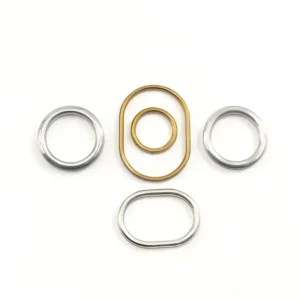
Metal O Rings
Datasheets & Compatibility Charts
Installation, Gland Design & Best Practices
- Inspect gland & mating surfaces: ensure finish and edge radii avoid O-ring nicking and extrusion.
- Lubrication: use compatible assembly lubricant to ease installation and reduce sliding friction during start-up.
- Compression: design to recommended squeeze (typically 10–30% cross-section): consult material datasheet and standard guidelines.
- Back-up rings: use PTFE or harder back-up rings where extrusion or gap risk exists (high pressure or large gaps).
- Dynamic service: select low friction compounds and optimized hardness; consider surface finish and reciprocating speed limits.
Application Industries & Case Examples
- Food & beverage processing — FDA/Food-grade O-rings
- Automotive — engine and transmission seals
- Oil & gas — downhole and hydraulic systems
- Medical & pharma — medical-grade & sterilizable seals
- Semiconductor — FFKM seals for aggressive chemistries
Standards & Common HS Codes
Standards to reference when specifying O-rings:- AS568 / ISO 3601 — Standard O-ring dimensions and tolerances for inch and metric sizes.
- FDA / USP / ISO 10993 — For food, beverage and medical-grade compounds and biocompatibility.
- ASTM standards for elastomer testing (compression set, tensile, hardness).
FAQ — Procurement & Application Questions
- Q: What cross-section and ID do I need to replace an existing O-ring?
- A: Measure inside diameter (ID) and cross-section (CS) or remove and use size chart (AS568/ISO). If in doubt, provide gland drawings or the part number to the supplier.
- Q: How does durometer affect performance?
- A: Harder compounds resist extrusion and high temperatures better; softer compounds provide better sealing at low compression and in static applications. Choose based on pressure, gap, and dynamic/static use.
- Q: Can I use PTFE O-rings in dynamic seals?
- A: Pure PTFE has low elasticity and is less suitable for dynamic seals unless engineered as PTFE-encapsulated with an elastomer core or combined with spring/energizer.
- Q: What causes O-ring swelling or degradation?
- A: Chemical incompatibility, high temperatures, ozone/UV exposure or unsuitable lubricants can cause swelling, hardening or softening. Use compatibility charts and test where necessary.
- Q: Do I need material certificates for food/medical applications?
- A: Yes — request FDA compliance statements, USP/ISO certifications or material test reports for traceability in regulated industries.
More FAQs
How do I prevent extrusion in high-pressure applications?
Use back-up rings, higher durometer materials or composite O-rings (PTFE-encapsulated with elastomeric core) and minimize gland clearance per design guidelines.
Are there standard packaging options?
Yes — bulk boxes, blister packs, custom-labeled kits and sterilized packaging for medical/food applications are common.
How to request a fast quote?
Provide O-ring ID & cross-section, material preference or compatibility needs, operating temperature & pressure, and expected service type (static/dynamic).