
FRP Gratings — Durable Fiberglass Grating Solutions for Industrial Flooring
What / Why — FRP gratings, also called fiberglass grating or GRP grating, are corrosion-resistant structural panels used for walkways, platforms, trench covers and drainage systems. They help reduce slip risk, cut maintenance cost and perform well in harsh chemical environments.
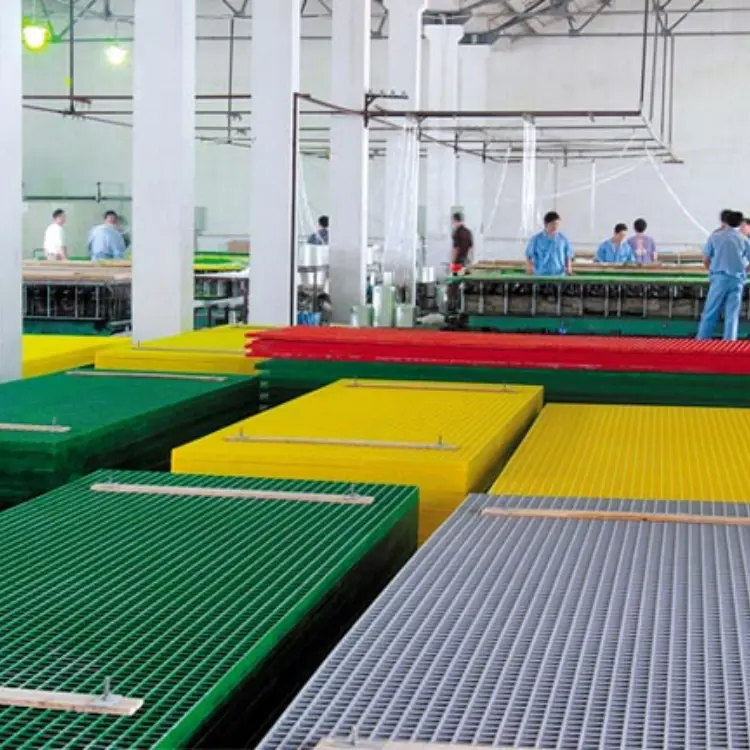
Executive Summary
FRP gratings are engineered composites designed to replace steel, aluminum or timber in corrosion-prone and slip-sensitive environments. For B2B buyers, the value is clear: lower lifecycle cost, stable performance in wet or chemical service, and faster installation than many traditional flooring systems.
This page covers molded FRP grating, pultruded FRP grating, covered fiberglass grating and accessories, plus practical selection criteria for procurement, engineering and maintenance teams.
What Is FRP Grating?
FRP grating is a composite panel made from fiberglass reinforcement and thermoset resin. It is used where conventional metal flooring may corrode, spark, slip or require frequent repainting. Typical uses include industrial platforms, offshore decks, cooling towers, wastewater plants, food processing lines and chemical facilities.
Common search terms also include GRP grating, fiberglass grating, FRP flooring and composite grating. These terms are often used interchangeably in international sourcing, although the exact product construction may vary by market.
FRP Gratings Classification
Molded FRP Grating
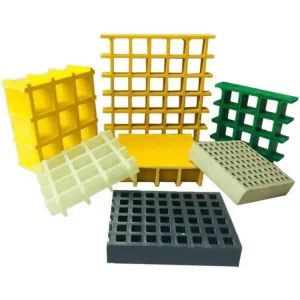
Molded FRP grating is produced by weaving fiberglass roving in a square lattice and saturating it with resin. It offers multidirectional strength, excellent corrosion resistance and good load distribution for walkways, platforms and trench covers. This type is widely selected for chemical plants, wastewater treatment, marine decks and areas exposed to splash, humidity or aggressive media. It is a practical choice when the buyer needs reliable anti-slip performance and easy field cutting. Learn more →
Pultruded FRP Grating
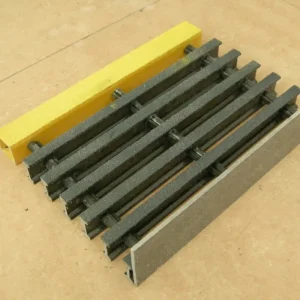
Pultruded FRP grating uses pultruded load-bearing bars with cross rods, giving it higher span capability and more directional stiffness than many molded options. It is commonly used on industrial platforms, heavy-duty walkways, stair treads and machine access areas where higher structural performance is required. Buyers often choose it for applications needing stronger load tables, longer support spacing and stable geometry. It is also searched as GRP grating panel or fiberglass grating panel in technical procurement. Learn more →
Covered Fiberglass Grating
Covered fiberglass grating combines a grating base with a solid top cover, creating a surface that improves pedestrian comfort, reduces debris penetration and provides a more sealed appearance. It is often used in food-grade areas, inspection platforms, public-access zones and applications where small tools or liquids must not fall through the openings. It is useful when a buyer needs both structural support and a more closed surface finish. Learn more →
Accessories
Accessories complete the installation system and directly affect safety and service life. Typical items include clips, fasteners, hold-down hardware, stair nosings, edge trims, support bars and cut-end seal kits. For industrial buyers, accessory selection matters because poor fastening or edge treatment can reduce performance even when the grating panel itself is correctly specified. A complete package simplifies sourcing, reduces installation error and improves project consistency. Learn more →
Selection Guide — How to Choose the Right FRP Grating
- Define the service environment — chemical exposure, water, oil, UV, salt spray or washdown conditions.
- Confirm loading requirements — pedestrian traffic, trolley loads, equipment access or point loads.
- Check span and support spacing — molded and pultruded grating behave differently under load.
- Select the right surface — concave, grit-top or covered surface depending on slip resistance and cleaning needs.
- Review fire, electrical and corrosion demands — especially for marine, power and chemical projects.
- Choose a compatible resin system — orthophthalic, isophthalic or vinyl ester depending on media and temperature.
Tip: For aggressive chemical service, vinyl ester is often preferred; for general industrial corrosion resistance, isophthalic resin is commonly used; for lower-cost applications, orthophthalic may be sufficient depending on the service condition.
Quick Flowchart — Fast Matching for B2B Buyers
Step 1
Identify the location: walkway, trench cover, platform, stair tread or drainage channel.
Step 2
Confirm whether chemical resistance, anti-slip performance or high load capacity is the priority.
Step 3
Match the structure: molded FRP grating, pultruded FRP grating or covered fiberglass grating.
-
 FRP Gratings
FRP Stair Tread
-
FRP Gratings
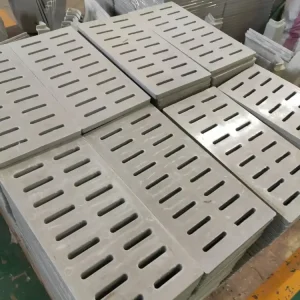
FRP Trench Cover
-
FRP Gratings
Molded FRP Grating
-
FRP Gratings
Pultruded FRP Grating
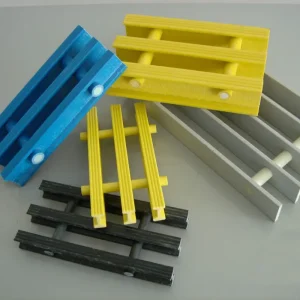
Molded FRP Grating
Molded FRP grating is one of the most widely used fiberglass grating products in corrosive industrial environments. Its square-grid structure distributes loads in multiple directions, making it suitable for areas where traffic direction changes or where support conditions are not perfectly uniform. Procurement teams often specify it for chemical plant platforms, offshore access decks, cooling towers, wastewater treatment plants and marine installations. It is also popular because it can be cut on site with ordinary tools, which helps reduce fabrication time. For long-tail searches, buyers may also look for molded fiberglass grating, GRP molded grating or FRP walkway grating.
Request molded FRP grating quote →Pultruded FRP Grating
Pultruded FRP grating uses pultruded bearing bars that improve stiffness and span performance. It is typically selected where the project requires greater structural efficiency, heavier service loads or wider support spacing. Common applications include industrial maintenance platforms, stair treads, refinery access ways and utility corridors. Buyers often compare pultruded FRP grating with molded fiberglass grating when they need a more rigid layout or a more directional load path. Long-tail keywords include pultruded fiberglass grating, FRP grating panel and heavy-duty GRP grating.
Request pultruded FRP grating quote →Covered Fiberglass Grating
Covered fiberglass grating is used when a more continuous walking surface is needed without losing the corrosion-resistant advantages of FRP construction. The cover layer helps prevent small objects from dropping through the openings and can make the surface easier to clean in controlled environments. This makes it attractive for food processing, public-access utility zones, inspection platforms and areas with specific hygiene or safety requirements. Depending on the project, buyers may also specify an anti-slip top finish or a sealed edge treatment for better durability.
Request covered fiberglass grating quote →Accessories
Accessories complete the system and should be selected together with the grating panel rather than treated as an afterthought. Typical FRP grating accessories include clip sets, hold-down hardware, mounting bolts, edge trims, stair nosings, panel supports and cut-edge seal kits. For international buyers, bundling accessories with the grating order often reduces sourcing friction and improves installation consistency across multiple project sites. This is especially valuable for EPC contractors, maintenance teams and distributors managing repeat orders.
FRP Material Comparison Table
| Property | FRP Grating | Steel Grating | Aluminum Grating | Wood / Timber |
|---|---|---|---|---|
| Temperature resistance | Good to very good, depending on resin | Excellent | Good | Limited |
| Pressure / load performance | Good for engineered spans and pedestrian or light equipment loads | Excellent | Moderate | Moderate |
| Chemical resistance | Excellent in corrosive service | Poor without coating | Moderate | Poor in wet service |
| Slip resistance | Excellent with grit-top / concave surfaces | Moderate | Moderate | Variable |
| Common applications | Chemical plants, wastewater, marine, platforms, trenches | Industrial floors, access platforms | Light-duty access structures | Temporary or low-duty structures |
| Main advantages | Corrosion resistance, low maintenance, electrical insulation | High strength, familiar supply chain | Light weight, decent corrosion resistance | Low initial cost |
| Main drawbacks | Higher unit price than timber, needs resin selection | Corrosion and repainting cost | Lower stiffness than steel | Moisture damage, short life |
Why Choose Us
Direct Manufacturer
We are a physical manufacturer, which means stable supply, clearer technical control and faster response for custom FRP grating projects. Direct manufacturing also helps reduce communication loss between specification, production and packing.
Production Capacity
Our production setup supports repeat B2B orders, project-based quantities and mixed accessory shipments. This is important for distributors, EPC contractors and industrial buyers that need consistency across multiple sites.
Cost Control
By managing resin selection, molding/pultrusion planning and package optimization, we help buyers balance performance and budget. This improves project economics without sacrificing the functional requirements of the application.
Industry Standards & Common HS Code References
| Topic | Common Reference | Buyer Note |
|---|---|---|
| Standards / specs | Project-specific load tables, resin specifications, slip resistance requirements, and fire-performance requirements | Always confirm the target market's code, testing method and acceptance criteria before order release |
| HS code | Typically classified under 3925.90 or 3926.90 depending on construction and destination market | Final customs classification depends on the exact product structure and local customs practice; confirm with your broker |
Installation & Maintenance Recommendations
- Support alignment: Ensure the support structure is level and designed for the correct span.
- Cutting: Use diamond or carbide tools suitable for fiberglass composite materials.
- Fixing: Use the correct clip sets and corrosion-resistant fasteners for long service life.
- Edge sealing: Seal cut edges where specified, especially in aggressive chemical environments.
- Inspection: Check clips, load-bearing points and surface wear during routine maintenance.
FAQ
What is the difference between molded FRP grating and pultruded FRP grating?
Molded FRP grating is typically preferred for multidirectional strength and corrosion-resistant general service, while pultruded FRP grating is chosen when higher span performance and stiffer load-bearing behavior are required.
Is FRP grating suitable for chemical plants?
Yes. FRP grating is commonly used in chemical plants because it resists corrosion far better than unprotected steel in many aggressive environments.
Can FRP grating be cut on site?
Yes. Most fiberglass grating can be cut on site with appropriate tools, which helps speed up installation and reduce fabrication complexity.
What information is needed for a quote?
Provide grating type, panel size, thickness or load requirement, surface finish, resin preference, quantity and destination port if shipping is required.
Do you supply FRP grating accessories together with panels?
Yes. Clip sets, fasteners, edge trims, stair nosings and seal kits can be supplied together to simplify sourcing and installation.
Which industries use fiberglass grating most often?
Chemical processing, wastewater treatment, marine, offshore, power utilities, food processing and general industrial platforms are the most common uses.
Need FRP grating for an industrial project?
Send your load, span and service conditions, and our technical team will help match the right fiberglass grating system.