
ASME B16.20 Spiral Wound Gasket for High-Pressure Flange Sealing in Critical Industrial Service
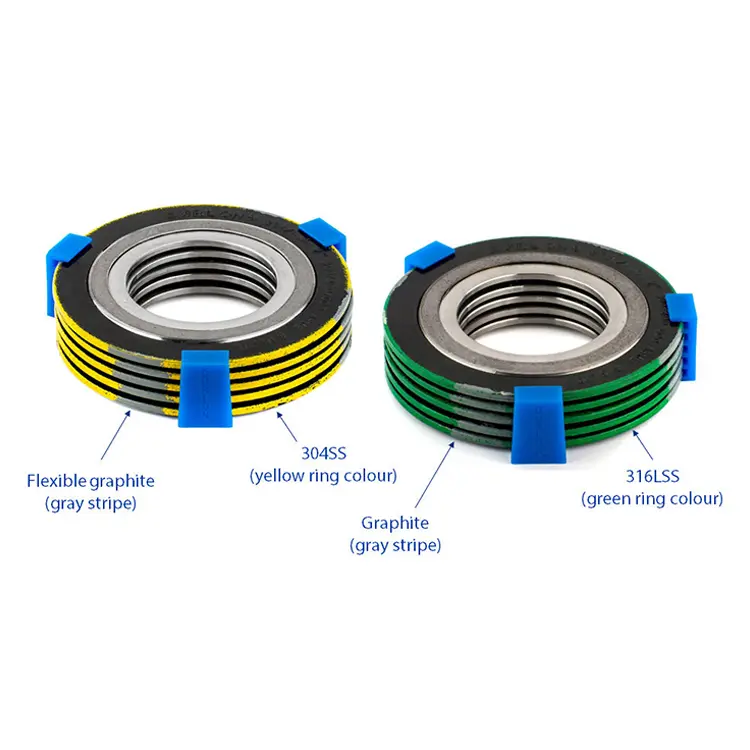
Precision-engineered spiral wound gaskets manufactured to ASME B16.20, API 601, and EN 1514-1 standards. Constructed from alternating metal winding strips (SS304, SS316, SS321, Inconel, Monel, Hastelloy) with flexible graphite, PTFE, or mica filler materials. Available in basic type, with inner ring, outer ring, or both inner and outer rings for maximum sealing performance in high-pressure, high-temperature, and corrosive service. Ideal for petrochemical, power generation, refining, and offshore applications worldwide.
Recommended Products
Spiral Wound Gasket Types & Configurations
-
 Spiral Wound Gasket
Spiral Wound Gasket With Inner Ring
-
 Spiral Wound Gasket
Spiral Wound Gasket Without Inner Ring
Spiral Wound Gasket Technical Specifications
Manufactured to ASME B16.20, API 601, and EN 1514-1 standards with precision winding technology. Each gasket combines alternating metal winding strips with high-performance filler materials to deliver exceptional sealing integrity in high-pressure, high-temperature, and corrosive service.
📋 Product Parameters
| Construction Type | Basic Type (Style CG) / with Inner Ring (Style CGI) / with Outer Ring (Style CG) / with Inner & Outer Ring (Style CGI) |
| Metal Winding Strip | SS304, SS316, SS321, SS347, Inconel 600/625, Monel 400, Hastelloy C276, Titanium, Carbon Steel |
| Filler Material | Flexible Graphite, PTFE, Mica, Ceramic Fiber (asbestos upon request) |
| Standard Sizes | ASME B16.5 Flanges: 1/2" – 24" (DN15 – DN600) |
| Pressure Class | 150# – 2500# (ASME B16.5) / PN10 – PN160 (EN 1514) |
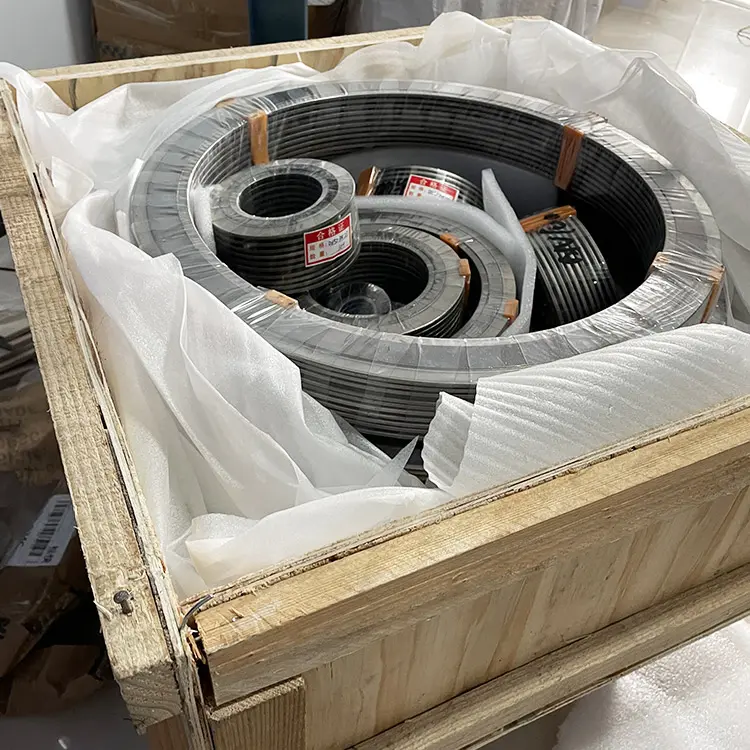
| Packaging | Individually boxed or bulk in wooden crates for export |
🔬 Performance Characteristics
| Temperature Resistance | Graphite Filler: -200°C to +450°C (oxidizing) PTFE Filler: -200°C to +260°C Mica Filler: up to +800°C (dry) |
| Pressure Resistance | Vacuum to Class 2500# (approx. 430 bar / 43 MPa depending on size) |
| Leak Tightness | ≤1×10⁻⁴ mbar·L/s (Helium Mass Spectrometer Test) |
| pH Range (Graphite Filler) | 0 – 14 (except strong oxidizing agents) |
| Density (Graphite Filler) | 1.0 – 1.2 g/cm³ |
| Fire-Safe | Graphite filler grades are API 607 / API 6FA fire-safe certified |
💡 Custom Spiral Wound Gasket Solutions
We provide customized spiral wound gaskets to meet your specific requirements including non-standard dimensions, special metal/filler combinations, high-pressure configurations, and custom ring materials. Send your flange specifications, pressure/temperature conditions, or technical drawings for professional evaluation and tailored recommendations.
Why Choose Our Spiral Wound Gaskets
Reliable high-performance sealing solutions designed for critical flange connections in demanding industrial applications. We don't just manufacture — we engineer sealing solutions that meet the rigorous standards of global industrial buyers.
ASME B16.20 / API 601 Certified
All our spiral wound gaskets are manufactured to ASME B16.20 and API 601 standards, ensuring consistent dimensions, quality, and interchangeability with standard ASME B16.5 flanges.
Fire-Safe & High Pressure Rated
Spiral wound gaskets with graphite filler are fire-safe certified and maintain sealing integrity in high-pressure applications up to Class 2500#, making them ideal for critical service.
Multiple Metal & Filler Options
Choose from stainless steel, Inconel, Monel, Hastelloy, titanium, and carbon steel winding strips with graphite, PTFE, or mica fillers to match your specific chemical and temperature requirements.
Precision Winding Technology
Advanced CNC winding machines ensure uniform winding density, consistent compression characteristics, and reliable sealing performance in every gasket.
Application-Specific Engineering
We analyze your flange pressure, temperature, and media to recommend the optimal metal, filler, and construction type (basic, IR, OR, or IR+OR) for maximum sealing life.
OEM & Global Export Supply
Flexible production capability for distributors, flange manufacturers, and industrial maintenance projects worldwide. Professional export packaging and documentation.
Spiral Wound Gasket Applications
Our spiral wound gaskets are widely used in high-pressure, high-temperature, and corrosive flange sealing across global industrial sectors. We provide tailored solutions for each specific operating condition.
Oil & Gas / Petrochemical
Wellhead equipment, pipeline flanges, heat exchanger gaskets, and reactor sealing in refineries and petrochemical processing facilities.
Power Generation
Steam turbine flanges, boiler feed water connections, and high-pressure steam line gaskets in thermal, nuclear, and combined-cycle power plants.
Chemical Processing
Reactor flange gaskets, corrosive chemical piping, and high-temperature process connections in chemical plants.
Offshore & Marine
Subsea pipeline flanges, riser connections, and high-pressure equipment sealing on offshore platforms and FPSO vessels.
Valve Bonnet & Body Sealing
Bonnet gaskets and body seals for high-pressure gate, globe, and control valves in critical industrial service.
Pipeline & Piping Systems
High-pressure and high-temperature flange gaskets for steam distribution, hydrocarbon transfer, and process piping in industrial plants.
Heat Exchanger & Pressure Vessel
Gaskets for shell-and-tube heat exchangers, pressure vessel connections, and high-temperature process equipment.
OEM Equipment Manufacturing
Custom spiral wound gaskets supplied to valve, pump, heat exchanger, and pressure vessel manufacturers as original components.
Why Choose Hongwo Sealing Solutions
A trusted manufacturing and engineering partner serving global industrial buyers with high-performance spiral wound gasket solutions. We combine direct factory pricing, technical expertise, and reliable export logistics.
- ✓ Direct Factory Manufacturing — Own production capability ensures stable quality, competitive pricing, and reliable supply for spiral wound gasket products.
- ✓ ASME/API Standards Compliance — Manufactured to ASME B16.20, API 601, and EN 1514-1 standards with full traceability and material certification.
- ✓ Application Engineering Support — Our technical team evaluates your flange pressure, temperature, and media to recommend the optimal metal/filler combination and gasket type.
- ✓ OEM Custom Solutions — Manufacture gaskets according to customer drawings, dimensions, and specific technical requirements for valves, heat exchangers, and pressure vessels.
- ✓ Strict Quality Inspection — Inspection of winding density, gasket dimensions, filler material, compression characteristics, and surface quality on every batch.
- ✓ Global Export Experience — Professional export packaging, documentation, and international logistics support for customers in over 50 countries.
Quality Control & Manufacturing Standards
Every spiral wound gasket product is manufactured and inspected according to strict ISO 9001 quality management procedures and ASME/API standards, ensuring consistent performance and reliability for global industrial buyers.
ISO 9001:2015
Certified Quality Management
ASME B16.20
Dimensional Compliance
API 607 / API 6FA
Fire-Safe Certified
Material Testing
Metal & Filler Verification
Export Packaging
Safe International Delivery
Frequently Asked Questions
Common questions from international buyers about spiral wound gasket selection, customization, and global supply.
Get Your Spiral Wound Gasket Quote Today
Tell us your flange specifications and sealing requirements. Our engineers will provide a tailored spiral wound gasket solution with competitive factory-direct pricing.
- Factory direct quotation
- ASME/API standards compliant
- Custom metal & filler options
- OEM manufacturing support
- Worldwide export service
Request Your Quote
We'll get back to you within 3 hours.
🔒 Your information is secure. We never share your data with third parties.