
Single Mechanical Seals — Compact, Cost-Effective Seal Solutions
What / Why — Single mechanical seals provide a single pair of lapped faces for shaft sealing. They offer a compact and economical solution for a wide range of pumps and rotating equipment where one containment interface is sufficient. Useful search phrases: single mechanical seal, single seal types, single seal pdf, pump single mechanical seal.
Executive Summary
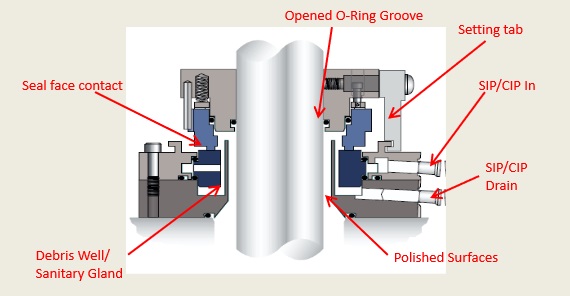
Single mechanical seals consist of one rotating face and one stationary face with secondary seals and a loading element (spring or bellows). They suit clean to moderately challenging services and are available in pusher, non-pusher, cartridge and specialty variants. This page provides concise selection guidance, comparison tables for procurement, installation best practices and an FAQ for engineers and buyers.
What is a Single Mechanical Seal?
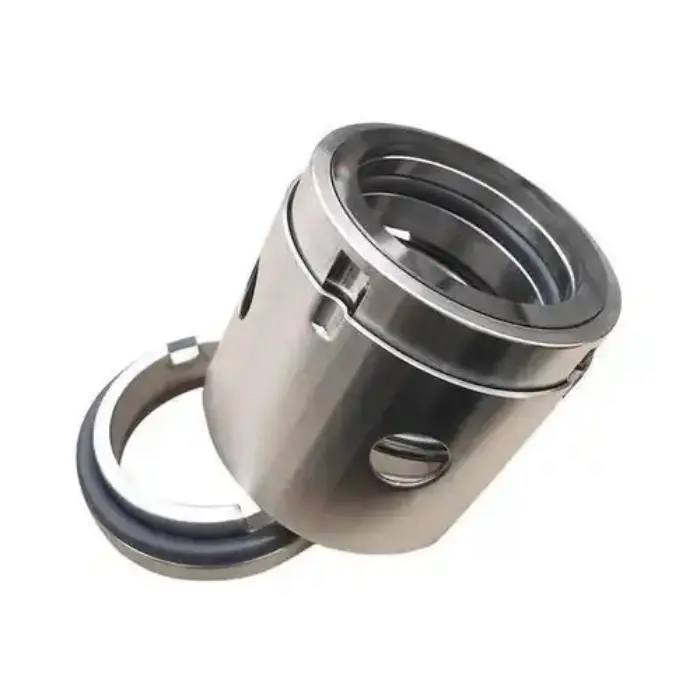
A single mechanical seal prevents process fluid leakage at a rotating shaft by using a precisely lapped rotating ring against a stationary ring. Secondary seals (O-rings) provide static sealing, while springs or bellows supply the necessary face load. Proper material pairing and correct installation are essential for reliable performance.
Types & Classification — concise overviews
Pusher Single Seals
Pusher seals use a pusher element and spring pack to transmit axial load to the faces, allowing compensation for wear and limited axial movement. Widely used in standard centrifugal pumps.
Non-Pusher Single Seals (Bellows / Elastomer)
Non-pusher designs (metal bellows or elastomer-loaded seats) remove rotating dynamic O-rings and improve compatibility with aggressive fluids and solids. Preferred for corrosive or fouling services.
Balanced & Unbalanced Single Seals
Balanced singles reduce face load hydraulically or geometrically for better performance at elevated pressure; unbalanced are simpler and suitable for lower-pressure services. Choose per operating pressure and thermal considerations.
Cartridge Single Seals
Pre-assembled cartridge single seals ensure correct preload and alignment for fast, repeatable installation—recommended where maintenance speed and reliability matter.
PTFE-Faced & Specialty Singles
PTFE-faced singles provide low running torque and excellent chemical resistance for aggressive or ultra-pure fluids; specialty single seals address sanitary, high-temp or low-leakage needs.
Split & Retrofit Options
Split single seals enable in-situ installation on large shafts or constrained pump designs, reducing downtime for maintenance and retrofits.
Selection Guide — How to choose the right single seal
- Process media: Provide fluid chemistry, abrasives and solids—select face and secondary materials accordingly (carbon, ceramic, SiC, TC, PTFE, elastomer types).
- Pressure & temperature: For higher pressures select balanced designs; for high temperature consider metal bellows and high-temperature elastomers or PTFE options.
- Shaft & speed: Supply shaft diameter, sleeve condition, surface finish and rotational speed—these determine face pairing and seal type suitability.
- Motion type: For reciprocating or oscillating motion prefer seals tolerant of axial movement (pusher or specialized geometries).
- Maintenance strategy: Choose between cartridge (fast swap) or component kits based on spare strategy and workshop capability.
Quick tip: For fast and accurate quotes include pump make/model, shaft diameter & sleeve condition, media/MSDS, temperature & pressure ranges, rpm and any required certifications (API, sanitary, ATEX).
Typical Specifications & Model Comparison
Reference values — verify with manufacturer datasheets before procurement.
| Type | Typical Applications | Temp Range (°C) | Pressure Suitability | Common Face Materials | Key Advantages |
|---|---|---|---|---|---|
| Pusher single | General centrifugal pumps, mixers | -40 → +200 (material dependent) | Low to medium | Carbon / Ceramic / SiC | Easy face replacement, wear compensation |
| Non-pusher (metal bellows) | Corrosive or elastomer-sensitive services | -50 → +250 | Low to medium | PTFE-lined / Metal faces | Elastomer-free dynamic interface |
| Balanced single | Medium pressure pumps | -40 → +220 | Medium | SiC, TC, Ceramic | Lower face load, reduced heat |
| Cartridge single | Maintenance-critical pumps | Varies by materials | Per cartridge rating | Vendor specified | Fast, repeatable exchange |
| PTFE-faced single | Chemical/clean services, low torque | -60 → +200 | Low to medium | PTFE face + elastomer/spring | Chemical inertness, low friction |
Packaging & Spares
| Item | Typical Offerings | Packaging |
|---|---|---|
| Complete single seal | Rotating & stationary faces, O-rings, spring/bellows | Boxed with instructions |
| Face & kit | Spare faces, secondary seals, springs | Kitted per model |
| Cartridge unit | Pre-assembled cartridge | Boxed, installation checklist |
-
 Single mechanical seal
Single Mechanical Seal Parts
Datasheets & Installation Guides
Installation & Best Practices
- Inspect shaft & sleeve: verify concentricity, finish and absence of grooves or pitting; replace worn sleeves when necessary.
- Correct orientation: install rotating and stationary rings per manufacturer instructions; ensure secondary seals are lubricated and undamaged.
- Tightening & torque: tighten gland bolts evenly; avoid over-compressing O-rings or displacing preloaded cartridge components.
- Run-in procedure: perform controlled start-up with low speed/pressure initially; monitor leakage and face temperature during first hours.
- Spare policy: keep face kits and secondary seals on site for critical pumps to reduce MTTR.
Application Industries & Case Study
- Water & wastewater — standard pump services
- Chemical processing — non-hazardous chemical services
- Food & beverage — sanitary single seals with FDA elastomers
- HVAC & utilities — condenser and booster pumps
- General industrial — mixers, agitators, light compressors
Standards & HS Code Guidance
- ISO 21049 — Guidance on pump shaft sealing systems and selection.
- API 682 — Reference for seal support systems; useful when defining upgrade paths to dual seals and piping plans.
- Material certificates — Request EN/ASTM numbers and mill test reports for critical materials.
FAQ — Common Questions
- Q: Why does my single seal overheat?
- A: Causes include dry running, incorrect face pairing, insufficient lubrication or flush, unbalanced high pressure, or poor shaft finish. Check face materials, run-in and cooling/flush provisions.
- Q: Can I retrofit to a cartridge single?
- A: Often yes — verify axial space and gland geometry; cartridges simplify installation but require adequate clearance and correct sleeve condition.
- Q: How often should single seals be inspected?
- A: Inspection frequency depends on service severity; start with daily checks during commissioning, then define intervals (weekly/monthly) based on leakage trends and process criticality.
- Q: What spares should be stocked?
- A: Face sets, O-rings, springs/bellows and at least one spare cartridge or face kit for critical pumps.