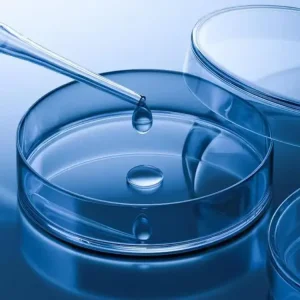
Quartz Labware — High-Purity Fused Silica for Advanced Laboratories

Crucibles · Beakers · Tubes · Dishes · Custom Fabrications. Quartz labware offers exceptional thermal shock resistance (ΔT up to 1100°C), UV to IR transparency, and near-inert chemical behavior. Essential for semiconductor R&D, high-temperature materials processing, analytical chemistry, and cleanroom environments.

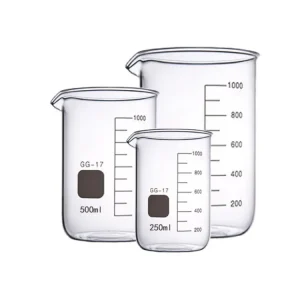
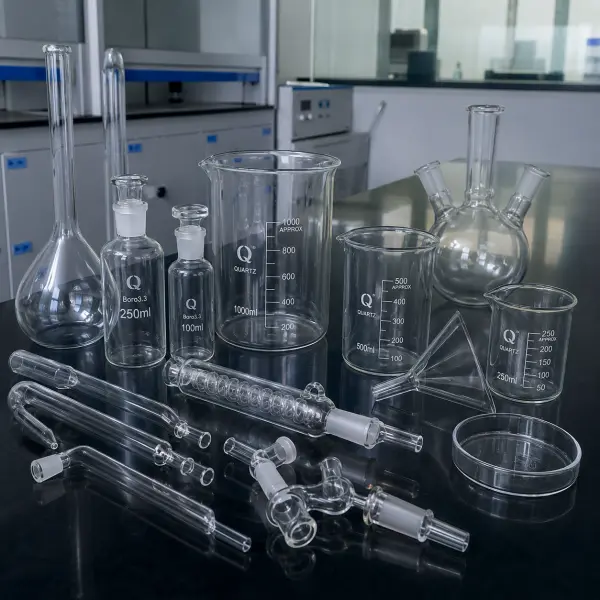
Quartz laboratory glassware set - crucibles, beakers and tubes
Assorted quartz labware: crucibles, beakers, and custom shapes

Executive Summary

Quartz labware refers to scientific glassware manufactured from fused silica (amorphous SiO₂). Unlike conventional borosilicate glass, quartz withstands extreme temperatures (up to 1150°C continuous), rapid thermal cycling, and aggressive chemicals (except HF). Its high ultraviolet transparency makes it indispensable for photochemical reactions and UV spectroscopy. Common items include crucibles for ashing, beakers for high-purity digestions, quartz tubes for furnaces, and custom evaporating dishes. This guide covers the most frequently procured quartz labware types, their specifications, and B2B sourcing considerations for research institutions, QC labs, and semiconductor fabs.

What Is Quartz Labware?

Quartz labware is fabricated from fused silica, a glass form of silicon dioxide with extremely low coefficient of thermal expansion (CTE 0.54 × 10⁻⁶/K). Key properties include:

  • High service temperature: up to 1150°C (long term), 1250°C short term
  • Excellent thermal shock resistance: can be moved directly from 1100°C to room water without cracking
  • Optical transmission: >90% from 200 nm (deep UV) to 2500 nm (mid-IR)
  • Chemical inertness: resistant to most acids (except HF and hot H₃PO₄) and halogens
  • Low extractables: no alkali leaching, ideal for ultra-trace analysis

Product Alias: fused silica labware, quartz glassware, high-purity quartz crucible, UV quartz beaker, silica laboratory vessels, quartz reaction tube.

Types of Quartz Labware — Common Configurations

🔹 Quartz Crucibles

High-purity fused silica crucibles for ashing, fusion, and high-temperature material synthesis. Available with smooth or frosted surfaces, with or without lids. Common capacities: 5ml, 10ml, 15ml, 30ml, 50ml, 100ml up to 500ml. Used in gravimetric analysis, metal melting, and thermal gravimetric analysis (TGA).

🔹 Quartz Beakers & Flasks

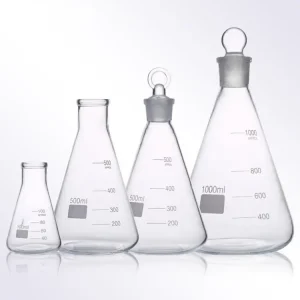
Transparent quartz beakers (low form / tall form) and Erlenmeyer flasks for extreme acid digestions, UV photochemical reactions, and high-purity sample preparation. Sizes from 25ml to 2000ml. Excellent for HF‑free digestion of geological and ceramic samples.

🔹 Quartz Tubes & Test Tubes

Open-ended quartz tubes (round or square) and closed-bottom test tubes for furnace work, chemical vapor deposition, and sample containment. OD ranges 8mm to 80mm, lengths from 100mm to 1500mm. Test tubes feature round bottoms or flat bottoms, with or without rims.

🔹 Quartz Dishes & Evaporating Dishes

Shallow quartz dishes for evaporation, crystallization, and residue analysis. Flat bottom with smooth or ground rim. Diameters from 40mm to 200mm. Ideal for gravimetric determination of solids in liquids.

🔹 Quartz Cuvettes & Cells

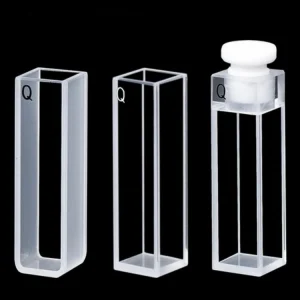
UV-grade quartz cuvettes for spectrophotometry (10mm path length, 1–100mm path). Matched pairs for precise absorbance measurements. Also available with screw caps for anaerobic studies.

🔹 Custom Quartz Fabrications

We manufacture custom items: combustion boats, bell jars, immersion tubes, condensers, and reaction vessels with specific ports. Provide drawings or dimensional sketches.

Application Scenarios — Where Quartz Labware Excels

🧪 High-Temperature Ashing

Quartz crucibles and dishes withstand muffle furnace temperatures up to 1150°C without devitrification. Used for determining ash content in polymers, food, and coal.

💡 UV Photochemical Reactors

Quartz tubes and beakers allow deep UV penetration (185nm, 254nm) for photolysis, UV curing, and water purification experiments. No UV absorption like borosilicate.

🧪 Acid Digestion (Trace Metal Analysis)

Quartz beakers and flasks resist hot aqua regia, HF‑free acid mixtures. Low elemental background ensures accurate ICP‑MS/AA results.

📈 Thermal Analysis (TGA/DSC)

Special quartz crucibles with flat bottoms or pin-type for thermogravimetric analysis. Inert up to 1200°C, no reaction with most samples.

🔬 Semiconductor Wet Processing

Quartz beakers, tanks, and carriers used in RCA cleaning, Piranha etch, and other high-purity wafer cleaning steps. Excellent chemical durability and low particle shedding.

⚗️ Chemical Vapor Deposition (CVD)

Quartz tube furnaces act as reaction chambers for epitaxial growth of graphene, 2D materials, and oxide thin films. High transparency allows in-situ observation.

Case Studies — Quartz Labware in Research & Production

📌 Case 1: University Geochemistry Lab — Acid Digestion of Rock Samples

Challenge: High-purity trace metal analysis required digestion in hot HF‑free acid mixture. Borosilicate beakers introduced sodium and boron contamination.

Solution: 250ml transparent quartz beakers with cover. Acid mixture (HNO₃ + HCl) heated at 180°C.

Result: Blank levels of trace elements reduced by >90%; detection limits improved tenfold.

📌 Case 2: Semiconductor Fab — Quartz Cleaning Tanks

Challenge: Standard PFA tanks for SC-1 cleaning showed limited temperature resistance (120°C). Needed 180°C bath for improved particle removal.

Solution: Custom-fabricated quartz rectangular tanks (300×200×150mm) with 5mm wall thickness.

Result: Stable at 190°C, no metal contamination, and easy visual inspection of wafer racks.

📌 Case 3: Petrochemical Lab — Ashing of Catalysts

Challenge: High-temperature ashing (950°C) of zeolite catalysts caused cracking of porcelain crucibles. Frequent breakage disrupted workflow.

Solution: 30ml quartz crucibles with lids. Quartz withstands thermal cycling without fracture.

Result: Crucible life extended from 2 weeks to over 1 year; accurate ash weight retention.

Selection Guide — Choosing the Right Quartz Labware

  1. Type of operation: Ashing → crucibles; liquid handling → beakers/flasks; UV reaction → tubes or open vessels; optical measurement → cuvettes.
  2. Temperature and thermal shock: Standard quartz labware handles up to 1150°C. For rapid quenching, specify thick wall (≥3mm) for better mechanical strength.
  3. Chemical compatibility: Quartz is attacked by HF and hot concentrated phosphoric acid. For these media, consider PTFE or sapphire.
  4. Purity requirement: Semiconductor/ICP-MS applications require high-purity fused silica (low OH, low metals). Standard quartz is sufficient for most chemical labs.
  5. Dimensions & capacity: Confirm volume (ml) or dimensions (OD × height) and any special features (spout, handle, flat bottom, rim type).
  6. Transparency: Transparent quartz (high clarity) vs. translucent opaque quartz (diffusing properties). Transparent allows visual observation; opaque used in high-temperature diffusers.

We offer both clear transparent quartz (fused silica) and milky translucent quartz (for special thermal applications). Certificates of analysis for trace metals (by ICP-MS) available on request.

Comparison: Quartz Labware vs. Borosilicate Labware

PropertyQuartz (Fused Silica)Borosilicate (e.g., Pyrex®)
Max continuous temperature1150°C280°C
Thermal shock ΔT~1100°C~150°C
UV transmission (254nm)>90%<30% (blocks UV)
Coefficient of expansion (CTE)0.54 × 10⁻⁶/K3.3 × 10⁻⁶/K
Chemical resistance (HF excluded)Excellent (inert)Good (but alkali sensitive)
Metal extractables (Na, K, Fe)Extremely lowLow to moderate
Cost (relative)Higher (5–10x borosilicate)Economical

Quartz is the material of choice for extreme temperature, UV applications, and ultra-trace analysis. For routine lab work below 250°C, borosilicate is cost-effective.

Why Choose Our Quartz Labware

🧪 High Purity & Consistency

We use virgin fused silica (GE 214, Heraeus, or equivalent). Low OH content (<30 ppm) and controlled metal impurities (<5 ppm total).

🔧 Custom Fabrication Capability

In-house glassblowing workshop for custom shapes: beakers with side arms, reactors with flanges, special crucible profiles. Rapid prototyping.

🌍 Global Export & Packing

Secure foam‑lined cartons or wooden crates. We ship worldwide with full insurance and customs documentation.

Industry Standards & HS Code References

Standard / SpecDetailsRelevance
ASTM E438 – Class 1Standard specification for borosilicate glass; quartz referenced for high‑tempMaterial classification
SEMI F57High-purity quartz for semiconductor applicationsTrace metal limits
DIN ISO 3585Properties of borosilicate glass 3.3 (quartz not directly covered but used as reference)General labware dimensions
HS Code typical7017.10 (laboratory glassware of fused quartz) or 7017.20Customs classification – confirm with broker

Frequently Asked Questions — Quartz Labware

What is the maximum temperature for quartz crucibles in a muffle furnace?

We recommend continuous use up to 1150°C, and short-term (few hours) up to 1250°C. Above 1200°C devitrification may occur over time, reducing transparency but not mechanical integrity.

Can quartz labware be used with hydrofluoric acid (HF)?

No. HF rapidly attacks silica. For HF work, use PTFE or platinum labware.

How do I clean quartz labware?

Use mild acid (dilute HCl or HNO₃) or alkaline cleaners (avoid strong bases that etch). Rinse with deionized water. For stubborn deposits, use aqua regia or a short soak in 10% HF (with caution, reduces thickness).

What sizes of quartz beakers do you stock for immediate export?

Common stocked sizes: 50ml, 100ml, 250ml, 500ml, 1000ml low form. Larger sizes (2000ml, 3000ml) made to order with 2–3 weeks lead time.

Do you provide quartz cuvettes for fluorescence spectroscopy?

Yes, we supply 10mm path length quartz cuvettes, fluorescence grade (four clear windows or two frosted). Also available with PTFE stoppers.

Can I get custom quartz vessels with ground glass joints?

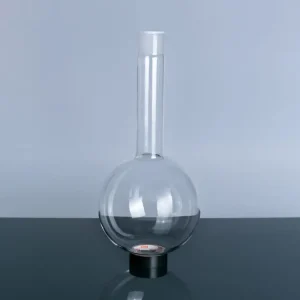
Absolutely. We fabricate quartz reaction flasks with standard taper (24/40, 29/42) joints, spherical joints, or threaded connections.

Need quartz labware for high‑temperature or UV‑sensitive applications?

Send us your required item type, capacity/dimensions, purity grade, and quantity. We’ll respond with a datasheet and competitive B2B pricing.

Scroll to Top