


Product overview
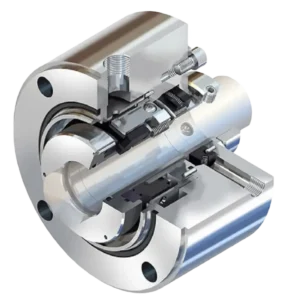
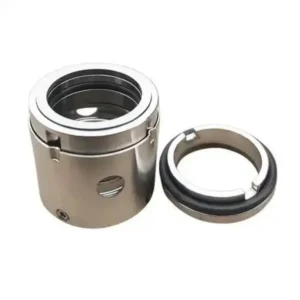
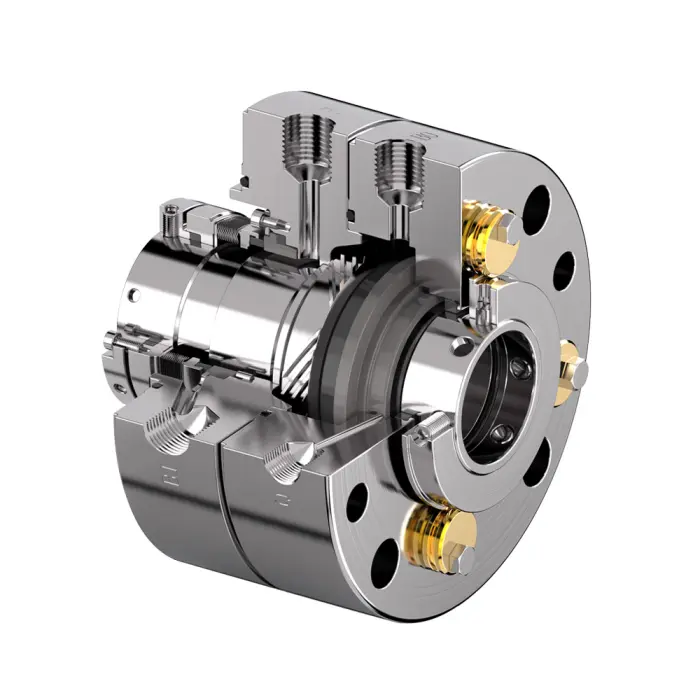
A balanced mechanical seal is a rotating equipment seal configured so that hydraulic forces reduce the net face loading on the primary sealing faces. This lowers heat generation, reduces wear and extends service life compared with unbalanced seals under higher pressure or larger shaft-diameter conditions. Balanced seals are commonly specified for industrial centrifugal pumps, compressors and mixers where process reliability and reduced maintenance are priorities.
Common aliases: balanced seal, pressure-balanced mechanical seal, controlled-balance seal.
Key features
-
Designed to reduce mechanical face load for improved life under pressure.
-
Standard shaft range: 12–180 mm (0.472″–7.087″).
-
Typical pressure capability: up to 25 bar (363 psi) for standard balanced designs; engineered variants available for higher pressures.
-
Temperature capability: –40 °C to +220 °C depending on face and elastomer selection.
-
Face choices: Carbon, Ceramic, Silicon Carbide (SiC), Tungsten Carbide (WC).
-
Elastomers: NBR, FKM (Viton®), EPDM, FFKM (perfluoroelastomer).
-
Materials: 316L stainless steel standard; Hastelloy, Duplex and Alloy 20 optional.
-
Cartridge and componentized formats available for rapid replacement.
How it works
A balanced seal offsets a portion of the process hydraulic force acting on the seal faces by geometric and hydraulic design, reducing the net load transmitted across the faces. Reduced face load lowers frictional heat and wear, allowing longer life in higher-pressure service or on larger shaft diameters. Balanced designs are often used in conjunction with proper flush/plan arrangements and selected face materials to control temperature and solids exposure.
Detailed product description
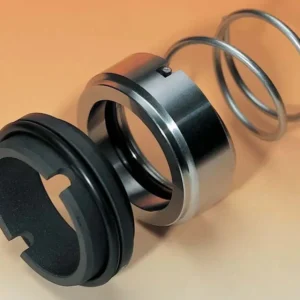
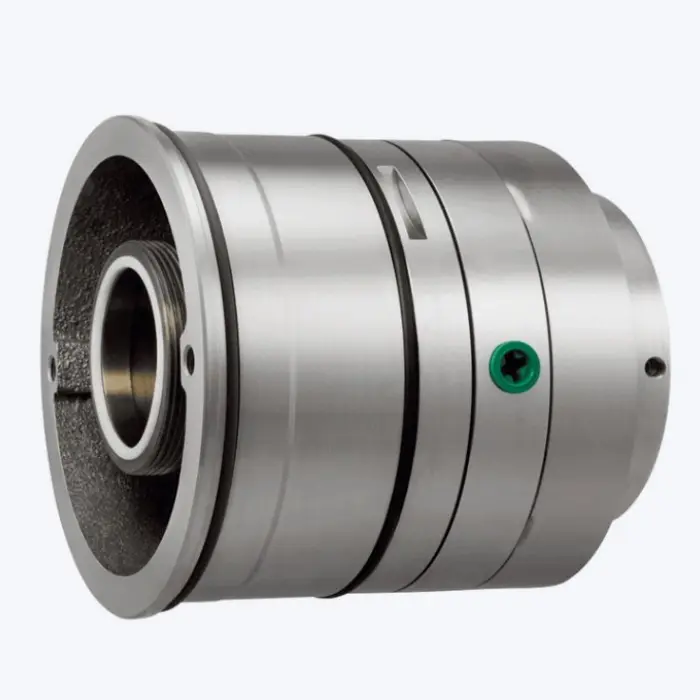
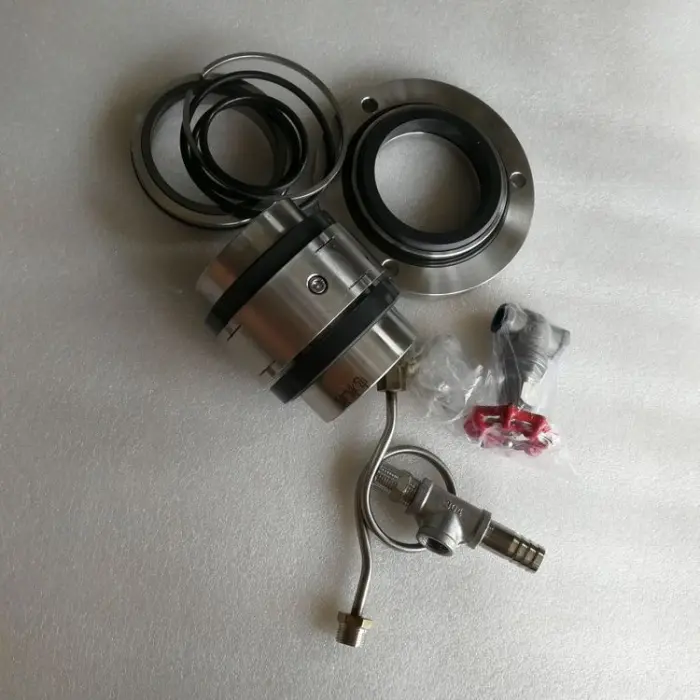
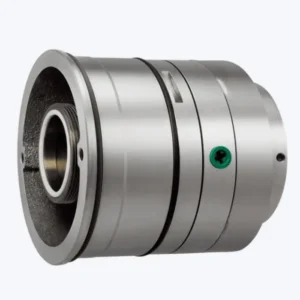
Our Balanced Mechanical Seal family includes balanced single-acting seals in single-spring, multi-spring and cartridge styles. The seals are available as component sets for retrofit or as factory-assembled cartridges for straightforward drop-in replacement. Face combinations and secondary seals are specified per process fluid and operating envelope to deliver optimized life and lowest total cost of ownership.
Standard construction elements
-
Rotary face: carbon, SiC or WC bonded rotary ring.
-
Stationary face: ceramic, SiC or tungsten carbide.
-
Secondary seals: O-rings, elastomer bellows or chevron packs (NBR, FKM, EPDM, FFKM).
-
Metal components: 316L stainless steel (standard); optional high-alloy materials for corrosive media.
-
Drive and retention: drive pins, keyways or torque transmission slots; stainless springs or wave springs.
Typical applications
-
Centrifugal pumps for chemical & petrochemical industries
-
Boiler feed, condensate and high-pressure utility pumps
-
Water treatment and desalination (with appropriate materials)
-
HVAC high-pressure chilled/water recirculation pumps
-
Pulp & paper, food & beverage and specialty-chemical pumps (sanitary variants available)
-
Compressors, mixers and agitators where face loading must be limited
Technical specifications
Use these as procurement baseline values. For precise selection, provide pump tag, shaft runout, fluid properties, temperature and pressure.
| Parameter | Typical value / range |
|---|---|
| Shaft diameter (stock) | 12 mm – 180 mm (0.472″ – 7.087″) |
| Pressure rating (standard) | Up to 25 bar (363 psi); engineered designs for higher pressures available |
| Temperature range | –40 °C to +220 °C (material dependent) |
| Sliding velocity (vg) | 10–22 m/s depending on face combo and cooling |
| Face material options | Carbon, Ceramic, Silicon Carbide (SiC), Tungsten Carbide (WC) |
| Elastomers | NBR, FKM (Viton®), EPDM, FFKM |
| Metal options | 316L stainless steel (standard); Hastelloy, Duplex optional |
| Seal balance | Hydraulic balanced design (reduces net face load compared with unbalanced) |
| Mounting formats | Cartridge, component set, pusher and non-pusher variants |
Common standard sizes & ordering examples
Typical stocked shaft sizes: 12, 15, 16, 18, 20, 22, 25, 28, 30, 32, 35, 38, 40, 45, 50, 55, 60, 65, 70, 75, 80, 85, 90, 95, 100, 110, 120, 140, 160, 180 mm.
Sample ordering code (example format): BMS-050-316L-SiC-FKM
(BMS = Balanced Mechanical Seal; 050 = shaft 50 mm; 316L = body; SiC = faces; FKM = elastomer)
Selection & performance notes
-
When to choose balanced: prefer balanced designs when operating pressure or shaft diameter increases face pressure to levels that would shorten the life of an unbalanced seal. Balanced seals are also preferred where thermal control or reduced friction is needed.
-
Materials vs. service: select SiC/WC faces for abrasive or erosive fluids; carbon for better conformability and dry-start tolerance; FFKM elastomers for aggressive chemistries.
-
Flush & cooling: use API piping plans or external flush where solids or heat generation require fluid exchange.
-
Shaft surface & runout: maintain specified shaft finish and limit runout per datasheet to avoid premature wear.
Advantages — buyer focused
-
Extended seal life in higher pressure and larger shaft applications.
-
Lower friction heat and wear through reduced net face loading.
-
Better performance margin during start/stop cycles and intermittent operation.
-
Flexible material set for corrosive, abrasive and high-temperature services.
-
Available as cartridge to minimize downtime and simplify installation.
-
Improved reliability leads to lower lifecycle maintenance costs.
Face material comparison table
| Property / Use | Carbon | Ceramic | Silicon Carbide (SiC) | Tungsten Carbide (WC) |
|---|---|---|---|---|
| Hardness | Low–Medium | High | Very high | Very high |
| Abrasion resistance | Low | Medium–High | Very high | Excellent |
| Chemical resistance | Good | Good | Excellent | Excellent |
| Dry-run tolerance | Best | Low | Low–Medium | Low |
| Thermal shock resistance | Good | Moderate | Moderate | Moderate |
| Typical cost | Low | Medium | High | High |
| Typical application | Conforming surfaces, dry-start risk | Clean services | Abrasive/chemical, long life | Severe abrasion/erosion |
Balanced vs Unbalanced
-
Balanced mechanical seal: reduces face load, recommended for higher pressures and larger shaft diameters; lower wear and heat generation.
-
Unbalanced mechanical seal: simpler design; acceptable for low to moderate pressure and smaller shafts; lower initial cost but shorter life under high pressure.
FAQ
Q1 — What details are required for accurate quotation?
A: Pump make/model or tag, shaft diameter and sleeve details, shaft runout, operating pressure & temperature, pumped fluid (chemical name & concentration), solids content, desired piping plan (if API piping required).
Q2 — What is the expected lead time for stocked sizes?
A: Typical stock lead time: 3–10 business days depending on size and regional logistics; custom or high-alloy builds vary (typically several weeks).
Q3 — How are balanced seals installed — cartridge or component?
A: Both options available. Cartridge formats are pre-assembled and reduce installation risk; component sets are used for retrofit where pump housings vary.
Q4 — Are material certificates available?
A: Yes — material test certificates (e.g., EN 10204 3.1 or equivalent) can be provided upon request for metallic components and critical orders.
Q5 — How to manage abrasive or slurry services?
A: Use hardened faces (SiC or WC), consider external flush/recirculation and filtration to protect the faces and barrier fluid.
E-E-T-A
To maximize conversion with technical buyers, include on the live page:
-
Engineer-signed datasheet showing material callouts, dimensional drawings, and revision date.
-
Factory test report badge indicating hydrostatic/leak test criteria and pass values.
-
Material certificates available on request (state certificate type on page).
-
Short case study (1–2 lines) demonstrating MTBF/MTBR improvement in a real installation.
-
Installation video and commissioning checklist authored by a field engineer.
-
Warranty statement (e.g., 12-month limited warranty) and spare parts availability policy.
Place these E-E-T-A elements near the product summary and download area to reassure procurement and maintenance engineers.
Product catalog & downloads (placeholders — replace with real URLs)
-
Full Mechanical Seals Catalogue — Datasheet (PDF) — Download:
https://www.aohongglobal.com/download/full-mechanical-seals-catalogue.pdf -
Double Cartridge Mechanical Seal Technical Data Sheet (PDF) — Download:
https://www.aohongglobal.com/download/balanced-mechanical-seal-technical-data-sheet.pdf. -
Double Cartridge Mechanical Seal Specifications (PDF) — Download:
https://www.aohongglobal.com/download/balanced-mechanical-seal-specifications.pdf.
Aftermarket & spare parts
We provide spare ring kits, O-rings, gland kits and full repair kits per SKU. Regional stocking and expedited shipping options are available for critical operations. Recommend stocking common sizes locally to minimize downtime.
Ordering & contact
For a tailored quote, CAD files or technical selection support, please contact our sales engineering team with pump tag and operating conditions.
AoHong Group — Sealing & Special Materials Division
-
Email: sales@aohongglobal.com (for datasheet requests and fast quotes)
-
Phone: +(86) 153 7318 1024 (please replace with your official number)
(Please replace the placeholder phone number and contact path with your company’s actual contact details before publishing.)