
High Performance Asbestos Gland Packing for Reliable Shaft Sealing & Leak Prevention
Premium asbestos gland packing manufactured from high-grade long-fiber chrysotile asbestos with graphite and PTFE impregnation options. Offering excellent thermal stability, chemical resistance, and long service life for pumps, valves, and rotating equipment across demanding industrial applications. Available in multiple braiding styles, sizes, and lubricant treatments.
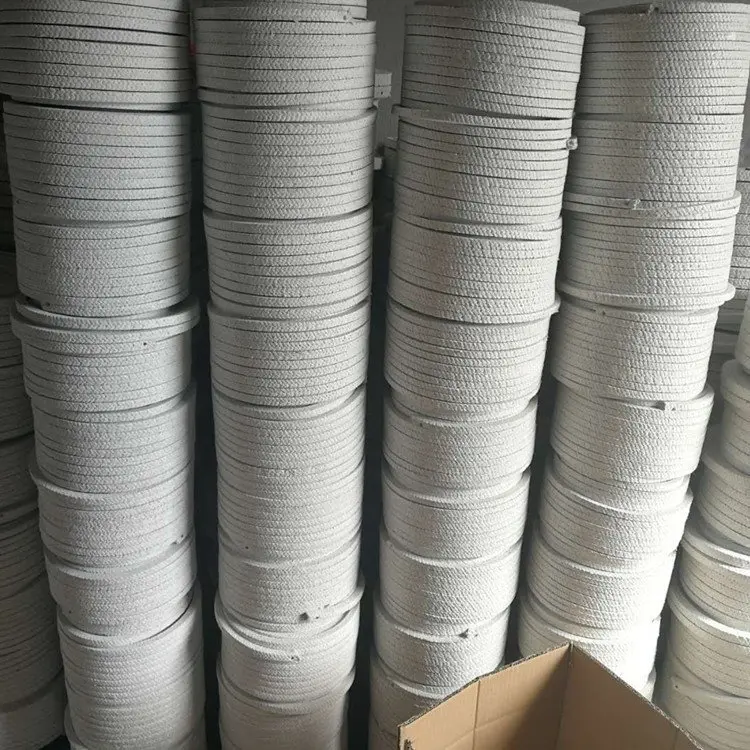
Recommended Products
Asbestos Gland Packing Types & Configurations
-
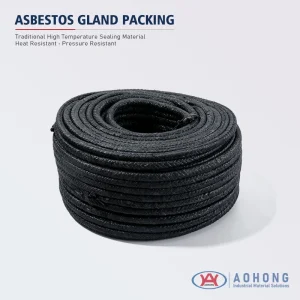 Asbestos Gland Packing
Asbestos Graphite Packing
-
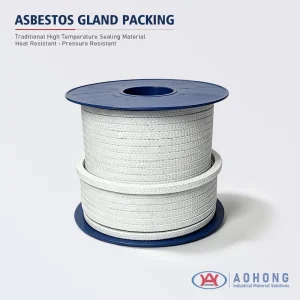 Asbestos Gland Packing
Asbestos PTFE Packing
Asbestos Gland Packing Technical Specifications
Manufactured from high-grade chrysotile asbestos fiber with optional graphite, PTFE, or oil lubricant impregnation — ensuring superior sealing performance, flexibility, and dimensional accuracy.
📋 Product Parameters
| Material | High Purity Chrysotile Asbestos Fiber |
| Fiber Content | ≥98% Asbestos Yarn (with optional graphite / PTFE coating) |
| Cross-Section Size | 3mm – 50mm (Square / Round / Rectangular Customized) |
| Braiding Style | Square Braid / Round Braid / Lattice Braid |
| Lubricant Treatment | Graphite, PTFE, Silicone Oil, or Dry Finish |
| Packaging | Coil (5kg / 10kg / 25kg) or Cut Rings As Required |
🔬 Performance Characteristics
| Temperature Resistance | Up to 500°C continuous operation (dry condition) |
| Pressure Resistance | Up to 15 MPa (rotating equipment) |
| pH Range | 4 – 10 (general service) |
| Shaft Speed | Up to 15 m/s (with proper lubrication) |
| Density | 1.1 – 1.3 g/cm³ (depending on braiding and lubricant) |
| Applications | Pumps, Valves, Agitators, Rotary Joints, Expansion Joints |
💡 Custom Sealing Solutions
We provide customized asbestos gland packing solutions including special cross-sections, braiding styles, lubricant combinations, and die-formed rings. Send your equipment specifications, shaft dimensions, or technical drawings for professional evaluation and tailored recommendations.
Why Choose Our Asbestos Gland Packing
Reliable sealing solutions designed for demanding industrial, marine, and power generation applications. We don't just manufacture — we engineer sealing solutions for your specific operating conditions.
High Temperature Resistance
Excellent thermal stability allows asbestos gland packing to perform reliably in high-temperature pump and valve sealing applications without degradation or hardening.
High Purity Asbestos Fiber
Selected long-fiber chrysotile asbestos with consistent quality provides excellent mechanical strength and sealing integrity.
Excellent Chemical Resistance
Resistant to most industrial fluids including oils, solvents, steam, and mild acids — suitable for a wide range of processing environments.
Precision Braiding & Sizing
Accurate cross-sectional dimensions, uniform density, and consistent braiding quality for reliable installation and long service life.
Application-Specific Solutions
We analyze your equipment parameters — shaft speed, pressure, temperature, and fluid media — to recommend the optimal packing configuration, not just a standard product.
OEM & Bulk Supply
Flexible production capability for distributors, pump and valve manufacturers, and industrial maintenance projects worldwide.
Asbestos Gland Packing Applications
Our asbestos gland packing products are widely used in pumps, valves, and rotating equipment across industrial, marine, and power generation sectors. We provide tailored solutions for each specific operating condition.
Centrifugal Pumps
Shaft sealing for water, oil, and chemical transfer pumps in industrial processing plants.
Valve Stem Sealing
Reliable gland packing for gate valves, globe valves, and control valves in high-temperature service.
Agitators & Mixers
Shaft sealing for industrial agitators, reactors, and mixing equipment handling viscous or abrasive media.
Marine Propeller Shafts
Stern tube and propeller shaft sealing for marine vessels operating in demanding saltwater environments.
Power Generation
Boiler feed pumps, steam valves, and auxiliary equipment sealing in thermal power plants.
Chemical Processing
Corrosion-resistant gland packing for chemical transfer pumps and process equipment.
Steel & Metal Processing
High-temperature sealing for rolling mill equipment, furnace components, and hydraulic systems.
Water & Wastewater Treatment
Reliable gland packing for water pumps, sludge pumps, and treatment plant rotating equipment.
Why Choose Hongwo Sealing Solutions
A reliable manufacturing and engineering partner providing customized asbestos gland packing solutions for global industrial customers. We deliver more than products — we deliver sealing performance.
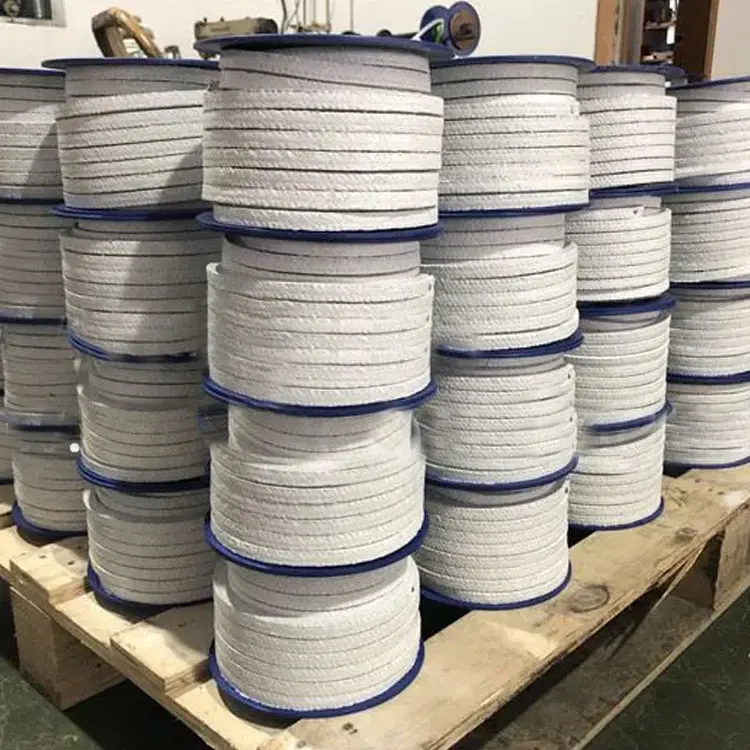
- ✓ Direct Factory Manufacturing — Own production capability ensures stable quality, competitive pricing, and reliable supply of asbestos gland packing products.
- ✓ Application Engineering Support — Our technical team evaluates your equipment parameters — shaft speed, pressure, temperature, and media — to recommend the optimal packing configuration.
- ✓ Advanced Processing Capability — Support custom braiding styles, lubricant impregnation, die-formed rings, and precision cutting to specification.
- ✓ OEM Custom Solutions — Manufacture gland packing according to customer drawings, dimensions, and specific technical requirements for pumps, valves, and OEM equipment.
- ✓ Strict Quality Inspection — Inspection of fiber content, braiding density, cross-sectional dimensions, lubricant uniformity, and surface quality.
- ✓ Global Export Experience — Professional packaging and international logistics support for customers worldwide, including marine and industrial distribution channels.
Quality Control & Manufacturing Standards
Every asbestos gland packing product is manufactured and inspected according to strict quality management procedures, ensuring consistent sealing performance.
ISO 9001:2015
Quality Management System
Material Testing
Asbestos Fiber Purity Inspection
Dimension Control
Precision Cross-Section Measurement
Export Packaging
Safe International Delivery
Frequently Asked Questions
Common questions about asbestos gland packing selection, customization, and applications.
Get Your Asbestos Gland Packing Quote Today
Tell us your equipment specifications and sealing requirements. Our engineers will provide a suitable gland packing solution tailored to your operating conditions.
- Factory direct quotation
- Application-specific recommendations
- Custom size & braiding options
- OEM manufacturing support
- Worldwide export service
Request Your Quote
We'll get back to you within 3 hours.
🔒 Your information is secure. We never share your data with third parties.