
High-Performance Tubular Sight Glasses — Built for Demanding Process Lines
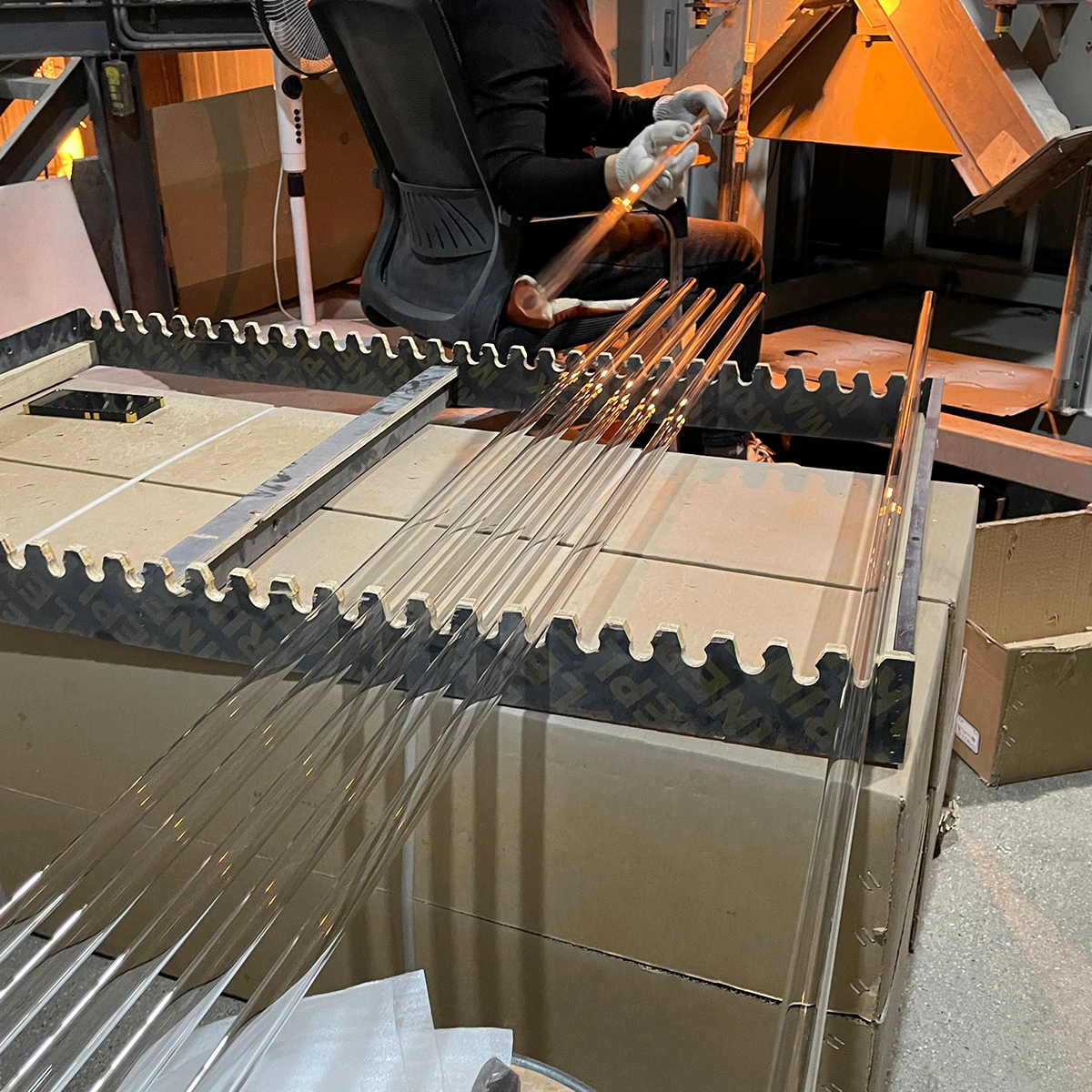
Premium tubular sight glasses engineered for clear visual flow monitoring in chemical, pharmaceutical, and food-grade applications. Borosilicate glass, 304/316L stainless steel, custom lengths & diameters. Quick-turn fabrication with global delivery.
Recommended Products
Tubular Sight Glass Types
-
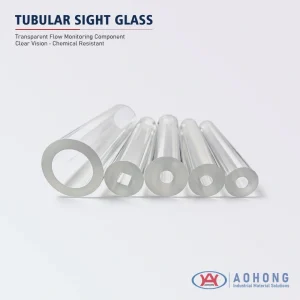
 Tubular Sight Glass
Heavy Wall Tubular Gauge Glass
-
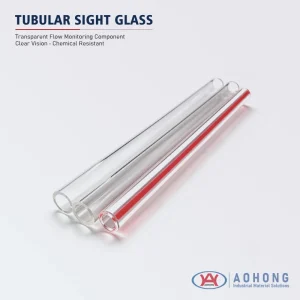
Tubular Sight Glass
Red Line Tubular Gauge Glass
-
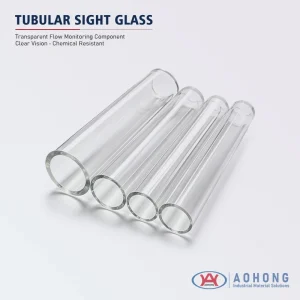
Tubular Sight Glass
Standard Tubular Gauge Glass
Tubular Sight Glass Technical Specifications
Designed for continuous visual monitoring of fluid flow, level, and condition. Robust construction for pressures up to 300 psi and temperatures to 300°C (572°F).
📋 Construction & Material Options
| Glass Type | Borosilicate 3.3 (DIN 7080), Soda-Lime, Quartz |
| Body Material | 304 SS, 316L SS, Carbon Steel, Hastelloy |
| Seal / Gasket | PTFE, Viton, EPDM, Silicone, FFKM |
| Connection Types | Flanged (ANSI/DIN/JIS), Tri-Clamp, Threaded NPT/BSP, Weld Ends |
| Protective Shield | Optional clear polycarbonate or SS slotted shield |
| Surface Finish | Ra ≤ 0.8μm (sanitary), electro-polished available |
🔬 Performance & Dimensional Data
| Max Operating Pressure | Up to 20 bar (300 psi) standard; higher on request |
| Temperature Range | -40°C to +300°C (-40°F to +572°F) borosilicate |
| Glass Tube OD | 15mm to 100mm (0.6" to 4") |
| Glass Wall Thickness | 2.5mm to 10mm depending on pressure class |
| Overall Length | 50mm to 2,000mm (2" to 80") custom cut |
| Process Connection Size | 1/2" to 8" (DN15 – DN200) |
| Compliance | FDA, 3-A Sanitary, PED 2014/68/EU, ATEX optional |
💡 Need a custom sight glass assembly?
We design and build complete sight glass units with integrated lighting, wipers, or spray rings. Send your P&ID or process conditions — our engineers will propose the optimal configuration.
Why Our Tubular Sight Glasses Excel
Every unit is hydrostatically tested and inspected to ensure optical clarity, mechanical integrity, and long-term reliability under process conditions.
Superior Optical Clarity
High-transmission borosilicate glass with low iron content provides distortion-free visibility of process media, color, and flow patterns.
Robust Mechanical Strength
Thick-walled glass tubing precision-cut and annealed to resist thermal shock and mechanical stress in demanding industrial environments.
Wide Temperature Range
Borosilicate glass handles temperatures from -40°C to 300°C. Quartz options available up to 800°C for extreme applications.
Fully Customizable
Any length, diameter, connection type, or material combination. Integrated lighting ports, wiper assemblies, and spray nozzles upon request.
Excellent Chemical Resistance
Borosilicate glass resists acids, alkalis, solvents, and process chemicals. PTFE-lined seals ensure full wetted-part compatibility.
Quick Turnaround & Stock
Standard sizes ship within 24 hours. Custom-engineered sight glasses delivered in 5–10 business days. Rush fabrication available.
Industries & Applications
Tubular sight glasses are critical components across process industries for safe, reliable visual monitoring.
Chemical Processing
Reactors, distillation columns
Pharmaceutical
WFI loops, CIP/SIP systems
Food & Beverage
Dairy, brewery, edible oil lines
Oil & Gas
Lubrication oil monitoring
Power Generation
Cooling water, steam condensate
Water Treatment
Filtration & dosing lines
Heavy Industry
Hydraulic oil reservoirs
R&D / Pilot Plants
Experimental flow visualization
Why Engineers & Procurement Teams Choose ClearView
From initial design to final delivery, we make sourcing industrial sight glasses straightforward and reliable.
- ✓ Factory-Direct Engineering Support — Work directly with our design team, not a sales rep. Get expert material and configuration recommendations.
- ✓ Hydrostatic Testing on Every Unit — Each sight glass is pressure-tested at 1.5× rated working pressure and documented with a test certificate.
- ✓ Material Traceability — Full 3.1 material certificates for all metallic and glass components. Heat numbers traceable to mill origin.
- ✓ Competitive Project Pricing — Save 20–35% versus major OEM brands. Volume discounts for annual supply agreements.
- ✓ Global Compliance Expertise — We navigate PED, ASME B31.3, 3-A Sanitary, and ATEX requirements so your order meets local regulations.
- ✓ No Minimum Order — Single-unit prototypes welcome. Trial orders encouraged so you can validate quality before bulk commitment.
Quality Certifications & Compliance
Our manufacturing and quality systems adhere to the most rigorous international standards.
ISO 9001:2015
Quality Management System
ASME B31.3
Process Piping Code
3-A Sanitary
Hygienic Equipment
PED 2014/68/EU
Pressure Equipment
FDA 21 CFR
Food Contact Materials
EN 10204 3.1
Material Traceability
Frequently Asked Questions
Quick answers to common questions about our tubular sight glasses.
Ready to Specify Your Tubular Sight Glass?
Submit your requirements and our engineering team will respond with a detailed quotation within 3 business hours.
- Free technical consultation & material selection guidance
- Competitive factory-direct pricing with volume discounts
- 3D CAD model or 2D drawing provided for approval before fabrication
- No obligation — transparent, itemized quotation
Request Your Quote
We'll get back to you within 3 hours.
🔒 Your information is secure. We never share your data with third parties.