
High-Performance Level Gauge Glass for Accurate Liquid Level Indication
Premium reflex and transparent gauge glass manufactured from borosilicate, aluminosilicate, and quartz materials. Engineered for high pressure, high temperature, and corrosive environments. Custom lengths, widths, and end finishes for boilers, tanks, and process vessels.

Level Gauge Glass Types
Choose between reflex and transparent gauge glass depending on your process requirements and visibility needs.
📊 Reflex Gauge Glass
Reflex gauge glass has prismatic grooves molded into the process side. When light passes through, the liquid-filled area appears dark and the vapor space appears bright, providing a sharp, high-contrast level indication without any moving parts.
| Material | Borosilicate 3.3 / Aluminosilicate |
| Max Pressure | Up to 40 bar (580 psi) |
| Max Temperature | Up to 400°C (752°F) |
| Standard Width | 30mm / 34mm / 40mm |
| Length | Customized (50mm – 2000mm) |
| Typical Applications | Boilers, storage tanks, liquid level indicators |
🔎 Transparent Gauge Glass
Transparent gauge glass offers a clear, unobstructed view through the glass, allowing operators to observe fluid color, clarity, interface levels, and the presence of contaminants. Often used in conjunction with a protective shield or mica shield for high-pressure applications.
| Material | Borosilicate 3.3 / Quartz |
| Max Pressure | Up to 100 bar (1450 psi) |
| Max Temperature | Up to 500°C (932°F) |
| Standard Width | 20mm / 30mm / 40mm / 50mm |
| Length | Customized (50mm – 3000mm) |
| Typical Applications | Process vessels, sight flow indicators, high-pressure systems |
-
 Reflex Level Gauge Glass
Aluminosilicate Reflex Gauge Glass
-
Transparent Level Gauge Glass
Aluminosilicate Transparent Gauge Glass
-
Reflex Level Gauge Glass
Borosilicate Reflex Gauge Glass
-
Transparent Level Gauge Glass
Borosilicate Transparent Gauge Glass
-
Reflex Level Gauge Glass
DIN 7081 Level Gauge Glass
-
Reflex Level Gauge Glass
JIS B 8211 Gauge Glass
-
Reflex Level Gauge Glass
Quartz Reflex Gauge Glass
-
Transparent Level Gauge Glass
Quartz Transparent Gauge Glass
-
Reflex Level Gauge Glass
Soda-Lime Reflex Gauge Glass
-
Transparent Level Gauge Glass
Soda-Lime Transparent Gauge Glass
-
Transparent Level Gauge Glass
Stepped Sight Glass


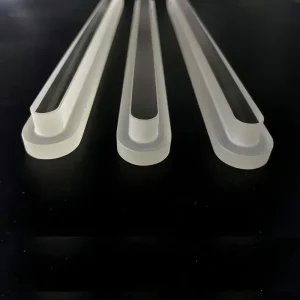
Level Gauge Glass Technical Specifications
Manufactured from high-quality glass materials with precise dimensional control and excellent thermal, chemical, and mechanical stability.
📋 Product Parameters
| Glass Types | Reflex (Prismatic) / Transparent |
| Material | Borosilicate 3.3, Aluminosilicate, Quartz |
| Width Range | 20mm – 50mm (custom sizes available) |
| Length Range | 50mm – 3000mm |
| Thickness | 10mm – 30mm depending on pressure class |
| End Finish | Fire-polished, ground, or beveled |
| Compliance | DIN 7081, JIS B8210, ANSI standards |
🔬 Performance Characteristics
| Temperature Resistance | Up to 500°C continuous (borosilicate), 800°C (quartz) |
| Thermal Shock Resistance | Excellent (ΔT up to 120°C) |
| Chemical Resistance | Resistant to most acids, alkalis, and organic solvents |
| Mechanical Strength | High compressive strength, impact resistant |
| Optical Clarity | High light transmission for transparent types |
| Pressure Rating | Up to 100 bar depending on type and dimensions |
💡 Need a custom gauge glass?
We provide custom-cut gauge glass with special widths, lengths, end finishes, and protective coatings. Send your drawing or equipment model for a precise match.
Why Choose Our Level Gauge Glass
Reliable, high-quality gauge glass designed for demanding industrial liquid level monitoring.
High Temperature & Pressure Resistance
Engineered to withstand extreme process conditions without cracking or clouding, ensuring long service life.
Excellent Optical Clarity
Transparent gauge glass offers distortion-free visibility, while reflex glass provides sharp, high-contrast level indication.
Superior Chemical Resistance
Borosilicate and quartz materials resist attack from acids, alkalis, and process fluids, maintaining integrity over time.
Precision Custom Manufacturing
Cut to exact dimensions with tolerances up to ±0.5mm. Various edge finishes and polishing options available.
Thermal Shock Resistant
Low thermal expansion coefficient prevents cracking under rapid temperature changes, critical for steam and condensate systems.
OEM & Bulk Supply
Flexible production for distributors, equipment manufacturers, and large industrial projects. Short lead times and competitive pricing.
Level Gauge Glass Applications
Our gauge glass is used in a wide range of industries where accurate liquid level monitoring is essential.
Boiler Systems
Reflex gauge glass for steam drum level indication
Chemical Processing
Transparent glass for corrosive fluid monitoring
Water Treatment
Level indicators for tanks, filters, and dosing systems
Oil & Gas
High-pressure sight glasses for separators and pipelines
Power Generation
Steam condensate and feedwater level monitoring
Food & Beverage
Sanitary gauge glass for storage tanks and mixing vessels
Pharmaceutical
High-purity glass for WFI and process vessels
Laboratory Equipment
Custom gauge glass for experimental setups and pilot plants
Why Choose Our Manufacturing Expertise
A reliable partner for high-quality gauge glass, customized to your exact specifications and delivered on time.

- ✓ Direct Factory Manufacturing — Own production line ensures consistent quality, competitive pricing, and reliable supply.
- ✓ Specialized Glass Processing — Precision cutting, edge polishing, and end finishing for exact fitment into gauge assemblies.
- ✓ High Purity Raw Materials — We source only high-grade borosilicate and quartz glass, ensuring long-term performance.
- ✓ OEM Custom Solutions — Manufacture according to customer drawings, dimensions, or reverse-engineered from samples.
- ✓ Strict Quality Inspection — Every batch undergoes dimensional checks, surface quality inspection, and pressure testing when required.
- ✓ Global Export Experience — Professional packaging and logistics support for safe international delivery.
Quality Control & Manufacturing Standards
Every gauge glass is produced and inspected according to strict quality management procedures.
ISO 9001:2015
Quality Management System
Material Testing
Glass Composition & Purity
Dimensional Control
Precision Measurement
Export Packaging
Safe International Delivery
Frequently Asked Questions
Common questions about level gauge glass selection, customization, and applications.
Get Your Level Gauge Glass Quote Today
Tell us your specifications and application requirements. Our engineers will provide a suitable gauge glass solution.
- Factory direct quotation
- Custom length, width, and type
- OEM manufacturing support
- Worldwide export service
Request Your Quote
We'll get back to you within 3 hours.
🔒 Your information is secure. We never share your data with third parties.