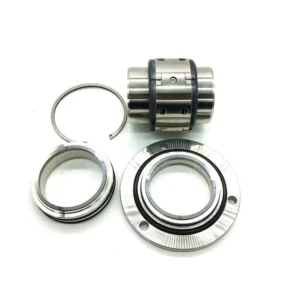
Product Overview
What is a Tandem Seal?
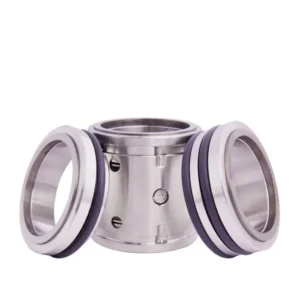
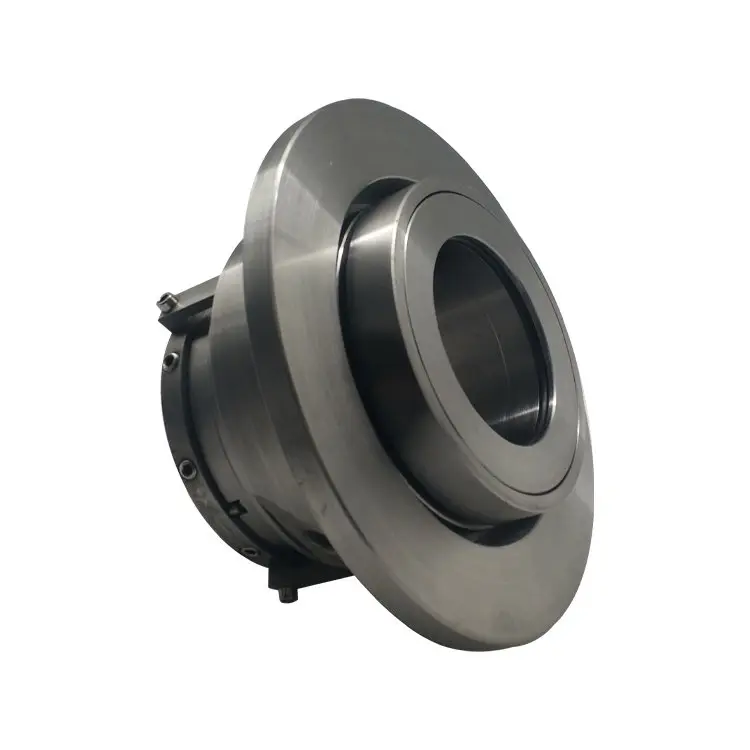
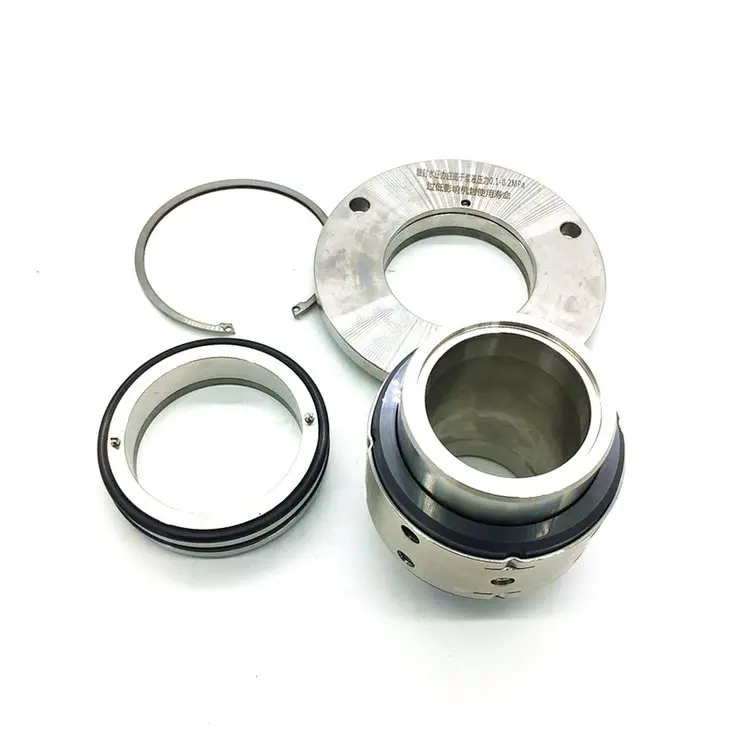
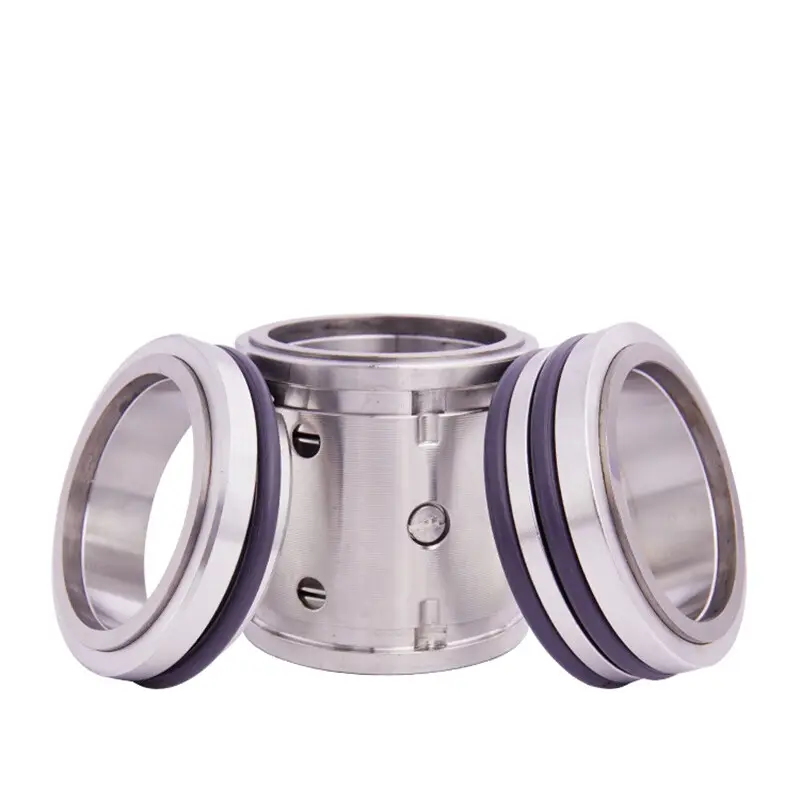
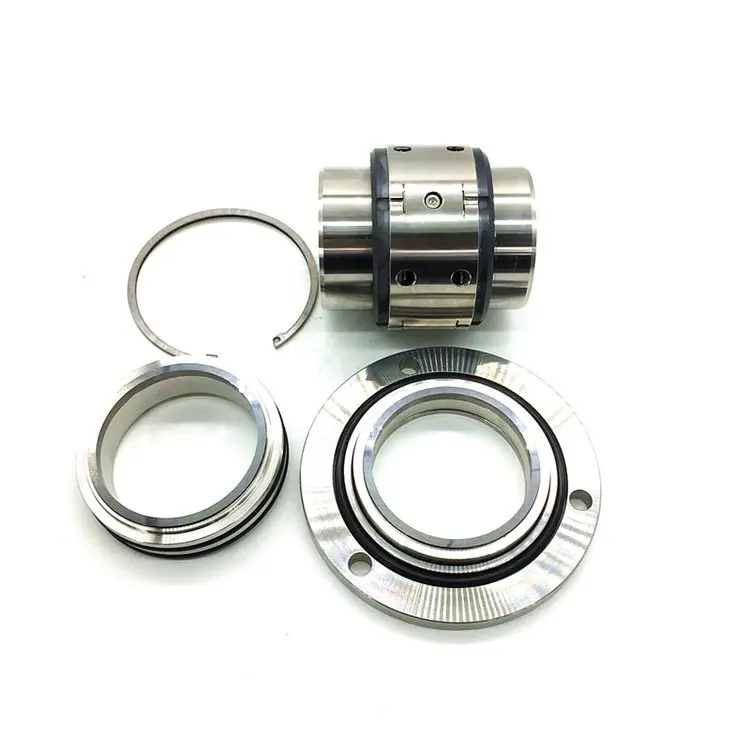
A tandem seals are dual mechanical-seal arrangement with two primary seal faces mounted in series (inboard and outboard) and a dedicated fluid chamber between them. The intermediate chamber is supplied with a compatible buffer fluid (non-pressurized buffer or pressurized barrier depending on the plan), so that any leakage past the inboard (process-side) seal is contained and does not escape to atmosphere. Tandem (face-to-back) arrangement is preferred for many hazardous or toxic fluids because the outboard seal backs up the inboard seal while buffer fluid management controls emissions.
Common aliases / keywords: Tandem seal, tandem dual seal, dual unpressurized seal, tandem mechanical seal, face-to-back dual seal.
Core Features & Design Options
Key features
-
Face-to-back dual arrangement (inboard + outboard) with a buffer chamber.
-
Buffer or barrier fluid compatibility: supports API piping plans (e.g., Plan 52 buffer and Plan 53A/B barrier variants) to maintain lubrication and to control leakage.
-
Modular cartridges available for retrofit and fast exchange, minimizing downtime.
-
Instrumentation options: ports for leakage monitoring, level sensors and optical detectors for buffer-chamber monitoring.
-
Material flexibility: standard face materials (carbon, SiC, ceramic, TC) and elastomers (NBR, FKM, EPDM, HNBR) to match process chemistry and temperature.
Note: final seal selection requires pump stuffing-box drawings, shaft diameter, process fluid, temperature, pressure and RPM.
Typical Technical Specifications
These are typical engineering envelopes for standard tandem systems. Confirm part-level ratings on the downloadable datasheet.
-
Seal arrangement: Tandem (face-to-back) dual mechanical seal; available as cartridge tandems or assembled component tandems.
-
Common stocked shaft diameters: 12, 16, 20, 25, 32, 40, 50, 63, 80, 100, 125, 130 mm. Custom sizes available.
-
Operating pressure (process side): application dependent — many tandem solutions operate routinely at typical pump pressures (up to 10–20 bar) when used with appropriate piping plans; specialty high-pressure tandem cartridges exist for much higher pressures in engineered designs.
-
Buffer/barrier fluid handling: Plan 52 (buffer, non-pressurized) commonly used for tandem seals; pressurized barrier (Plan 53 variants / external reservoir) used where higher margin is required.
-
Temperature range: depends on face/elastomer choice; typical elastomer systems: −40 °C to +150 °C; metal faces / high-temp elastomers or specialty designs extend above these ranges.
-
Rotational speed: verify for selected face pair; many standard face combinations are rated for shaft surface speeds up to ~15–25 m/s depending on lubrication.
-
Face materials: Carbon, Silicon Carbide (SiC), Tungsten Carbide (TC), Ceramic; matched by duty and buffer strategy.
Applications & Typical Pump Types
Industries
-
Chemical & petrochemical (toxic, flammable fluids)
-
Pharmaceuticals and specialty chemicals
-
Oil & gas upstream and midstream (where emissions control is required)
-
Municipal & wastewater (where containment is needed)
-
Refining and power generation
Pump types
-
ISO / ANSI centrifugal process pumps
-
Refrigeration and solvent pumps (with controlled barrier fluids)
-
Vertical and horizontal pumps with adequate stuffing-box length for tandem cartridges or component sets
Why customers choose tandem seals: minimize fugitive emissions, protect workers/environment, satisfy regulatory and insurance requirements, and provide a safety margin against inboard seat failure.
Common Sizes & Selection Guide
Typical stocked shaft sizes (mm → inch)
| Shaft dia (mm) | Inch (approx.) |
|---|---|
| 12 | 0.47″ |
| 16 | 0.63″ |
| 20 | 0.79″ |
| 25 | 0.98″ (1″) |
| 32 | 1.26″ |
| 40 | 1.57″ |
| 50 | 1.97″ |
| 63 | 2.48″ |
| 80 | 3.15″ |
| 100 | 3.94″ |
| 125 | 4.92″ |
| 130 | 5.12″ |
Selection checklist (what we need to quote): shaft diameter, pump make/model or stuffing-box drawing, fluid chemistry & concentration, operating & test pressures, temperature range, RPM, solids content, preferred buffer/barrier plan and required monitoring/alarms.
Materials & Face Combination Guidance
-
Inboard face (process side): typically softer/hydrophilic face to promote sealing and low wear (e.g., carbon or carbon vs harder SiC stationary).
-
Outboard face (atmosphere side): often harder, corrosion-resistant pair (SiC/SiC or TC/SiC) to handle occasional exposure to buffer fluid and to provide backup.
-
Buffer fluid choice: must be compatible with process and both seal elastomers; often a clean, low-vapour, lubricating fluid is chosen.
Face material comparison
| Property | Carbon | Silicon Carbide (SiC) | Tungsten Carbide (TC) | Ceramic |
|---|---|---|---|---|
| Typical use in tandem | Inboard rotor (run-in) | Outboard stationary/rotor (hard backup) | Heavy abrasion / high wear | Corrosion resistance, moderate wear |
| Run-in behavior | Excellent | Good (brittle) | Good (very hard) | Moderate |
| Abrasion resistance | Moderate | High | Very high | High |
| Chemical resistance | Good (depends on carbon grade) | Very good | Very good | Very good |
| Typical benefit in tandem | Low break-in leakage | Robust backup surface | Abrasion resistance | Corrosion resistance |
Tandem vs Other Dual Arrangements
| Arrangement | Description | Best for |
|---|---|---|
| Tandem (face-to-back) | Two seals in series with buffer chamber between; outboard faces atmosphere side | Hazardous/toxic fluids where leakage containment is required; buffer fluid Plan 52 common. |
| Back-to-back | Seals face away from each other; able to resist pressure spikes | High pressure and thermal shock environments |
| Face-to-face | Seals share a common stationary ring (compact) | Space-constrained installations |
| Single balanced seal | Single seal with reduced face loading | Non-toxic services, lower cost |
(Tandem is commonly selected when a sealed buffer is preferred over pressurized barrier for safety and emissions control.)
Performance, Piping Plans & Support Systems
-
Plan 52 (buffer, unpressurized): most common for tandem seals — buffer fluid is maintained in the chamber at a pressure lower than process but sufficient to carry particulates away and to provide lubrication.
-
Plan 53A/53B/53C / Plan 54 (pressurized barrier): used where barrier fluid must be maintained above process pressure or where circulation and filtration are required. API 682 provides standard piping plan guidance for dual seals.
-
Monitoring & safety: include chamber level sensors, leakage detectors, and pressure/temperature monitoring to ensure early warning on inboard seal failure. Piping plan selection should follow industry guidelines and vendor engineering.
Advantages of Tandem Seals
-
Leakage containment: buffer chamber collects leakage, preventing emissions of hazardous process fluid.
-
Reduced downtime risk: outboard seal provides backup; inboard seal failure is contained and visible via monitoring.
-
Regulatory & environmental compliance: helps meet emissions and safety regulations for toxic/volatile fluids.
-
Retrofit capability: cartridge tandem kits exist for many pump frames to upgrade single seals to tandem protection with minimal machining.
Downloadable Resources
FAQ
Q1: When should I select a tandem seal instead of a single balanced seal?
A: Select a tandem seal when containment of process fluid is required (toxic, odorous or hazardous fluids) and when you want a buffer chamber to catch leakage and enable monitoring. For simple, non-hazardous services a single balanced seal may be adequate.
Q2: Which piping plan is typical for a tandem seal?
A: Plan 52 (buffer, non-pressurized) is the most common for tandem seals; pressurized barrier plans (Plan 53 variants and Plan 54) are used when a pressurized barrier is required. Final selection depends on process pressure, temperature and emissions requirements.
Q3: What information do you need to provide a quotation?
A: Shaft diameter, pump make/model or stuffing-box drawing, process fluid chemistry, operating & hydrostatic test pressures, temperature range, RPM, solids content, required piping plan (52/53/54) and required monitoring features.
Q4: Can you supply cartridge tandem seals for retrofit?
A: Yes — cartridge tandem solutions are available for many ISO/ANSI pump frames to minimize installation time and risk of misalignment.
Q5: How is buffer fluid selected?
A: Buffer fluid must be compatible with the process and seal elastomers, provide adequate lubrication and have low vapour pressure where required. Selection is engineering-led and provided in the catalog and datasheet.
E-E-T-A
-
Experience: “Our rotating-seals team has deployed tandem and dual seal systems across chemical, refining and municipal projects, delivering retrofit and OEM solutions.”
-
Expertise: “Seal recommendations follow API 682 guidance and vendor piping plans; our engineers perform piping-plan and buffer selection to match process requirements.”
-
Authoritativeness: “Dimensional drawings, material certificates and test reports accompany every tandem seal shipment; we provide documented QA and certificates on request.”
-
Transparency: “We disclose material limits, piping plan recommendations and monitoring requirements up front. For critical duties we supply application notes and onsite commissioning support.”
Why choose our Tandem Seal solutions
-
Stocked kits for common shaft sizes (12–130 mm) for fast retrofit.
-
Engineered buffer/barrier packages tailored to your process and safety requirements.
-
Instrumentation and alarm integration for early warning and remote monitoring.
-
Onsite commissioning and retrofit services available.
Contact & Ordering
Hengshui Aohong— Mechanical Seals Division
-
Email: sales@aohongglobal.com (for datasheet requests and fast quotes)
-
Phone: +(86) 153 7318 1024 (please replace with your official number)