
High-Purity Borosilicate Glass Tubes for Laboratory, Pharmaceutical & Industrial Applications
Premium borosilicate glass 3.3 tubes with excellent thermal shock resistance, high chemical durability, and superior optical clarity. Available in a wide range of outer diameters from 4mm to 315mm, wall thicknesses from 0.8mm to 12mm, and custom lengths. Manufactured to DIN ISO 3585 and DIN EN ISO 4803 standards for laboratory glassware, pharmaceutical packaging, solar energy, and industrial applications.
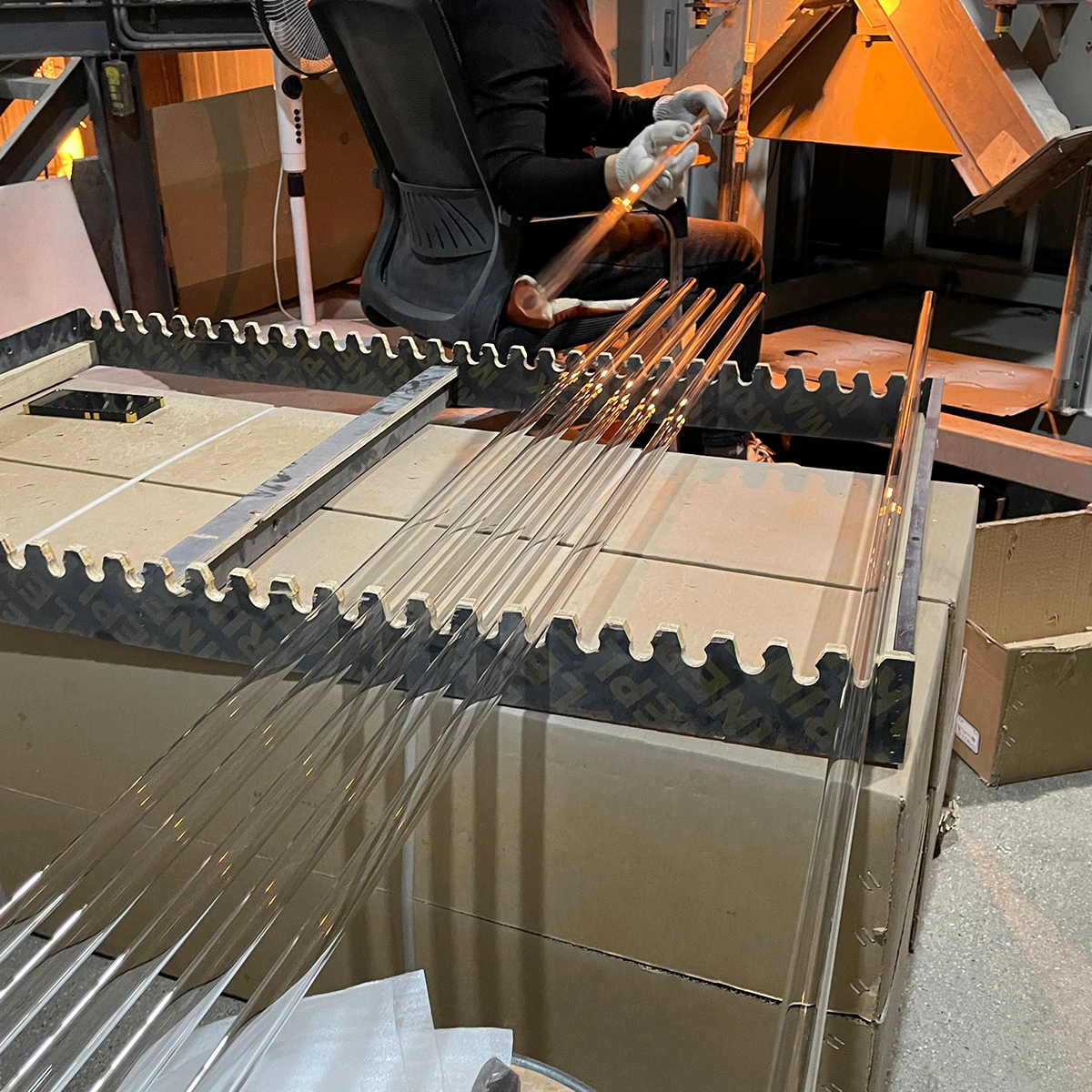
Reflex Gauge Glass Types
Type A and Type B Reflex Gauge Glass — Standard Sizes & Applications
-
 Borosilicate Glass Tube
Borosilicate Glass Round Tube
-
Borosilicate Glass Tube
Custom High Borosilicate Glass Tube
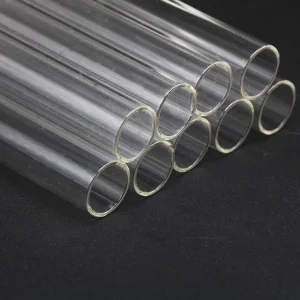
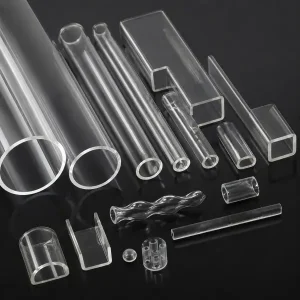
Borosilicate Glass Tube Technical Specifications
Manufactured from borosilicate glass 3.3 with a low coefficient of linear thermal expansion (3.3 × 10⁻⁶ K⁻¹), providing outstanding thermal shock resistance and chemical durability for demanding applications.
📋 Product Parameters
| Material | Borosilicate Glass 3.3 (High Borosilicate) |
| Chemical Composition | SiO₂ ≈ 81%, B₂O₃ ≈ 13%, Na₂O + K₂O ≈ 4%, Al₂O₃ ≈ 2% |
| Coefficient of Linear Expansion | 3.3 ± 0.1 × 10⁻⁶ K⁻¹ (20–300°C), per DIN 52328 |
| Outer Diameter (OD) | 4mm – 315mm |
| Wall Thickness (WT) | 0.8mm – 12mm |
| Standard Lengths | 1500mm / 1800mm (custom cutting available) |
| Color | Clear / Amber (UV protection) |
| Density | 2.23 ± 0.02 g/cm³ at 20°C |
🔬 Performance Characteristics
| Transformation Temperature | 525 ± 15°C |
| Upper Annealing Temperature | 560 ± 10°C |
| Softening Point | 820 ± 10°C |
| Working Point | 1260 ± 20°C |
| Max Short-Time Working Temperature | 500°C |
| Hydrolytic Resistance (98°C) | ISO 719 – HGB 1 |
| Hydrolytic Resistance (121°C) | ISO 720 – HGA 1 |
| Acid Resistance | DIN 12116 – Class 1 |
| Alkali Resistance | ISO 695 – Class 2 |
💡 Borosilicate 3.3 vs. High Borosilicate
"Borosilicate glass 3.3" refers to glass with a coefficient of mean linear thermal expansion of 3.3 ± 0.1 × 10⁻⁶ K⁻¹, as defined by ISO 3585. "High borosilicate" is commonly used interchangeably to describe the same material family with high SiO₂ and B₂O₃ content, offering superior thermal and chemical performance compared to standard soda-lime glass.
Standard Size Range & Custom Capabilities
Borosilicate glass tubes are available in a comprehensive range of standard dimensions. Custom sizes, cutting, fire polishing, bending, and grinding services are available upon request.
| Parameter | Standard Range | Custom Options |
|---|---|---|
| Outer Diameter (OD) | 4mm – 315mm | Custom OD available |
| Wall Thickness (WT) | 0.8mm – 12mm | Custom WT available |
| Standard Lengths | 1500mm / 1800mm | Cut to any length |
| Common Sizes | 9×2, 12×2, 25×4, 28×4, 32×3.2, 32×4, 38×4, 44×4, 51×4, 50×5 (OD×WT in mm) | Custom OD×WT combinations |
| End Finish | As-cut / Fire-polished | Ground, beveled, flared |
| Additional Processing | — | Bending, pinching, grinding, coating |
Why Choose Our Borosilicate Glass Tubes
Precision-engineered borosilicate 3.3 glass tubes delivering superior thermal shock resistance, chemical durability, and optical clarity for critical applications.
Outstanding Thermal Shock Resistance
Low coefficient of expansion (3.3 × 10⁻⁶ K⁻¹) enables borosilicate tubes to withstand rapid temperature changes without cracking. Stable up to 500°C short-time working temperature.
Excellent Chemical Durability
Hydrolytic resistance Class 1 (ISO 719/720), acid resistance Class 1 (DIN 12116), and alkali resistance Class 2 (ISO 695). Resistant to water, acids, alkalis, and organic solvents.
High Optical Clarity
Excellent light transmission and transparency make borosilicate glass tubes ideal for visual monitoring, laboratory observation, and lighting applications.
Precision Manufacturing
Tight dimensional tolerances with uniform wall thickness. Available in OD from 4mm to 315mm and WT from 0.8mm to 12mm. Custom cutting and fire polishing available.
Pharmaceutical Grade
Type I neutral borosilicate glass tubes meet USP and European Pharmacopoeia requirements for primary pharmaceutical packaging. Low risk of drug-container interaction.
OEM & Custom Supply
Flexible production capability for custom diameters, lengths, and end finishes. Bending, pinching, grinding, and coating services available for specialized applications.
Borosilicate Glass Tube Applications
Borosilicate glass 3.3 tubes are trusted across industries requiring thermal stability, chemical resistance, and optical clarity.
Laboratory Glassware
Test tubes, culture tubes, pipettes, burettes, and chemical analysis equipment. Chemical resistance and transparency are essential for accurate experiments.
Pharmaceutical Packaging
Type I neutral borosilicate glass tubing for vials, ampoules, and pre-filled syringes. Inert to sensitive drugs and suitable for long-term storage.
Solar Energy
Evacuated tube solar collectors for low and medium temperature hot water systems. Borosilicate's thermal expansion coefficient ensures mechanical stability.
Lighting & Illumination
Glass tubes for flameproof light fittings, decorative lighting, and high-temperature lamp envelopes. High light transmission and thermal shock resistance.
Chemical Processing
Chemical reactors, heat exchangers, filtration systems, and fluid handling equipment. Resistant to most acids and chemicals.
Sight Glass & Level Gauges
Transparent borosilicate tubes for visual monitoring of liquid levels and fluid properties in process vessels and pipelines.
Medical Devices
Components for medical equipment requiring high purity, chemical inertness, and sterilization compatibility (autoclavable).
OEM Equipment Manufacturing
Custom borosilicate glass components supplied to equipment manufacturers for industrial, scientific, and consumer products.
Why Choose Our Borosilicate Glass Tubes
A reliable manufacturing partner providing high-quality borosilicate glass 3.3 tubes to global industrial and scientific customers.
- ✓ ISO 3585 / DIN EN ISO 4803 Compliant — Manufactured to international standards for borosilicate glass 3.3 tubing, covering dimensions, material, designation, and testing procedures.
- ✓ Borosilicate 3.3 Composition — SiO₂ ≈ 81%, B₂O₃ ≈ 13%, Na₂O + K₂O ≈ 4%. Low alkali content ensures high chemical durability and hydrolytic resistance.
- ✓ Wide Size Range — Outer diameter from 4mm to 315mm, wall thickness from 0.8mm to 12mm. Standard lengths of 1500mm and 1800mm with custom cutting available.
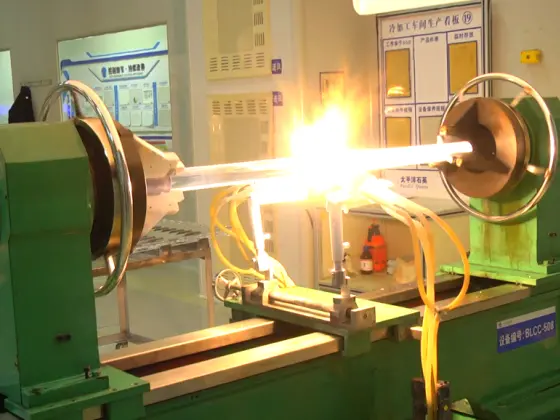
- ✓ Custom Processing Services — Cutting, fire polishing, bending, pinching, grinding, and coating to meet your specific application requirements.
- ✓ Strict Quality Inspection — Dimensional checks, visual examination for cracks, bubbles, and stones, plus chemical resistance testing per ISO and DIN standards.
- ✓ Global Export Experience — Professional packaging with protective materials and full documentation for safe international delivery.
International Standards & Compliance
Our borosilicate glass tubes are manufactured and tested in accordance with international standards for laboratory glassware, pharmaceutical packaging, and industrial applications.
ISO 3585:1998
Borosilicate Glass 3.3 — Properties
DIN EN ISO 4803
Laboratory Glassware — Borosilicate Glass Tubing
ISO 719 / 720
Hydrolytic Resistance — HGB 1 / HGA 1
DIN 12116
Acid Resistance — Class 1
ISO 695
Alkali Resistance — Class 2
ISO 9001:2015
Quality Management System
Frequently Asked Questions
Common questions about borosilicate glass tube selection, specifications, and applications.
Get Your Borosilicate Glass Tube Quote Today
Tell us your specifications and application requirements. Our engineers will provide a suitable borosilicate glass 3.3 tube solution with full certifications.
- Factory direct quotation
- ISO 3585 / DIN EN ISO 4803 compliant
- OD 4mm – 315mm, WT 0.8mm – 12mm
- Custom cutting and processing support
Request Your Quote
We'll get back to you within 3 hours.
🔒 Your information is secure. We never share your data with third parties.