

Product Overview
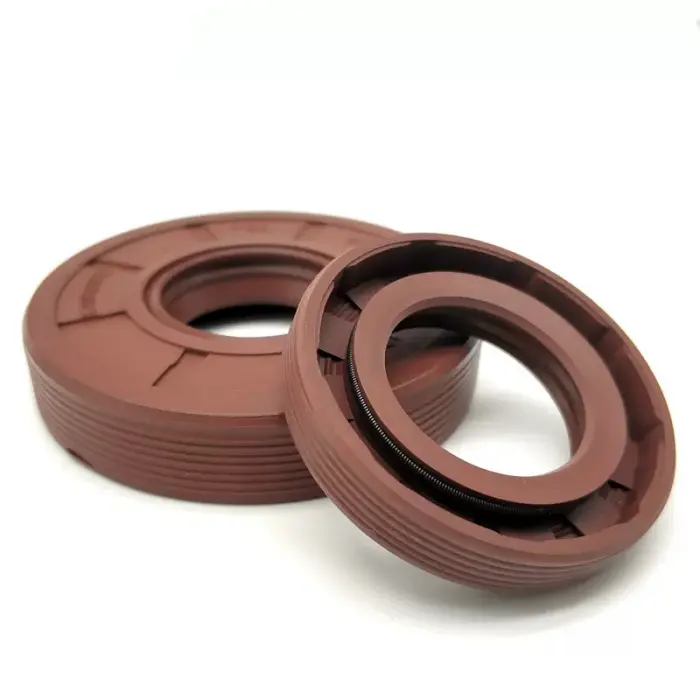
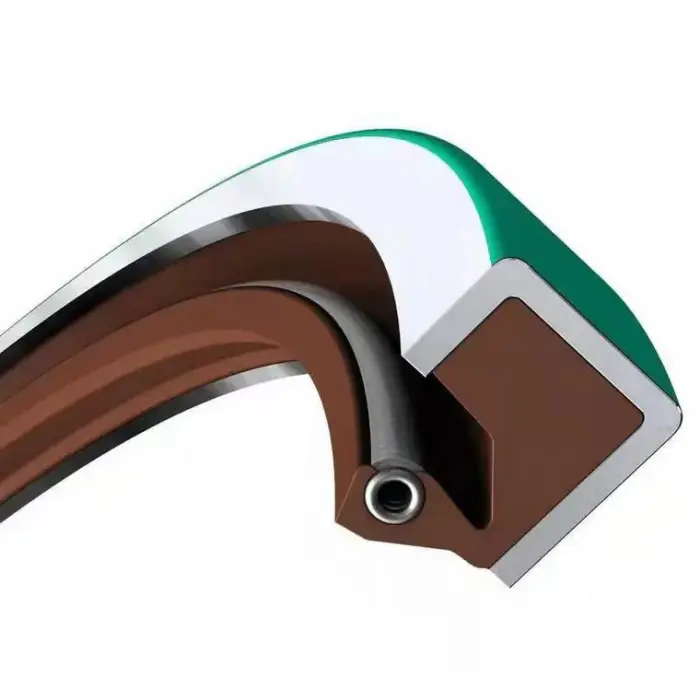
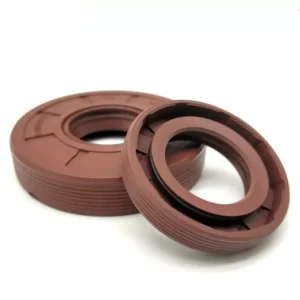
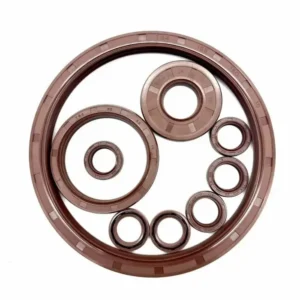
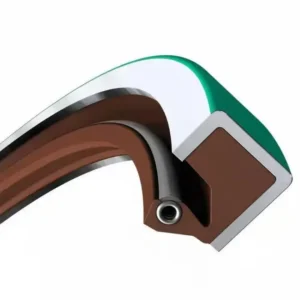
High pressure rotary shaft seals are specialized rotary lip seals designed to operate reliably at elevated pressures and shaft speeds while minimizing leakage and wear. Typical constructions combine a hard-wearing sealing element (PTFE, filled PTFE, or polyurethane) with a metal case or carrier and an energizer (garter spring or elastomeric energizer). These seals are produced as single-element rotary shaft seals, cartridge modules or as bespoke assemblies for rotary unions and swivels.
Common Aliases / Keywords
High pressure rotary shaft seal, high pressure rotary lip seal, PTFE rotary seal, hydraulic rotary seal, rotary union seal, high pressure shaft lip seal
Key Buyer Features
-
Engineered for elevated pressures (typical commercial ratings to 150 bar; engineered designs to 300 bar).
-
Material options: PTFE (virgin & filled), polyurethane (PU), reinforced PTFE, and elastomer-energized variants.
-
Configurations: single lip, double lip (dust + fluid), multi-lip for staged sealing, cartridge modules for rapid retrofit.
-
Sealing energizer choices: garter spring, elastomeric energizer or metal energizer for extreme duty.
-
Available with metal case (stainless steel 304/316) or bonded insert for shaft fit and ease of installation.
Materials & Construction Options
Sealing elements:
-
PTFE (virgin / filled — e.g., 15% glass, 25% carbon): excellent chemical resistance, low friction, good wear when filled.
-
Filled PTFE / PTFE blends (carbon, graphite, bronze): improved wear life under abrasive, high-PV service.
-
Polyurethane (PU): high elasticity, excellent dynamic sealing at moderate pressures (used where abrasion resistance and elasticity are required).
Energizers / secondary material: FKM (Viton), HNBR, NBR, FFKM (for high temperature/aggressive chemicals), garter spring (stainless steel).
Metal components: 304 / 316 stainless steel case; duplex or special alloys available for corrosive environments.
Typical Operating Ranges
Final selection must be confirmed against actual shaft geometry, surface finish, speed and process conditions.
-
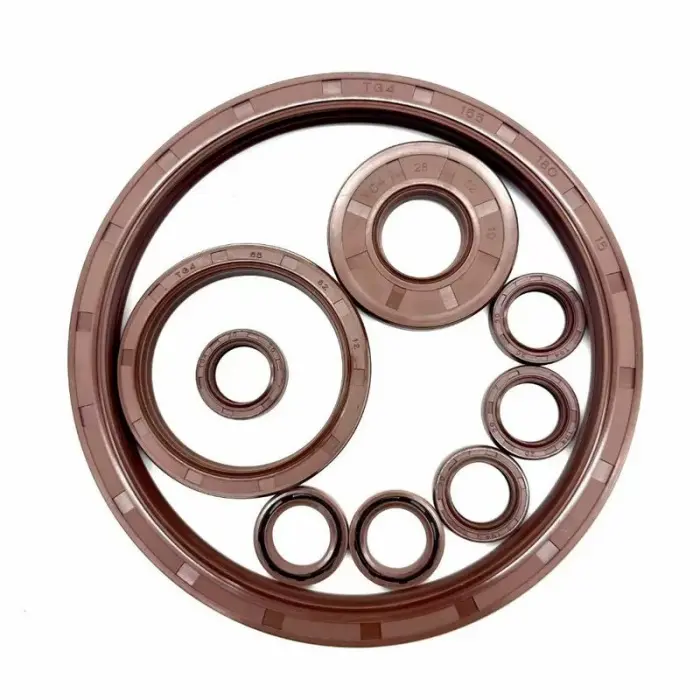
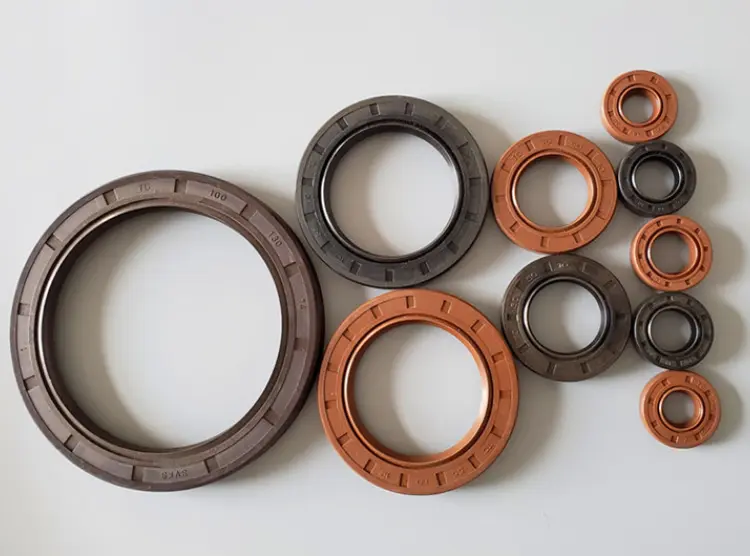
Shaft diameters (common stocked sizes): 8, 10, 12, 14, 15, 16, 18, 20, 22, 25, 28, 30, 32, 35, 38, 40, 45, 50, 55, 60, 65, 70, 75, 80, 90, 100, 110 mm.
-
Pressure (typical commercial ratings): up to 150 bar (≈ 2175 psi) for engineered PTFE and reinforced designs; many standard high pressure rotary seals rated 10–100 bar depending on design. Engineered assemblies and cartridge modules can be supplied to 300 bar with appropriate hardware and installation controls.
-
Temperature ranges: material dependent — NBR / standard elastomers: −25 °C to +100 °C; FKM (Viton): −20 °C to +200 °C; PTFE seals (with appropriate elastomer energizer): −60 °C to +250 °C (short term).
-
Surface speed (shaft): typical up to 15 m/s for PTFE/filled PTFE; some PTFE blends and metallic-backed solutions permit 20–25 m/s with proper cooling.
-
Shaft surface finish: recommended Ra ≤ 0.4 µm (16 µin) for PTFE rotary seals; exact requirement depends on material and energizer.
Standard Specification Table
| Item | Typical Value / Range |
|---|---|
| Product type | High Pressure Rotary Shaft Seal (single / double lip, cartridge options) |
| Stock shaft diameters | 8–110 mm (common sizes listed above) |
| Typical pressure capability | Standard: up to 100–150 bar; engineered: up to 300 bar |
| Temperature | −60 °C to +250 °C (material dependent) |
| Material options | PTFE, filled PTFE, polyurethane, elastomer-energized PTFE |
| Energizers | Garter spring (SS), elastomeric energizer (FKM/HNBR/NBR), metal energizer |
| Housing / case | 304 / 316 stainless steel (bonded or crimped) |
| Typical shaft finish | Ra ≤ 0.4 µm (check per material) |
Common Sizes & Ordering Example Codes
-
HPRS-25-PTFE-FKM — High Pressure Rotary Shaft Seal, 25 mm shaft bore, PTFE sealing element, FKM energizer (standard metal case).
-
HPRS-50-PTFE-G — 50 mm, PTFE with garter spring energizer (suitable to higher pressure).
-
HPRS-32-PU-NBR — 32 mm, polyurethane sealing element, NBR energizer (abrasion-tolerant).
When requesting a quote, include shaft OD, shaft finish, axial width, process pressure, temperature, shaft speed (RPM) and fluid characteristics.
Advantages
-
High pressure capability — engineered PTFE and reinforced designs sustain elevated pressures with minimal leakage.
-
Low friction & long life — PTFE materials provide low friction coefficients and improved wear life versus unfilled polymers.
-
Wide chemical compatibility — PTFE seals resist aggressive chemicals, acids and solvents.
-
Retrofit and cartridge options — cartridge modules simplify installation and reduce downtime.
-
Customizable energizers and housings — select garter spring, elastomeric energizer or metal energizer to match PV, pressure and thermal demands.
-
Reduced maintenance costs — longer service intervals and lower replacement frequency in demanding rotary applications.
Comparison: High Pressure Rotary Seals vs Standard Lip Seals vs Mechanical Seals
| Characteristic | High Pressure Rotary Seal (PTFE/filled) | Standard Elastomer Lip Seal (NBR/FKM) | Mechanical Seal (face seal) |
|---|---|---|---|
| Best for | Elevated pressure rotary service, chemical compatibility | Low-to-moderate pressure, low cost | Very low leakage, very high pressure & complex sealing systems |
| Typical pressure capability | Up to 150–300 bar (engineered) | ≤ 10–20 bar typically | Can exceed 200 bar depending on design |
| Chemical resistance | Excellent (PTFE) | Good to moderate (elastomers) | High (with correct face materials) |
| Leakage behavior | Low steady leakage possible; engineered low-leak designs available | Moderate leakage at pressure | Near-zero leakage when correctly installed |
| Cost | Moderate — higher than standard lip seals, lower than many mechanical seals | Low | High (higher initial cost and complexity) |
| Maintenance | Lower than elastomer seals in abrasive/chemical services | Frequent replacement in harsh service | Periodic, often more complex maintenance |
Application Scenarios
-
Rotary unions and swivels operating under high fluid pressures.
-
High-pressure process pumps and pump shafts where mechanical seals are impractical.
-
Hydraulic swivels and rotary manifolds in testing and service benches.
-
High-pressure mixers and agitators with rotating shafts.
-
Subsea and downhole rotary feedthroughs (with appropriate materials and qualification).
FAQ
Q1 — Can you supply a high-pressure rotary seal to replace my existing pump lip seal?
A: Yes. Provide shaft OD, axial width, shaft finish, operating pressure and temperature, and a photo or seal drawing. We will confirm interchangeability or propose a retrofit cartridge solution.
Q2 — What do you require to size a high-pressure rotary seal?
A: Shaft OD and tolerance, axial depth/width available, shaft surface finish, operating pressure (max), operating temperature range, fluid chemistry (including solids/abrasion), and shaft speed (RPM or m/s).
Q3 — Are PTFE seals suitable for abrasive services?
A: Yes — filled PTFE blends (carbon, glass or bronze filled) and reinforced constructions improve wear resistance in abrasive applications. In heavy slurry service we recommend additional protective measures (exclusionary seals, flushing or sacrificial sleeves).
Q4 — How do you minimize leakage at elevated pressures?
A: Use reinforced PTFE or metal-backed seals with appropriate energizer (garter spring or metal energizer), ensure correct shaft finish and installation tolerance, and consider staged (double-lip) designs or flushing plans for extreme services.
Q5 — Can you supply material/certification documentation and CAD models?
A: Yes — CAD drawings, dimensional datasheets and material certificates (MTC) are supplied with quotation or upon order as required.
E-E-T-A
-
Experience: Our sealing engineers have delivered high-pressure rotary shaft seal solutions for OEMs and end-users across chemical processing, test-stands and hydraulic systems. We have supplied seals for rotary unions, high-pressure pumps and swivel joints.
-
Expertise: We perform shaft surface assessment, PV and extrusion gap design checks, and material selection (PTFE grades, energizers) to match pressure, temperature and chemical loads.
-
Authoritativeness & Trustworthiness: We provide certified material test reports, inspection records, and CAD models for client approval; final technical selections are validated by engineering before production.
-
Accuracy: All pressure, temperature and speed ranges shown above are selection guidance; final ratings are confirmed during quotation based on supplied operating data.
Product Catalog & Datasheet (Downloads)
-
Download: High Pressure Rotary Shaft Seals Technical Data Sheet (PDF)
- Download: High Pressure Rotary Shaft Seals Specifications (PDF)
How to Order / Quote Checklist
Please include the following with your inquiry to obtain an accurate and fast quotation:
-
Shaft diameter (OD) with tolerance and axial width available.
-
Shaft surface finish (Ra) and hardness if known.
-
Maximum operating pressure and typical operating pressure.
-
Operating temperature range.
-
Fluid description (chemical composition, specific gravity, viscosity, solids/abrasives).
-
Shaft speed (RPM) or surface velocity (m/s).
-
Quantity, required lead time and any certification requirements (e.g., material certs, ATEX, NORSOK).
Contact & Sales
Hengshui Aohong— Mechanical Seals Division
-
Email: sales@aohongglobal.com (for datasheet requests and fast quotes)
-
Phone: +(86) 153 7318 1024 (please replace with your official number)