
In steam condensate recovery systems, reflex level gauge glass that cracks every few hundred hours is more than a maintenance headache — it’s a serious safety and energy-loss problem. This case study details how a chemical plant eliminated chronic borosilicate gauge glass failures by switching to aluminosilicate reflex gauge glass, achieving zero cracks after eight months of severe thermal cycling.
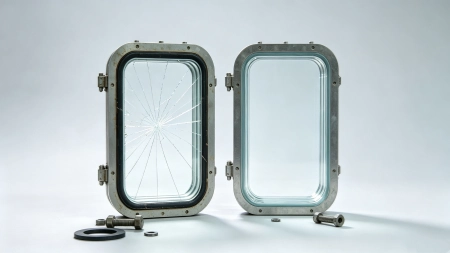
The Problem: Chronic Borosilicate Glass Failures Under Thermal Shock
The plant’s condensate system operates with rapid transitions between saturated steam at 175–185 °C and subcooled return condensate as low as 40–60 °C, with multiple start-ups and shutdowns daily. Originally equipped with standard borosilicate reflex gauge glass, the level gauges suffered repeated failures:
Frequent cracking: Radial cracks appeared at grooves or edges after only 200–300 service hours, propagating into through-cracks and leaks.
Safety hazards: Each break released hot condensate and steam, creating burn risks and flying glass fragments. Emergency isolation and draining caused losses of treated water and thermal energy.
Escalating costs: Maintenance teams replaced glass 2–3 times per month, inflating labor, spare parts, and unplanned downtime expenses.
Misdiagnosis: Initial attempts to control bolt torque and change borosilicate batches failed to stop the breakage, confirming that the material itself was operating at its thermal shock limit.

Root Cause: Why Borosilicate Glass Couldn’t Handle the Thermal Cycling
1. Insufficient Thermal Shock Resistance
Borosilicate glass (thermal expansion ~3.3 × 10⁻⁶/°C) is good general-purpose heat-resistant glass. However, instantaneous temperature differences of 80–120 °C between inner and outer faces during start-up steam blasts or cold condensate quenching concentrated tensile stress at micro-defects. Once the critical stress intensity factor was exceeded, cracks initiated instantly.
2. Extreme, Repeated Thermal Cycling
Fast valve operations often heated glass from ambient to >180 °C within seconds. Repeated “thermal shock – cooling – thermal shock” cycles accelerated fatigue, allowing micro-cracks to grow at stress levels below the single-event failure limit.
3. Material Selection Mismatch
The original gauge design relied solely on nominal pressure-temperature ratings and overlooked the high-frequency thermal transients and water hammer typical of condensate recovery. No upgrade to a glass engineered for severe thermal shock had ever been implemented.
The Solution: Switching to Aluminosilicate Reflex Gauge Glass
All affected level gauge glasses were replaced with aluminosilicate reflex gauge glass (compliant with DIN 7081). This material upgrade directly addressed the root cause.
Material Advantage: Built for Thermal Shock
Thermal expansion: ~4.8 × 10⁻⁶/°C, combined with higher mechanical strength and softening point, providing thermal shock resistance exceeding 200 °C instantaneous difference — a safe margin even under worst-case condensate system conditions.
Optical clarity: Same reflex groove structure ensures a sharp light-dark boundary at the steam-water interface, keeping liquid level reading clear and unambiguous.
Chemical durability: Excellent resistance to leaching and devitrification in high-purity hot water and mild acid/alkali media.
Learn more about our Aluminosilicate Reflex Gauge Glass engineered for high-cycling steam applications.
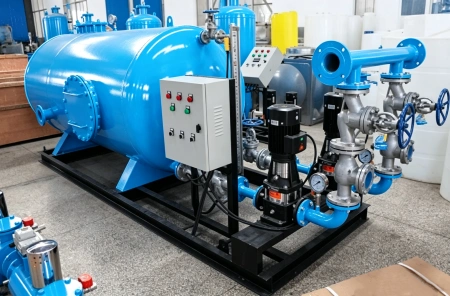
Installation & Warm-Up Procedure Optimization
While the glass itself provides ample margin, we also standardized these practices to decouple thermal and mechanical stress completely:
Gasket & torque: Adopted flexible graphite/metal composite gaskets and specified exact diagonal-pattern torque values, eliminating mounting stress points.
Slow warm-up: Introduce steam via a bypass over 10–15 minutes to heat the chamber evenly above 100 °C before full pressurization. During shutdown, maintain slight positive pressure for natural cooling.
Download our installation best practices guide for detailed torque tables.
Implementation & Results: Zero Cracking in 8 Months
After replacing all glasses and implementing the staged warm-up, the system underwent over 100 start-up/shutdown cycles and numerous load swings during eight months of continuous monitoring.
| Performance Indicator | Before (Borosilicate) | After (Aluminosilicate) |
| Glass cracking events | 2–3 per month (chronic) | Zero |
| Unplanned downtime from leaks | Frequent emergency isolation | Eliminated |
| Replacement frequency | Every 200–300 hours | No replacements needed |
| Safety incidents (steam blow-out) | Recurring risk | Risk removed |
| Condensate & energy loss | Significant | Drastically reduced |
The sharp reflex indication of the aluminosilicate glass also improved operator confidence and reduced level-control errors.
Frequently Asked Questions
What is the maximum temperature difference aluminosilicate gauge glass can withstand?
Aluminosilicate reflex gauge glass can routinely withstand instantaneous temperature differences exceeding 200 °C (392 °F), far exceeding borosilicate’s practical limit. This makes it ideal for steam condensate systems experiencing severe thermal shock.
Does aluminosilicate glass affect level visibility?
No. It uses the same reflex groove optical principle and provides an equally sharp, high-contrast light-dark boundary at the liquid-vapor interface. Operators often find the reading clearer after eliminating frequent cracking and staining.
Can I keep my existing metal gauge body when upgrading?
Yes. Aluminosilicate reflex gauge glass can be custom-manufactured to the exact dimensions and pressure ratings of your existing gauge bodies. No modifications are needed, only glass and gasket replacement.
How do I prevent future thermal shock cracking during start-up?
Besides upgrading the glass material, always use a slow warm-up bypass. Heat the gauge chamber gradually (≤5 °C/min) to above 100 °C before admitting main steam. Avoid direct cold condensate quenching of hot glass.
Ready to Solve Your Gauge Glass Cracking Problem?
If you’re dealing with repeat level gauge glass failures in steam, condensate, or boiler service, we can help you specify the right aluminosilicate solution and provide installation support. Stop the cycle of replacements, safety risks, and steam losses.
Contact Our Engineers for a Gauge Glass Upgrade.
