

Nylon is a widely used engineering plastic offering high mechanical strength, excellent wear resistance, and light weight. Yet many engineers and equipment buyers face recurring nylon problems: warping after machining, bushing seizing during operation, UV aging in outdoor use, and difficulty in making the right material selection. This nylon FAQ delivers practical, data-backed solutions to fix warping, prevent seizing, and choose between cast nylon and standard nylon — helping you reduce downtime and improve part reliability.
Q1: Can nylon replace metal parts?
In many cases, yes. Nylon reduces weight, noise, and lubrication requirements while lowering machining costs. Nylon gears, bushings, and slide pads often replace metal successfully in conveying, packaging, and light machinery applications.
However, for extreme heat, heavy shock loads, or ultra-tight precision, you may need to reconsider. If a simple material selection does not solve the problem, reinforced nylon or other engineering plastics can fill the gap.
We supply cast nylon sheet stock, rods, and tubes for your machining needs — whether for trial parts or ongoing production.
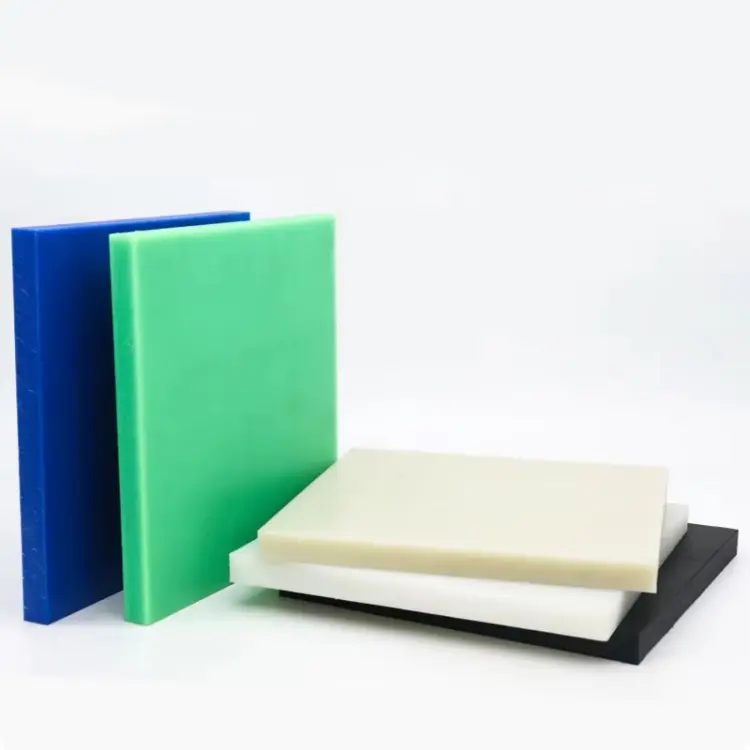
Q2: Why do nylon rods and sheets warp after machining? How do I solve nylon warping?
Nylon warping is a frequent and costly issue. The material is hygroscopic — it absorbs ambient moisture, which creates internal stress and leads to deformation. Slender or thin parts are especially vulnerable; once they pick up humidity, they can bend beyond tolerance. On top of that, nylon’s narrow processing temperature window can cause scorching or premature solidification.
How to solve nylon warping:
Pre-dry the nylon stock. Use vacuum drying at a stable temperature of 80°C (176°F) and a vacuum of at least 0.05 MPa. This removes absorbed moisture before machining begins.
Control machining temperature strictly. Avoid excessive heat buildup that can soften or scorch the material.
Store semi-finished parts in dry conditions. Use sealed packaging or humidity-controlled storage to prevent moisture reabsorption before final assembly.
For complex or high-precision parts, professional nylon machining services can control tolerances and prevent warping from the start.
Q3: Do nylon fasteners age outdoors?
Yes. Long-term exposure to UV radiation causes nylon UV aging, making parts brittle, discolored, and chalky — a reliability risk for outdoor equipment.
How to fix nylon UV aging:
Specify UV-stabilized nylon grades for any outdoor application.
Add protective covers or shields to block direct sunlight.
Store spare fasteners in a cool, dark, and dry place.
Need UV-resistant fasteners for your next outdoor project? Contact us for recommendations.
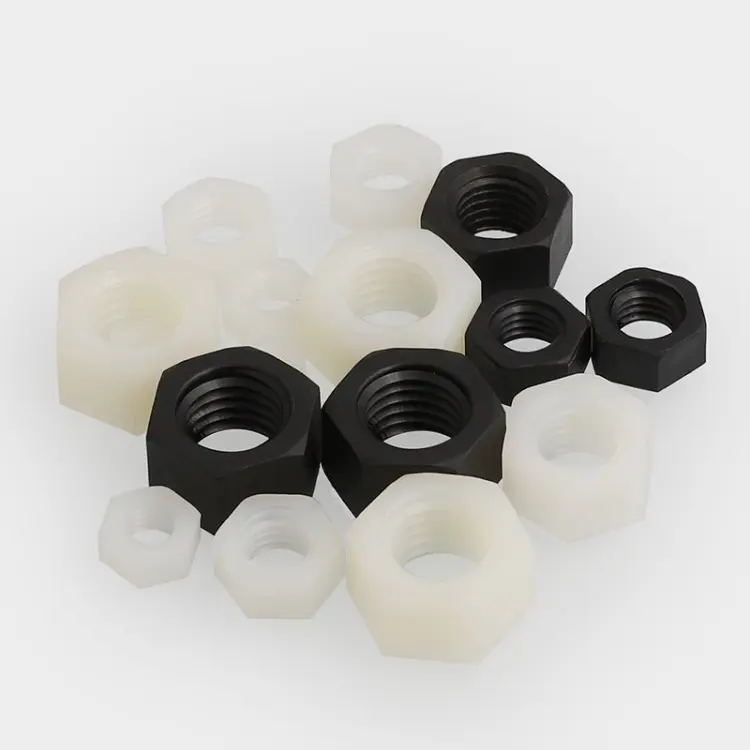
Q4: Why do nylon bushings seize? How can I prevent nylon bushing seizing?
Nylon bushing seizing almost always traces back to dimensional changes caused by moisture absorption and thermal expansion. As nylon takes on moisture or heats up, it swells, closing the running clearance between the bushing and the shaft. Friction rises, rotation becomes difficult, and eventually the part locks up completely.
How to prevent nylon bushing seizing — a design-focused approach:
- Get the clearance design right from the start.
Do not use metal-part clearance standards. For a PA6 bushing, a practical rule is: initial assembly clearance should be at least 0.5%–0.8% of shaft diameter, and increase to 1.0% or morein damp or hot environments.
Example: For a 25 mm shaft operating at 60% RH and 40°C, a PA6 bushing may swell radially by approximately 0.15 mm. A minimum diametral clearance of 0.25–0.30 mm is recommended to avoid seizing.
- Choose the right nylon material.
Match the grade to your actual operating conditions (see the material selection guide in Q5). Using a more dimensionally stable grade like cast nylon (PA6G) often resolves seizing without redesigning the entire assembly. - What if the bushing is already sticking?
Re-machining the bore to restore clearance can be a temporary fix. However, if wear or deformation is severe, it’s time to revisit both the clearance design and the material choice.
Real-world result: A packaging equipment manufacturer replaced their PA66 gears with PA6G cast nylon gears and eliminated moisture-related seizing. Maintenance intervals extended threefold, reducing unplanned downtime significantly.
Need application-specific clearance calculations? Talk to our application engineer.
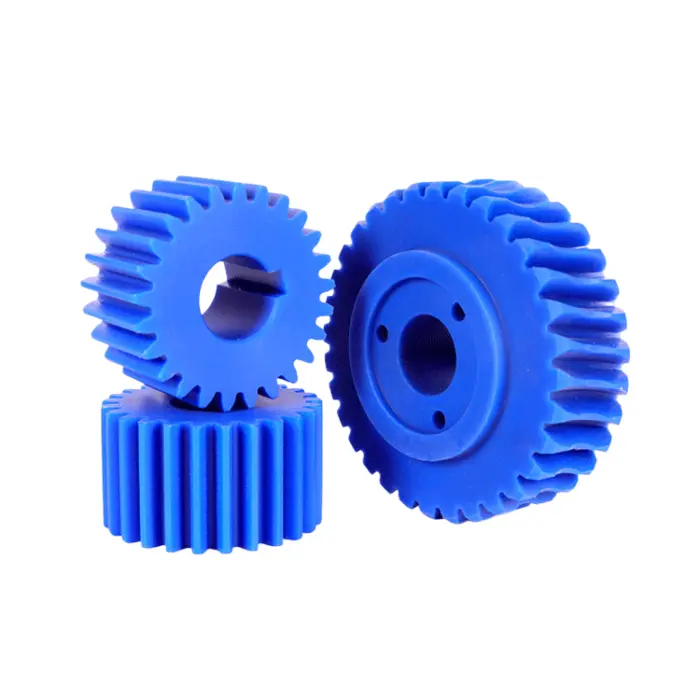
Q5: Cast nylon vs standard nylon: how to make the right material selection?
Making the right nylon material selection depends on your part size, volume, and operating environment. The table below summarizes the key differences.
| Feature | Cast Nylon (PA6G) | Standard Nylon (PA6/PA66) |
| Manufacturing Process | Cast polymerization | Extrusion or injection molding |
| Typical Moisture Absorption (24h, 23°C) | 0.8–1.2% | PA6: 1.3–1.9% / PA66: 1.0–1.5% |
| Mechanical Properties | Higher wear resistance, impact strength, and dimensional stability | Good strength and stiffness; high production efficiency |
| Best For | Large machined parts: bushings, gears, sheaves, wear pads | Small-to-medium precision parts, high-volume production |
| Dimensional Stability | Better, less post-machining warping | Good, but more affected by moisture changes |
Material selection rule:For large wear parts and better long-term stability → choose cast nylon (PA6G).
For high-volume, smaller complex parts → choose PA6 or PA66.
Browse our range of cast nylon rods and standard nylon sheets to find the right stock shape for your next job.
Still unsure about nylon material selection or clearance design?
Our engineering team helps equipment manufacturers and end-users solve nylon failures every day. Whether you need a material recommendation, a clearance calculation review, or a custom part evaluation, we’re here to support your project.
Download our Nylon Material Selection Checklist — includes clearance guidelines and moisture compensation data. Request a Free Technical Consultation — send us your application details and we’ll respond with specific advice.
