
When sourcing fiberglass reinforced plastic (FRP) grating for industrial or commercial applications, selecting the right type is critical to performance, safety, and long-term cost efficiency. This guide breaks down the five most common FRP grating categories — molded, pultruded, gritted, concave, and cross-bar — and explains exactly when each is the right choice.
1. Molded FRP Grating
What It Is
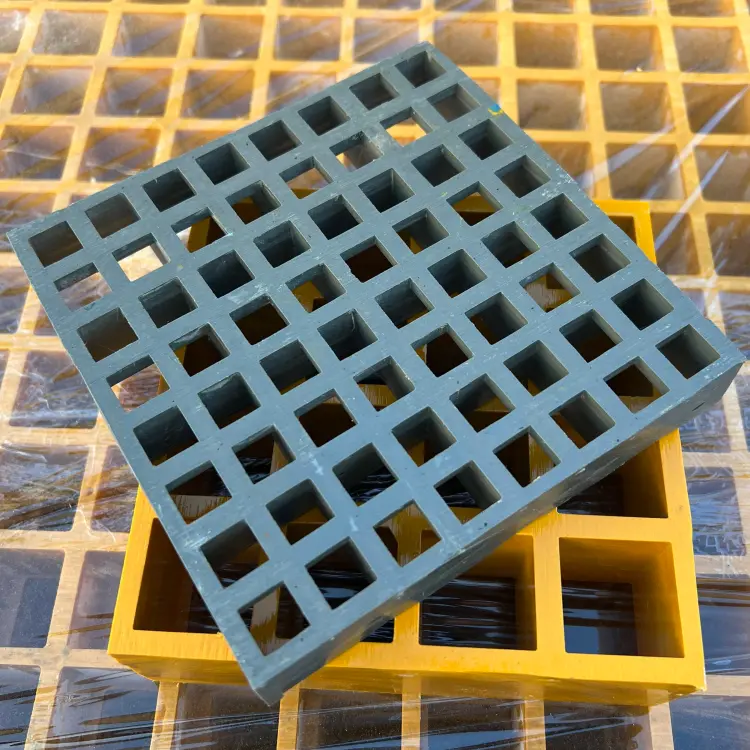
Molded grating is manufactured by interweaving continuous fiberglass strands with liquid resin in a mold, then curing under heat and pressure. The result is a one-piece, homogeneous panel with a square or rectangular mesh pattern.
Key Characteristics
Bi-directional strength — load-bearing capacity in both directions
Excellent corrosion resistance — ideal for harsh chemical environments
High impact resistance — absorbs shock without cracking
Non-slip surface options — can be produced with a concave or gritted top surface
Standard panel sizes — typically 4′ × 8′, 4′ × 12′, or metric equivalents
Resin systems — polyester, vinyl ester, or phenolic available
When to Choose Molded Grating
| Application | Why It Fits |
| Chemical processing plants | Superior resistance to acids, alkalis, and solvents |
| Wastewater treatment facilities | Handles constant moisture and chemical exposure |
| Offshore platforms & marine environments | Saltwater corrosion-proof, non-conductive |
| Food & beverage processing | Hygienic, easy to clean, won’t rust or contaminate |
| Electroplating and metal finishing | Non-conductive, resistant to aggressive chemicals |
| Walkways with multi-directional traffic | Bi-directional strength handles loads from any angle |
Limitations
Lower span capability compared to pultruded grating of similar depth
Heavier than pultruded for the same load rating
Higher material cost per square foot in some regions
2. Pultruded FRP Grating
What It Is
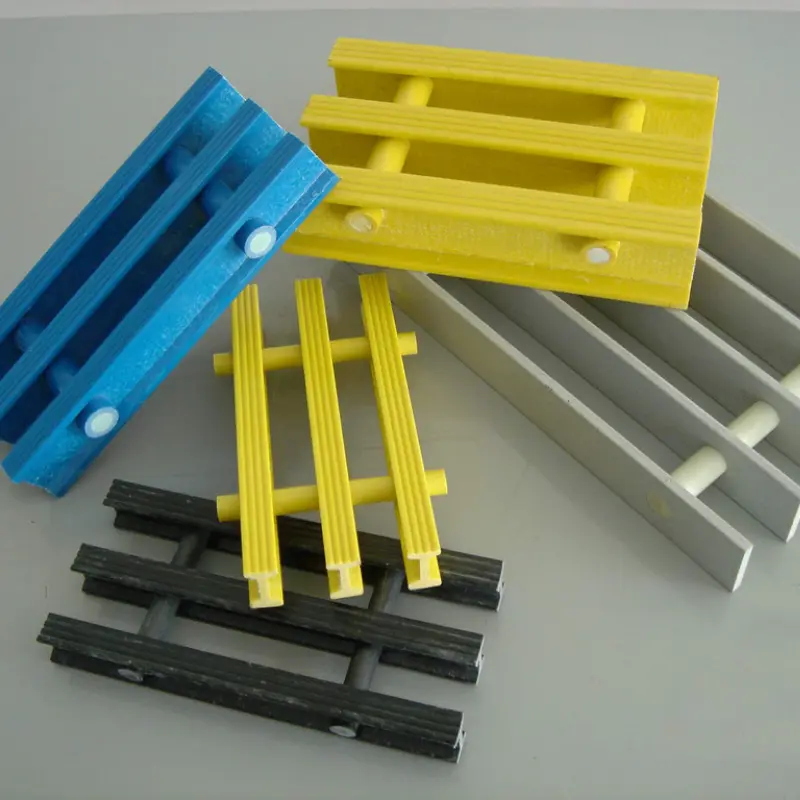
Pultruded grating is assembled from pultruded structural shapes — typically I-bars or T-bars — locked together with cross rods. The pultrusion process pulls continuous fiberglass rovings through a resin bath and heated die, producing high-strength linear profiles.
Key Characteristics
Unidirectional strength — extremely high load capacity along the bar direction
Longer spans — can span significantly further than molded grating of the same depth
Lighter weight — higher strength-to-weight ratio
Lower resin content — approximately 35% resin vs. 65% glass, compared to molded’s 65/35 ratio
Smooth or gritted top surface available
Standard bearing bar spacing — 1″, 1.5″, or 2″ on center
When to Choose Pultruded Grating
| Application | Why It Fits |
| Long-span walkways and platforms | Spans up to 6 feet or more without intermediate support |
| Cooling tower decks | Lightweight, moisture-resistant, handles large open areas |
| Bridges and pedestrian overpasses | High load capacity with minimal deflection |
| Industrial mezzanines | Supports heavy equipment loads over wide spans |
| Rooftop walkways | Lightweight — reduces structural load on the building |
| Applications requiring frequent access | Smooth surface allows easy cart and trolley movement |
Limitations
Primarily unidirectional strength — loads must run perpendicular to bearing bars
Cutting and fabrication require more care to seal exposed fibers
Less impact resistant than molded grating in some configurations
3. Gritted / Grit-Top FRP Grating
What It Is
Gritted grating features a coarse silica or aluminum oxide grit bonded to the top surface during manufacturing. The grit is embedded in the resin before curing, creating a permanent, high-traction surface.

Key Characteristics
Superior slip resistance — even when wet, oily, or icy
Permanent bond — grit will not peel, flake, or wear away under normal use
Available on both molded and pultruded grating
Grit size options — fine, medium, and coarse depending on application
ADA-compliant options available for public access areas
When to Choose Gritted Grating
| Application | Why It Fits |
| Ramps and inclined walkways | Prevents slipping on slopes |
| Oily or greasy environments | Maintains traction where fluids are present |
| Outdoor walkways in wet or icy climates | Safe footing in all weather conditions |
| Stair treads and ladder rungs | Critical fall prevention on vertical access points |
| Marine docks and piers | Safe footing on constantly wet surfaces |
| Vehicle and forklift traffic areas | Prevents wheel slippage |
Limitations
Slightly higher cost than standard smooth-surface grating
Grit surface may be abrasive to bare skin or soft-soled footwear
Requires periodic cleaning to maintain optimal traction
4. Concave / Meniscus FRP Grating
What It Is
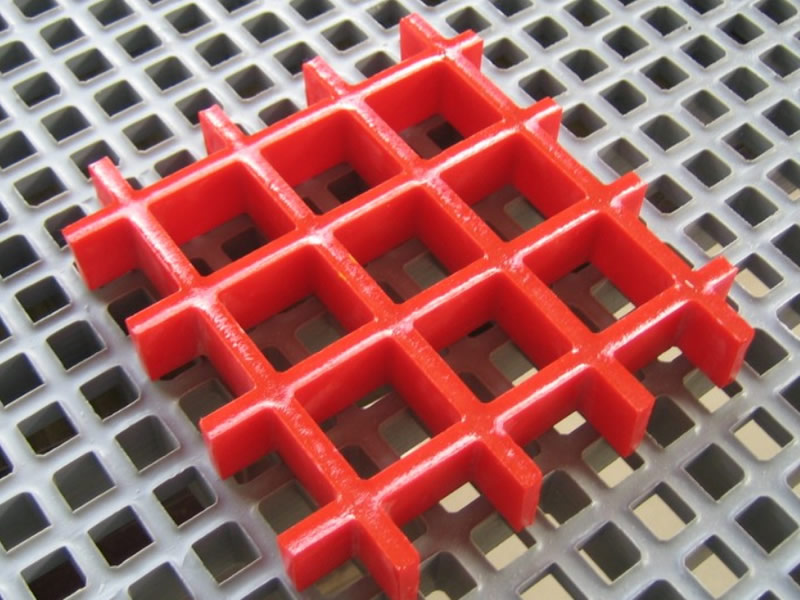
Concave grating (also called meniscus grating) is a molded grating variant where the top surface of each bearing bar has a curved, concave profile. This design is achieved through a secondary surfacing process applied during molding.
Key Characteristics
Inherent slip resistance — concave surface channels liquids away from the contact point
No added grit required — slip resistance is structural, not applied
Softer on footwear — less abrasive than gritted surfaces
Enhanced resin-rich surface — improved UV and corrosion resistance
Available in standard mesh patterns
When to Choose Concave Grating
| Application | Why It Fits |
| Food processing facilities | Non-abrasive, easy to sanitize, slip-resistant without grit |
| Pharmaceutical manufacturing | Clean, hygienic, no grit that could contaminate products |
| Public walkways and pedestrian areas | Slip-resistant without being rough on shoes |
| Areas where workers kneel or sit | More comfortable than gritted surfaces |
| Breweries and bottling plants | Handles constant moisture with reliable traction |
| Swimming pool surrounds | Slip-resistant, non-abrasive for bare feet |
Limitations
Slightly lower slip resistance than heavy gritted surfaces in oily conditions
Available primarily in molded grating only
May show wear on the concave profile after extended heavy traffic
5. Cross-Bar / Cross-Rod FRP Grating
What It Is
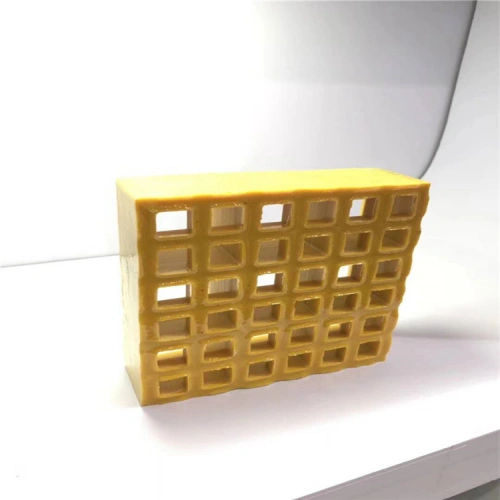
Cross-bar grating refers to the transverse members that lock bearing bars together. While both molded and pultruded grating have cross-members, the term “cross-bar grating” in procurement contexts typically refers to pultruded grating with mechanically locked cross-rods, or molded grating with a reinforced cross-bar pattern.
Key Characteristics
Enhanced lateral stability — cross-bars prevent bar splaying and twisting
Improved load distribution — transfers loads across multiple bearing bars
Torsional rigidity — resists racking and diagonal deflection
Available in square or rectangular mesh configurations
When to Choose Cross-Bar Grating
| Application | Why It Fits |
| Heavy equipment platforms | Cross-bars distribute point loads across multiple bars |
| Areas with concentrated point loads | Prevents single-bar overloading |
| Seismic zones | Added torsional rigidity resists lateral forces |
| High-traffic industrial walkways | Maintains structural integrity under constant use |
| Applications with vibration | Cross-bars dampen vibration and prevent loosening |
| Cutting and custom fabrication | Cross-bar construction holds shape better when cut |
Limitations
Marginally higher cost than standard grating without reinforced cross-bars
Slightly heavier than standard configurations
Quick Selection Reference Chart
| Your Requirement | Best Grating Type |
| Chemical resistance is the #1 priority | Molded (vinyl ester resin) |
| Longest spans with minimal support | Pultruded |
| Wet, icy, or oily walking surfaces | Gritted |
| Food-grade, hygienic, slip-resistant | Concave |
| Heavy point loads or vibration | Cross-bar reinforced |
| Bi-directional traffic loading | Molded |
| Lightest weight for rooftop applications | Pultruded |
| Barefoot traffic (pools, showers) | Concave |
| Vehicle traffic (forklifts, carts) | Gritted or molded with heavy load rating |
| Marine/offshore environment | Molded (polyester or vinyl ester) |
Conclusion
Choosing the right FRP grating comes down to four key questions:
What is the load requirement and span? → Determines molded vs. pultruded
What is the environment? → Determines resin system and corrosion needs
What are the slip-resistance requirements? → Determines gritted vs. concave vs. standard
What are the traffic patterns? → Determines bi-directional vs. unidirectional and cross-bar needs
By matching your application to the correct grating type, you ensure optimal safety, longevity, and total cost of ownership. For custom specifications, resin formulations, or load-rating calculations, consult with your FRP grating manufacturer to validate your selection against specific project requirements.
For more information on FRP grating specifications, load tables, or to request a quote for your project, contact our engineering team.
