
In chemical pumps, valves, and related equipment, plastic components often face multiple simultaneous demands: chemical attack, temperature, pressure, friction, wear, and mechanical load. PTFE, UHMWPE, and nylon (PA6/PA66) are the three engineering plastics most frequently considered for chemical pump and valve applications. Each has distinct strengths: PTFE offers outstanding chemical resistance and an extremely low coefficient of friction; UHMWPE delivers exceptional wear and impact resistance; nylon provides superior mechanical strength and rigidity.
The real selection logic follows this sequence:
Media → Concentration → Temperature → Pressure/Load → Friction & Wear → Service Life → Total Cost
1. Step One: Define the Actual Operating Conditions First
The most common mistake in engineering plastics selection is starting with questions like “Which plastic has the highest strength?” or “Which plastic is most corrosion-resistant?” Neither question is precise enough. Before choosing a material, you need to pin down at least the following parameters:
| Operating Parameter | What to Confirm |
| Media | Acid, alkali, solvent, oil, water, slurry, etc. |
| Concentration | Chemical concentration or composition of the media |
| Temperature | Normal operating temperature and maximum temperature |
| Pressure | Normal working pressure and possible peak pressure |
| Contact time | Continuous or intermittent exposure |
| Mechanical load | Compression, rotation, sliding, impact, etc. |
| Friction | Whether continuous sliding or rotational friction is present |
| Solid particles | Whether sand, crystals, catalyst particles, or other solids are present |
| Dimensional requirements | Whether tight dimensional and tolerance requirements exist |
| Service life | Expected operating cycle and replacement interval |
2. Core Properties and Limits of the Three Materials
2.1 PTFE: First Choice for Severe Chemical Exposure, Sealing, and Low Friction
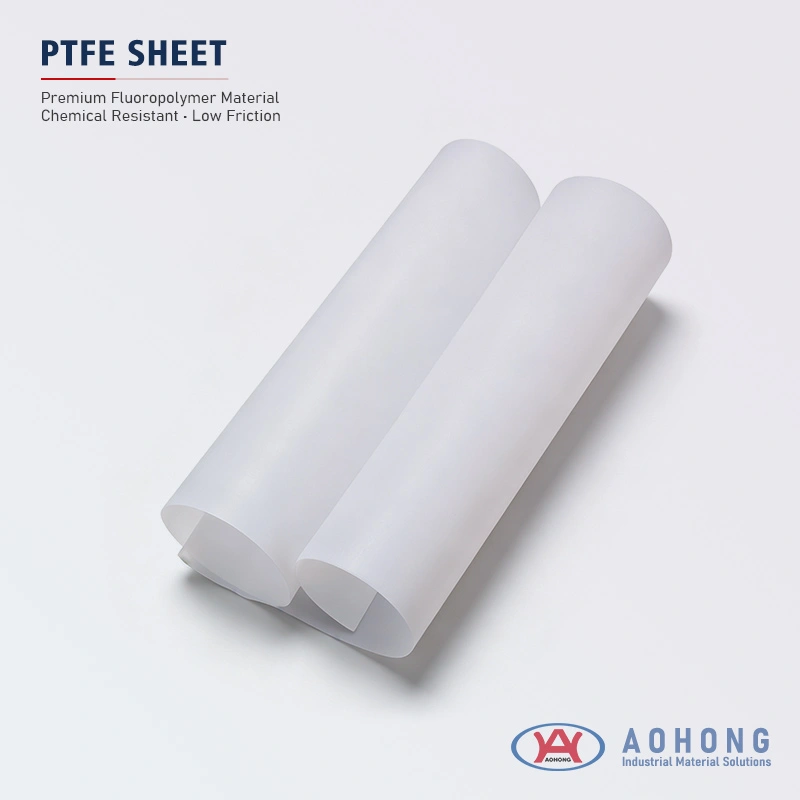
PTFE offers excellent resistance to a wide range of acids, alkalis, solvents, and other chemical media. Key advantages include:
- Outstanding chemical resistance
- Extremely low coefficient of friction with good self-lubrication
- Very low water absorption and excellent weatherability
- Continuous service temperature up to approximately 260°C, depending on grade and operating conditions
- Suitable for many highly corrosive chemical media
For these reasons, PTFE is widely used in valve seats, gaskets, seals, pump linings, bushings, sliding components, and corrosion-resistant internal parts.
However, PTFE’s mechanical strength is not its strong suit. Unfilled PTFE is prone to creep and cold flow under sustained pressure or continuous load. If a component must withstand both highly corrosive media and significant mechanical load, unfilled PTFE should not be the default choice. Filled or modified PTFE grades should be evaluated instead.
2.2 UHMWPE: First Choice When Wear Is the Primary Problem
The biggest advantage of UHMWPE (ultra-high molecular weight polyethylene) is not high-temperature performance, but rather:
- Excellent wear resistance
- Outstanding impact resistance
- Low friction and self-lubricating properties
- Good resistance to many acids, alkalis, and salt solutions
When the media contains sand, mineral particles, catalyst fines, crystals, sludge, or other solid particles, components face more than just chemical corrosion. They also face continuous particle impact, sliding friction, and surface abrasion. In such cases, UHMWPE is often a better fit than PTFE.
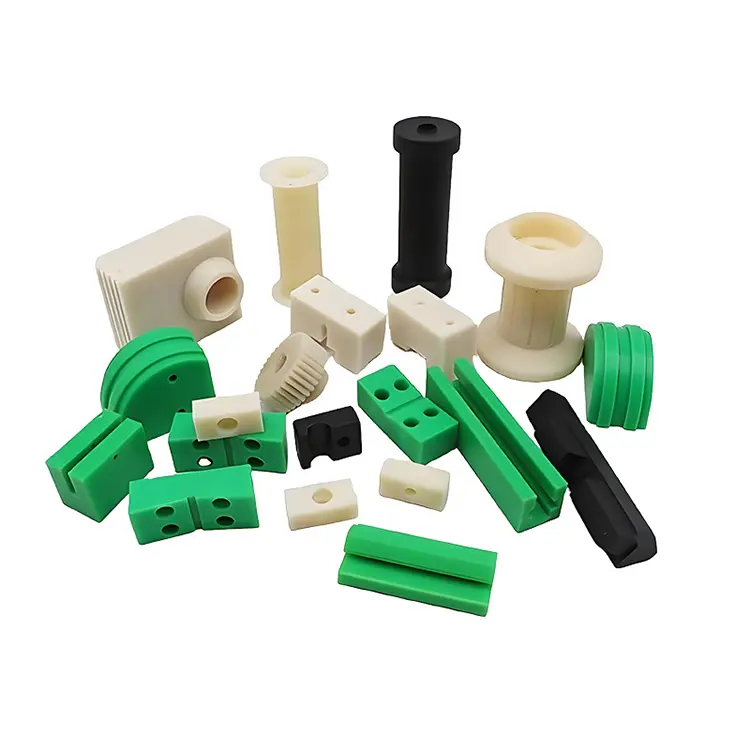
Common UHMWPE applications include pump linings, wear plates, sliding components, guide rails, and slurry handling equipment parts.
Its main limitation is a continuous service temperature typically around 80–90°C, far below PTFE. Exact limits depend on the specific grade, load, pressure, and design.
2.3 Nylon: Consider When Mechanical Strength and Rigidity Are Critical
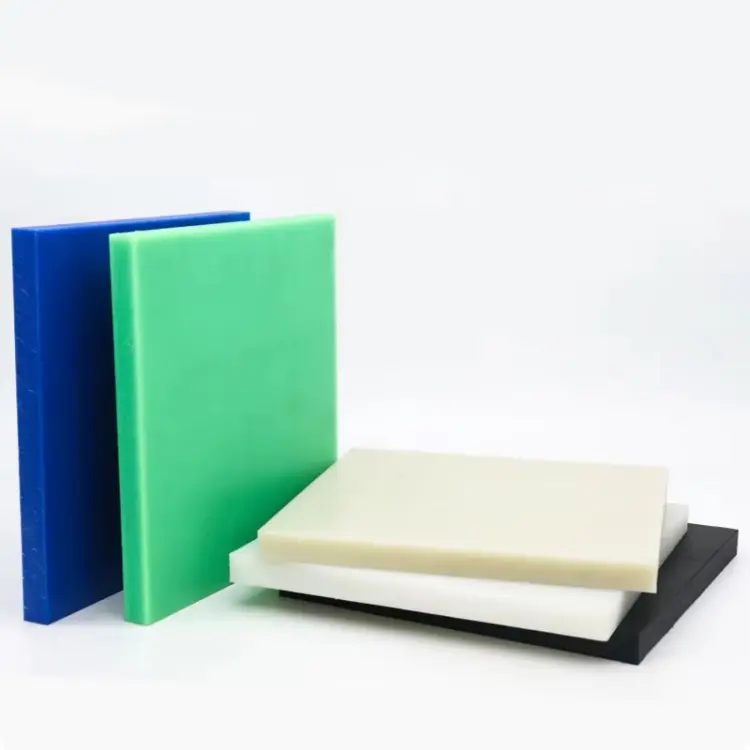
Nylon (PA6, PA66, and modified nylons) typically offers:
- Higher mechanical strength and rigidity
- Good wear resistance and impact strength
- Good machinability
- Good resistance to oils and many hydrocarbon media
Nylon is therefore commonly used in gears, bushings, rollers, pump components, mechanical supports, and structural parts.
Nylon’s biggest weakness is that its chemical resistance is clearly inferior to PTFE. Strong acids, strong alkalis, high-temperature water, and certain aggressive media can cause swelling, hydrolysis, chemical degradation, dimensional change, and loss of strength. In addition, nylon has significant moisture absorption, which affects dimensional stability, mechanical properties, and fit tolerances after water uptake.
2.4 Quick Comparison of the Three Materials
| Property | PTFE | UHMWPE | Nylon PA6/PA66 |
| Chemical resistance | Excellent | Good–Excellent | Moderate |
| Acid resistance | Excellent | Good for many acids | Limited |
| Alkali resistance | Excellent | Good for many alkalis | Limited |
| Solvent resistance | Excellent for many media | Good for many media | Good for oils and hydrocarbons |
| Continuous service temp. | Up to ~260°C | Typically ~80–90°C | Typically ~80–100°C |
| Coefficient of friction | Very low | Low | Medium-low |
| Wear resistance | Good | Excellent | Good |
| Impact resistance | Fair | Excellent | Good |
| Mechanical strength | Low | Moderate | High |
| Creep resistance | Poor | Moderate | Better |
| Water absorption | Very low | Very low | Noticeable |
| Typical applications | Seals, valve seats, gaskets, linings | Wear linings, sliding parts | Gears, bushings, mechanical structural parts |
Actual performance depends on media concentration, temperature, pressure, load, and exposure time. Critical applications should always be verified against chemical compatibility data for the specific material grade and actual service conditions. This table is intended for preliminary screening only.
3.Selection Decision Path: Four Key Questions
3.1 Step One: What Exactly Is the Media?
Knowing the media name alone is not enough. You must also know the concentration and temperature. The same chemical can affect a material completely differently at different concentrations and temperatures.
3.2 Step Two: What Is the Temperature?
Temperature is a critical screening factor. A material that is compatible with a media at room temperature may behave very differently at elevated temperatures.
Above approximately 100°C, PTFE has a clear temperature advantage, while UHMWPE and standard nylon are much more limited. However, high temperature does not automatically mean PTFE is the answer. Pressure, mechanical load, creep, media concentration, and component geometry must all be considered.
Below approximately 80°C, all three materials may be candidates. The next step is determining whether the primary issue is corrosion, wear, or mechanical strength.
3.3 Step Three: Are There Solid Particles in the Media?
This is especially important in pumping applications. Even with identical chemical composition, the presence or absence of sand changes the failure mode entirely.
No solid particles; corrosion is the main concern → PTFE first
Solid particles present; particle impact and abrasive wear are the main concerns → UHMWPE first
Chemical attack is the dominant failure mode → PTFE; particle abrasion is the dominant failure mode → UHMWPE
3.4 Step Four: How Much Mechanical Load Does the Component Carry?
A gasket and a gear cannot be selected using the same logic. Material selection should be based on the component’s function, not just the chemical media being handled.
Gaskets: Chemical compatibility, sealing performance, compression behavior, friction, and temperature. PTFE is often a key candidate.
Gears: Tensile strength, rigidity, dimensional stability, wear resistance, and fatigue performance. If the chemical environment allows, nylon may be the better fit.
Pump linings: Corrosion resistance, wear resistance, temperature, friction, and dimensional stability must all be considered simultaneously. Both PTFE and UHMWPE may be candidates.
3.5 Rapid Screening Flow
1.Is the media clearly corrosive?
Yes → Start with PTFE
No → Continue evaluating mechanical and wear requirements
2.Is the operating temperature high?
Yes → PTFE typically has a clear temperature advantage
No → Continue
3.Does the media contain significant solid particles?
Yes → UHMWPE deserves strong consideration, especially for low-temperature abrasive service
No → Continue
4.Does the component carry significant mechanical load?
Yes → Consider nylon or reinforced/filled engineering plastics, provided chemical compatibility is confirmed
No → If corrosion resistance and low friction are the core requirements, start with PTFE
5.Are creep resistance or dimensional stability critical?
Yes → Do not default to unfilled PTFE. Evaluate filled PTFE, modified grades, or other engineering plastics
4. Material Recommendations by Component Type
4.1 Valve Seats: PTFE Is Usually a Key Candidate
Valve seats must form a reliable seal. Chemical resistance, low friction, sealing performance, and dimensional stability are the priorities. PTFE is therefore widely used for chemical valve seats. If the seat is subjected to high pressure or load, modified or filled PTFE grades should be evaluated to improve creep resistance, wear resistance, and load-bearing capacity.
4.2 Pipe and Equipment Gaskets: PTFE Is Typically the First Choice
For highly corrosive media, PTFE is commonly used in flange gaskets, valve gaskets, and pipe connection seals. But material selection is only the first step in sealing reliability. Actual seal performance also depends on working pressure, temperature, flange condition, bolt load, gasket geometry, and installation procedure.
4.3 Pump Linings: PTFE or UHMWPE Depends on the Dominant Failure Mode
Corrosion is the primary issue (highly aggressive media, elevated temperature, low solids content) → Evaluate PTFE first
Wear is the primary issue (sand-laden media, slurry, high solids, continuous erosion, low-temperature operation) → UHMWPE is likely the better fit
Pump lining material should not be fixed to one option. It should be selected based on the actual failure mode observed in service.
4.4 Sliding Components: UHMWPE Usually Deserves Strong Consideration
For wear strips, slide blocks, guide rails, wear pads, and low-friction sliding components, UHMWPE offers a clear advantage. It combines low friction, high wear resistance, and high impact strength, making it well suited for continuous sliding contact.
4.5 Gears and Mechanical Parts: Consider Nylon When the Chemical Environment Allows
Nylon works well for gears, rollers, bushings, and mechanical supports—provided the actual media does not cause significant swelling, hydrolysis, or chemical degradation of the nylon. “High mechanical strength” only matters if the chemical environment is compatible first.
5. Real-World Application Examples
5.1 Gasket for 30% Hydrochloric Acid Transfer Pump
Conditions: 30% HCl, 80°C, atmospheric/low pressure, sealing gasket
The dominant failure risk is chemical attack. The gasket is not a high-load structural component. The core requirements are corrosion resistance and seal stability. PTFE is the material worth evaluating first. Final confirmation still depends on the specific concentration, temperature, pressure, and gasket design.
5.2 Lining for Sand-Laden Wastewater Pump
Conditions: Wastewater, sand content, near-neutral pH, 60°C, pump lining
Chemical corrosion is not the main issue here. The real problem is particle impact and continuous abrasion. UHMWPE becomes a very strong candidate. Choosing PTFE simply because “it has better chemical resistance” would fail to address the actual failure mode.
5.3 Mechanical Components in Mineral Oil Transfer Pump
Conditions: Mineral oil, 80°C, no aggressive chemicals, mechanical drive components
The primary requirements are mechanical strength, rigidity, wear resistance, and dimensional stability. If the specific oil, temperature, load, and geometry are compatible, nylon is a practical candidate. PTFE may have superior chemical resistance, but it is not necessarily suitable for load-bearing mechanical parts.
6. FAQ
Q1: Is PTFE always better than UHMWPE?
No. PTFE generally offers broader chemical resistance and a higher temperature range. UHMWPE offers clear advantages in wear resistance, impact strength, and low friction—especially for relatively low-temperature abrasive service.
Q2: Can UHMWPE be used with acidic media?
Yes, for many acids. But you cannot judge based on the word “acid” alone. The specific acid type, concentration, temperature, pressure, and exposure time all matter. Strong oxidizing acids and high-temperature, high-concentration conditions require strict compatibility verification.
Q3: Can nylon be used in chemical pumps?
Yes. If the media is oil, hydrocarbon, or another relatively mild chemical environment, nylon can be used for certain mechanical and wear components. However, strong acids, strong alkalis, high-temperature water, and aggressive media require careful evaluation.
Q4: What is PTFE’s biggest weakness?
Its mechanical strength is relatively low, and it is prone to creep under sustained load. In high-load applications, filled PTFE or other reinforced materials may be necessary.
Q5: Does nylon absorb water?
Yes. Nylon’s moisture absorption is significantly higher than PTFE and UHMWPE. Water uptake can cause dimensional change, strength variation, rigidity change, and fit tolerance shifts. High-precision mechanical components must account for actual humidity and water exposure in material selection.
7.Conclusion: Match the Material to the Conditions, Not to the Highest Spec
For engineering plastic components in pumps and valves, no single material performs best under all conditions. Each material has its own performance boundaries and suitable applications.
Primary risk is chemical corrosion → PTFE first
Primary risk is abrasive wear from solid particles → UHMWPE first
High mechanical strength and rigidity required, and chemical compatibility confirmed → Consider nylon
The core of material selection is not “which material has the highest performance” but “which material best matches the actual operating conditions.” Defining the media composition, concentration, temperature, pressure, mechanical load, solid particles, and dimensional requirements matters more than specifying a material upfront. Once the operating conditions are clearly defined, you can determine whether PTFE, UHMWPE, nylon, or another engineering plastic is the right choice.
