
Choosing the right insulation material for high-temperature applications can be confusing. This FAQ answers the most common questions about fiberglass cloth, ceramic fiber cloth, graphite coated fabrics, and asbestos-free alternatives — so you can select the right product with confidence.
1. Fiberglass Cloth vs. Ceramic Fiber Cloth: Which Should You Choose?
Both materials are widely used for thermal insulation, but they serve different temperature ranges and working environments.
Fiberglass Cloth, Tape & Rope
Excellent thermal insulation, abrasion resistance, and electrical insulation
Typical applications: pipe lagging, equipment heat shielding, cable protection, high-temperature sealing
Best for continuous temperatures up to 550°C (1022°F)
Ceramic Fiber Cloth, Tape & Rope
Higher temperature rating (typically up to 1260°C / 2300°F)
Lower thermal conductivity and better thermal stability
Ideal for boilers, kilns, high-temperature piping, and heat treatment equipment
Difference Between Ceramic Fiber Paper and Ceramic Fiber Cloth
Quick comparison table:
| Property | Fiberglass Cloth | Ceramic Fiber Cloth |
| Continuous temp | 550°C | 1260°C |
| Thermal conductivity | Moderate | Low |
| Abrasion resistance | Good | Moderate |
| Flexibility | High | Lower |
| Cost | Lower | Higher |
| Best for | General high-temp insulation | Extreme heat & thermal cycling |
Rule of thumb:
If your application runs below 500°C and needs flexibility → choose fiberglass cloth.
If your equipment faces sustained high heat or frequent thermal shocks → choose ceramic fiber cloth.
2. Why Does Insulation Material Become Brittle and Crack Over Time?
Brittleness and cracking usually result from one or more of these factors:
Long-term oxidation at high heat – Fibers gradually lose strength and become brittle.
Temperature exceeding the material’s rating – Running standard fiberglass cloth above its continuous limit accelerates degradation.
Chemical exposure – Acids, alkalis, oils, or corrosive gases attack the fiber structure.
Frequent thermal cycling – Repeated heating and cooling causes expansion/contraction stress, leading to fatigue and cracking.
What to do:
Don’t just look at the peak temperature number. Match the material to your actual running temperature, chemical environment, and expected service life. If you need help, contact our engineers for a material recommendation.
3. What Makes Graphite Coated Fiberglass Cloth Different from Standard Fiberglass Cloth?
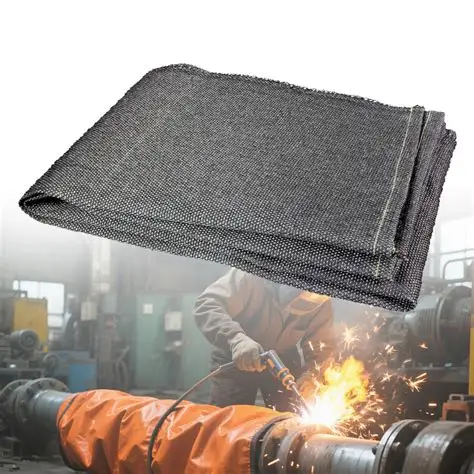
Graphite coated fiberglass cloth is a standard fiberglass cloth with a thin graphite layer applied to the surface. This coating adds extra heat and wear protection.
Key advantages:
Boosts surface thermal stability
Resists radiant heat better — ideal near flames or high-heat sources
Improves abrasion resistance and extends service life
Reduces heat loss in shields, curtains, and protective barriers
Typical applications:
Welding protection curtains and blankets
Outer insulation on high-temperature equipment
Boiler and heat treatment equipment shielding
High-temperature pipe protection
If your work involves open flames, sparks, or intense radiant heat, graphite coated fiberglass cloth is usually the best choice.
4. Why Is Ceramic Fiber Cloth Ideal for Boilers and Kilns?
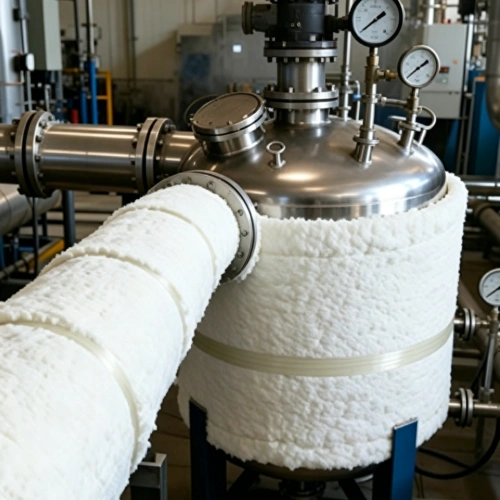
Boilers and kilns operate at extreme temperatures and require insulation that remains stable under continuous heat. Ceramic fiber cloth delivers:
High temperature rating up to 1260°C (2300°F)
Low thermal conductivity — minimizes heat loss
Low heat capacity — fast heat-up and cool-down
Strong thermal stability — won’t degrade quickly
Excellent thermal shock resistance — withstands rapid temperature changes
Ceramic fiber cloth maintains its structure where standard materials fail, reduces energy consumption, and improves overall efficiency in high-temperature industrial equipment.
5. What Are the Best Alternatives to Asbestos Cloth, Tape, and Rope?
Asbestos was once common in insulation, but due to severe health risks, its use is now restricted or banned in most regions. Modern alternatives offer similar or better performance without the dangers.
Recommended asbestos-free replacements:
| Asbestos Product | Safer Alternative |
| Asbestos cloth | Ceramic fiber cloth or fiberglass cloth |
| Asbestos tape | Fiberglass tape or ceramic fiber tape |
| Asbestos rope | Ceramic fiber rope or fiberglass rope |
These non-asbestos materials provide comparable heat resistance, are easier to handle, and comply with health and safety regulations worldwide. If you’re replacing legacy asbestos insulation, we can help you choose the right substitute.
6. Insulation Cloth, Tape, or Rope: How to Pick the Right Form
Choosing between cloth, tape, and rope depends mainly on the installation method and the shape of the surface.
Insulation Cloth – Best for large-area coverage: pipe wrapping, equipment shell insulation, fire-resistant barriers.
Insulation Tape – Best for spiral wrapping: pipe insulation, cable protection, tight-space jobs.
Insulation Rope – Best for filling and sealing: door and furnace mouth seals, expansion joint packing, gap filling.
Selection tip:
First determine how you need to install the insulation, then choose the right material based on temperature and environment.
7. Why Does Equipment Surface Stay Hot Even After Installing Insulation?
Insulation slows heat transfer — it doesn’t stop it completely. If the surface is still too hot, check these points:
Material thickness is insufficient
Temperature rating doesn’t match actual operating conditions
Gaps or poor installation quality
Operating temperature exceeds design limits
Moisture ingress or physical damage
Solution:
Ensure you have the right combination of temperature rating, thickness, and installation quality. For critical applications, consider a multi-layer system: a ceramic fiber inner layer for high heat, plus a fiberglass outer layer for abrasion protection.
8. Why Temperature Rating Alone Isn’t Enough for Choosing Insulation
A single “max temperature” number doesn’t tell the whole story. You also need to consider:
Is the operating temperature steady or fluctuating?
Are there thermal shocks or sudden spikes?
Will the material contact corrosive gases or chemicals?
Do you need frequent removal for maintenance?
Are abrasion resistance, flame retardance, or electrical insulation required?
Application examples:
Standard high-temperature piping → Fiberglass Cloth
Boilers, kilns → Ceramic Fiber Cloth
Zones near flames or high radiant heat → Graphite Coated Fiberglass Cloth
Match the full working conditions, and you’ll get reliable insulation with a longer service life.
Recommended Products for Your Application
Browse our most popular insulation materials:
[Ceramic Fiber Tape– 1260°C High Temperature]
[Graphite Coated Fiberglass Cloth – Radiant Heat Protection]
[Fiberglass Cloth– Flexible Insulation for Pipes & Cables]
Still Have Questions?
Contact our team for personalized material recommendations based on your exact temperature, environment, and installation needs.
