
Introduction
This document outlines common cutting methods for PTFE sheets. It also covers the tools needed, operational tips, and safety considerations. These details will help users select the right method for their needs.
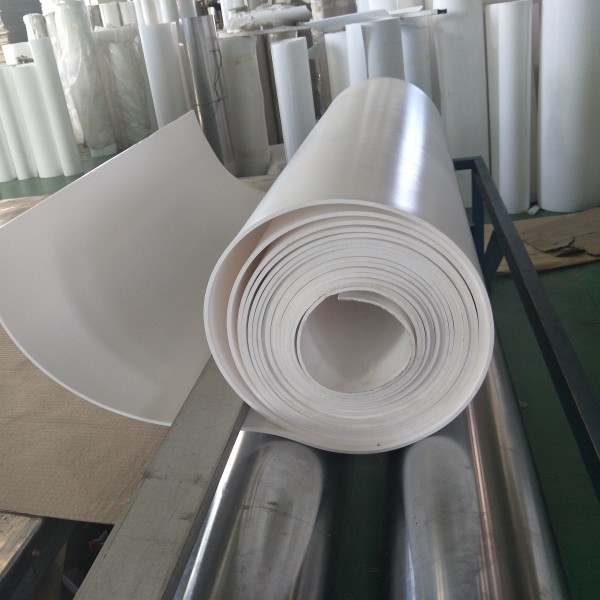
1. Mechanical Cutting
Mechanical cutting is one of the most commonly used methods for cutting PTFE sheets. Typical equipment includes wire cutting machines (wire EDM), hydraulic cutters, and shearing machines.
Advantages:
-
Fast processing speed
-
Wide applicability
-
Good for cutting PTFE sheets into different shapes and sizes.
Disadvantages:
-
Lower cutting precision than that of high-precision methods.
-
Prone to burrs and deformation, which affect product quality.
-
It makes noise and dust, so you need dust extraction and hearing protection while it runs.
2. Laser Cutting
Laser cutting is a precise method. It uses a focused laser beam to cut materials. It can complete high-quality cuts in a relatively short time.
Advantages:
-
High cutting accuracy
-
Fast cutting speed
-
Broad applicability
-
Can cut complex shapes and fine contours.
Disadvantages:
-
High equipment and capital costs.
-
Requires trained operators.
-
Not cheap for a very small-batch production.
3. Manual Cutting
Manual cutting is a simple and flexible method for PTFE sheets. Common hand tools include utility knives, serrated knives, and hand shears/cutting pliers.
Advantages:
-
Low cost
-
Easy to learn.
-
Great for small batches.
-
Ideal for custom or one-off work.
Disadvantages:
-
Low precision and efficiency.
-
Higher risk of hand injuries
-
Requires patience and skill for good results.
Operational Tips and Precautions
-
Mechanical cutting: select the right machine. Adjust the cutting speed and pressure to cut burrs and deformation. Use suitable fixturing to hold the sheet flat and stable. Use dust extraction and hearing protection as needed.
-
Laser cutting: Adjust laser power and speed with precision. Also, keep the right distance between the laser head and the PTFE sheet. Don’t let local heating get too high. It can deform materials or even cause fires in serious cases. Ensure good ventilation and fume extraction. High temperatures during PTFE processing can create dangerous decomposition products.
-
Manual cutting: select the right-hand tool for the part shape and thickness. Keep the workpiece clamped in a stable manner. Also, wear the correct personal protective equipment (PPE) to protect your hands. Cut down on vibration and force while cutting. This helps prevent rough edges and reduces the risk of injury.
Conclusion
You can cut PTFE sheets in three main ways:
-
Mechanical cutting
-
Laser cutting
-
Manual cutting
Each method has its own advantages and suitable application scenarios. Users should choose the right cutting method and tools for their needs. They must follow operational techniques and safety precautions. This ensures cutting quality and keeps everyone safe.
