
Summary
A petrochemical plant experienced repeated failures of the level gauge glass on a high-pressure steam boiler drum. Each rupture forced an unplanned boiler shutdown and exposed operators to high-temperature steam leakage, disrupting production and creating serious safety risks.
We recommended and supplied thermally tempered aluminosilicate glass to replace the original borosilicate glass in the boiler drum level gauge glass viewing window.
This glass delivers superior thermal shock resistance, pressure resistance, and mechanical strength. It eliminated the recurring glass failures caused by cyclic high-temperature and high-pressure service. The retrofit used custom cutting, tempering, and edge finishing to precisely match the original level gauge glass assembly. The unit has now run continuously for 14 months with no further glass rupture. The upgrade also improved boiler safety and reliability and reduced unplanned downtime and maintenance costs.
Background and Problem
Our customer is located at a large coastal petrochemical complex. Its thermal power workshop operates high-pressure steam boilers that supply steam and power to production units. The boiler drum level gauge glass is a critical safety device for direct drum level monitoring. The integrity of the level gauge glass directly affects boiler safety and operator safety.
One month, the level gauge glass ruptured suddenly during boiler operation. High-temperature steam and water sprayed out, the control room received a water level alarm, and the boiler operator performed an emergency shutdown. After replacing the glass with the same borosilicate specification, two more ruptures occurred the following month, seriously affecting production and creating major safety hazards.
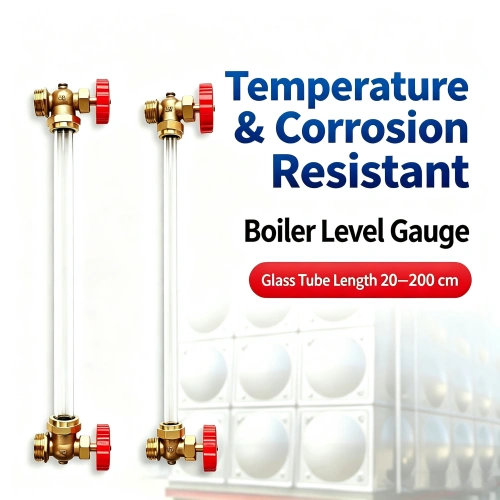
The customer team reported the following core pain points:
- High temperature, high pressure, and thermal shock cause frequent glass rupture.During boiler blowdown, intermittent feedwater, and load swings, water temperature inside the level gauge glass changes rapidly. The original borosilicate glass had insufficient thermal shock resistance and tended to crack under cyclic thermal stress.
- Serious safety risks and pro
duction losses.Glass rupture caused high-temperature steam and boiler water leakage, posing burn and electrical short-circuit risks. Each failure required boiler shutdown and depressurization before replacement, interrupting steam supply to downstream production units. - Frequent maintenance and high overall cost.The previous level gauge glass required replacement about every 2–3 months. Frequent repairs increased spare parts and labor costs and damaged sealing surfaces, creating a vicious cycle.
After reviewing operating conditions and failure records, our team confirmed the following fundamental limitations of the original borosilicate glass:
- Insufficient thermal shock resistance.The level gauge glass is located where hot and cold cycling is most severe. Conventional glass cannot withstand rapid temperature changes caused by blowdown and feedwater operations. Concentrated thermal stress leads to cracking.
- Limited mechanical strength.Uneven bolt preload during installation and aged gaskets created localized point contact. Thermal expansion amplified local stress, causing crack propagation.
- Average resistance to water and steam corrosion.High-temperature alkaline boiler water gradually attacked the glass surface, forming microcracks and reducing actual glass strength.
Facing repeated unplanned shutdowns, production losses, and burn risks, the customer urgently needed a reliable, low-maintenance long-term solution.
Failure Symptoms
The failures showed a clear pattern:
- Cracks mostly appeared in the middle of the level gauge glass or near clamping bolts, showing radial patterns.
- There was no obvious warning before rupture. Some failures occurred during boiler blowdown, feedwater pump start, or rapid load changes.
- High-temperature water and steam leakage created heavy steam around the level gauge glass, posing burn and electrical short-circuit risks.
- Each failure required boiler shutdown and depressurization before replacement. A single shutdown lasted about 6 hours, interrupting steam supply to downstream units.
Root Cause Analysis
Inspection and operating records showed the glass failures resulted from a combination of factors.
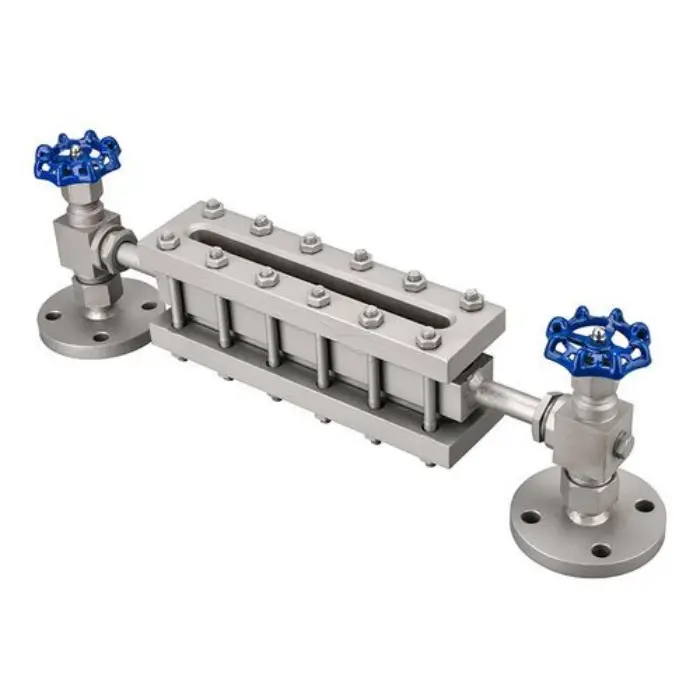 1 Thermal Shock
During boiler blowdown, intermittent feedwater, and load swings, water temperature inside the level gauge glass changes rapidly. The original borosilicate glass offers some thermal shock resistance, but after long-term service, surface microcracks expanded and thermal shock performance declined. When the blowdown valve opens, cold water and saturated water alternately impact the glass plate, generating significant thermal stress. This is a primary cause of rupture.
2 Mechanical Stress and Improper Installation
The site did not use a torque wrench during installation. Bolt tightening torque was uneven, causing excessive local pressure on the glass plate. The gasket between the metal clamping frame and glass aged and deformed, allowing direct glass-to-metal contact and point contact stress. Thermal expansion amplified this local stress, leading to crack propagation.
3 Surface Damage and Alkaline Boiler Water Corrosion
Boiler water is alkaline over the long term. High-temperature alkaline water corrodes the glass surface and creates microcracks. Hard tools used during inspection and cleaning caused scratches, further reducing glass strength.
4 Insufficient Strength Margin of the Original Material
The original borosilicate glass had a low tempering degree: surface compressive stress was about 40–60 MPa and flexural strength was about 60–80 MPa. Under the combined effects of thermal shock, mechanical stress, and surface defects, the strength margin was insufficient and rupture occurred easily.
Replacement Solution and Material Selection
Based on the above causes, we recommended and supplied thermally tempered aluminosilicate glass to replace the original borosilicate glass, together with improved installation practices.
Aluminosilicate glass has a high Al₂O₃ content and a stable network structure. It offers a higher softening point, higher mechanical strength, and better alkali resistance. Physical tempering creates a surface compressive stress layer that effectively inhibits microcrack propagation.
1 Material Performance Comparison
| Performance parameter | Standard borosilicate glass | Thermally tempered aluminosilicate glass |
| Thermal expansion coefficient | Approx. 3.3×10⁻⁶/K | Approx. 4.0×10⁻⁶/K |
| Mechanical strength | Moderate; may decline after long-term thermal cycling | Higher; better impact resistance and crack propagation resistance |
| Thermal shock resistance | Good, suitable for conventional service | Excellent, suitable for high-temperature, high-pressure, and frequent temperature change service |
| High-temperature performance | Suitable for general boiler applications | Higher softening point, better for demanding conditions |
| Alkali corrosion resistance | Average | Better, suitable for long-term high-temperature water and steam service |
| Recommended application | Conventional boiler level gauge glass | High-pressure boilers, petrochemical units, and critical equipment |
2 Reasons for Selecting Tempered Aluminosilicate Glass
- High surface compressive stress.After thermal tempering, surface compressive stress reaches ≥180 MPa, significantly improving thermal shock resistance and mechanical impact resistance.
- High softening point.Suitable for long-term high-temperature service in boiler level gauge glass.
- Better alkali resistance.Outperforms standard borosilicate glass and slows corrosion in high-temperature boiler water.
- Physical tempering is more suitable for high-temperature service.Compared with chemical tempering, physical tempering has a lower risk of stress relaxation at high temperatures, making it better suited for continuous high-temperature level gauge glass service.
Replacement Implementation
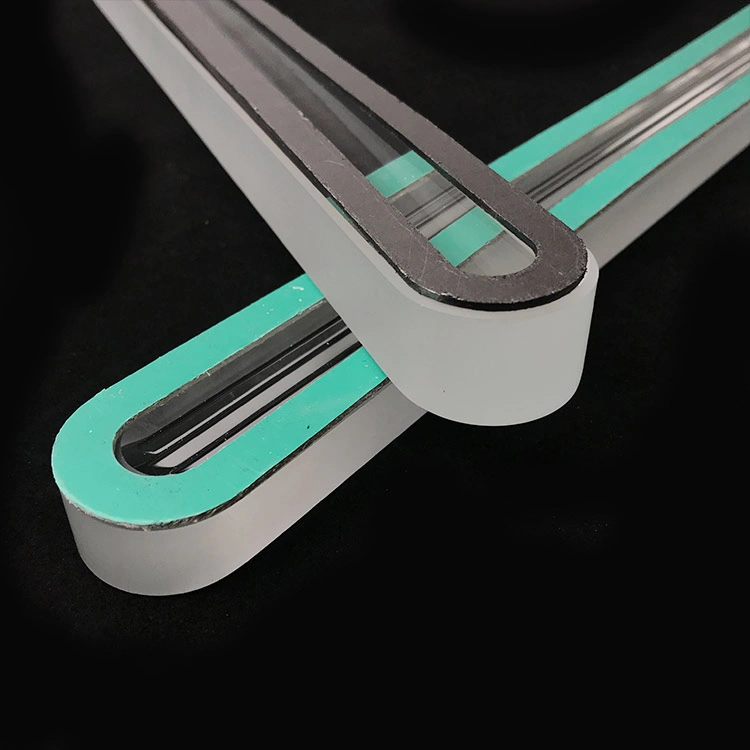 1 Boiler Shutdown and Safety Isolation
Shut down the boiler according to procedure. Close the primary and secondary steam and water side valves on the level gauge glass. Wait until boiler pressure drops to atmospheric pressure and temperature drops below 50 °C. Place “Do Not Operate” warning tags and confirm no residual pressure inside the level gauge glass.
2 Removal of Old Glass
Loosen the clamping bolts evenly in a diagonal sequence. Remove the metal clamping frame and old glass. Inspect sealing surfaces for corrosion and scratches, and remove old gasket residue. Use a copper scraper and lint-free cloth to clean the sealing groove without damaging metal sealing surfaces.
3 Installation of New Glass
Install new graphite composite gaskets; do not reuse old gaskets. Place the tempered aluminosilicate glass plate into the sealing groove, ensuring no direct contact between glass and metal frame. Tighten bolts evenly in a diagonal sequence in three passes. Use a torque wrench to verify each point and prevent local overtightening.
4 Post-Installation Inspection
Slowly open the secondary steam and water side valves to preheat the level gauge glass. At 0.3 MPa, check for leakage, then gradually raise to working pressure. After 24 hours of operation, perform hot retightening and recheck bolt torque. Check the glass plate for deformation, bubbles, or abnormal stress patterns.
Operating Results
Since replacing the original glass with tempered aluminosilicate glass and improving installation practices, the boiler level gauge glass has been in continuous service for 14 months. It has experienced multiple scheduled blowdowns, load swings, and start-stop cycles without further glass rupture.
Inspection results:
The level gauge glass window remains clear, with no steam or water leakage.
No visible cracks, scratches, or alkali corrosion marks are present on the glass surface.
Bolt torque remains stable and gaskets show no extrusion.
Economically, before the retrofit, the boiler experienced multiple shutdowns each year due to level gauge glass rupture. Each shutdown interrupted steam supply to downstream units and caused repair costs. After the retrofit, unplanned shutdowns dropped significantly. The retrofit eliminated the safety hazard of high-temperature steam and water spray and clearly reduced overall maintenance costs.
Conclusions and Recommendations
When boiler level gauge glass ruptures frequently, do not simply replace it with the same glass specification. Systematically analyze thermal shock, installation stress, surface damage, and material durability.
Thermally tempered aluminosilicate glass offers high strength, high softening point, and excellent thermal shock resistance. It is suitable for high-pressure steam boiler level gauge glass in petrochemical plants and can serve as an upgrade replacement for traditional borosilicate glass.
Installation quality is as important as glass material. Use a torque wrench and tighten bolts evenly in a diagonal sequence. Replace gaskets regularly and avoid direct contact between glass and metal.
Operationally, reduce severe thermal shock. Open blowdown valves slowly and avoid direct cold water impact on the level gauge glass.
Safety note: The boiler level gauge glass is a pressure-containing component. Replacement must be performed by certified boiler maintenance personnel or qualified technicians, strictly following boiler safety regulations and the equipment manufacturer’s instructions.
