
Packing is the most common shaft sealing element in pumps, valves, mixers, and reactors. The right choice directly affects leakage rate, shaft wear, power consumption, and maintenance costs.
This guide compares seven common packing types — PTFE, ramie, acrylic, carbon fiber, graphite, Kevlar/aramid, and phenolic — and shows you how to match them to real operating conditions.
1. Key Factors to Consider Before Selecting Packing
Packing selection is not just about temperature or pressure. You need to evaluate the full working environment.
Media Type
Strong acids, alkalis, and solvents demand high chemical resistance.
Media with solid particles, such as slurry or pulp, causes extra wear.
Food and pharmaceutical applications require non-toxic, certified materials.
Temperature
Consider both continuous operating temperature and short-term peak temperature. Different materials have different limits:
PTFE: up to 260°C
Graphite: about 450°C in oxidizing atmospheres, higher in steam
Carbon fiber: about 350°C
Aramid: about 280°C
Pressure
Low pressure (≤1 MPa): standard braided packing is enough.
Medium-to-high pressure (1–5 MPa): use dense, extrusion-resistant packing.
Very high pressure (>5 MPa): add anti-extrusion rings.
Shaft Speed / Surface Speed
High surface speed creates frictional heat. If heat is not removed quickly, packing burns and shaft wear increases.
Above 10 m/s: choose carbon fiber or graphite packing.
Below 5 m/s: PTFE and aramid packing work well.
pH and Chemical Compatibility
PTFE is inert to nearly all chemicals.
Graphite oxidizes in strong oxidizing acids such as concentrated nitric acid.
Carbon fiber may cause galvanic corrosion in conductive media.
Shaft Hardness
High-strength packing like Kevlar or carbon fiber can wear soft shafts. Check shaft sleeve hardness before selection.
Allowable Leakage
Packing normally needs slight leakage for lubrication and cooling. If zero leakage is required, consider a mechanical seal.
2. Seven Common Packing Types at a Glance
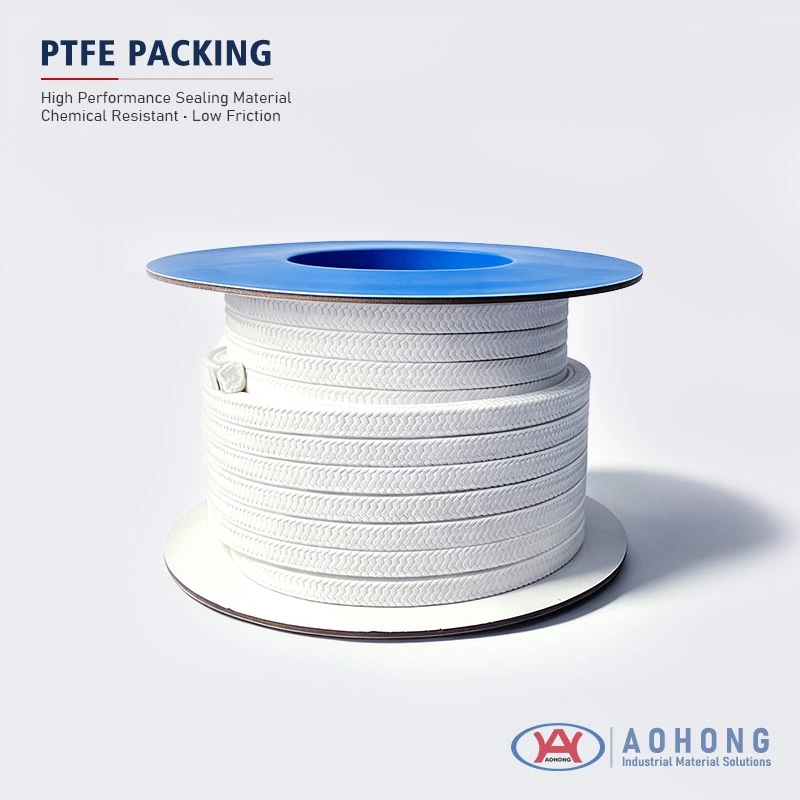
2.1 PTFE Packing
Braided from pure or filled PTFE yarn. Excellent chemical resistance, low friction, and minimal shaft wear. Ideal for chemical pumps, food equipment, and sanitary valves.
Temperature: -200°C to 260°C
Best for: strong acids, alkalis, solvents, food, pharmaceutical
Limits: poor heat transfer; can cold-flow at high temperature
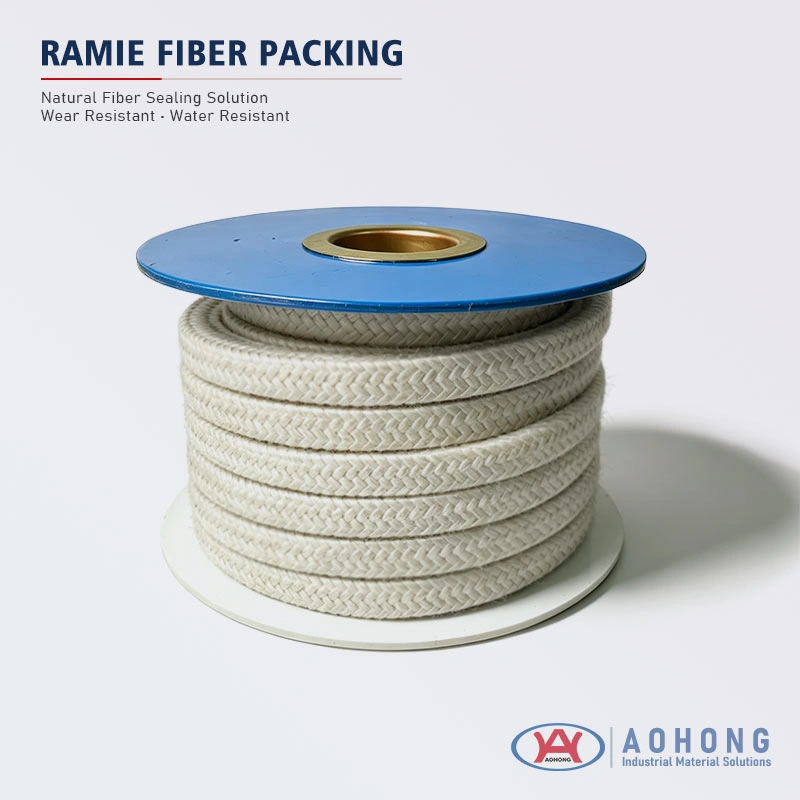
2.2 Ramie (Flax) Fiber Packing
Economical natural fiber packing, usually impregnated with tallow, PTFE, or graphite. Suitable for low-pressure, low-temperature, non-aggressive services.
Temperature: -20°C to 120°C
Best for: clean water, seawater, weak acids/alkalis, agricultural pumps
Limits: not resistant to strong chemicals or high temperature
2.3 Acrylic Fiber Packing
Synthetic fiber with moderate chemical resistance and better wear resistance than natural fibers. Good for pulp, wastewater, and slurry with small particles.
Temperature: -30°C to 150°C
Best for: pulp and paper, mining, wastewater pumps
Limits: performance drops in strong acids and high temperatures

2.4 Carbon Fiber Packing
High strength, high thermal conductivity, and good self-lubrication. A common choice for high-speed and high-temperature equipment.
Temperature: -200°C to 350°C
Best for: high-speed pumps, boiler feedwater, high-temperature valves
Limits: can cause galvanic corrosion; relatively expensive

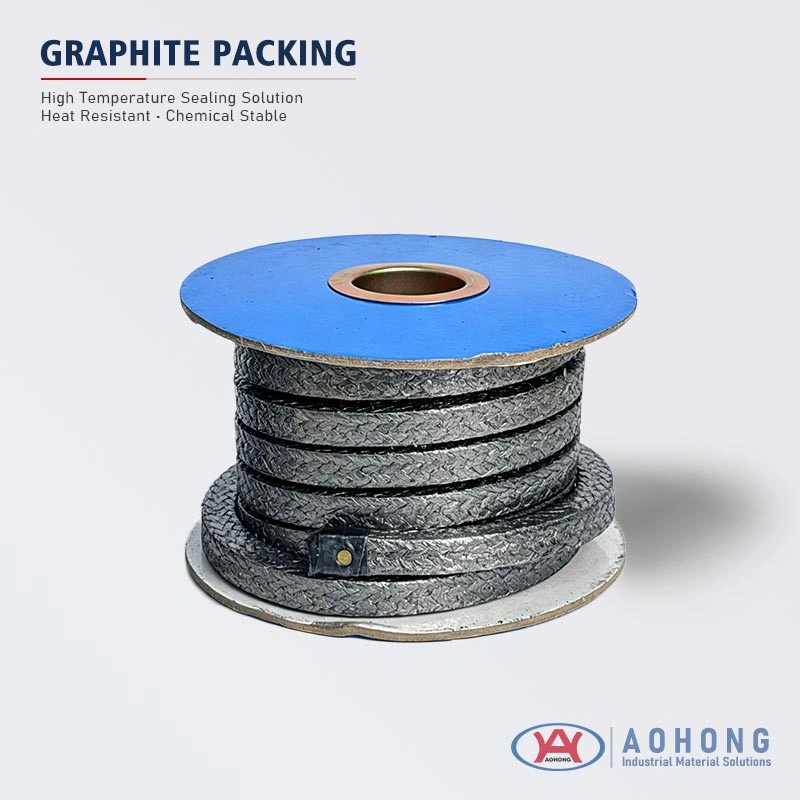
2.5 Graphite Packing
The most common choice for high-temperature sealing. Excellent self-lubrication and heat transfer.
Temperature: up to 450°C in oxidizing atmosphere, higher in steam
Best for: steam, hot oil, boiler feedwater, thermal fluid systems
Limits: oxidizes in strong oxidizing acids; can extrude under high pressure
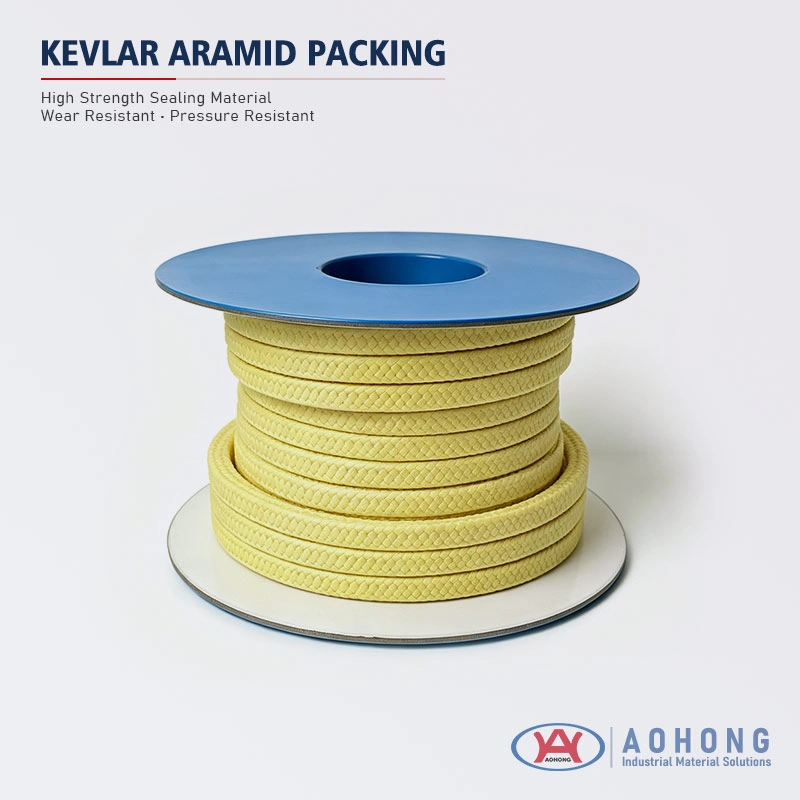
2.6 Kevlar & Aramid Packing
High strength and abrasion resistance. Ideal for abrasive media containing solid particles.
Temperature: -50°C to 280°C
Best for: slurry, pulp, mining, wastewater, particle-laden media
Limits: average thermal conductivity; may wear soft shafts
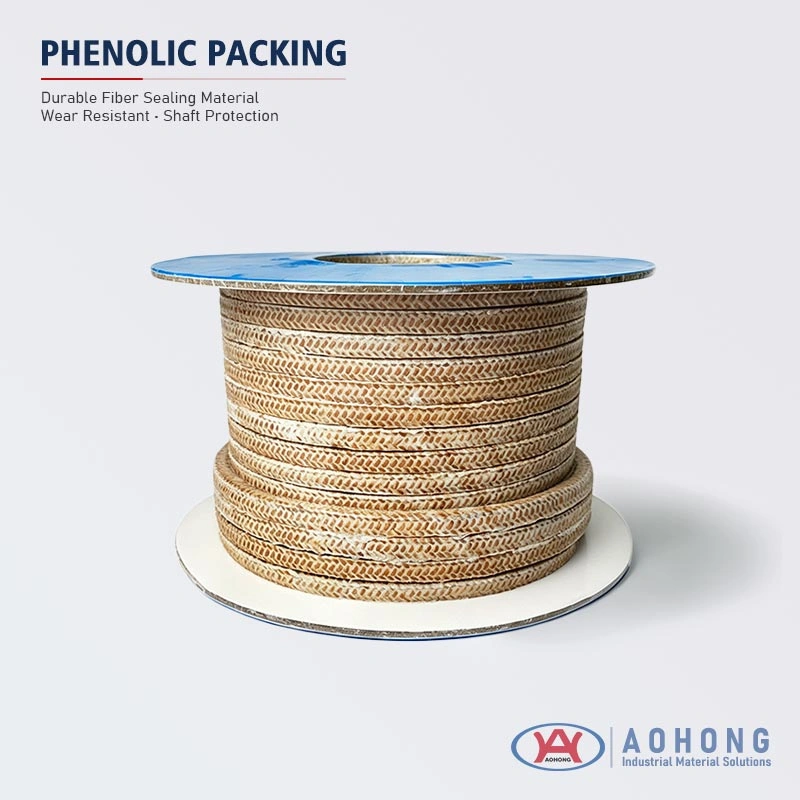
2.7 Phenolic Packing
Good oil and solvent resistance. Widely used in reciprocating pumps and plunger pumps.
Temperature: -50°C to 200°C
Best for: oil, solvents, refrigerants, reciprocating pumps, valve stems
Limits: limited resistance to strong acids and alkalis
3. Quick Packing Selection Table
| Packing Type | Temperature Range | Suitable Media | Typical Equipment | Main Advantages |
| PTFE Packing | -200°C to 260°C | Strong acids, alkalis, solvents, food | Chemical pumps, sanitary valves | Excellent chemical resistance, low friction |
| Ramie Packing | -20°C to 120°C | Water, seawater, weak chemicals | Agricultural pumps, low-pressure valves | Economical, self-lubricating |
| Acrylic Packing | -30°C to 150°C | Acids, alkalis, wastewater, slurry | Pulp, mining, wastewater pumps | Cost-effective, moderate corrosion resistance |
| Carbon Fiber Packing | -200°C to 350°C | High-temperature water, steam, oil | High-speed pumps, high-temp valves | High strength, high thermal conductivity |
| Graphite Packing | -200°C to 450°C | Steam, hot oil, boiler feedwater | High-temperature valves, boiler pumps | High temp resistance, self-lubricating |
| Kevlar Packing | -50°C to 280°C | Slurry, pulp, particle-laden media | Mining pumps, pulp pumps | High strength, abrasion resistance |
| Phenolic Packing | -50°C to 200°C | Oil, solvents, refrigerants | Reciprocating pumps, plunger pumps | Oil resistance, good mechanical strength |
Quick Selection
Strong corrosion + moderate temperature → PTFE Packing
High temperature + non-oxidizing media → Graphite Packing
High surface speed + wear resistance → Carbon Fiber Packing
Abrasive or particle-laden media → Kevlar & Aramid Packing
Mild conditions + limited budget → Ramie or Acrylic Packing
4. Matching Packing to Common Applications
Clean Water and Low-Pressure Pumps
Use ramie or acrylic packing. Upgrade to PTFE if sanitary or higher corrosion resistance is required. Avoid overtightening.
Chemical, Acid, and Solvent Services
PTFE is the first choice. For strong oxidizing acids such as nitric acid, use pure PTFE only. Avoid graphite packing in these conditions.
High-Temperature Valves and Boiler Feedwater
Graphite and carbon fiber packing are preferred. Use high-purity graphite for boiler feedwater to prevent ion leaching. Install anti-extrusion rings under high pressure.
High-Speed and Particle-Laden Media
Carbon fiber suits high surface speeds. Kevlar/aramid suits slurry and abrasive media. Always use a flush system to remove heat and particles.
Food, Pharmaceutical, and Sanitary Services
Use FDA or EC 1935/2004 certified PTFE packing or high-purity graphite. White PTFE is easy to inspect for contamination. Replace regularly.
Reciprocating and Plunger Pumps
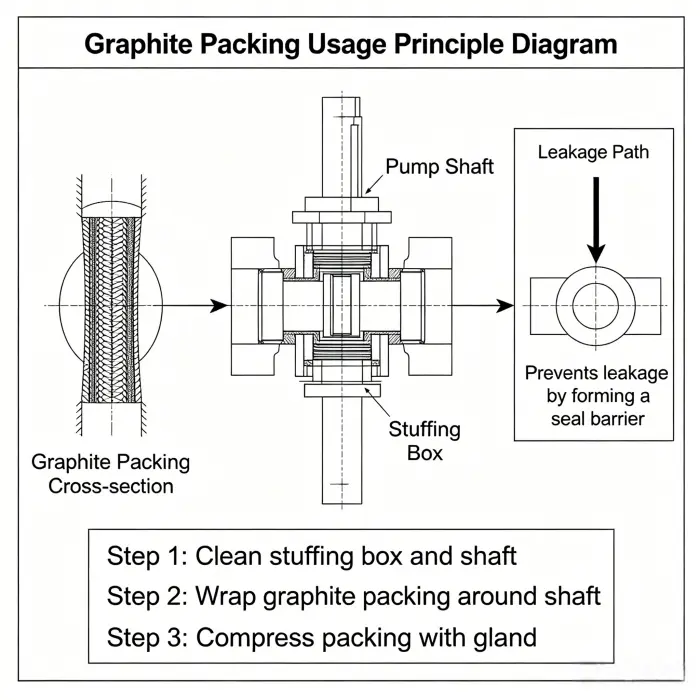
Phenolic or Kevlar packing works well. Install rings individually and stagger joints by 90° to 120°. Maintain controlled leakage for lubrication.
5. Common Packing Selection Mistakes
Selecting only by temperature and ignoring surface speed
A high-temperature material can still fail at high speed if heat transfer is poor.
Expecting zero leakage from packing
Packing seals normally need slight leakage. Use a mechanical seal if zero leakage is mandatory.
Ignoring shaft hardness
High-strength packing wears soft shafts. Harden the shaft sleeve or choose a softer packing.
Using graphite packing in strong oxidizing media
Graphite oxidizes rapidly in nitric acid or concentrated sulfuric acid. Use PTFE instead.
Ignoring galvanic corrosion with carbon fiber
Carbon fiber is conductive. In electrolyte media, it can cause pitting on metal shafts.
Focusing only on purchase price
Low-cost packing can increase shaft wear, downtime, and labor costs. Calculate total lifecycle cost.
Using standard packing in food applications
Non-certified packing may contaminate the product. Always use sanitary-certified materials.
Overtightening during installation
Excessive gland load increases friction, heat, and power consumption. Start with light pressure and adjust gradually.
6. Summary
The right packing selection is a balance of media, temperature, pressure, surface speed, shaft material, and environmental requirements.
PTFE – best for chemical compatibility
Graphite – best for high temperatures
Carbon fiber – best for high speeds
Kevlar/aramid – best for abrasive media
Phenolic – best for oil resistance
Ramie – economical for mild conditions
Acrylic – cost-effective for moderate conditions
Before purchasing, record the full operating parameters. Use the quick selection table above and consult your packing supplier for a final recommendation. This will reduce leakage, lower maintenance costs, and extend equipment service life.
Need a custom packing recommendation?
Contact our engineering team with your media, temperature, pressure, and shaft speed. We will help you select the right material and braid style for your application.
