
1. Core Selection Principles — Key Points
-
Chemical compatibility with the media: Verify the sheet material’s chemical resistance to the media (acids, alkalis, solvents, oils, steam, etc.) to avoid softening or rapid degradation.
-
Temperature limits: Choose materials that can withstand the system’s minimum and maximum operating temperatures (including short-term temperature spikes). Different sheet types have very different maximum operating temperatures (for example, PTFE vs. graphite).
-
Pressure and sealing requirements: Confirm the flange pressure class and compression/recovery needs; select appropriate thickness, reinforced, or multi-layer composite sheets to meet sealing performance.
-
Mechanical wear and elasticity: Some applications require materials with good shear resistance and compression recovery (e.g., high-pressure pump housings, valve covers).
-
On-site machinability and handling: Consider how easy the sheet is to cut, punch, or machine, and whether it is brittle or prone to cracking — this affects field processing and installation efficiency.
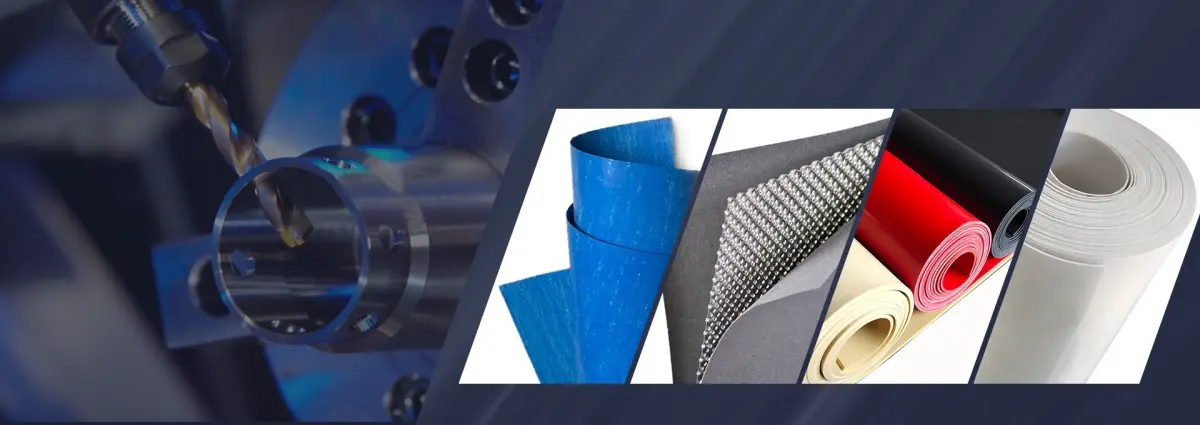
2. Typical Technical Parameters for Common Sealing Sheets (Quick Reference)
Note: The table below lists typical parameter ranges and common use cases. Always refer to the manufacturer’s technical data sheet (TDS) for exact properties.
| Material | Typical Temperature Range | Chemical / Media Compatibility (summary) | Common Thickness (mm) | Typical Applications / Advantages | On-site Cutting Notes |
|---|---|---|---|---|---|
| Compressed non-asbestos fiber | Depends on formulation; often from -100°C up to ~350–400°C | Good for many aqueous acids/bases and neutral oils; consult vendor for strong oxidizers or certain organic solvents. | 0.5–6.0 | General industrial flanges; cost-effective asbestos alternative; good pressure resistance. | Hand trimming or die-cutting. |
| PTFE (teflon) | -200°C to +260°C (short excursions higher) | Excellent chemical inertness; suitable for almost all corrosive media (except some active fluorine species). | 0.5–6.0 | Highly corrosive environments, low-friction/non-stick needs (chemical plants, pickling). | Requires very sharp blades; commonly cut by waterjet or CNC. |
| Flexible graphite | -269°C up to +500–550°C (process dependent) | Excellent for high-temperature media and non-oxidizing gases; susceptible to oxidation in strongly oxidative environments. | 0.5–6.0 | High-temperature steam, power plants, heat recovery systems. | Can be die-cut or CNC cut; edges may be friable and need finishing. |
| Elastomers (EPDM, NBR, Neoprene, etc.) | Approx. -40°C to +120~150°C (EPDM ~+120°C typical) | EPDM resists steam, many acids/bases, and weather/ozone; NBR/Neoprene are better for oils and fuels. | 1.0–10.0 | Pipe seals, outdoor exposures, low-temperature applications. | Easily hand-cut, die-cut, or punched; clean edge finish. |
| Reinforced/Composite (e.g., PTFE with metal insert, graphite-metal composites) | Depends on constituent materials | Combines properties of multiple materials — suitable for demanding corrosive, thermal and pressure conditions. | Multi-layer designs | Complex applications requiring high pressure, corrosion resistance, and thermal stability. | Typically requires professional die-cutting or CNC processing. |
3. Application-oriented Selection Recommendations (Decision Matrix)
-
High-temperature steam (boilers, turbines, heat exchangers): Prefer flexible graphite or metal-reinforced graphite composites; consider graphite with metal anti-extrusion support where needed.
-
Strong acids / strong alkalis (chemical reactors, pickling): Prefer PTFE or filled-PTFE sheets; for combined high-temperature and corrosive conditions consider PTFE/graphite composite solutions.
-
Oils / fuels (tanks, fuel piping): Use elastomers like NBR or Neoprene, or oil-compatible filled PTFE.
-
Low temperature / outdoor exposure (UV, ozone): EPDM is preferred for its weathering and ozone resistance.
-
General industrial flanges / cost-driven replacements: Compressed non-asbestos fiber sheets are widely used — check compatibility and thickness matching.
4. Pre-use Preparations (Site Checks and Preparation)
-
Verify material and certification: Confirm material type, thickness, and that TDS / material certificates match the purchase order.
-
Inspect sheet condition: Look for cracks, delamination, blisters, moisture uptake, or contamination. Clean graphite sheets if oily and ensure they are not damp.
-
Measure and clean flange faces: Use feeler gauges/calipers to measure flange face dimensions and gap; remove rust, old gasket residues and oil to ensure flat, clean contact surfaces.
-
Prepare cutting/forming tools and PPE: Select proper knives, punches, waterjet or CNC based on material. Use PPE (gloves, eye protection, dust masks) to guard against dust and irritating fibers.
5. Standard Installation / Usage Procedure (Step-by-step)
-
Cutting and blanking
-
Mark cut lines using templates on a clean, flat surface. For high precision use CNC, waterjet or die-cutting; for low-volume or site work, use sharp hand tools and produce a test piece first.
-
-
Clean flange faces
-
Clean flange contact surfaces with an appropriate solvent (e.g., isopropyl alcohol, light petroleum solvent) to remove oil, dirt and old gasket residues.
-
-
Positioning and alignment
-
Place the sheet and ensure bolt holes are aligned. For slippery materials, use temporary locating bolts or a compatible low-outgassing adhesive sparingly (confirm adhesive compatibility with process media).
-
-
Bolt tightening sequence and torque
-
Tighten bolts in an opposing (cross) pattern progressively to the recommended torque. Avoid single-step full torque to prevent local over-compression and sheet damage. Follow flange standard or manufacturer torque data.
-
-
Pressure testing and secondary checks
-
Perform hydrostatic or pneumatic testing per procedure, observe for leaks, and re-torque bolts if required. Record compression and torque values.
-
-
Initial operation monitoring
-
During first startup, inspect for leaks and check bolt tightness over the first hours/days of operation. For materials that creep or recover with temperature cycling, re-torque after thermal cycles as recommended by the manufacturer.
-
6. Quality Control Criteria for Installation (Measurable Items)
-
Flange cleanliness and finish: Contact surfaces must be free of contaminants and meet flatness/parallelism tolerances required by the flange or supplier.
-
Compression of the sheet: Installed compression should fall within the manufacturer’s recommended range — both under-compression and over-compression reduce seal life.
-
Bolt torque uniformity: Record torques; allowable deviation should follow flange/ASME/EN recommendations or supplier instructions.
-
Leak test pass: Pressure testing must show no unacceptable leakage. Any leakage beyond allowable levels must be corrected and re-tested.
-
Installation records: Keep traceable records of material batch, install date, installer, torque values, and test results for future diagnostics.
7. Maintenance and Lifetime Management
Routine maintenance highlights
-
Conduct periodic inspections (monthly, quarterly depending on severity) for leakage, corrosion around the flange, and bolt loosening. Increase inspection frequency for corrosive, vibrating, or high-temperature equipment.
-
For graphite materials, protect against moisture and oxidation; for PTFE, avoid sharp metal-to-sheet contact that can cause cutting or extrusion.
Replacement interval guidance (indicative only)
-
Compressed non-asbestos fiber: In moderate conditions, typical inspection/replacement intervals are 1–3 years; replace immediately if signs of leakage or degradation are found.
-
PTFE: Can last for many years under stable conditions; replace sooner in high mechanical wear or aggressive chemical conditions.
-
Graphite: High-temperature and steam applications may accelerate aging or oxidation — review at major outages or based on measured compression recovery.
Note: These are general references. Actual replacement decisions should account for media corrosion rate, thermal cycling, flange vibration, and measured field data.
Storage best practices
-
Environment: Store in a dry, dust-free, ventilated area, protected from direct sunlight and away from strong acids/alkalis and volatile solvents.
-
Temperature & humidity: Avoid extremes of temperature and humidity. Keep graphite and compressed fiber in sealed packaging to prevent moisture uptake.
-
Stacking: Store large sheets flat. Avoid vertical leaning or improper stacking that causes warpage. Label stock with batch, material type and thickness.
8. Frequently Asked Questions (FAQ)
Q1: If we don’t have waterjet or CNC on site, how do we ensure cutting accuracy?
A1: Use steel templates and sharp hand knives or rotary cutters. Produce a sample cut and finish edges with sanding or deburring. For high-precision flanges, subcontract the blanking to a shop with die-cutting or CNC capability.
Q2: Why does leakage occur after installation due to material “rebound” (relaxation)?
A2: Non-metallic materials may creep or thermally relax, reducing compression under operating conditions. To mitigate, avoid excessive initial compression, choose materials with better recovery characteristics, and plan re-torquing after thermal cycles per supplier guidance.
Q3: Can graphite be used in oxidizing environments?
A3: Pure graphite can oxidize at elevated temperatures in oxidative atmospheres. Where oxidation risk exists, use protective wraps, oxidation-resistant composites, or alternate materials designed for oxidative environments.
Q4: How to determine bolt torque if no manual is available?
A4: Use flange standards (ASME/EN) or manufacturer torque tables as primary reference. If unavailable, perform graded torque testing on a controlled flange assembly and validate by pressure testing, then document the values.
Q5: Is it acceptable to drill bolt holes on site?
A5: Yes, but only with proper tooling, support, clamping, and care to avoid misalignment. Hole accuracy directly affects sealing performance, so if possible, have critical holes machined in a workshop.
