
In bulk material handling, chutes, hoppers, and silos are the silent workhorses of any operation—constantly battered by falling ore, sliding coal, or sticky limestone. Yet two problems keep coming back: liner wear that forces unplanned shutdowns and material buildup that chokes flow. Traditional steel liners fight a losing battle against both. The engineering solution that forward-thinking plants now specify is Ultra-High Molecular Weight Polyethylene—commonly called UHMWPE—a lining material that fundamentally changes how bulk solids move through your system. This article explains why UHMWPE linings solve the wear-and-blockage equation at its root, and how to integrate them into reliable, low-maintenance chute and hopper designs.
The Real Cost of Worn Liners and Blocked Chutes
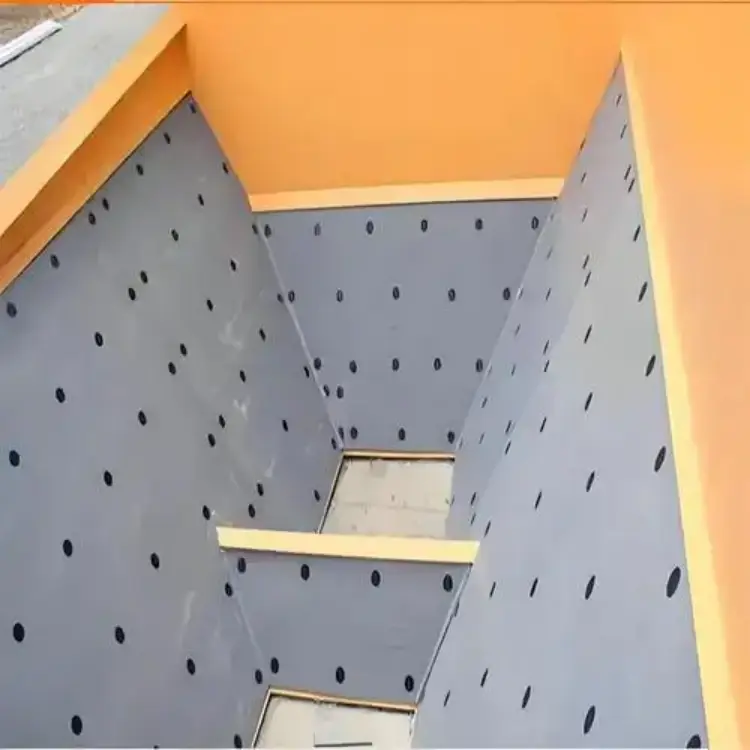
When a chute liner fails, the damage isn’t limited to a piece of steel plate. Abrasive materials like ore, coal, or mineral fines cut grooves into the lining surface at every slide and impact point. Impact from large lumps causes spalling and gouges, accelerating thickness loss. In parallel, moist or sticky materials cling to metal walls, layer by lay
er, until the flow cross-section shrinks and eventually bridges over completely. In freezing conditions, wet fines freeze to steel linings overnight, guaranteeing a morning shutdown for manual cleaning.
Each of these events triggers the same chain of cost: emergency downtime, labor for clearing or replacement, spare parts, and lost production. For a large silo or a long transfer chute, a full liner swap can eat days of schedule. The underlying cause is not the abrasive material or the sticky ore—it’s the intrinsic properties of metal liners: high friction, easy adhesion, and only moderate wear resistance. A systematic material upgrade at the lining level is the only way to break this cycle.
Why UHMWPE Changes the Game
Ultra-High Molecular Weight Polyethylene (UHMWPE) is a thermoplastic engineering plastic with an average molecular weight above 1.5 million. In chute and hopper service, it brings four decisive advantages that directly counter the failure modes of metal.
1. Ultra-Low Friction Keeps Material Moving
The dynamic coefficient of friction of UHMWPE against bulk solids ranges between 0.05 and 0.11—second only to PTFE among engineering materials and far below carbon steel (0.3–0.5). This self-lubricating surface prevents moist fines from sticking and eliminates the progressive accretion that leads to bridging. Coupled with water absorption below 0.01%, UHMWPE remains unaffected by wet materials and will not bond with ice in outdoor winter installations. The result: steady, predictable flow with dramatically reduced blockage alarms.
2. Exceptional Abrasion Resistance Extends Service Life
In sliding and slurry abrasion conditions, UHMWPE outlasts traditional carbon steel by a factor of 3 to 7, depending on the material combination. It also significantly outperforms nylon and standard HDPE. Instead of forming deep grooves and spalling like metal, UHMWPE wears slowly and evenly, maintaining its low-friction surface th
roughout its service life. This directly translates into multi-year intervals between liner replacements—and far fewer production interruptions.
3. High Impact Strength Absorbs Heavy Lump Impacts
With a Charpy notched impact strength reaching approximately 160 kJ/m², UHMWPE ranks among the toughest engineering plastics available. It absorbs impact energy from large, heavy particles without cracking or brittle failure, preserving structural integrity even under aggressive drop conditions. This makes UHMWPE a reliable choice for transfer chutes handling primary-crushed ore or coarse coal.
4. Chemical Stability for Harsh Industrial Environments
UHMWPE resists most inorganic acids, alkalis, salt solutions, and many organic solvents. It also demonstrates good weatherability under prolonged sunl
ight and outdoor exposure. In mining, chemical processing, and power plant environments, this chemical inertness ensures that UHMWPE linings retain their mechanical properties and surface quality over the long term.
Material Comparison: UHMWPE vs. Traditional Liner Materials
| Material | Coefficient of Friction | Abrasion Resistance (vs. Carbon Steel) | Water Absorption | Impact Resistance | Typical Liner Suitability |
| UHMWPE | 0.05–0.11 | 3–7× | <0.01% | Extremely high | Bulk handling, silo & chute linings |
| Carbon Steel | 0.3–0.5 | 1× (baseline) | — | Medium | High-wear impact zones, but requires frequent replacement |
| Stainless Steel | 0.15–0.30 | 1–2× | — | Medium | Mildly corrosive environments, still prone to adhesion |
| Nylon | 0.15–0.30 | 0.5–1× | 8–10% | High | Light-duty sliding elements; moisture absorption limits liner use |
As the table shows, UHMWPE uniquely combines a low-friction, non-stick surface with high wear and impact resistance, making it the superior choice for bulk material chute and hopper linings in most operating conditions.
Installing UHMWPE Liners: Key Practices for Long-Term Performance
To get the full benefit of UHMWPE, installation must accommodate its material properties, especially its thermal expansion behavior.
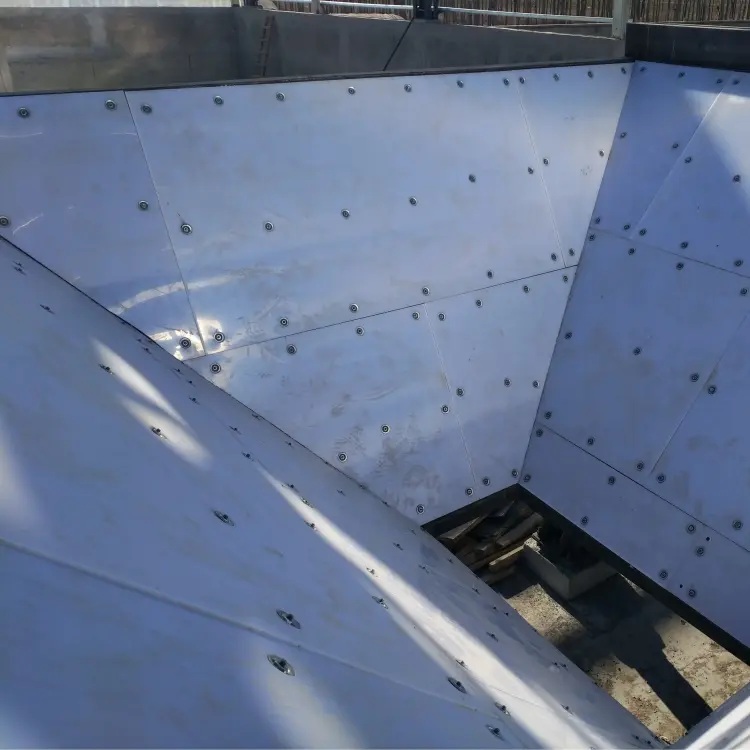
Fixing method: Use countersunk bolts or clamping bars, ensuring bolt heads sit below the liner’s working surface. Modular panel layouts simplify handling and future partial replacement.
Thermal expansion compensation: The linear thermal expansion coefficient of UHMWPE is about 2×10⁻⁴/K, much higher than steel. Always provide adequate expansion gaps. Fix each panel at one end only and leave the other end free to slide. For outdoor applications with wide temperature swings, segment the lining and keep panel lengths moderate to prevent buckling.
Surface accuracy: The finished inner surface must be smooth and flush. No steps or gaps at panel joints—these would trap material and add flow resistance. Ensure the supporting steel structure is rigid enough to maintain full back-face contact.
Maintenance and Condition Monitoring for UHMWPE-Lined Equipment
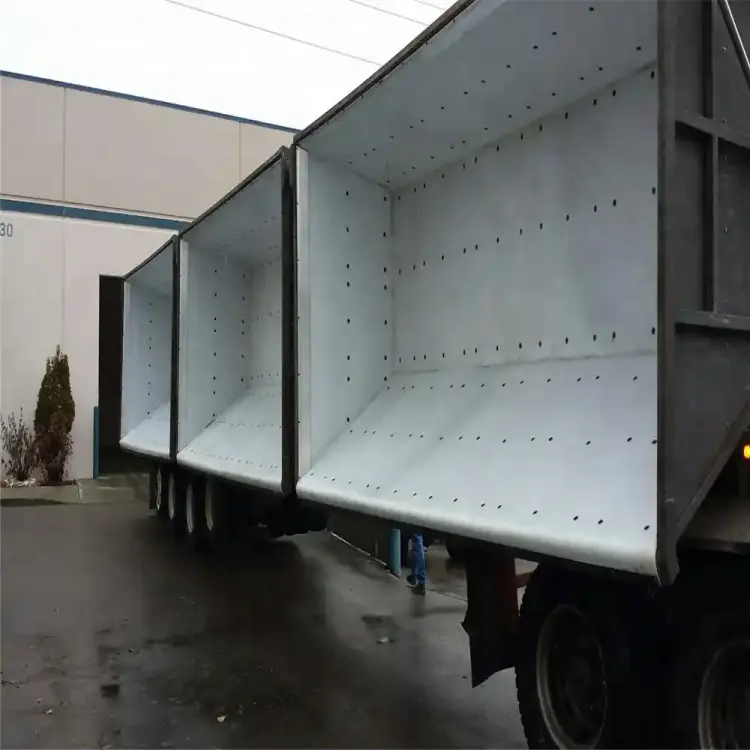
While UHMWPE liners require far less maintenance than metal, a simple inspection routine maximizes their service life and makes replacement predictable.
Weekly visual checks: Look for deep grooves, gouges, or cracks. The onset of deep, localized wear indicates the liner has entered its late wear stage; plan replacement before the steel shell is exposed.
Monthly thickness measurement: Use an ultrasonic thickness gauge at predefined critical locations. Compare remaining thickness with the as-installed baseline and track the wear rate. Schedule replacement when thickness approaches the minimum design limit.
Flow monitoring: If discharge rates slow or intermittent blockages start appearing, inspect the UHMWPE surface for any unexpected buildup or damage.
Data-based life prediction: Keep standard inspection logs. Over time, the collected thickness data builds a wear curve that supports condition-based maintenance and accurate remaining-life forecasts.
Conclusion: UHMWPE Linings Deliver a Lower Total Cost of Ownership
Replacing metal chute and hopper liners with Ultra-High Molecular Weight Polyethylene (UHMWPE) transforms bulk material handling reliability. Under suitable conditions, the upgrade delivers:
Friction coefficient reduced to 0.05–0.11, slashing flow resistance and eliminating most material hang-ups.
Liner service life extended to 3–7 times that of carbon steel, dramatically cutting replacement frequency and downtime.
Near-zero water absorption and excellent weatherability, maintaining performance in wet, cold, and outdoor settings.
Liner weight roughly 1/8 that of steel, enabling faster, safer installations and simpler logistics.
Of course, UHMWPE linings have their limits—they are not designed for sustained temperatures above approximately 80°C (176°F) or extreme high-speed impact from sharp, angular particles without engineering assessment. For most bulk solids in mining, power generation, cement, and chemical processing, however, UHMWPE provides the most cost-effective, long-life lining solution available.
When you specify UHMWPE chute and hopper liners, you trade frequent, reactive maintenance for predictable, low-cost operation. The savings start at the next shutdown you don’t have to take.
Looking to upgrade your chute, hopper, or silo linings with UHMWPE? Contact our engineering team for a project-specific wear and flow analysis, and get a tailored liner specification that fits your operating envelope.
