
Non-asbestos gasket sheets come as flat stock, not pre-formed gaskets. That gives you the freedom to cut exactly the shape and size your flanges demand—whether a simple ring, a complex pattern for a reactor lid, or a set of sealing strips. The same sheet can become a gasket for a pipe connection, a packing piece, or a custom seal for an inspection port. What follows is the ground-level method used in maintenance shops and field installations every day.
Before You Start
First, inspect the sheet. Look for cuts, cracks, dents, or moisture swelling. A sheet that’s been stored standing on edge can develop a permanent curl—if it won’t lay flat, don’t force it. Confirm the material grade matches the service: temperature, pressure, and the chemical family of the fluid you’re sealing. The sheet’s data sheet lists these limits; exceed them and the material will fail, often without warning.
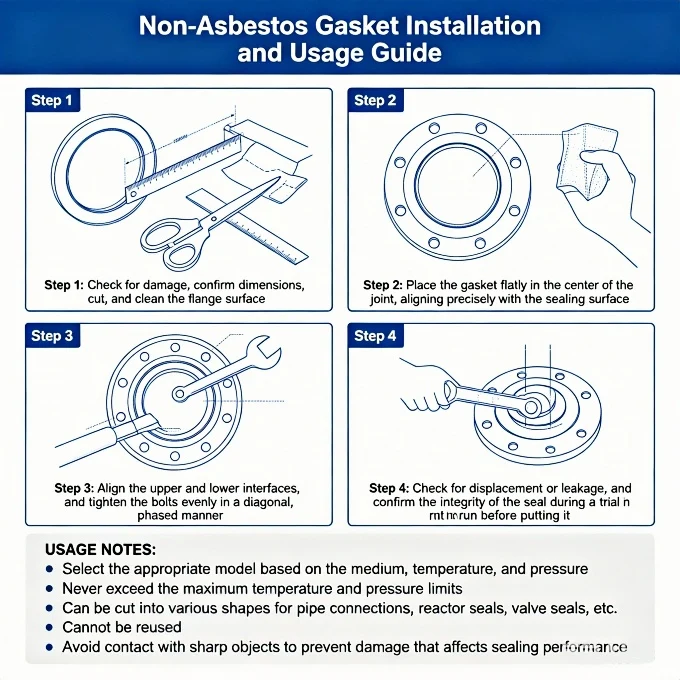
Measure the flange sealing face. The gasket must cover the entire raised face or flat face area without extending into the bolt holes or the bore. Mark the inner and outer diameters directly onto the sheet. Use a sharp blade or a gasket cutter, and cut cleanly in one continuous pass. Ragged edges create leak paths and catch debris during assembly. The finished piece should sit dead flat with no waves.
Now turn to the metal surfaces. Scrape off every trace of old gasket material. A brass scraper works well on most flange faces without gouging them. Follow with a solvent wipe to lift oil and grease. Inspect for burrs, pitting, or radial scratches that bridge across the sealing face—any of these need dressing with a fine stone. The faces must be dry before you set the gasket in place.
 Setting the Gasket
Place the cut gasket onto one flange face. Align it carefully so it follows the bolt circle evenly. No part of the gasket should hang inside the pipe bore or interfere with a bolt shank. The sheet should lie flat under its own weight; if it springs up or won’t settle, it’s cut wrong or the face is unclean. Never use adhesive to tack it down unless the plant specification explicitly calls for it. Adhesive can act as a lubricant during compression and let the gasket extrude.
Bring the mating flange into position. Guide it down straight, without dragging the gasket sideways. Insert all bolts and run them in finger-tight. The gasket should remain fully visible around the flange rim, with no fold or pinch marks anywhere.
Tightening and Sealing
Bolt tightening follows a diagonal pattern and is done in stages. On a four-bolt flange, tighten opposite pairs; on a multi-bolt circle, use a star sequence. The first pass brings every bolt to roughly 30% of the target torque. The second pass goes to 60%. The final pass hits the full recommended torque from the gasket manufacturer. This even compression is what prevents the sheet from buckling, splitting, or squeezing out the side.
Never hammer a flange closed or use a single bolt to pull the joint tight. Over-tightening is just as harmful as leaving bolts loose. A common symptom of over-compression is the gasket thinning around the bolts and bulging between them. That joint will leak sooner rather than later.
First Pressure Check
Before bringing the line to full operating pressure, pressurize gradually. For liquid service, watch the flange periphery for any bead of moisture. For gas, brush soapy water onto the joint and look for bubbles. Hold at test pressure long enough for the gasket to settle. Afterwards, on a cold system, recheck bolt tension with a torque wrench—thermal cycling later will make this habit even more important. If the gasket hasn’t shifted and nothing drips, the installation is sound.
What to Watch for in Service
Non-asbestos sheets are single-use components. Once compressed and exposed to operating heat, the fiber and binder take a permanent set. Pulling a flange apart means the gasket comes out and a fresh one goes in. Don’t try to reuse it; the sealing performance won’t come back.
Store unused sheets flat in a cool, dry place. Stack them so they don’t sag or curl. When handling around sharp tools or rough edges, protect the sheet from nicks and cuts. A scratch that doesn’t go all the way through today can open up under compression tomorrow.
Material Selection at a Glance
Pick the sheet grade based on what it will touch. Oil-resistant grades for hydraulic and fuel lines, acid-resistant grades for chemical duties, general-purpose grades for water and mild steam. Every grade has a published maximum temperature and pressure. Run hotter or higher and the binder breaks down, the material hardens, and the seal disappears. If you are uncertain, get the manufacturer’s compatibility chart and match it to your worst-case process condition.
The method described here is not theory. It’s the same approach used in refineries, power stations, and processing plants where a leaking gasket means shutting down a line. A gasket cut carefully from flat sheet, set square, and tightened evenly will hold for years. Rush any of these steps and you’ll be back at the flange with a scraper in your hand sooner than you planned.
