
1. Executive Summary
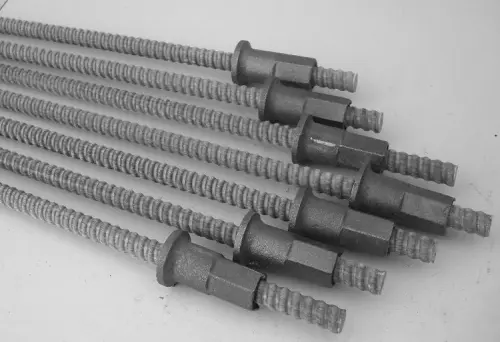
A coastal tide station rebuild faced a serious durability challenge: chloride ingress from seawater was corroding the carbon steel rebar in conventional reinforced concrete. We supplied FRP Rebars to replace all carbon steel reinforcement in the public dock and tide gauge station slabs. This move eliminated rebar corrosion risk completely, extended structural service life well beyond the original target, and cut long-term maintenance costs. The project used a mix of Straight Fiberglass Rebar and FRP Bent Rebar—we handled all custom precision bending in our factory to match the complex dock geometry. The result was a durable, corrosion-free solution that solved the client’s long-term structural integrity problem in an aggressive marine environment.
2. Background & Problem
Our customer, based in a coastal region, was rebuilding a critical infrastructure asset that serves both as a tide monitoring station and a public dock. The goal was to boost resistance to tidal forces, seawater attack, and environmental aging. During early planning, the client team flagged several core pain points:
Severe marine corrosion risk:The tide station and dock structures sit in the tidal zone, fully exposed to seawater. In previous coastal projects, carbon steel rebar corroded rapidly. Rust expansion cracked the concrete cover and caused spalling, drastically shortening structural life.
Insufficient service life with conventional materials:The client had studied multiple coastal concrete bridges and wharfs. Structures weakened by internal rebar corrosion often needed replacement after only 40 years. Sticking with carbon steel rebar would mean unacceptable long-term reliability and massive future repair and replacement costs.
Special functional constraints:The tide gauge station houses precision monitoring equipment and electromagnetic sensors. The magnetic signature of carbon steel rebar causes electromagnetic interference. The client required a completely non-magnetic reinforcement material.
After digging deeper into the requirements, our team confirmed three fundamental limits of carbon steel rebar in this setting:
Unavoidable chloride attack
In the tidal zone, concrete goes through continuous wet-dry cycles. Chloride ions migrate into the concrete cover. Once the chloride concentration at the bar surface hits the critical threshold, the passive layer on carbon steel breaks down. Sustained electrochemical corrosion follows, even in high-density concrete.
Inherent material weakness of carbon steel rebar
Carbon steel relies entirely on the alkaline concrete environment for protection. In marine exposure, carbonation and chloride ingress gradually destroy that alkalinity. When the cover fails, rebar corrosion starts and cannot be stopped. The expanding rust products accelerate concrete cracking.
Maintenance cost vs. service life conflict
In marine environments, carbon steel rebar often shows serious corrosion within 30–40 years, far short of the design life. The lifetime cost of repeated repairs, strengthening, or full replacement easily outweighs any upfront construction savings.
3. Engineering Solution & Product Advantages
To address these pain points, we proposed a full swap: replace all carbon steel rebar with FRP Rebars. The FRP Rebars used on this project deliver the following key advantages:
Outstanding corrosion resistance
Naturally immune to chlorides, salt spray, and chemical degradation from seawater. This completely removes the rebar corrosion risk and frees the client from long-term corrosion protection headaches.
Lightweight and high strength
Weighs only one-quarter of steel, yet delivers excellent tensile performance. The strength-to-weight ratio can reach eight times that of steel, reducing transport and on-site handling costs.
Non-magnetic
Generates zero electromagnetic interference. Perfect fit for electromagnetically sensitive installations like tide gauge stations; ensures accurate, uninterrupted monitoring.
Low thermal conductivity
Minimizes thermal bridging and improves structural thermal performance under extreme temperature swings.
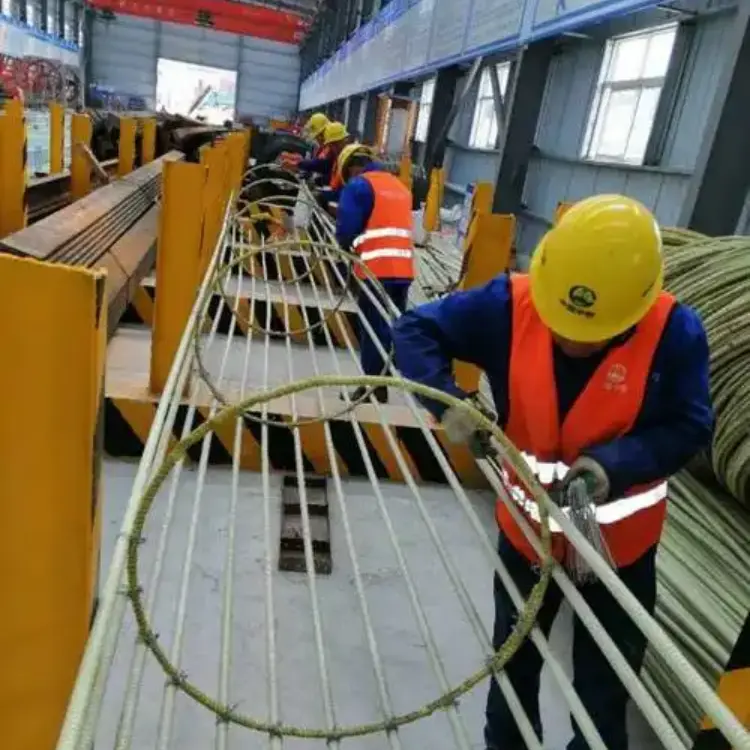
To meet the dock’s varied geometric demands, we prefabricated Straight Fiberglass Rebar and FRP Bent Rebar with precise bending at our factory. This custom-bent reinforcement integrated seamlessly into the complex dock structure and eliminated the risk of fiber damage from field bending, preserving full mechanical properties.
4. Project Implementation
Design and material selection:Our technical team worked alongside the client’s design engineers. Based on structural load requirements and the marine exposure classification, we determined the sizes, diameters, and layout of the FRP Rebars and completed the full reinforcement design.
Custom manufacturing:We prefabricated Straight Fiberglass Rebar and FRP Bent Rebar at our factory according to the approved shop drawings. Bend radii and angles were precisely controlled, ensuring every bar matched the design dimensions exactly.
On-site installation support:Our technicians provided on-site guidance. The FRP Rebars arrived ready and were placed and tied following standard rebar installation workflows. At just a quarter of the weight of steel, handling and positioning were much easier, noticeably reducing labor intensity.
Concrete placement coordination:After the reinforcement inspection, we assisted with slab concrete pours, making sure the FRP Rebar surfaces were protected from mechanical damage during casting.
Quality acceptance:We supported the client’s quality checks on bar location, spacing, and tie integrity to confirm full design compliance.
5. Final Results
By switching to our FRP Rebars, the client achieved these outcomes:
Corrosion risk eliminated:FRP Rebars are naturally immune to seawater chlorides and salt-laden air. The structure will not face rebar corrosion at any point in its service life.
Substantially extended service life:While carbon steel rebar in similar marine environments shows serious deterioration within 30–40 years, the structure reinforced with FRP Rebars is expected to deliver a 75–100-year service life, significantly lowering lifecycle costs.
Special functional needs met:The non-magnetic properties of FRP Rebars eliminate electromagnetic interference with the station’s precision monitoring instruments, ensuring accurate data collection.
Faster, easier construction:Light weight made on-site handling and installation more efficient, cutting labor difficulty and costs.
Minimal maintenance demand:No periodic anti-corrosion treatments, no repairs from rust-induced concrete cracking. Ongoing operational expenses are drastically reduced.
6. Lessons Learned & Feedback
Lifecycle cost advantage validated :Carbon steel rebar may have a lower initial material cost, but in chloride-laden marine environments, heavy repairs or full replacement are often needed within 30–40 years. Our FRP Rebars carried a higher upfront material cost, yet the elimination of corrosion protection maintenance and the extended service life delivered clear lifecycle cost savings for the client.
Custom fabrication ensures structural fit :The bent and shaped bars required on this project were precision-formed in our factory. This avoided fiber damage from on-site bending, guaranteed accurate geometry, and allowed seamless integration with the complex dock structure.
Non-magnetic properties unlock sensitive applications:For electromagnetically sensitive installations like tide gauge stations, the non-magnetic nature of our FRP Rebars became a key decision driver.
Multi-scenario validation supports reliability:The corrosion-resistant benefits of FRP Rebar technology in marine environments have been proven across many projects—sea-crossing bridges, coastal highways, and port facilities. This successful installation adds further proof of reliable, fit-for-purpose performance in small-to-medium coastal infrastructure, giving the client a durable, essentially maintenance-free structural solution.
