
Looking for a practical circular sight glass selection guide? The decision starts with three materials that cover almost every industrial situation. Getting the match right means stable operation, clear visibility, and a much longer service life.
 1. What Really Drives the Choice
Narrow down your options by pinning down these three conditions first:
-
Working temperature
-
Working pressure
-
Media type (corrosive or non-corrosive)
These factors directly rule out materials that won’t hold up, saving you from guesswork.
2. The Three Materials, Side by Side
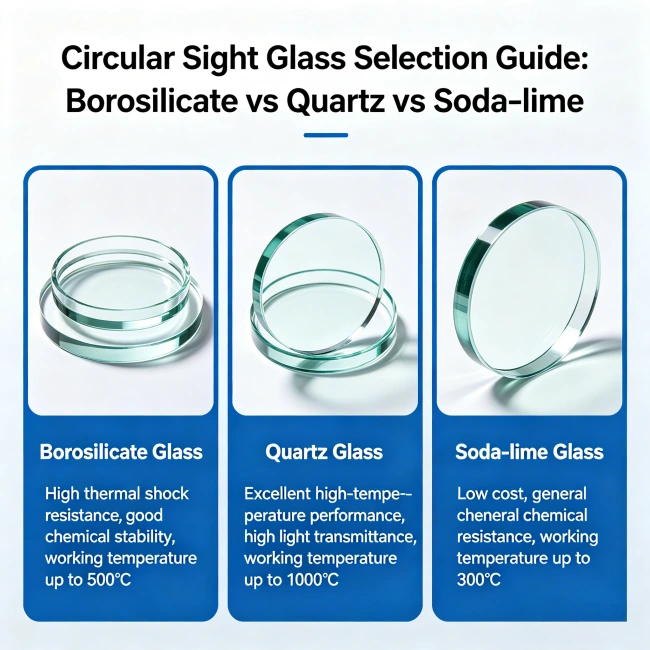
Borosilicate sight glass
Borosilicate handles sudden temperature swings with ease, offers excellent transparency, and works across a wide range of everyday applications. Use it for non-corrosive media at temperatures up to 280°C and pressures up to 6.4 MPa. It’s the go-to for standard level gauges, routine monitoring, and general-purpose setups.
Quartz sight glass
If your environment pushes the limits, quartz is where you land. It pairs outstanding high-temperature endurance with strong resistance to acids, alkalis, and other corrosive media. It stays optically clear up to 1000°C and handles pressures up to 6.4 MPa. Think chemical processing, extreme heat, and harsh corrosive service — quartz holds up when others fail.
Soda-lime sight glass
For simplicity on a tight budget, soda-lime glass can’t be beat. It’s easy to fabricate, costs very little, and works perfectly in non-corrosive, low-demand applications. Keep it within 150°C and 4.0 MPa. It’s ideal for ambient-temperature level indicators, low-pressure tanks, and places where you just need a quick visual check without spending more than necessary.
The core takeaway from this circular sight glass selection guide is refreshingly straightforward: borosilicate covers the middle ground, quartz tackles the extremes, and soda-lime handles the simple, low-cost jobs. Let temperature and chemical exposure make the first cut, then pressure confirms your final pick.
3. How to Choose in One Minute
First, confirm your equipment’s actual operating temperature, pressure, and what media will touch the glass. Then lay those numbers against the limits listed above — the material that comfortably fits all three conditions is your answer. If there’s any doubt about system compatibility, don’t guess. Reach out to us directly for free, customized selection advice.
Still sorting through options? This circular sight glass selection guide gives you a clear starting point, but we’re happy to walk through the specifics of your setup at no charge. Every circular sight glass panel we supply meets the international DIN standard and is designed to drop right into a wide range of industrial equipment without surprises.
