
The Problem
In esterification reactors and other process vessels handling acidic media, level gauge glass assemblies often develop internal fogging and blurred scale markings within 1–2 months of service. Graduation marks become unreadable. In some cases, the gasket area begins to seep.
Operators lose the ability to read levels accurately, forcing unplanned shutdowns for replacement, driving up maintenance costs, and disrupting production. This isn’t an isolated headache. It’s a recurring failure pattern across reactors operating in acid-laden, high-temperature environments.
Root Cause Analysis
Early level gauge glass failure is typically driven by three interacting factors:
1. Chemical Attack
Reactor media often contain acetic acid, sulfuric acid catalyst, and organic solvents. Under high temperatures, acidic vapor contacts the glass surface and reacts with alkali metal oxides in standard soda-lime glass. This reaction breaks down the silica-oxygen network structure, generating surface micro-cracks and progressive fogging that drastically reduces light transmission.
2. Thermal Shock
Reactor operating temperatures usually swing between 80°C and 250°C. Soda-lime glass has a relatively high thermal expansion coefficient.Rapid heating and cooling cycles generate internal stress. Micro-cracks propagate. Glass strength degrades over time, moving the assembly closer to failure.
3. Seal Deterioration
Once the glass surface undergoes chemical attack, surface flatness deteriorates. A roughened contact face prevents the gasket from forming a uniform, tight seal, gradually opening a leak path. Meanwhile, acidic media accelerate aging in non-chemical-resistant gasket materials, further compromising seal integrity.
These three factors create a self-reinforcing cycle: chemical attack triggers micro-cracking and surface roughness → thermal stress propagates cracks → degraded sealing faces admit more aggressive media → accelerated corrosion and leakage.

The Fix
1. Material Upgrade
For standard acid-duty, high-temperature service up to 280°C,specify borosilicate level gauge glass. Its thermal expansion coefficient is roughly one-third that of soda-lime glass, delivering significantly improved thermal shock resistance. Borosilicate also provides strong chemical stability against organic acids such as acetic acid and inorganic acids including sulfuric acid (hydrofluoric acid excluded). Surface clarity and seal performance hold up over extended runs.
Where the process involves high-temperature concentrated caustic, or acidic media without hydrofluoric acid but with temperatures exceeding 280°C and corrosion severity beyond borosilicate’s limits, quartz level gauge glass is the appropriate choice. With an SiO₂ purity of 99.99% or higher, quartz glass is virtually non-reactive with most acids (hydrofluoric acid excluded), withstands temperatures up to 1100°C, and features an exceptionally low thermal expansion coefficient,making it suited for extreme-duty applications.
Key rule: If the glass comes out with visible surface roughness or fogging, replace it. Do not just swap the gasket and put the same glass back.
2. Install the Correct Gasket
Gasket selection is critical to long-term seal reliability. PTFE gaskets or flexible graphite gaskets with proven acid/alkali resistance are strongly recommended. Both materials deliver excellent chemical inertness and temperature capability, maintaining stable sealing performance under corrosive media and thermal cycling while compensating for any microscopic surface irregularities on the glass.
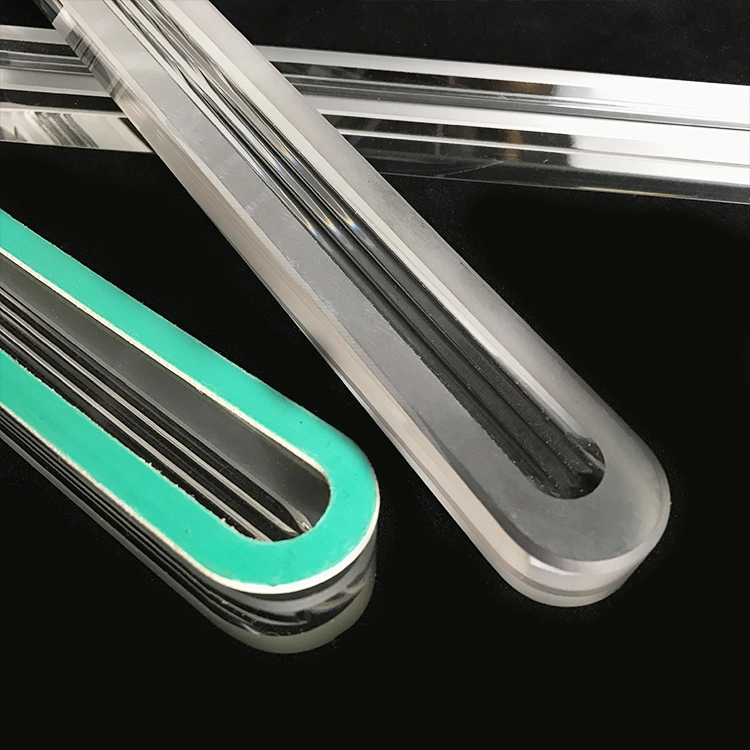
3. Installation Procedure
When replacing level gauge glass, follow these steps:
Post-removal Inspection and Cleaning
Strip All Old Gasket Residue:Thoroughly remove all old gasket residue from flange sealing faces. Use a brass scraper—steel tools risk scratching the flange face.
Inspect the Flange Sealing Faces:Check for corrosion pits. If any pit exceeds 0.2 mm in depth, repair the flange face or add a gasket compensation layer before proceeding.
Clean the Sealing Faces:Wipe sealing faces with a lint-free cloth moistened with anhydrous ethanol. Ensure surfaces are free of oil, grease, and particulate contamination.
New Component Installation
Verify Specifications:Confirm that the sight glass and gasket specifications match the equipment. Borosilicate and quartz glass must not be mixed or interchanged.
Center the Gasket:Center the gasket carefully during placement. Off-center positioning reduces effective sealing contact width.
Tighten in Sequence:Tighten bolts using a diagonal progressive sequence. Hand-tighten first, then apply torque incrementally in 3–4 passes following a diagonal pattern until reaching the specified torque value.
Post-installation Verification and Routine Inspection
Ambient-temperature Pressure Test:Pressurize with inert gas or water to 1.1–1.2 times working pressure. Hold for 30 minutes and check for leaks.
Hot Retorque:After the first thermal cycle reaches operating temperature, perform a hot retorque. This step is especially critical with PTFE gaskets.
Routine Inspection:Visually check sight glass clarity and flange joint leakage at least once per shift.
