
When specifying materials for industrial maintenance platforms, the FRP grating vs steel grating debate is often reduced to a simple upfront price check. But if your platform is exposed to chemicals, moisture, or salt spray, that shortcut can lead to higher maintenance costs, more downtime, and early replacement. This article compares FRP grating and steel grating across corrosion resistance, installation, maintenance, and 20-year total cost of ownership (TCO), so you can make a data-driven decision for your next project.
Key Takeaways: FRP Grating vs Steel Grating
FRP grating typically costs more upfront but delivers lower maintenance costs and longer service life in corrosive environments.
Hot-dip galvanized steel grating is cheaper initially but may require recoating and partial replacement within 12–15 years.
In a 20-year TCO model for a 1,000 sq. ft. maintenance platform, FRP grating saved over $47,000 compared to steel grating.
For chemical plants, wastewater treatment, marine facilities, and electrical safety zones, FRP grating usually offers the better long-term value.
FRP Grating vs Steel Grating: Understanding the Two Materials
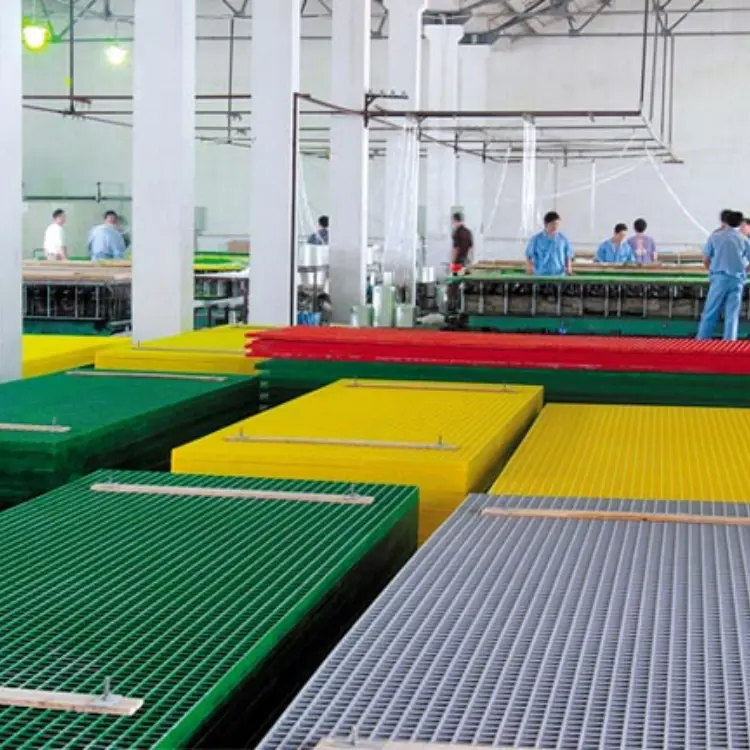
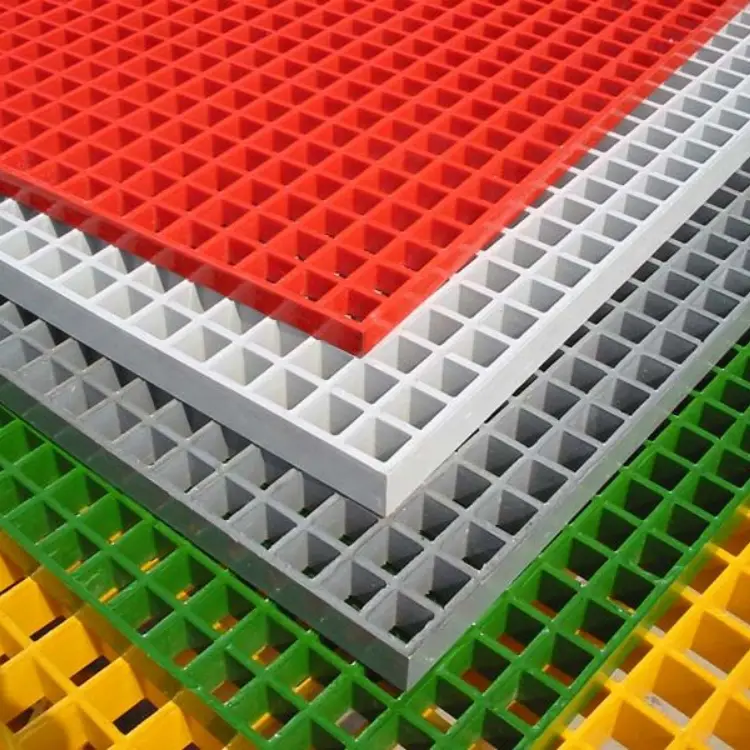
FRP grating is made from high-strength glass fiber reinforcement embedded in a corrosion-resistant resin matrix. The two main types are molded and pultruded. FRP is valued for its chemical inertness and light weight.
Steel grating typically refers to welded or press-locked carbon steel grating that is hot-dip galvanized for corrosion protection. Stainless steel grating is an option, but at a much higher cost. Steel grating remains the traditional workhorse for industrial platforms.
Both materials can handle heavy loads and meet safety standards. The real differences show up year after year in demanding service environments — right where your biggest pain points live.
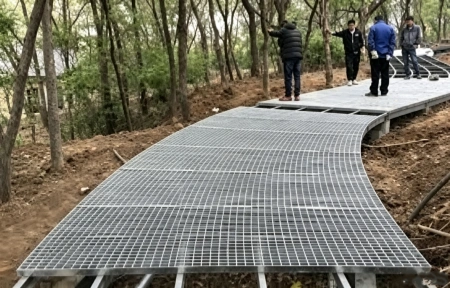
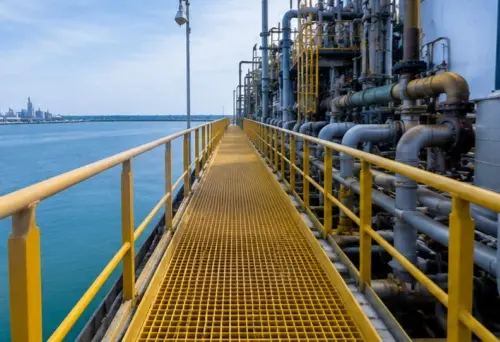
FRP Grating vs Steel Grating: 6 Performance Factors for Maintenance Platforms
Choosing grating isn’t just about load capacity. In the field, these six factors determine whether your maintenance platform becomes a long-term asset or a recurring liability.
| Performance Factor | FRP Grating | Hot-Dip Galvanized Steel Grating |
| Corrosion Resistance | Excellent. Does not rust like steel. Resists water, salt spray, most acids and alkalis. Suited for chemical processing, wastewater treatment, and marine environments. | Moderate. Protection depends on the zinc coating, which gradually sacrifices itself in corrosive environments. Cut edges and scratches commonly become rust initiation points. |
| Weight & Installation | Lightweight. About 25%–35% the weight of steel. Can be handled and installed without heavy equipment, reducing labor cost. | Heavy. Large panels often require more manpower or lifting equipment, placing higher demands on site logistics. |
| Strength & Load Capacity | High strength-to-weight ratio. Meets the demands of most industrial platforms and walkways. Span and deflection must be considered during design. | Higher strength and stiffness. Better suited for heavy loads, impact loading, and areas requiring very high rigidity. |
| Slip Resistance | Superior. Integral molded anti-slip surface provides reliable grip, even when wet or oily. | Fair. Serrated grating offers some grip, but smooth bars become extremely slippery in the presence of oil or grease. |
| Fire & Thermal Performance | Fire-retardant resin options available to meet fire codes. Low thermal conductivity keeps surface temperatures lower in direct sun. | Non-combustible. Excellent high-temperature tolerance. High thermal conductivity means surfaces heat up quickly in sun or near hot processes. |
| Electrical Safety | Excellent insulator. Non-conductive. Suited for electrical substations, power generation areas, and equipment access platforms. | Conductive. Requires proper grounding design for the application. |
In any environment with water, chemicals, or electrical hazards, FRP grating consistently outperforms unprotected steel and significantly extends maintenance intervals.
Total Cost of Ownership: FRP Grating vs Steel Grating Lifecycle Costs
In most industrial maintenance platform projects, the material purchase price is the first number people look at.
Steel grating typically comes with a lower initial procurement cost thanks to mature manufacturing and well-established supply chains. That’s why it has long been the default for industrial platforms, walkways, and inspection areas.
But for projects exposed to corrosive environments over the long haul — chemical plants, wastewater facilities, marine structures — the real cost story doesn’t stop at the purchase order. The numbers that actually affect project economics include freight, installation, ongoing maintenance, replacement, and production downtime risk.
A smarter way to evaluate FRP grating vs steel grating is through Total Cost of Ownership (TCO).
Initial Purchase and Freight Costs
At the procurement stage, steel grating usually holds the advantage.
Steel grating strengths:
Mature manufacturing process
Wide market availability
Lower initial material outlay
For low-corrosion industrial settings, short-term projects, or cost-sensitive applications, steel grating remains an economical choice.
FRP grating, made with glass fiber reinforced composite and a resin matrix for built-in corrosion resistance, typically carries a higher initial purchase price than plain steel grating. But material price isn’t the whole cost picture.
Because FRP grating offers a high strength-to-weight ratio:
Lower weight per square foot
More efficient freight and logistics
Easier on-site handling
This is especially relevant for overseas projects, remote job sites, and large-area platform installations, where lightweight design can significantly cut freight and manual handling expense. When material plus freight are viewed together, the cost gap often shrinks considerably.
Installation Costs: FRP Grating vs Steel Grating
Installation cost isn’t just about the grating price tag. It’s shaped by equipment needs, crew size, installation time, and site safety requirements.
Steel grating installation reality
Higher steel density means:
Individual grating panels are heavier
Large panels often require multi-person handling or mechanical lifting
Some jobs involve welding for fixing
This adds preparation time, equipment cost, and site coordination complexity.
FRP grating installation reality
One of FRP grating’s biggest advantages is light weight. Compared to steel grating, FRP grating is:
Easier to move by hand
Simpler to cut on site
Free of traditional welding requirements
Able to reduce reliance on lifting gear
Because some hot work steps are eliminated, you can also lower hot-work permit management demands and improve overall installation safety. In elevated maintenance platforms, equipment-congested areas, and retrofit projects on aging structures, FRP grating typically delivers higher installation efficiency.
Maintenance Costs
For industrial platforms, maintenance cost is often the most overlooked piece of lifecycle cost.
Long-term maintenance needs of steel grating
Hot-dip galvanized steel grating protects itself with a zinc layer. Over time, exposure to salt spray, chemical media, moisture, and mechanical wear gradually consumes that layer. Cut edges, weld zones, and surface scratches are especially vulnerable as corrosion starting points.
In moderate-to-severe corrosive environments, steel grating usually needs periodic inspections, surface preparation, and anti-corrosion touch-ups. All of that adds to long-term operating cost.
Low-maintenance advantage of FRP grating
FRP grating has a non-metallic composite structure, so the electrochemical corrosion that attacks steel simply doesn’t apply. Under normal operating conditions, it requires no rust treatment, no recoating, and far less frequent maintenance — typically just routine cleaning and visual inspection. In corrosive environments, FRP grating effectively reduces long-term maintenance investment.
Replacement Costs
Many projects underestimate the extra costs that come with replacement. Swapping out industrial platform grating generally involves:
Isolating the work area
Arranging safety measures
Coordinating crews
Scheduling equipment shutdowns
For continuous production facilities, even a short maintenance window can lead to production loss, extra labor allocation, and operational disruption.
When corroded steel grating eventually needs replacement, you pay not only for new material but also for the crew and logistics to install it. FRP grating, with its light weight, installation flexibility, and minimal maintenance needs, reduces the frequency of disruptive swap-outs and improves long-term platform reliability.
Downtime Risks
In industries that run continuous operations — chemical processing, power generation, water and wastewater treatment — downtime cost often dwarfs the material cost itself. A single maintenance event can mean stopping associated equipment, adjusting production schedules, and adding safety management overhead.
The value of a material isn’t just “will it break during service.” It’s whether it can reduce unplanned maintenance and keep the area operational for more hours over the long run. FRP grating, with its corrosion resistance and low-maintenance profile, helps reduce the frequency of maintenance intervention in these settings.
20-Year TCO Case Study: FRP Grating vs Steel Grating
Let’s model a typical scenario: an elevated maintenance platform of about 100 square meters (≈1,000 sq. ft.) inside a chemical processing building, continuously exposed to moderate corrosion from industrial fumes, humid air, and chemical agents.
Comparison options:
Hot-dip galvanized steel grating
FRP grating with grit-top anti-slip surface
Note: The figures below represent a typical industrial cost model to show cost trends over a 20-year service life. Actual project costs will vary based on specification, region, installation conditions, and environmental severity.
| Cost Item | Hot-Dip Galvanized Steel Grating | FRP Grating (Grit-Top Surface) |
| Initial material cost (1,000 sq. ft.) | $15,000 | $23,000 |
| Freight | $1,200 | $600 |
| Installation (labor & equipment) | $8,500 (Includes handling, crane use, welding, installation aids, and site equipment input.) | $5,500 (Manual handling, more flexible installation.) |
| Maintenance (Years 1–20) | $20,000 (Corrosion inspection, two full maintenance recoats, plus localized rust removal.) | $0 (Occasional very low cost, mainly daily in-house cleaning and routine inspection.) |
| Replacement cost | $20,000 (Approximately Year 12: repair or partial replacement of severely corroded areas.) | $0 (Under proper specification and normal operating conditions, design life exceeds 30 years.) |
| Total 20-year cost (excl. downtime) | $64,700 | $29,100 |
| Potential downtime cost | $12,000 (Two 8-hour shutdowns for coating/replacement.) | $0 |
| Total Lifecycle Cost (TCO) | $76,700 | $29,100 |
Choosing the FRP grating option saves over $47,000 — nearly three times its initial investment. And these numbers don’t yet account for the safety and productivity gains that come from a permanently slip-resistant, rust-free surface.
Industrial Platform Grating Selection: When to Choose FRP or Steel
There is no absolute “best” between FRP grating and hot-dip galvanized steel grating. The right choice depends on environmental conditions, load requirements, installation realities, and long-term maintenance goals.
Choose FRP grating when:
The platform lives in a corrosive environment: wastewater treatment plants, chemical processing areas, pulp and paper mills, offshore platforms, and dock facilities.
Electrical safety is required: substation auxiliary platforms, power generation areas, and access walkways around electrical equipment.
You need to reduce structural dead load or boost installation efficiency: rooftop maintenance platforms, structural retrofits on older buildings, and space-constrained equipment zones.
Long-term slip resistance matters in wet conditions: wet areas, oily environments, cooling tower zones, and outdoor maintenance walkways.
Lifecycle cost (TCO) is a strategic priority: you’re willing to accept a somewhat higher initial investment to eliminate future maintenance budgets. This applies to long-life assets, facilities with high maintenance costs, and production areas where shutdowns for repairs are difficult to schedule.
Choose steel grating when:
The environment is dry or low-corrosion: general industrial workshops, indoor equipment platforms, and areas with no significant chemical exposure.
Initial capital budget is tight: short-term projects, temporary platforms, and applications where long-term maintenance demands are minimal.
High rigidity and heavy load capacity are non-negotiable: heavy equipment platforms, high concentrated-load areas, and zones subject to heavy vehicle or equipment traffic.
The application calls for special hygiene standards or extreme corrosion resistance where stainless steel is mandated: food processing, pharmaceutical, and high-purity environments.
FRP Grating vs Steel Grating FAQ: Common Questions Answered
Can FRP Grating Handle Heavy Industrial Loads?
Although the matrix is a resin, FRP grating is far from ordinary plastic. Engineered with continuous glass fiber reinforcement, it delivers a high strength-to-weight ratio and reliable mechanical properties. Depending on grating type, thickness, span, and support configuration, FRP grating meets load requirements for personnel walkways, equipment maintenance areas, industrial catwalks, and even certain vehicle traffic zones. Compared with steel, FRP has a lower modulus of elasticity, so it may exhibit more visible deflection under the same load. That flexibility absorbs impact energy — making it safer for dropped objects — and does not mean the material is under-strength. The key is selecting the right product for the actual span and load conditions during design.
Does FRP Grating Meet Fire Code Requirements?
FRP is a composite material. Its fire performance depends on the resin system, fire-retardant formulation, and product design. FRP grating manufactured with fire-retardant resin systems can meet requirements such as ASTM E-84 flame spread testing and specific industry fire codes. For offshore platforms, tunnels, and other applications with strict fire, smoke, and toxicity requirements, phenolic FRP or low-smoke, low-toxicity formulations are typically specified. Always select an FRP product matched to the required fire standard — do not assume all FRP grating carries the same fire rating.
How Long Does FRP Grating Last vs Steel Grating?
Service life depends on the corrosion severity, UV exposure, resin type, mechanical loads, and installation quality. Under proper specification and normal operating conditions, high-quality FRP grating typically delivers a service life of 25 years or more. Compared with traditional steel grating, FRP’s standout advantages are zero rust, no periodic anti-corrosion coating maintenance, and stable performance in corrosive environments. That’s why in chemical plants, wastewater treatment, and offshore applications, FRP grating keeps lifecycle maintenance costs lower over the long run.
FRP Grating vs Steel Grating: Final Verdict for Maintenance Platforms
The choice between FRP grating and steel grating ultimately comes down to your operating environment and long-term cost picture. Steel grating offers low initial cost and high structural stiffness, making it a solid choice for low-corrosion, high-load applications. In corrosive environments — chemical processing, water and wastewater treatment, marine facilities — FRP grating’s excellent corrosion resistance, light weight, and minimal maintenance requirements translate directly into lower long-term operating cost.
Maintenance platform selection should never stop at purchase price. Factor in installation, maintenance, replacement, and downtime risk through a Total Cost of Ownership lens. For industrial applications where long-term reliability and low maintenance matter most, FRP grating almost always delivers the better overall value.
