
Tubular gauge glass plays a critical role in industrial liquid level monitoring, but its performance and service life depend heavily on correct specification and handling. Below we address the most frequent questions from engineers, maintenance teams, and procurement professionals to help you avoid common pitfalls and extend equipment uptime.
1. What Is the Difference Between Tubular Gauge Glass and Ordinary Glass Tubing?
Tubular gauge glass is not interchangeable with standard glass tubing. It is purpose‑engineered for continuous liquid level observation under fluctuating pressure and temperature conditions. This application demands consistently higher mechanical strength, excellent optical clarity, tight dimensional tolerances, and superior resistance to thermal shock.
In virtually all industrial installations, [borosilicate gauge glass] is specified because of its low coefficient of thermal expansion. This property significantly reduces the risk of cracking caused by temperature differentials, making it a fundamentally different material from ordinary soda‑lime glass tubing.
2. Why Is Tubular Gauge Glass Prone to Breakage?
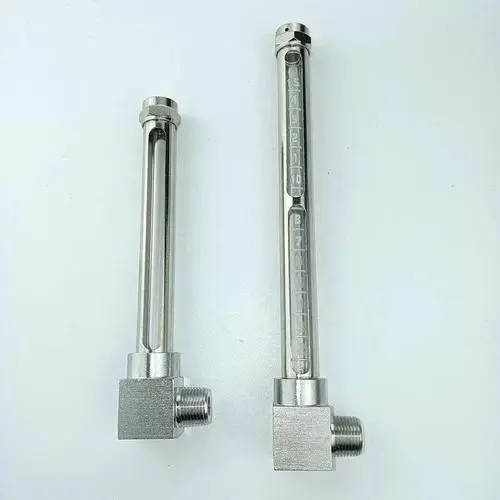
The majority of field failures can be traced back to a few root causes rather than inherent material defects:
-
External impact – Micro‑cracks introduced during transport or handling can go unnoticed but will propagate under service loads.
-
Thermal shock – A sudden inrush of hot medium or rapid quenching generates stress that can exceed the glass’s structural tolerance.
-
Over‑tightened clamps – Excessive or uneven clamping force creates local stress concentrations. The glass should be secured, not compressed.
-
Surface scratches – Even a shallow scratch acts as a stress riser and crack initiation point, especially when combined with pressure cycling.
Understanding these failure modes is the first step toward a reliable installation.
3. What Are the Common Types of Tubular Gauge Glass?
Different service conditions require different glass constructions. The three standard types are:
-
Standard Clear Tubular Gauge Glass – Offers high light transmission for straightforward visual level checks in general industrial service.
-
Red‑Line Tubular Gauge Glass – Features a fused red stripe inside the glass wall, creating a refractive contrast effect that makes the liquid level sharply visible, even from a distance. This is ideal for steam boilers and remote reading points. See our [red-line gauge glass selection].
-
Thick‑Walled Borosilicate Tubular Gauge Glass – The increased wall thickness boosts mechanical strength and pressure‑bearing capacity, s
uitable for more demanding process conditions where standard wall dimensions are marginal.
4. How to Select the Wall Thickness of Tubular Gauge Glass
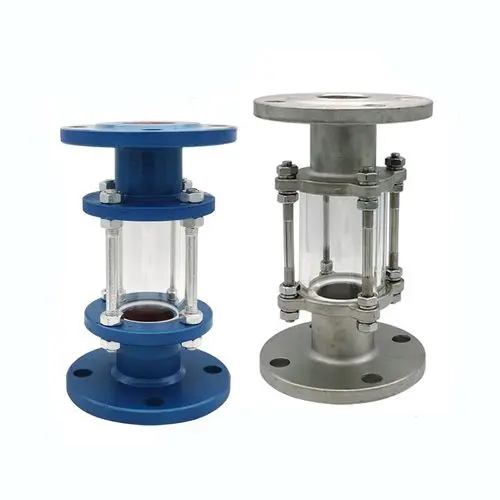
A thicker wall is not automatically the safer choice. Wall thickness must be matched to the actual operating window:
-
Higher working pressure → Thicker wall required, calculated with an appropriate safety factor.
-
Larger tube diameter → Pressure resistance drops as diameter increases, so wall thickness must be proportionally raised.
-
Frequent temperature cycles → Thermal gradients create stress; thicker walls can sometimes retain heat longer and i
-
ncrease thermal gradient, so the thermal shock resistance of the material must be evaluated alongside the dimensional choice.
Always include a suitable safety margin based on the manufacturer’s pressure/temperature ratings to guard against long‑term fatigue.
5. Why Do the Food and Pharmaceutical Industries Demand Closer Attention to Gauge Glass Material?
Hygienic and high‑purity processes impose extra requirements that go beyond pressure and temperature. In food and pharmaceutical applications, the gauge glass must deliver:
-
High optical clarity – Ensures operators can easily verify liquid level and product appearance through the glass.
-
Excellent chemical stability – Prevents any reaction with the process media, CIP fluids, or sterilization agents.
-
Smooth, easy‑to‑clean surfaces – Minimises the risk of residue build‑up and bacterial adhesion, supporting validated cleaning protocols.
-
Zero extractables or leaching – The glass composition must not release any substances that could compromise product purity or patient safety.
For these sectors, we always recommend verified [food‑grade borosilicate glass] that meets relevant sanitary standards.
6. What Precautions Should Be Taken When Installing Tubular Gauge Glass?
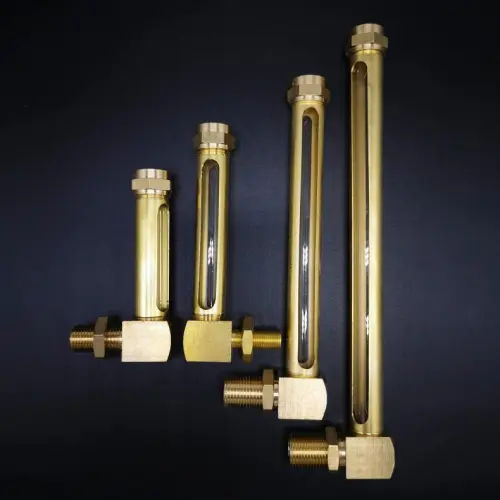
Correct installation has a direct and measurable impact on service life. Follow these guidelines to avoid premature failures:
-
Prevent point loads – Ensure the entire glass circumference is evenly supported. Never allow the glass to rest directly on a hard, uneven surface without a compliant cushion or gasket.
-
Use compatible sealing rings– Select gaskets that are chemically compatible with the process fluid and operating temperature. A mismatched seal can deform, leak, or impose uneven stress.
-
No direct metal contact – Never strike the glass with metal tools during assembly. Even a light tap can produce invisible damage.
-
Verify seal integrity – After installation, always conduct a low‑pressure leak check before bringing the equipment up to full working pressure. This final step confirms the assembly is correctly seated and sealed.
The service life of tubular gauge glass is never determined by material quality alone. It is the result of correct type selection, wall thickness specification, and installation discipline. Focusing on these three areas is the most effective way to eliminate preventable breakage and keep long‑term maintenance costs under control.
Need help selecting the right gauge glass for your operating conditions? Contact our technical team or explore our full range of [tubular gauge glass].
