
Rubber sheets are a standard material in industrial production and building finishes. Manufacturers extensively use them in gasket making, floor coverings, and equipment cushioning. This is due to their great wear resistance, sealing ability, and electrical insulation. In practical work, many people face problems. For example, the blade might stick to the rubber, or the cut edges may be uneven. These issues can affect how the tool works later. With the right tools and methods, cutting rubber sheets is straightforward. Here are several practical cutting techniques that beginners can adopt with ease.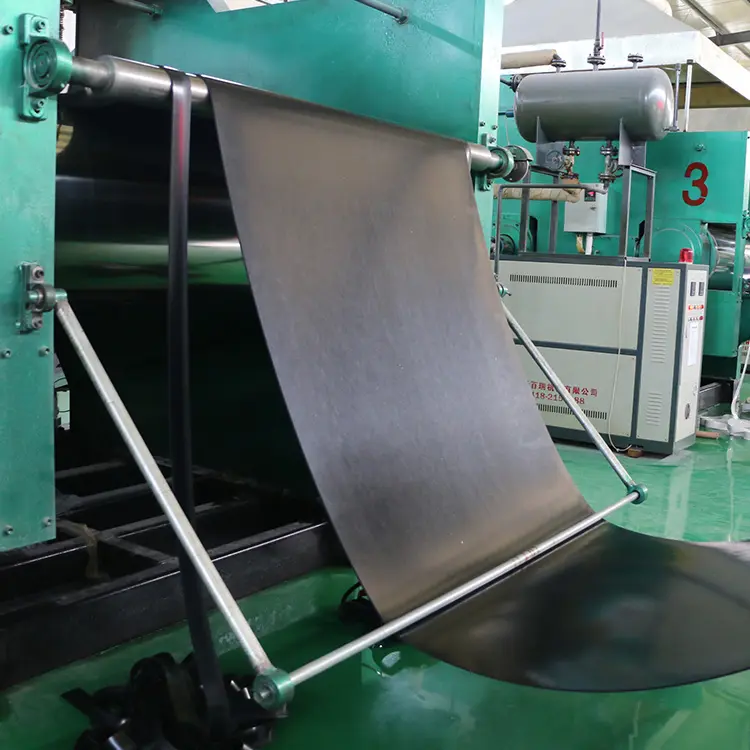
Manual cutting — suitable for small areas and thin sheets.
Manual cutting is the most basic and easiest method. It is appropriate for thin rubber sheets up to about 3 mm thick and for small or irregular shapes.
Tools:
-
Tape measure
-
Marking pen
-
Utility knife or rubber cutting knife
-
Steel ruler
Procedure:
-
Measure and mark — use a tape measure and marker to draw a clear cutting line on the sheet. To prevent faint lines, trace the line several times.
-
Secure the sheet. Lay the rubber sheet flat on a level workbench. Press a steel ruler with strong pressure along one side of the cutting line. This will help to prevent slipping.
-
Cut — hold the utility knife at a 45° angle to the sheet and score along the marked line with even pressure. Make several light passes instead of one deep cut. This helps the blade penetrate the sheet completely and reduces rough edges.
Tip: Draw the blade along the surface of a candle to pick up a thin wax coating before cutting. The wax reduces adhesion between the rubber and the blade and results in a smoother edge.
Power saw cutting — suitable for large areas and thick sheets.
For rubber sheets thicker than 5 mm, cutting by hand isn’t efficient. This is especially true when you need many identical pieces. Use a power saw or a dedicated rubber-cutting machine.
Tools:
-
Handheld circular saw (woodworking type)
-
Dedicated rubber cutting machine
Safety Gear:
-
Safety goggles
-
Gloves
-
Dust mask
Procedure:
-
Mark the cutting line with a bold line on the sheet.
-
Clamp the sheet to the workbench with a firm grip to prevent movement and crooked cuts.
-
Put on PPE, start the saw, align the blade with the line, and advance the saw at an even pace. Do not push too fast — excessive speed can overheat the blade and cause the rubber to melt and stick.
Note: Power sawing produces rubber dust. Work in a well-ventilated area and wear a mask to avoid inhalation.
Laser cutting — suitable for high precision and complex patterns.
For high precision, like detailed patterns or small parts, laser cutting is the best option. Laser cuts are smooth and show almost no burrs. They also offer accuracy down to the millimeter.
Use case: industrial batch processing or customized products with tight tolerances.
A focused laser beam melts or vaporizes the rubber along the cut path in a short time, producing a clean edge.
Advantages: fast, precise, and capable of cutting complex designs without more edge finishing. Laser systems are costly. So, they work best in factories instead of small personal projects.
Hot-water soak aid — for rubber sheets with a high level of stickiness.
Some blades adhere to rubber materials, which keep a strong tackiness even with wax. A hot water soak can help.
Procedure: Soak the rubber sheet in water at 60–80°C (140–176°F) for 5–10 minutes. This will soften the material and lower its tackiness. Remove and dry the sheet first. This helps the blade glide with ease and creates a sharper edge.
General precautions and tips for cutting rubber sheets.
-
Ensure the work surface is flat, and secure the sheet to prevent slipping.
-
Keep tools sharp. Blunt blades lower efficiency and cause tearing and rough edges.
-
Rubber compounds differ in hardness. For abrasion-resistant or high-hardness sheets, use more force. If you’re power sawing, increase the blade speed. For manual cutting, make more scoring passes.
-
For large-volume production, use dedicated gasket-cutting machinery to improve throughput and consistency.
Learn these methods and tips. You’ll get clean, accurate cuts on rubber sheets, no matter your experience level.
