
Product overview
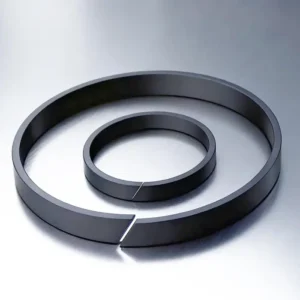
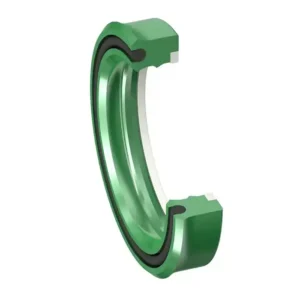
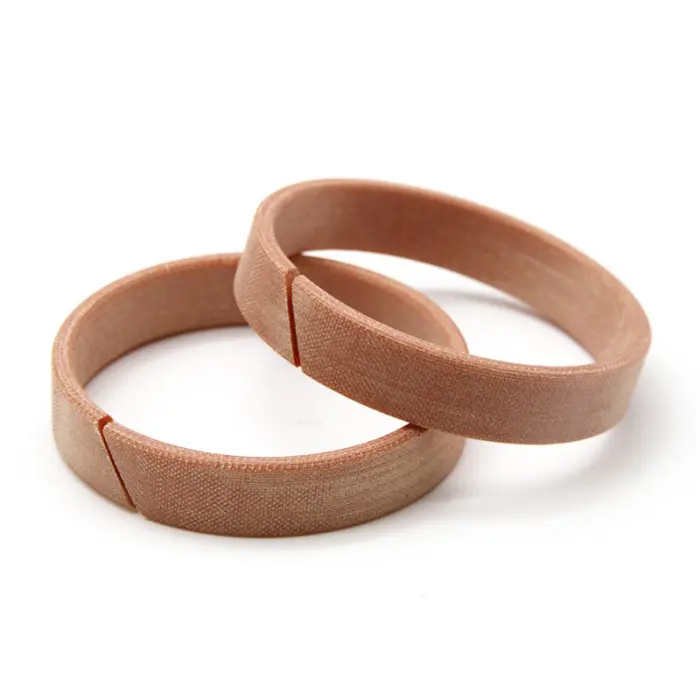
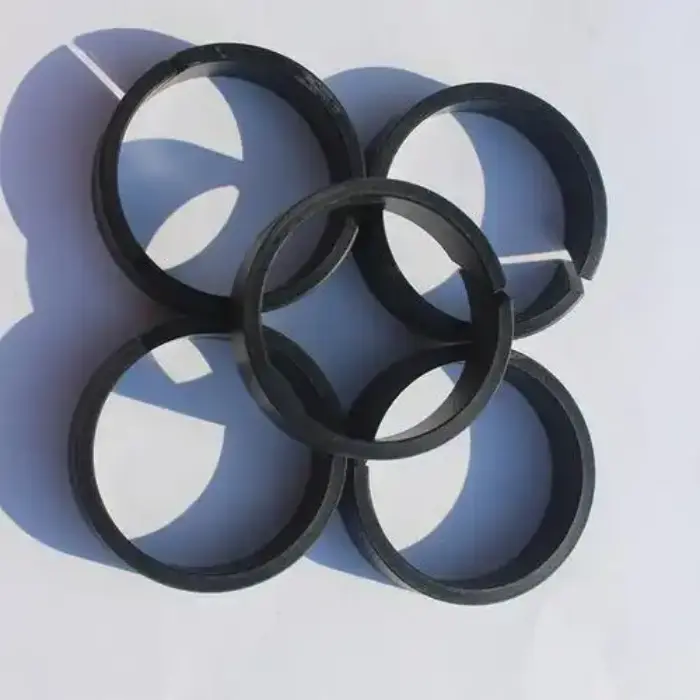
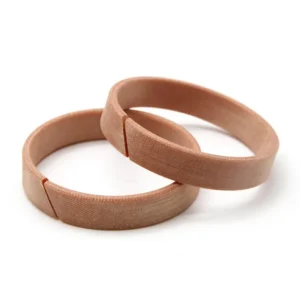
Pneumatic guide rings are non-metallic bearing elements installed in the piston or gland to keep the piston and rod concentric with the cylinder bore while absorbing radial loads and protecting sealing components. For pneumatic service they are optimized for low running friction, minimal stick-slip, and resistance to abrasive contaminants commonly found in industrial compressed-air systems.
Key features
-
Self-lubricating materials for minimal friction and no routine lubrication.
-
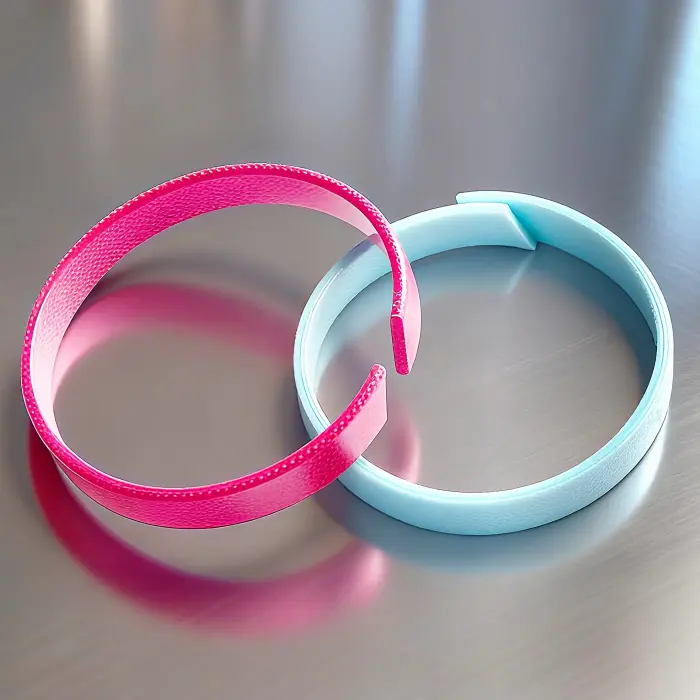
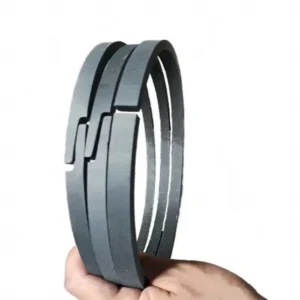
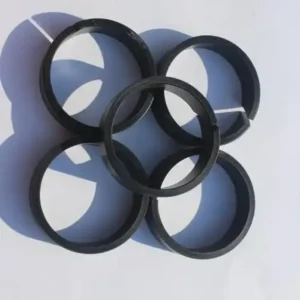
Available as full (solid) rings, split rings (butt-cut) and guide strips for easy installation and retrofit.
-
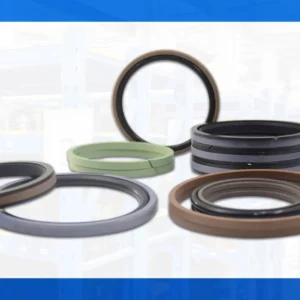
Materials choices (PTFE/filled PTFE, POM/Acetal, glass-filled nylon, phenolic composites) to match load, speed and environment.
-
Tight manufacturing tolerances to protect seal life and control extrusion gaps.
Materials & selection guidance
PTFE & filled PTFE
Ultra-low friction and wide temperature/chemical resistance; best for minimizing stick-slip and for applications where lubrication is limited. Suitable for moderate radial loads in fast-cycling pneumatic cylinders.
POM (Acetal) / Nylon (PA66, glass-filled)
Good wear resistance and compressive strength; common for standard pneumatic guide rings where contamination tolerance and mechanical stability matter. Glass-filled grades improve stiffness for higher side loads.
Phenolic / composite guide rings
Engineered for higher radial loads or larger diameters; phenolic variants provide excellent load capacity while still preventing metal-to-metal contact.
Typical operating parameters
-
Common nominal cylinder/rod sizes stocked: ISO/NFPA cylinder bores and rod diameters commonly covered include 12, 16, 20, 25, 32, 40, 50, 63, 80, 100 and 125 mm; larger/custom sizes are available on request.
-
Recommended radial clearance (guide ring to mating part): typical design practice uses ~0.05–0.10 mm diametral/radial clearance for small/medium diameters to balance wear and avoid metal contact; exact clearance must follow the guide ring series and seal design.
-
Temperature range (typical by material): elastomer-compatible plastics and POM/nylon: about −40 °C to +90 °C; PTFE variants extend significantly higher (service up to >200 °C depending on compound).
-
Speed capability: standard pneumatic guide rings are specified for typical cylinder speeds up to ~1.0 m/s; verify series datasheet for high-speed or high-wear conditions.
Applications
-
ISO/NFPA pneumatic cylinders for industrial automation and packaging machinery
-
Compact and short-stroke cylinders where axial space is limited
-
Rod-guided cylinders and guided actuators requiring increased lateral stiffness
-
High-cycle pneumatic presses, clamps, conveyors and handling equipment
(Include aliases in copy where relevant: “wear ring”, “guide bearing”, “piston guide ring”, “rod guide”.)
Technical specifications
| Parameter | Typical range / notes |
|---|---|
| Stocked rod/piston diameters | ISO sizes 12–125 mm commonly stocked; custom up to 250 mm on request. |
| Cross-section thickness | Typical cross section 2.0–6.0 mm for piston/rod guide rings; series-dependent. |
| Radial clearance (design guideline) | ~0.05–0.10 mm (0.002–0.004 in) typical; use series dimension table for exact Smin / Smax. |
| Temperature limits | POM / Nylon: −40 °C to +90 °C; PTFE variants: −200 °C to +250 °C (compound dependent). |
| Typical max lateral load | Material- and cross-section dependent — specify load and diameter for selection. Manufacturer load tables available in catalog. |
| Typical finishes | Cylinder bore Ra ≤ 0.4–0.8 µm recommended for low wear and seal protection. |
Common sizes & part examples
-
Metric stock rings (examples): ring sets for diameters 12 mm, 16 mm, 20 mm, 25 mm, 32 mm, 40 mm, 50 mm, 63 mm, 80 mm, 100 mm, 125 mm.
-
Form factors: full solid rings (pressed or molded), split/butt-cut rings for retrofit, and guide strips for large diameters or custom grooves.
Note: actual groove width, groove depth and cut gap (Z) are series-specific — always confirm with the dimensional table for the selected guide ring series before ordering.
Why choose our pneumatic guide rings
-
Low friction & no external lubrication: self-lubricating formulations reduce maintenance and avoid contamination from lubricants.
-
Protect seals & extend life: correct guidance reduces side load on seals, reducing leaks and service interventions.
-
Easy retrofit: split rings and standard ISO sizes simplify replacement during maintenance.
-
Material variety: select from PTFE, POM, glass-filled nylon or phenolic grades according to speed, load and environment.
Pneumatic guide ring vs Hydraulic guide ring
| Characteristic | Pneumatic guide ring | Hydraulic guide ring |
|---|---|---|
| Primary design focus | Low friction, self-lubrication, fast cycles | High compressive strength, high radial load capacity |
| Typical materials | PTFE, POM, nylon, phenolic — prioritized for low friction and contamination tolerance | POM, phenolic, or metal-reinforced composites designed for high pressure and heavy loads |
| Radial clearance | Smaller clearances to reduce leakage and friction in air systems (series specific) | Often larger or reinforced designs to withstand higher pressures and extrusion forces |
| Typical application | Air cylinders, guided actuators, compact pneumatics | Hydraulic cylinders, heavy machinery, high-load actuators |
Design implication: pneumatic guide rings are engineered for lower pressure, higher cycle frequency and lower friction; do not substitute a pneumatic guide ring into heavy hydraulic service without confirming load ratings.
Installation & maintenance notes
-
Clean bore and remove burrs before installation; ensure mating surfaces are within recommended surface finish.
-
Allow the specified cut gap (Z) in split rings to accommodate thermal expansion and avoid binding—follow series dimensional chart.
-
Inspect guide rings periodically for wear; replace when diametral clearance increases beyond manufacturer limits to protect seals and cylinder bore.
Downloads
E-E-T-A
-
Experience: Decades supplying guide rings and bearing solutions for OEM pneumatic cylinders and aftermarket service.
-
Expertise: Application engineers validate ring selection against lateral loads, speed and environmental conditions to optimize seal life.
-
Authoritativeness: Standardized dimensional tables aligned with ISO/NFPA cylinder sizes and factory test reports available on request.
-
Trustworthiness: Lot traceability, batch inspection and material certificates provided for production orders; samples and short-run trials supported before full production.
FAQ
Q — What information is required for a correct guide ring selection?
A — Provide piston/rod diameter, groove width and depth (or cylinder model/series), maximum lateral load (if known), operating speed, temperature range and expected cycle count. Photos or samples speed the quoting process.
Q — Can I retrofit split guide rings into an existing cylinder?
A — Yes — split/butt-cut guide rings are designed for retrofit without disassembling the piston in many cases. Confirm available cut gap and series compatibility first.
Q — How do I choose between PTFE and POM guide rings?
A — Choose PTFE when ultra-low friction or very wide temperature/chemical range is needed; choose POM (or glass-filled nylon) for higher compressive strength and resistance to abrasive contaminants under moderate loads.
Q — What tolerances should I hold for the groove?
A — Use the guide ring series dimensional table; typical manufacturing tolerances are tight (±0.025 mm cross-section) to protect seals and control extrusion gaps.
H2 — Call to action / Contact
Hengshui Aohong— Mechanical Seals Division
-
Email: sales@aohongglobal.com (for datasheet requests and fast quotes)
-
Phone: +(86) 153 7318 1024 (please replace with your official number)
Request a quote / Request sample: Get a Quote — include diameter, ring type (solid/split/strip), material preference and required quantity.