

Key product names & aliases
Primary keywords: PTFE seals, PTFE composite seals, Teflon seals.
Common aliases to include on product pages / anchors: Teflon seals, PTFE-filled seals, PTFE piston seals, PTFE rod seals, PTFE backup rings.
Product overview
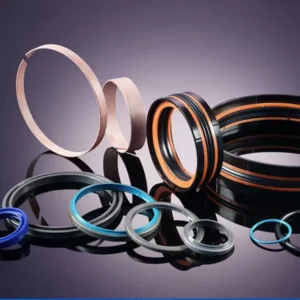
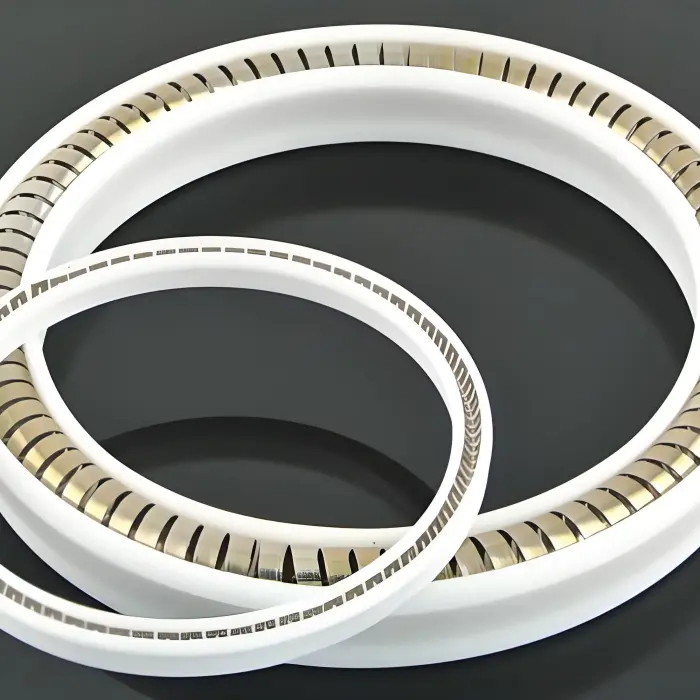
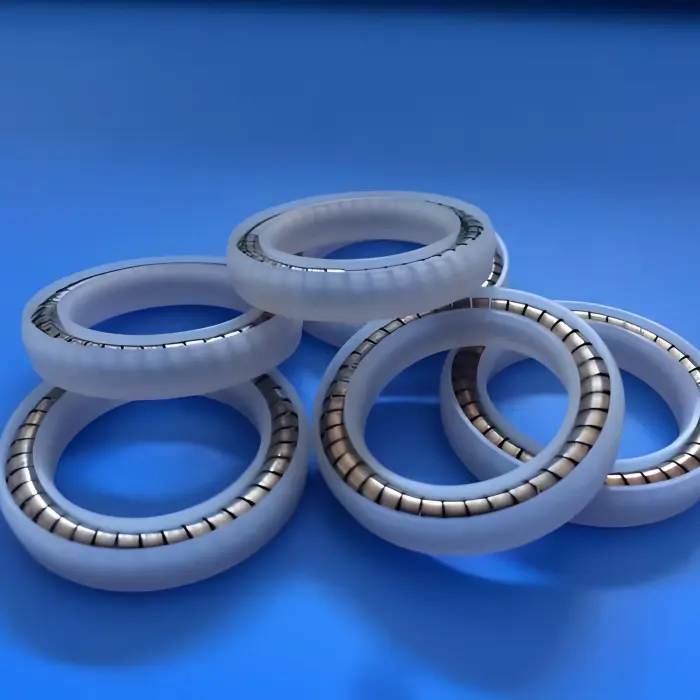
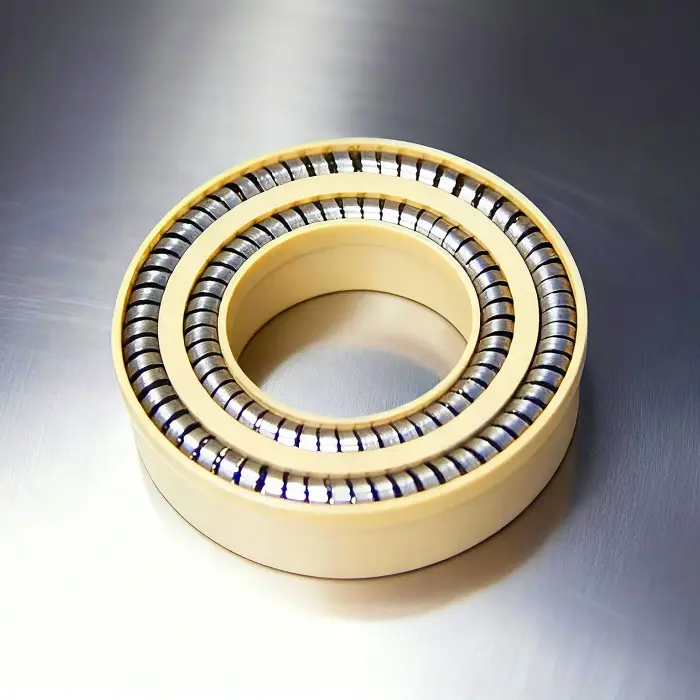
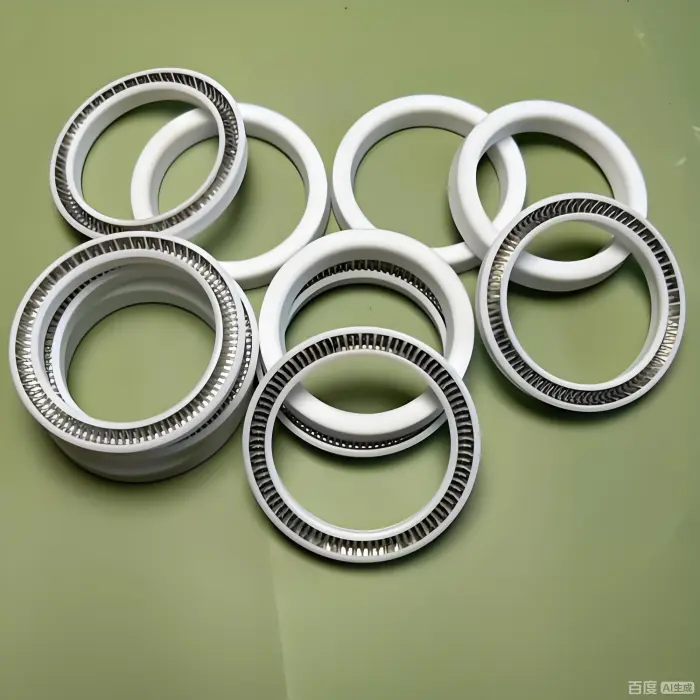
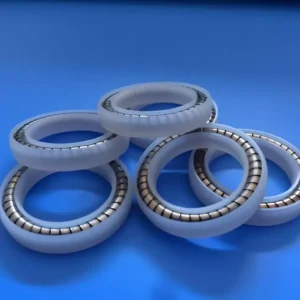
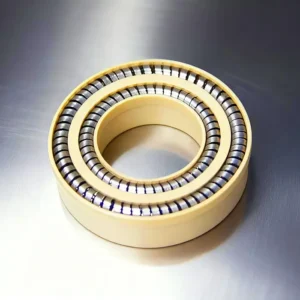
PTFE seals combine ultra-low friction, wide temperature tolerance and near-universal chemical compatibility — making them the preferred choice where rubber/urethane fail (strong acids, solvents, steam, high temperature). PTFE composite seals are PTFE compounds or PTFE molded with fillers (glass, graphite, bronze, carbon) and/ or designed as PTFE rings with an elastomer energizer to combine sealing resilience with PTFE’s chemical and thermal advantages. Typical production diameters span from sub-millimetre components up to large custom rings — manufacturers report capacity from ~0.5 mm to multiple meters for machined PTFE parts.
Typical technical highlights
-
Temperature range: typical service −240 °C to +260 °C for virgin/filled PTFE grades (actual range depends on compound).
-
Chemical resistance: Excellent to almost all acids, bases and organic solvents (exceptions: molten alkali metals and some fluorinating agents).
-
Pressure capability: PTFE composite seals with proper energizer/back-up designs are commonly used up to several thousand psi in hydraulic services (e.g., common PTFE piston/rod designs rated in commercial listings to ~5000 psi depending on design and gland).
-
Friction: Very low static/dynamic friction — reduces stick-slip and wear on mating surfaces.
Detailed product types & constructions
Virgin PTFE rings
Used where maximum chemical purity and temperature resilience are required (gaskets, static seals, insulating parts).
Filled PTFE / PTFE composite
Glass, carbon, graphite or bronze filled PTFE to improve wear, compressive strength and reduce cold flow — used in dynamic seals and where creep must be controlled.
PTFE seals with elastomer energizer
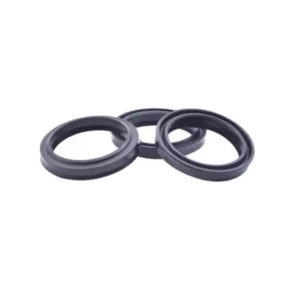
PTFE sealing lip bonded/assembled to an elastomeric energizer for improved extrusion resistance and sealing under pressure (common as PTFE piston/rod seals). Examples and common geometries available for metric piston/rod sizes.
PTFE backup / anti-extrusion rings
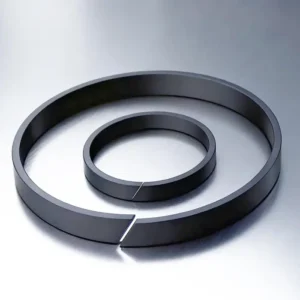
Non-sealing rings (filled PTFE, PEEK, etc.) used behind seals to prevent extrusion in high-pressure gaps.
Common applications
-
Hydraulic cylinders (pistons & rods) in mobile and industrial hydraulics.
-
Chemical process valves, mixers and reactors.
-
Compressors and pumps (gas and liquid service).
-
Food/pharma equipment when FDA-grade PTFE is required.
-
High-temperature steam and oven seals.
When specifying, include media, operating temperature, pressure, surface finish and gland geometry to ensure correct PTFE grade and anti-extrusion strategy.
Typical dimensions & frequently stocked sizes
(All dimensions shown as OD × ID × cross-section / thickness — metric examples commonly stocked for piston/rod PTFE composite seals.)
| Typical part example | OD (mm) | ID (mm) | Section (mm) | Notes |
|---|---|---|---|---|
| PTFE piston seal (small) | 22.0 | 14.5 | 3.2 | common small bore hydraulic repair kits. |
| PTFE piston seal (general) | 40.0 | 32.5 | 3.2 | widely used metric size. |
| PTFE piston seal (medium) | 50.0 | 42.2 | 3.2 | common in mid-size cylinders. |
| PTFE piston seal (large) | 80.0 | 69.0 | 4.2 | heavy duty geometry examples. |
| PTFE piston seal (extra large) | 85.0 | 70.0 | 7.6 | high-pressure buffer designs. |
Note: the table shows frequently stocked metric examples — we supply full custom machining from sub-mm bores to large diameters per application requirements. Manufacturer capability to machine PTFE parts up to multiple meters is reported in industry literature.
Specification table
| Parameter | Typical value / note |
|---|---|
| Material grades | Virgin PTFE, Glass-filled PTFE, Graphite/Carbon-filled PTFE, Bronze-filled PTFE, Modified PTFE (low wear) |
| Operating temperature | −240 °C to +260 °C (verify per compound). |
| Chemical resistance | Excellent to most media; exceptions: molten alkali metals, select fluorinating agents. |
| Max recommended pressure | Design dependent; PTFE composite seals with energizers commonly used up to several thousand psi (service examples in commercial listings up to ~5000 psi). |
| Surface finish (rod/piston) | Typical Ra ≤ 0.4 µm for dynamic seals; exact requirement depends on seal design. |
| Tolerances | Machined PTFE parts: custom tolerances available — specify ID/OD/width and runout. |
Advantages
-
Exceptional chemical inertness — suits corrosive media and solvents.
-
Wide operating temperature window (cryogenic to +260 °C typical).
-
Extremely low friction and minimal stick-slip — prolongs rod/cylinder life.
-
Custom machinability — from small precision rings to large diameters.
-
Available in filled/composite grades or with elastomer energizers for high pressure and anti-extrusion performance.
PTFE vs. common alternative materials
| Feature | PTFE / PTFE composite | NBR / Buna-N (rubber) |
|---|---|---|
| Chemical resistance | Excellent for most chemicals; few exceptions. | Good for oils, fuels; poor with strong solvents/oxidizers. |
| Temperature range | Wide (≈ −240 to +260 °C typical). | Typically −40 to +120 °C (varies by compound). |
| Friction | Very low (excellent for dynamic seals). | Higher friction; good elasticity for low-pressure sealing. |
| Extrusion resistance | Needs backup rings or energizer designs at very high pressure. | Better inherent elasticity; may perform better in low-pressure dynamic due to flexibility. |
| Typical use | Chemical, high temp, low friction dynamic seals, piston/rod seals | General hydraulic seals, low-cost general service |
Quality, testing & E-E-T-A information
Experience: Our engineering team evaluates each sealing application against media, pressure, temperature and gland geometry; we provide material recommendations and anti-extrusion strategies based on industry best practices.
Expertise: Material data sheets and test reports for specific PTFE compounds (tensile/compression, thermal data, chemical charts) are provided on request so procurement can verify suitability prior to order.
Authoritativeness: We reference material datasheets and industry design guides when designing PTFE sealing solutions; customers receive recommended gland drawings and installation notes with every quotation.
Trust: Traceability of raw polymer grade, batch certificates and sample testing are available for high-risk applications. Warranty and acceptance criteria are included in supply agreements.
Ordering & commercial details
-
MOQ & lead times: stocked sizes available for small MOQ; custom machined rings and special compounds quoted per order.
-
Samples: small sample quantities available for evaluation — request sample part numbers and nominal lead time.
-
OEM / private label: we support OEM packaging and part-numbering for production customers.
-
Customization: specify OD, ID, cross-section, compound, surface finish and application data (pressure, temp, media) in RFQ.
Downloads
FAQ
Q1: Can PTFE seals be used for hydraulic cylinders?
A: Yes — PTFE composite piston/rod seals with appropriate energizers and back-up rings are widely used in hydraulic cylinders, especially where chemical compatibility or temperature extremes make elastomers unsuitable. Confirm pressure, gland geometry and surface finish before final selection.
Q2: What temperature and chemical limits should I expect?
A: Typical PTFE service is −240 °C to +260 °C for common grades; PTFE is chemically resistant to most acids, solvents and bases — exceptions include molten alkali metals and strong fluorinating agents. Always check compound data for critical services.
Q3: How do PTFE seals compare to rubber for dynamic sealing?
A: PTFE offers far better chemical and temperature resistance and lower friction. Rubber has better elastic recovery; for dynamic high-pressure service, PTFE designs often use energizers/backup rings to control extrusion.
Q4: Can you supply custom sizes and OEM labeling?
A: Yes — we supply stocked common sizes for fast delivery and offer custom machining and private labeling for production orders.
Q5: What information should I provide to get an accurate quote?
A: Indicate application (piston/rod/static), media, max operating pressure, continuous and peak temperatures, OD/ID/width, surface finish (Ra), and expected cycle profile. We will then recommend compound, anti-extrusion parts and a quotation.
Call to action
Request a quote today — provide cylinder/rod drawings or specify the part sizes and operating conditions in your RFQ, and we will return a detailed quotation with recommended compound, drawing and lead time.
Contact
Hengshui Aohong— Mechanical Seals Division
-
Email: sales@aohongglobal.com (for datasheet requests and fast quotes)
-
Phone: +(86) 153 7318 1024 (please replace with your official number)