

Product Overview
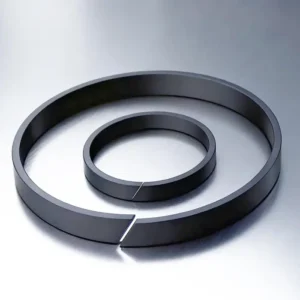
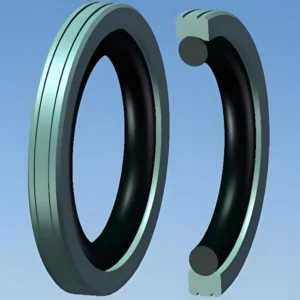
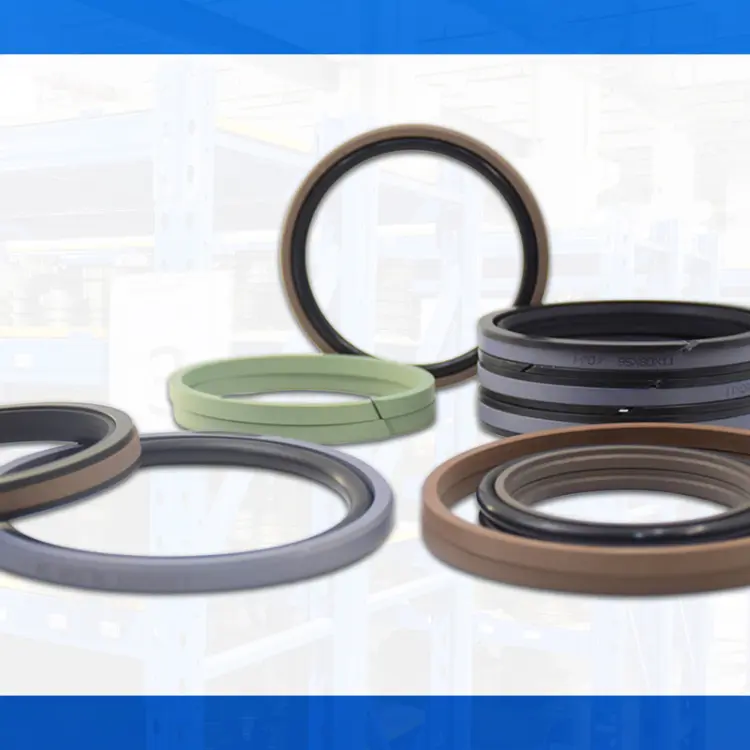
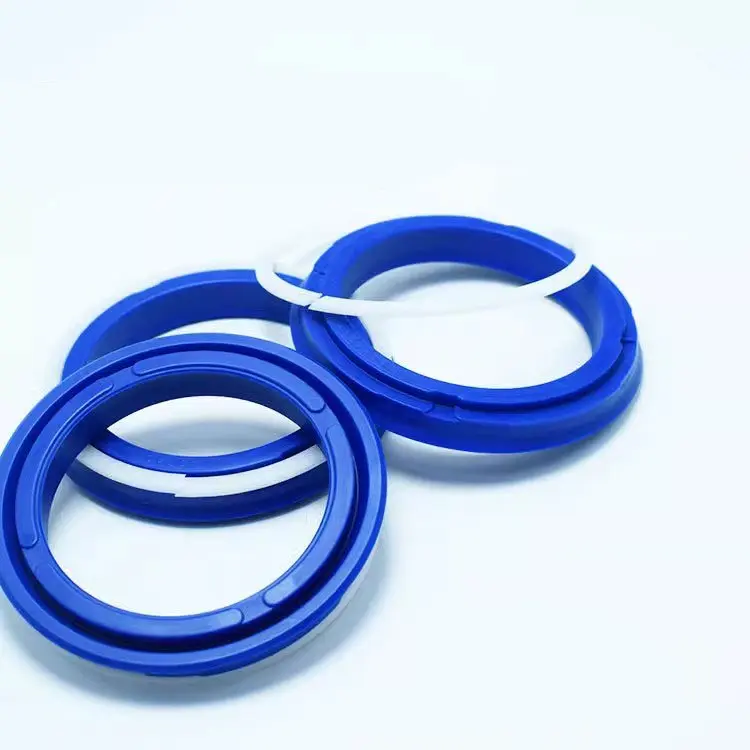
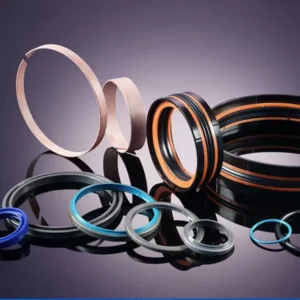
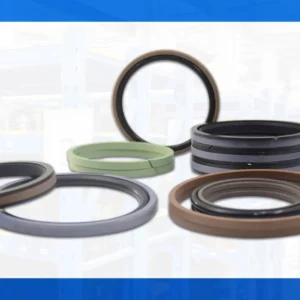
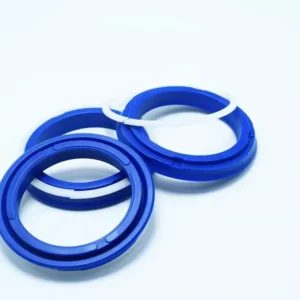
Hydraulic piston seals prevent fluid transfer between piston chambers in hydraulic cylinders and convert fluid pressure into linear motion. Our piston seals are available in industry-proven geometries — U-cup (cup seals), T-seals, capped PTFE seals and multi-element piston sets — and are offered in PTFE compounds, engineered polyurethanes (Zurcon/Zurcon-equivalents), and elastomer energizers to suit a wide range of pressures, temperatures and media.
Key Applications
Typical industries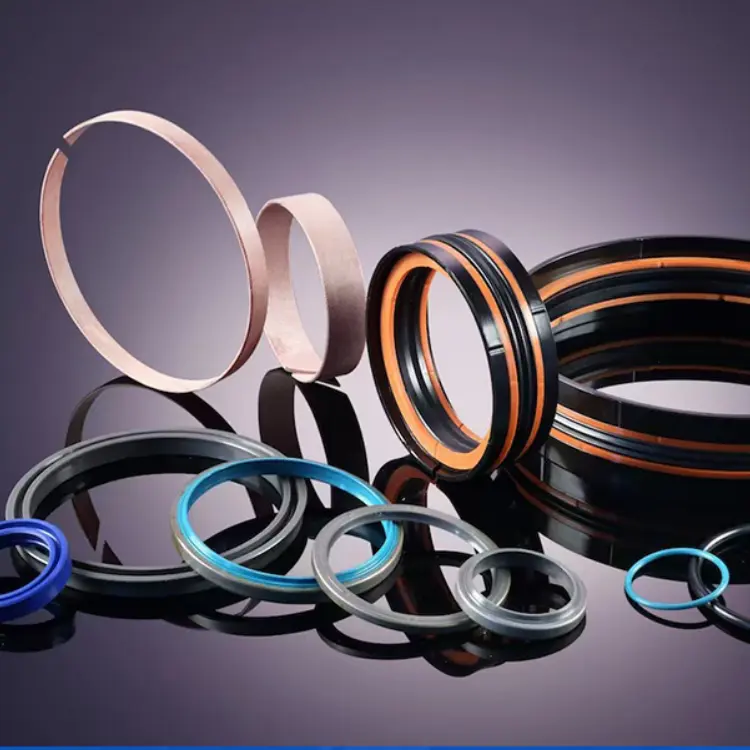
-
Mobile hydraulics: excavators, loaders, cranes.
-
Industrial hydraulics: presses, injection molding, cylinder repair.
-
Marine and offshore hydraulic actuators.
-
Energy: turbine pitch systems, valve actuators.
Typical functions -
High-pressure piston sealing to separate rod and cap chambers, resisting extrusion and wear during reciprocation.
Product Types & Common Profiles
-
U-cup / Cup seals (uni- or bi-directional) — simple, robust for low to medium pressure.
-
T-seals — high-performance profile for higher pressures and long life.
-
Capped PTFE piston seals — PTFE sliding element with an elastomer energizer for very low friction and higher service life. Suitable for medium-to-high pressures when combined with backup rings.
-
Multi-element piston sealing sets (energizer + carrier + backup rings) — for high-pressure and demanding dynamic applications.
Materials & Typical Performance
Materials: PTFE (Turcon®/filled PTFE variants), polyurethane (Zurcon® equivalents), NBR/FKM energizers, polyamide/nylon backup rings. These materials are industry standard for piston seals and selected based on required abrasion resistance, extrusion resistance and friction characteristics.
Performance highlights
-
Pressure capability: industry piston seals (depending on profile and backups) are used up to thousands of psi — many high-pressure piston designs are rated up to ~7000 psi (≈480 bar) depending on seal design and clearances; PTFE with energized designs are commonly used to 350 bar for medium-high applications when using slide rings and backups. Always confirm with engineering for ultra-high pressure systems.
-
Temperature range: depends on compound — typical NBR/PU ranges −40°C to +100°C; PTFE compounds extend higher depending on filler and energizer selection.
E-E-T-A (Experience, Expertise, Authoritativeness, Traceability)
-
Manufactured under controlled compound traceability and batch QC.
-
Available test data: hardness (durometer), extrusion test, dynamic wear tests, and dimensional certification on request.
-
Engineering support for gland design, clearance recommendations and material selection is available to match your cylinder duty cycle.
Specifications & Common Sizes
Note: below are typical, real catalog sizes and representative gland depth ranges sourced from seal industry catalogs — use these as starting points for standard piston replacement or new cylinder design. For final engineering you should confirm precise gland tolerances with seal supplier or our technical team.
Manufacturer typical guidelines: Parker lists piston-seal bore ranges and gland depths for standard profiles (example bore 32.0–200.0 mm; gland depth 3.7–10.5 mm in typical families).
Range of supply: industry suppliers stock standard sizes from small bores (≈4–6 mm) up to large custom diameters (seals and rings produced to >1000 mm in some manufacturers).
Common nominal sizes
| Nominal Bore (ID) | Typical OD (seal outer) | Typical Cross-section / Height | Typical Notes / Source |
|---|---|---|---|
| 20 mm | 30 mm | 7.3 mm | example catalog listing for U-seal. |
| 25 mm | 33 mm | 5.7 mm | catalog sample. |
| 32 mm | 42 mm | 7.3 mm | catalog sample. |
| 40 mm | 55 mm | 11.4 mm | catalog sample. |
| 65 mm | 80 mm | 10.5 mm | PTFE capped example item sizing commonly available. |
| 80 mm | 100 mm | 10–12 mm | common medium bore example. |
| 100–200 mm | custom OD | 8–15 mm | Parker catalog product families cover these bores; custom sets available. |
Advantages — Why choose these piston seals
-
Low friction and extended service life with PTFE caps and engineered energizers.
-
High abrasion and extrusion resistance with polyurethane piston seals for heavy-duty use.
-
Modular multi-element sets allow pressure ratings to be increased with backup rings.
-
Standardized sizes for rapid replacement and custom machining for special bores (up to very large diameters).
Materials Comparison
| Material | Typical Strengths | Typical Limits / Best for |
|---|---|---|
| PTFE (filled) | Very low friction, chemical compatibility | Low wear without backups; best with energizer & backup rings; good to medium-high pressure (catalogs show use up to ~350 bar in slide-ring designs). |
| Polyurethane (PU / Zurcon®) | Excellent abrasion & extrusion resistance | Preferred for heavy duty, high wear applications; pressure capability depends on profile and clearances. |
| NBR / FKM energizers | Good sealing energization over elastomer temperature ranges | Use as energizer for PTFE caps or U-cups. |
Installation & Gland Guidelines
-
Use the seal family-specific groove dimensions; typical gland depths for standard piston families range from 3.7 mm to ~10.5 mm depending on bore and profile. Confirm tolerances with the chosen seal family.
-
Avoid sharp edges on piston land and chamfer the piston and cylinder bore to allow safe seal installation. Use correct backup rings where pressure or extrusion risk is high.
FAQ
Q1 — What is the difference between a piston seal and a U-cup?
A: U-cups are a family of cup-shaped seals (often single element) that seal effectively in one or both directions depending on profile; piston seals include U-cups, T-profiles and capped PTFE slide rings — selection depends on pressure, friction and wear requirements.
Q2 — Can I replace my piston seal with a PTFE capped seal to reduce friction?
A: Often yes, but PTFE capped seals require correct gland design and may need backup rings for high pressure. Provide your bore, rod, groove dimensions and duty cycle for engineering confirmation.
Q3 — What pressure ratings can I expect?
A: Pressure capability depends on seal profile, energizer and backup configuration. Typical catalog families are applied from low pressures up to thousands of psi; some high-pressure families are used to ~7000 psi depending on design. Confirm with datasheet and engineering.
Q4 — Do you supply custom sizes?
A: Yes. Industry suppliers routinely manufacture custom piston seals and multi-element sets to large diameters and uncommon cross-sections. Provide drawings or cylinder bore/land dimensions.
Why our product is different from competitors
-
Technical support for gland design: We provide engineered gland recommendations for each seal family to reduce leakage and extend service life.
-
Catalog + custom capability: Standard stocked sizes for fast delivery plus in-house tooling for custom diameters up to large bore sizes.
-
Documented traceability & test data: Material batch records and sample test reports available on request to support E-E-T-A claims.
Ordering information & part numbering
-
Provide: (1) Nominal piston bore (ID), (2) Seal family/profile, (3) Material, (4) Operating pressure, (5) Temperature range, (6) Application media.
-
Example part number format (internal): HPS-PTFE-65x80x10.5-NBR (where 65 = bore mm, 80 = OD mm, 10.5 = height mm).
Contact & Downloads
Catalog & Specs (host these files on your domain):
Hengshui Aohong— Mechanical Seals Division
-
Email: sales@aohongglobal.com (for datasheet requests and fast quotes)
-
Phone: +(86) 153 7318 1024 (please replace with your official number)
— Provide: required material, operating temperature, media, O-ring size (AS568 dash or ID×CS) or drawing, desired quantity, and any certification requirements (FDA, NSF, USP, etc.). We will respond with a technical quote and lead time.