
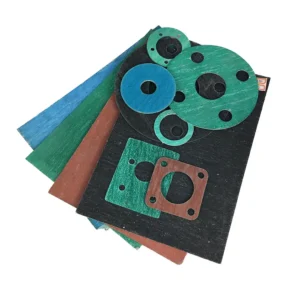
Product Overview
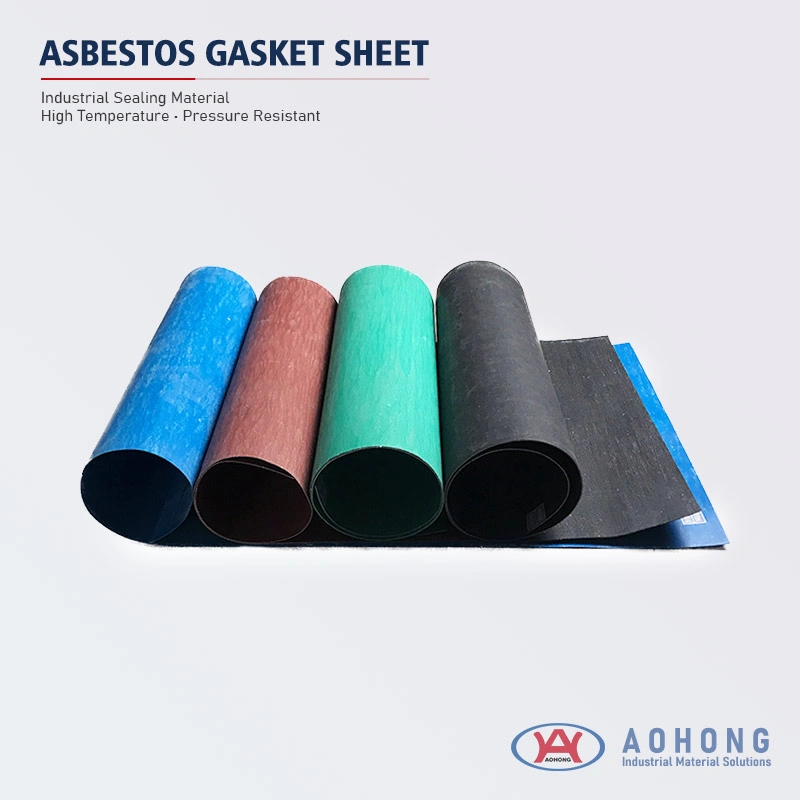
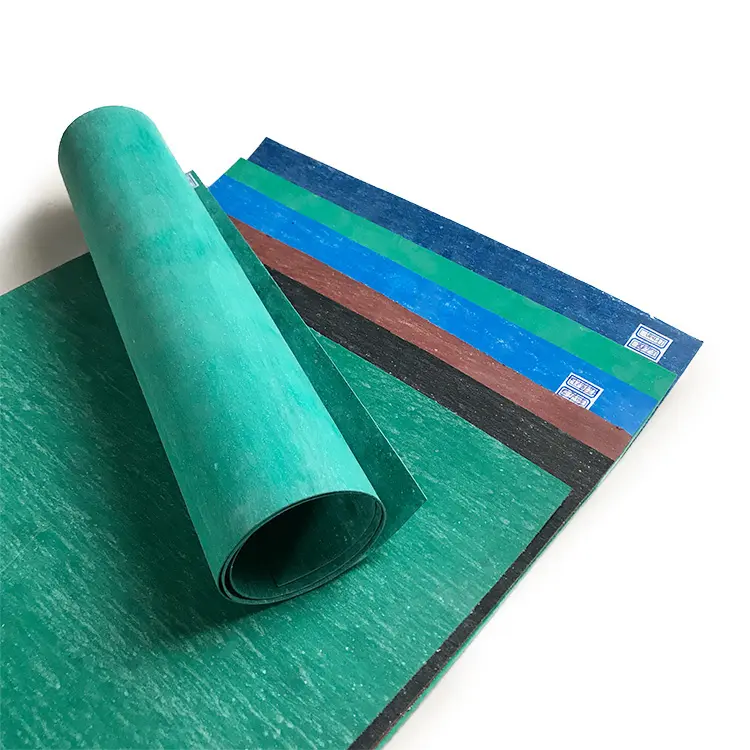
Compressed Asbestos Gasket Sheet (CAF) is a pressed and bonded fiber jointing material manufactured from long-grade asbestos fibers and elastomeric binder to deliver excellent compressibility, recovery and long-term sealing performance under varying temperatures and flange stresses. It is widely used for flange jointing, valve bonnets, pumps and industrial equipment where a durable, low-cost sealing solution is required. (Also known as: CAF gasket sheet, compressed asbestos fiber sheet, asbestos jointing sheet, compressed asbestos jointing sheet.)
Technical Description
Composition & Manufacture
Compressed asbestos gasket sheets are made by hot-pressing long-length chrysotile (or other approved asbestos grades) fibers with an SBR/NBR binder to form a dense, board-like jointing material. This process yields high compressive strength, low creep and predictable torque retention.
Performance Characteristics
-
Good resistance to steam and hot water, moderate resistance to oils and hydrocarbons, and reliable sealing across a wide range of pressures and temperatures (see technical limits below).
-
Excellent dimensional stability and die-cutting yield for large-volume OEM gasket production.
(Technical limits and nominal performance references follow in the Technical Specifications section.)
Applications & Typical Use Cases
-
Steam flange gaskets (industrial boilers, steam lines)
-
Pumps and compressors (oil & gas processing)
-
Heat exchangers and pressurized vessels (where asbestos use is permitted)
-
Valve bonnets, manways and general mechanical jointing applications
-
OEM die-cut gasket production for maintenance spares and aftermarket supply
Technical Specifications
Material: Chrysotile asbestos fibers + synthetic binder (SBR/NBR)
Nominal thickness (standard stock): 0.4 mm, 0.5 mm, 0.75 mm, 1.0 mm, 1.5 mm, 2.0 mm, 3.0 mm (other thicknesses 0.25–6.0 mm on request).
Standard sheet sizes (mm): 1270 × 1270 mm; 1500 × 1500 mm; larger sheets and custom sizes available.
Operating temperature (typical range): up to 450–550°C for high-grade chrysotile varieties depending on binder and grade; confirm grade-specific data prior to selection.
Max service pressure: depends on thickness and flange design — some grades rated for high pressures (refer to grade datasheet; Klinger-type asbestos grades have published high-pressure ratings).
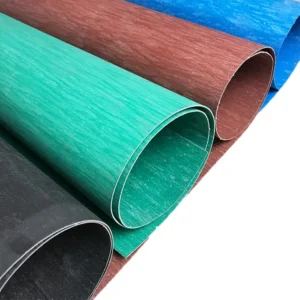
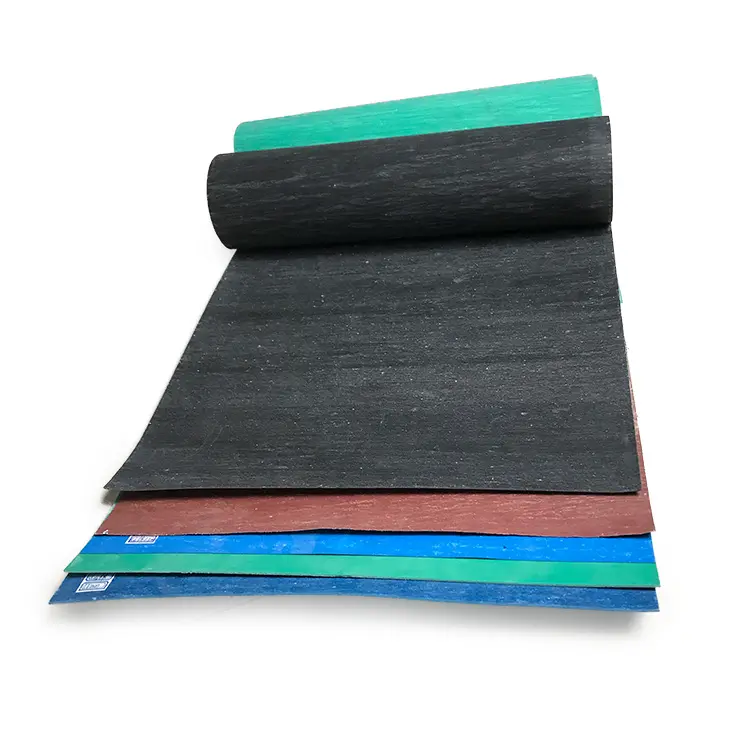
Color / finish: natural brown/red (binder dependent); optional anti-stick treatment available.
Packing: plywood pallet, wrapped by protective film; export crates for sea freight.
Notes: Always request the specific grade datasheet, MSDS and test certificates for steam & critical applications.
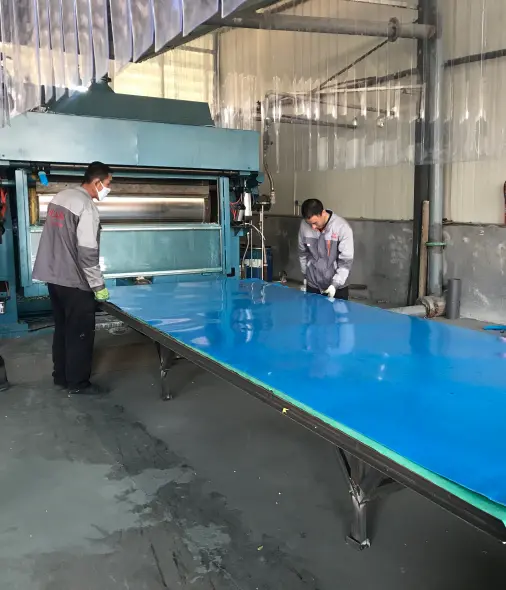
Common Sizes & Stock List
-
CAF-050-1270 — 0.5 mm × 1270×1270 mm — standard stock
-
CAF-100-1270 — 1.0 mm × 1270×1270 mm — standard stock
-
CAF-150-1500 — 1.5 mm × 1500×1500 mm — standard stock
-
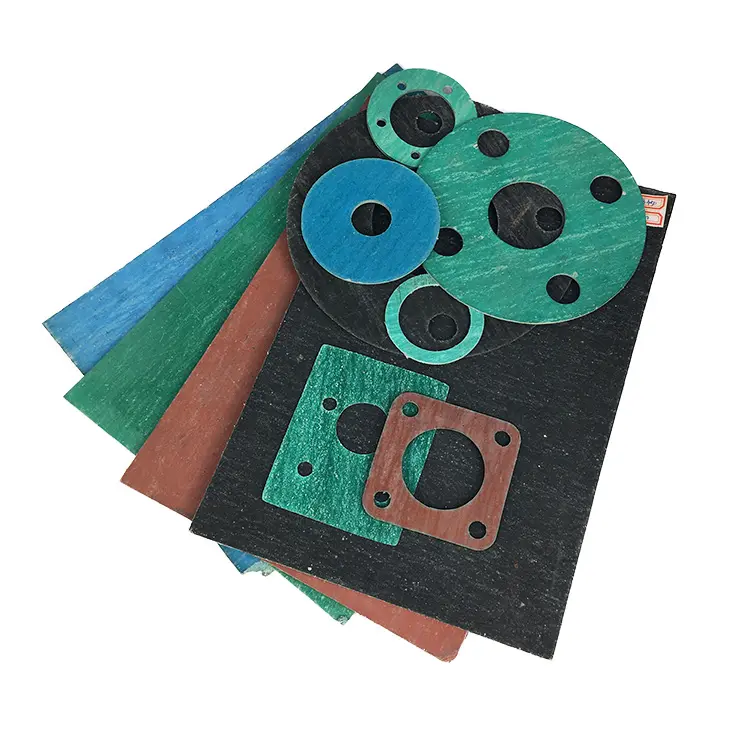
Custom die-cut rings and gaskets — per CAD/ISO drawing
Product Advantages
-
Cost-effective sealing for non-extreme chemical services.
-
Excellent die-cutting yield and repeatability for OEM gasket production.
-
Good steam and hot-water resistance (widely used in steam systems).
-
Stable dimensions and reliable torque retention under repeated start/stop cycles.
-
Export & OEM support: CAD die-cutting, custom finishing, private-label packaging.
Compliance, Safety & Regulatory Notes
-
Asbestos products are subject to strict regulations and bans in many jurisdictions. Buyers must confirm local import/use regulations and ensure proper handling and PPE at installation sites. Our company provides MSDS, composition certificates and chain-of-custody documentation on request for export compliance.
Comparison Table — Compressed Asbestos vs Common Alternatives
| Property / Material | Compressed Asbestos (CAF) | Aramid / Non-Asbestos (e.g., Klingersil) | Graphite Sheet | Expanded PTFE |
|---|---|---|---|---|
| Temp range | Up to 450–550°C (grade dependent). | Up to ~400°C (depending on grade). | Very high up to ~650°C (oxidation limits apply) | -200 to +260°C (excellent low-temp & chemical) |
| Chemical resistance | Moderate (steam, oils); limited vs strong acids/oxidizers | Good (wide chemical range) | Excellent for heat and many chemicals | Excellent chemical resistance |
| Compressibility & recovery | Good | Good to very good | Lower compressibility | Low surface friction, low creep |
| Cost | Typically lower | Mid to higher | Mid to high | Higher |
| Regulatory / availability | Restricted / banned in many markets — check local laws. | Widely accepted replacement | Widely accepted | Widely accepted |
| Best for | Traditional steam/oil flanges where allowed | Modern OEM replacement, broad usage | High-temp/graphite specific | Corrosion-sensitive, aggressive chemicals |
Custom Services
-
Die-cut gaskets from customer DXF/CAD files (jig & tool matched).
-
Custom thickness blends and anti-stick surface coatings.
-
Private label packaging and batch traceability (lot numbers).
-
Sample program: free/sample packs for qualified buyers (subject to export controls and local laws).
FAQ
Q1: What is the MOQ (minimum order quantity)?
A1: Typical MOQ for stocked compressed asbestos gasket sheet is 100 pieces (1270×1270 mm) or equivalent volume. For die-cut or custom orders, MOQ depends on tool setup and material grade — please request a quote. (You can set your actual MOQ — adjust per factory capabilities.)
Q2: What is lead time?
A2: For stocked sizes: 7–14 business days for pallet orders; for custom thicknesses, die-cut or large volumes: 2–5 weeks depending on order size, tooling and freight choice. Expedited production is available for rush orders.
Q3: How is the product shipped and how is it packaged?
A3: Compressed asbestos gasket sheets are interleaved, film-wrapped, and palletized (plywood pallet). For export: wooden crates or fumigated pallets on request; we offer CIF/FOB shipping and handle export documentation.
Q4: Do you provide die-cutting and custom gaskets?
A4: Yes — we offer CNC/die cutting to customer drawings (DXF/CAD), ring-cut, and full gasket kits. Tooling charges may apply for new dies.
Q5: Are MSDS / test certificates available?
A5: Yes — MSDS, composition reports, and lot test certificates (where applicable) are available on request for each shipment.
Q6: Is this material allowed in my country?
A6: Regulations vary. Many countries have total or partial bans on asbestos; please confirm local import/use rules. We can assist with documentation and advise on non-asbestos alternatives if required.
Q7: Can you supply non-asbestos alternatives?
A7: Yes — we supply aramid/kevlar reinforced compressed sheets, graphite and PTFE jointing sheets as asbestos-free options for markets where asbestos is restricted.
Q8: What information should I provide to get an accurate quote?
A8: Provide required material grade (if known), sheet size, thickness, quantity, desired finish (anti-stick), and any die-cut/CAD drawings. Also advise shipping port and INCOTERM.