

Product Overview
What is a compressed asbestos fiber gaskets (CAF)?
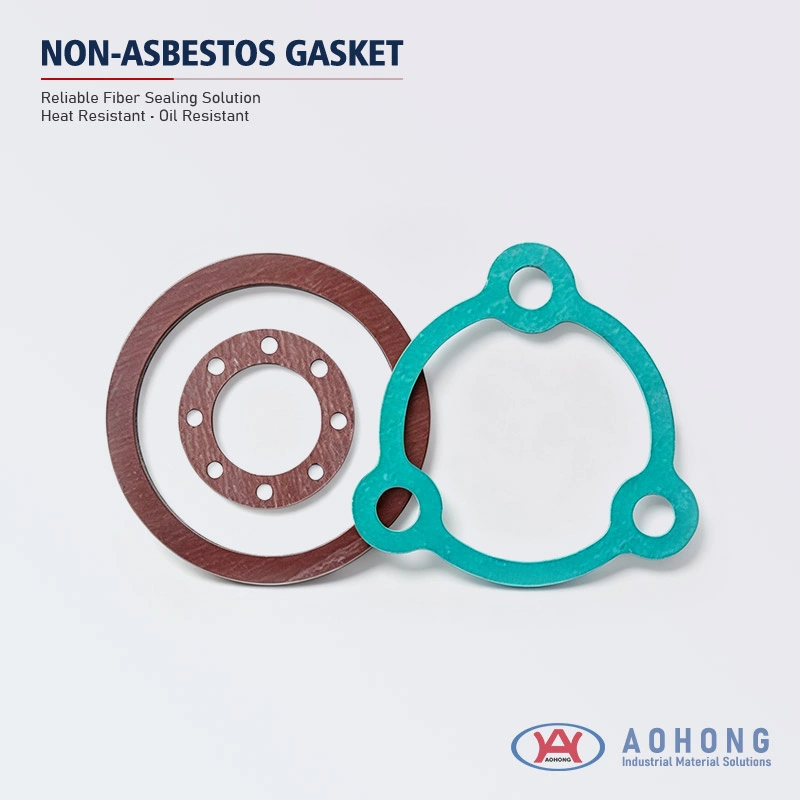
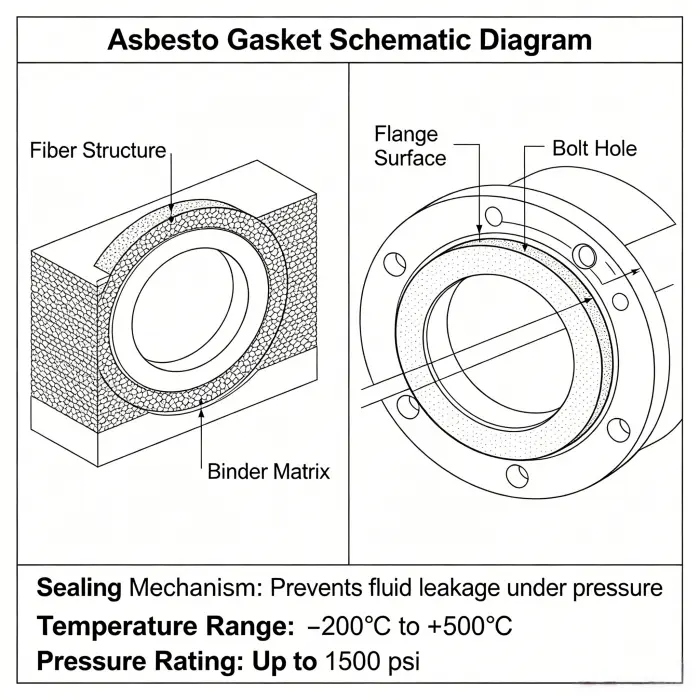
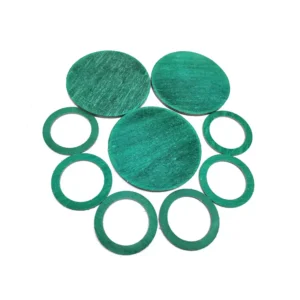
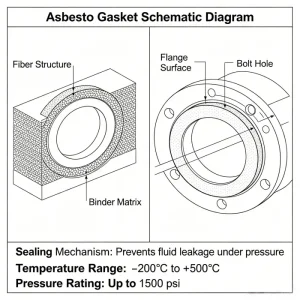
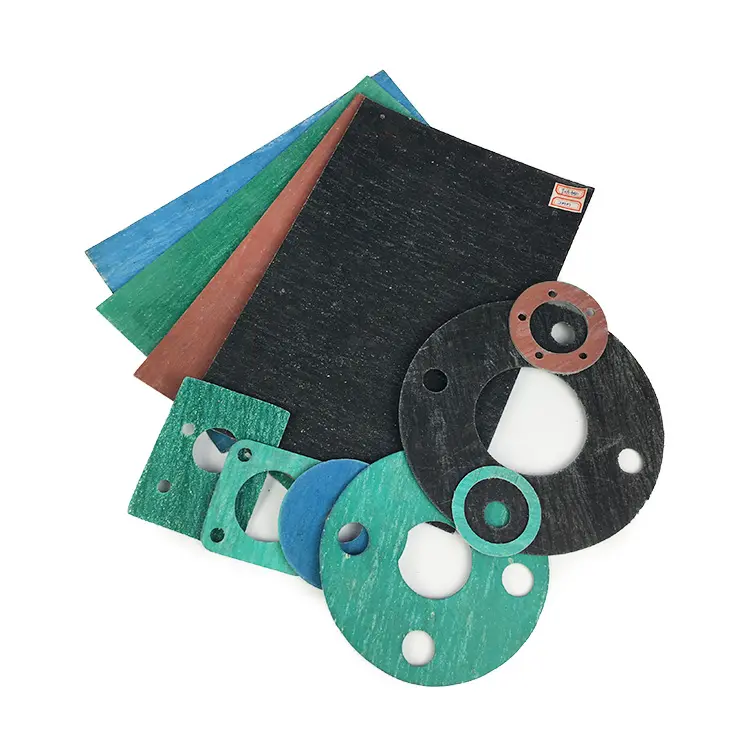
A compressed asbestos fiber gasket is produced by compressing asbestos fibers together with a binder (nitrile rubber, phenolic resin or similar) into flat jointing sheets that are then die-cut to form flat ring or full-face gaskets. These gaskets have historically been specified for steam, oil, water and many chemical services because of their combination of heat resistance and sealing performance. Common trade names and abbreviations include CAF gasket, compressed asbestos gasket, asbestos jointing sheet gasket, and compressed asbestos fiber sheet gasket.
Compressed asbestos fiber gaskets (commonly abbreviated CAF gaskets) are sheet-cut gasket rings made from asbestos fibers bound with rubber or resin binders, historically used for reliable, high-temperature sealing in flanged pipe and equipment joints. They offer good compressibility, dimensional stability and chemical resistance in many legacy industrial services — but are subject to strict regulatory controls and are being progressively replaced by modern non-asbestos materials.
Construction & Typical Materials
How they’re made (short):
-
Base fiber: chrysotile or other asbestos fiber grades historically used.
-
Binder: nitrile (NBR), phenolic or other elastomeric/resin binders.
-
Reinforcement: some sheets include wire gauze reinforcement for higher pressure services (reinforced CAF).
Because of the health hazards associated with asbestos fibers, many suppliers and regions have phased out or regulated these materials; always check local regulations before specifying or buying.
Standards & Compliance
-
Dimensioning & flange fit: Use ASME B16.21 / ASME B16.5 flange tables for ID/OD/bolt-circle sizes when cutting flat gaskets. Representative ASME gasket dimension tables are commonly used by manufacturers.
-
Material testing: Historically CAF materials were subject to industry specifications and national standards (for example some national jointing-sheet standards).
 Performance & Application Ranges
 Performance & Application Ranges
Important regulatory note: Many countries have strict bans or phase-outs for asbestos products. For example, the U.S. EPA finalized significant restrictions on asbestos uses (including many sheet gasket uses) in March 2024 — always verify legal status before procurement.
Typical service guidance (representative ranges — verify per material & supplier):
-
Temperature: up to ~200°C (some grades to 300°C depending on binder and asbestos grade).
-
Pressure: suitable for a broad range of flange classes when properly selected and installed; performance depends on sheet grade and thickness.
-
Media: steam, hydrocarbon oils, water, many acids/alkalies (compatibility varies).
(These are general guidance values only — confirm with the manufacturer’s datasheet and current regulations before specifying.)
Typical Specifications & Common Sizes
Common stock thicknesses (examples): 1.0 mm, 1.5 mm, 2.0 mm, 3.0 mm, 4.0 mm (manufacturers vary).
Common stock forms: IBC (inner bolt circle / ring type) and FF (full face) slugs per ASME/DIN templates.
Representative ASME-based gasket dimension examples (ID/OD in mm) — starter table
(Use official ASME B16.21/B16.5 tables for final manufacturing — shown here as representative examples for popular NPS sizes.)
| NPS (in) | Typical ID (mm) | Typical OD (mm) | Notes |
|---|---|---|---|
| 1/2″ | ~14–21 | ~47–60 | Class/face type affects exact OD. |
| 3/4″ | ~20–27 | ~57–70 | |
| 1″ | ~27–33 | ~66–80 | |
| 2″ | ~56–70 | ~105–125 | |
| 4″ | ~106–127 | ~175–200 | |
| 6″ | ~157–183 | ~222–260 | |
| 8″ | ~216–233 | ~279–320 | |
| 10″ | ~268–287 | ~340–380 | |
| 12″ | ~318–340 | ~410–450 |
Ordering info we need: nominal pipe size (NPS/DN), flange standard (ASME/DIN), pressure class, gasket form (IBC or FF), gasket thickness, and any reinforcement or special binder requirement. Always specify “asbestos” explicitly if you legally intend to buy CAF (so the supplier does not substitute non-asbestos material inadvertently), but first confirm regulatory acceptability in your jurisdiction.
Advantages
-
Good compressibility for conforming to flange irregularities.
-
Dimensional stability and low creep under many static loads.
-
Historically cost-effective and widely available (in jurisdictions where permitted).
-
Reasonable chemical resistance for a range of services depending on binder selection.
Drawbacks & Regulatory / Health Considerations
-
Health risk: asbestos fibers are carcinogenic when inhaled; strict exposure control is required during cutting, removal, or handling. Improper handling or cut-to-order processes can release hazardous dust.
-
Regulation: many countries now restrict or ban asbestos-containing gaskets; suppliers often recommend non-asbestos alternatives when compliance or worker safety is a concern. The EPA’s March 2024 final rule significantly restricts many uses of chrysotile asbestos in the U.S., including many sheet gasket uses. Always confirm local law before purchase.
-
Replacement trend: the market is moving toward advanced non-asbestos compressed fiber sheets, aramid/carbon blends, PTFE, and other specialty materials (see comparison below).
Performance Comparison
Compressed Asbestos Fiber (CAF) vs Non-Asbestos Compressed Fibre
| Feature | Compressed Asbestos Fiber (CAF) | Modern Non-Asbestos Compressed Fiber |
|---|---|---|
| Temperature tolerance | Moderate to high (depends on binder) | Comparable or improved in many grades |
| Health & safety | High risk (asbestos exposure) | Much safer — no asbestos fibers |
| Regulatory risk | Potentially restricted/banned | Generally accepted / compliant |
| Chemical compatibility | Good (varies) | Designed for specific chemistries (often superior) |
| Availability | Limited by law/region | Widely available globally |
CAF vs PTFE / Spiral Wound / Graphite
-
PTFE: Excellent chemical resistance but lower temperature limit vs graphite/CAF.
-
Spiral wound (graphite): Better for very high temperature and fluctuating T/P; provides metal support and resilience.
-
Graphite sheets / flexible graphite gaskets: Excellent high-temperature performance without asbestos.
Choose material based on media compatibility, temperature, pressure, and regulatory constraints.
Installation, Handling & Safety Notes
-
Procurement caution: before ordering CAF gaskets, confirm that asbestos usage is legal for your application and location. If not permitted, request non-asbestos compressed fiber material (e.g., aramid/carbon/NBR binders).
-
Cutting & removal: these operations can generate airborne asbestos dust. Only licensed, trained personnel with proper local-law-required PPE and containment procedures should cut, install, or remove asbestos gaskets. Follow local occupational safety regulations.
-
Storage: store flat, dry, and in original packaging to minimize degradation and contamination.
-
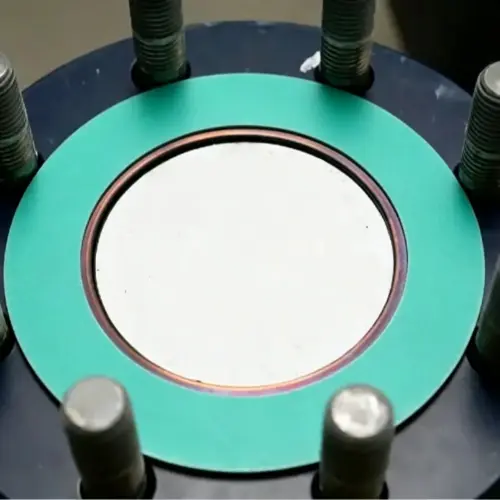
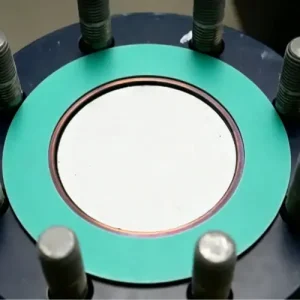
Installation: torque per flange class and gasket thickness; avoid over- or under-tightening. Use correct bolt tightening sequence and retorque if specified. (Refer to manufacturer torque charts for exact values.)
FAQ
Q1 — Are compressed asbestos fiber gaskets still available?
A: Availability depends on country and industry. Many suppliers have stopped manufacturing asbestos-containing gaskets due to regulation and health concerns, while others in jurisdictions where it remains legal may still supply them with strict controls. Always verify local laws and supplier documentation.
Q2 — What are common alternate names for this product?
A: CAF gasket, compressed asbestos gasket, asbestos jointing sheet gasket, compressed asbestos fiber sheet.
Q3 — Can I replace CAF gaskets with non-asbestos materials?
A: In most cases yes — modern non-asbestos compressed fiber, aramid/carbon/NBR composites, flexible graphite, PTFE and spiral wound solutions can replace CAF gaskets. Selection depends on temperature, pressure, and chemical compatibility.
Q4 — What information should I provide to get a correct quotation?
A: Provide flange standard (ASME/DIN), NPS/DN, pressure class, required gasket form (IBC or Full Face), thickness, any reinforcement needs, and whether asbestos is permitted in your jurisdiction. Also request material certificates if required for compliance.
Q5 — Are there safety certificates or handling instructions included?
A: Reputable suppliers must provide material data, safety datasheets and handling/installation guidance; if asbestos is used, expect additional regulatory documentation and restricted handling instructions.