
Gland Packing Selection Guide
-
Service medium & chemical compatibility: Identify the liquid, vapor, or slurry in contact with the packing (pH, solvents, oxidizers, abrasives). Chemical compatibility is the primary selection filter.
-
Temperature: Determine continuous and intermittent operating temperatures; some packings tolerate short excursions better than continuous exposure.
-
Pressure & shaft speed: Consider stuffing-box pressure and shaft surface speed (m/s or fpm). High pressure or high speed demands more robust, low-friction materials and often metallic reinforcement.
-
Shaft/rod material & surface finish: Hardness and surface finish (Ra) influence friction and wear; softer shafts may need low-abrasion packings.
-
Movement and vibration: Axial/radial movement and vibration accelerate wear—select resilient or low-friction formulations.
-
Regulatory and process constraints: Food, pharmaceutical, or gas-tight services may require FDA, 3A, or API-compliant materials.
-
Maintainability & cost: Factor expected lifetime, downtime cost, and spare-parts availability.
Main braided gland packing — quick reference table
| Packing Type | Typical Temp Range (°C) | Typical Pressure Capability | Typical Cross-section (mm) | Key Properties | Typical Applications |
|---|---|---|---|---|---|
| PTFE (virgin / filled) | -200 to +260 | Low to moderate | 3–10 | Excellent chemical resistance, low friction, inert | Chemical, food, pharmaceutical |
| Graphite (flexible graphite braided) | -200 to +450 | Moderate to high | 3–12 | High temp, excellent thermal conductivity, good chemical resistance (avoid strong oxidizers) | Steam, high-temp pumps, valves |
| Carbon / Graphite composite | -200 to +450 | Moderate to high | 3–10 | Low friction, good thermal stability, conductive | High temp/pressure rotating equipment |
| Aramid (Nomex/aramid fiber) | -50 to +220 | Low to moderate | 3–10 | High strength, low stretch, good abrasion resistance, not chemical-universal | Oil & hydrocarbon pumps, general service |
| Synthetic PTFE-impregnated yarns (PTFE/aramid blends) | -200 to +200 | Low to moderate | 3–10 | Balanced chemical resistance and strength, reduced cold flow vs pure PTFE | Mixed chemical/hydrocarbon services |
| Cotton / Flax (impregnated) | -40 to +150 | Low | 3–10 | Low cost, pliable, used with lubricants; limited chemical/temperature resistance | Water pumps, low-cost applications |
| Ceramic / High-temperature fibers | up to 1000 | Low (limited) | 3–12 | Extreme temperature resistance; abrasive; often used with metallurgy | Furnace drain valves, high-temp process lines |
Notes: Temperature and pressure ranges are typical guidance. Final selection must follow supplier datasheets, machine OEM recommendations, and process safety requirements.
Scenario-based selection guidance
-
Corrosive chemical service (acids, solvents): PTFE or filled PTFE braid is usually preferred for chemical inertness and low permeation.
-
High-temperature steam or hot oil: Graphite or carbon-based braided packing offers superior stability and thermal conductivity.
-
High-speed centrifugal pumps: Use low-friction PTFE blends or carbon-graphite packings to minimize shaft wear and heat buildup.
-
Hydrocarbon / lubrication oil systems: Aramid or PTFE/aramid blends perform well; consider oil-lubricated packings for extra cooling.
-
Slurry or abrasive fluids: Choose harder, more abrasion-resistant fibers (carbon or specialized synthetics); inspect shaft and replace more frequently.
-
Food & pharma: Virgin PTFE with appropriate process certifications; avoid packings with potential extractables.
 Gland Packing Installation Guide — Pre-installation preparation
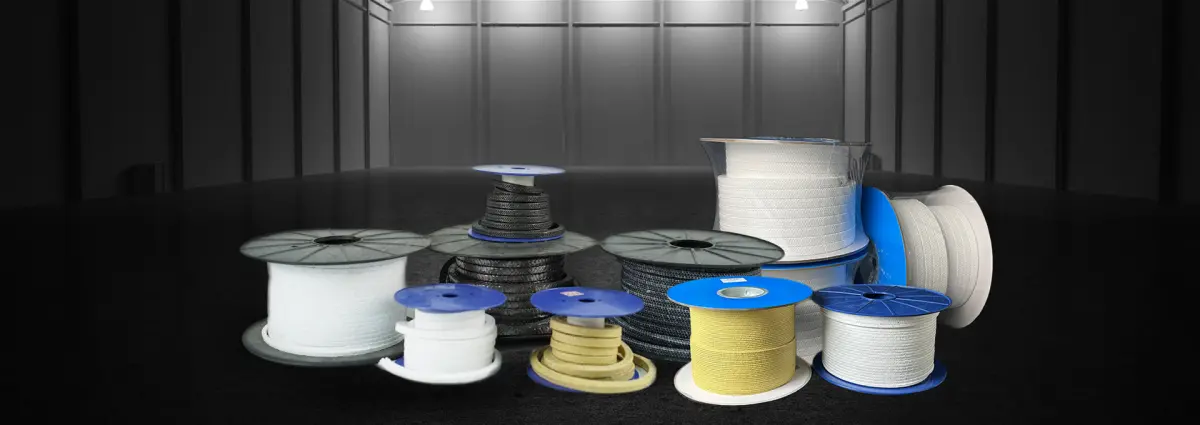 Gland Packing Installation Guide — Pre-installation preparation
-
Verify material and documentation
-
Confirm packing material, batch/lot, manufacturer’s datasheet, and required certifications.
-
-
Inspect the shaft/rod and stuffing box
-
Check shaft for wear, pitting, scoring, or out-of-round condition. Measure diameter and compare to OEM tolerance. Verify stuffing-box bore and depth.
-
-
Cleanliness
-
Remove old packing, deposits, and foreign matter. Clean with a compatible solvent and lint-free cloths. Ensure dry, oil-free surfaces unless lubricant is specified.
-
-
Inspect hardware
-
Check gland follower, nuts, bolts, and lantern ring (if used). Replace worn or corroded parts. Ensure gland follower runs true.
-
-
Select ring count and ring thickness
-
Calculate number of rings by stuffing-box depth divided by packing ring thickness. Typical installations use 3–6 rings; follow manufacturer’s guidance.
-
-
Cutting tools and safety
-
Use a proper packing cutter or sharp knife for clean 45° butt joints. Wear PPE—gloves and eye protection—especially when handling graphite or abrasive fibers.
-
-
Lubricants and dressings
-
Only use lubricants or dressings recommended by the packing manufacturer. Some PTFE packings require no additional lubrication.
-
Standard installation procedure (step-by-step)
-
First ring placement
-
Insert the first ring with a tight, but not compressive, fit against the gland shoulder. Orient the butt joint at ~3 o’clock position.
-
-
Subsequent rings
-
Stagger butt joints by ~90° between rings to avoid a continuous leakage path. Tap each ring gently into place with a soft mallet or installation tool; do not deform the shaft.
-
-
Final ring finish
-
The last (top) ring is usually cut slightly longer to allow for controlled compression and finishing. Ensure no twists and that braid sits squarely.
-
-
Install gland follower and hand-tighten
-
Thread the gland follower in and hand-tighten the bolts evenly to hold packing in place. Do not compress fully at this stage.
-
-
Initial run-in / setting
-
For rotating shafts, start the machine at slow speed and allow packing to seat. You should normally see a light weep or drip that indicates proper sealing and lubrication.
-
-
Progressive tightening
-
With the machine at operating temperature/speed, tighten gland bolts evenly in small increments until the desired leakage rate (manufacturer’s recommendation) or minimal acceptable drip is achieved. Avoid over-tightening.
-
-
Final adjustment
-
After a short run-in period (minutes to a few hours depending on service), re-check and adjust gland bolts once, then monitor—do not repeatedly tighten as this shortens packing life.
-
-
Record installation data
-
Log packing material, ring count, shaft diameter, gland bolt condition, and initial adjustments for maintenance records.
-
Installation quality-control standards
-
Acceptable initial leakage: A small controlled drip is often acceptable for braided packing (typically a few drops per minute) to ensure lubrication and cooling—follow manufacturer guidance for acceptable rates.
-
Bolt/gland condition: Gland bolts must be even, not over-stressed, and within manufacturer torque or gland movement limits.
-
Shaft condition after installation: No scoring or overheating signs; surface temperature within expected range.
-
No extrusion or blow-out: Packing should not extrude past the gland or show signs of immediate crushing.
-
Run-in checks: After run-in, leakage should stabilize; if leakage increases, stop and inspect.
Common installation failures & causes
-
Over-compression → excessive friction, heat, accelerated wear.
-
Under-compression → persistent leakage and packing washout.
-
Poor shaft finish or damage → rapid packing wear.
-
Incorrect ring cutting or alignment → leakage paths.
-
Incompatible packing material → chemical breakdown or swelling.
Maintenance & lifetime management
Daily / routine checks
-
Visual inspection for leakage, unusual vibration, or elevated casing temperatures.
-
Monitor and log drip/leakage rate during start-up and at regular intervals.
-
Check gland bolts/gland follower for looseness; avoid frequent re-tightening.
Operational maintenance actions
-
Perform a single, measured gland adjustment after the initial warm-up run. Subsequent tightening should be infrequent and in small increments.
-
For severe services, consider scheduled minor re-adjustments (e.g., weekly) and keep records.
-
If encountering abrasive slurries or particulates, shorten inspection intervals.
Replacement intervals (guidelines)
-
Non-critical water services: 12–36 months depending on conditions.
-
Hydrocarbon pumps / moderate duty: 6–18 months typical.
-
High-temperature, high-pressure, abrasive, or critical services: Inspect every shutdown and expect replacement during planned outages; service life can be weeks to months depending on severity.
-
When to replace immediately: Visible shaft damage from packing, excessive leakage that cannot be corrected by a single adjustment, burned or charred packing, or chemical breakdown.
These intervals are indicative only. Actual life depends on fluid properties, shaft speed, stuffing-box pressure, and operating practices.
Storage and handling
-
Store in original, sealed packaging in a cool (10–25°C), dry, and well-ventilated area out of direct sunlight.
-
Avoid exposure to ozone, solvents, and high humidity. Some fibrous and elastomeric materials can absorb moisture or degrade in UV.
-
Follow FIFO stock rotation and mark each package with receipt date and lot number.
-
Do not stack heavy objects on packing coils or rings to prevent deformation.
Common questions (FAQ)
Q: Can I reuse braid packing after removing it?
A: Generally no. Most braided packings compress and conform to the shaft and stuffing box; reusing reduces sealing effectiveness and risks leakage. Some high-quality, undamaged rings in noncritical service might be reused after inspection and cleaning, but manufacturer guidance should be followed.
Q: What is a safe leakage rate after installation?
A: Many manufacturers accept a light drip/weep at start-up that stabilizes. Acceptable rates vary by material and application—refer to supplier guidance. Zero leakage is usually impractical for braided packing in dynamic service.
Q: How many rings should I install?
A: Use the stuffing-box depth divided by the packing ring thickness as a starting point. Typical installations use 3–6 rings. Overfilling or underfilling the box reduces life and performance.
Q: Is braided packing suitable for high-pressure services?
A: Braided packing can handle moderate pressures. For very high pressure or critical sealing (especially where fugitive emissions must be minimized), mechanical seals or more specialized sealing solutions may be required.
Q: Are asbestos packings still acceptable?
A: No. Asbestos-based packings are hazardous and banned or heavily restricted in most jurisdictions. Use modern non-asbestos alternatives.
Practical recommendations (final notes)
-
Always consult the packing manufacturer’s technical data and your equipment OEM’s recommendations for critical applications.
-
Use calibrated tools and keep clear installation and maintenance records.
-
Prioritize safety: handle fibrous, high-temp, and chemically loaded packings with appropriate PPE and disposal procedures.
-
When in doubt about material compatibility, select the more conservative option (chemical resistance, thermal stability) and budget for periodic inspection.
