
When you need a reliable flooring solution for harsh industrial, marine, or chemical environments, FRP grating is consistently the top high-performance alternative to traditional steel grating. Whether you’re replacing rusted steel platforms, designing walkways for corrosive facilities, or evaluating long-term project costs, this FAQ covers the most frequently asked questions about FRP grating — from corrosion resistance and outdoor service life to installation ease and total lifecycle value. Read on to determine if FRP grating is the right fit for your project.
1. Can FRP grating replace steel grating?
In many corrosive or wet environments, yes — FRP grating is specifically engineered to replace steel grating where rust and chemical attack are persistent problems.
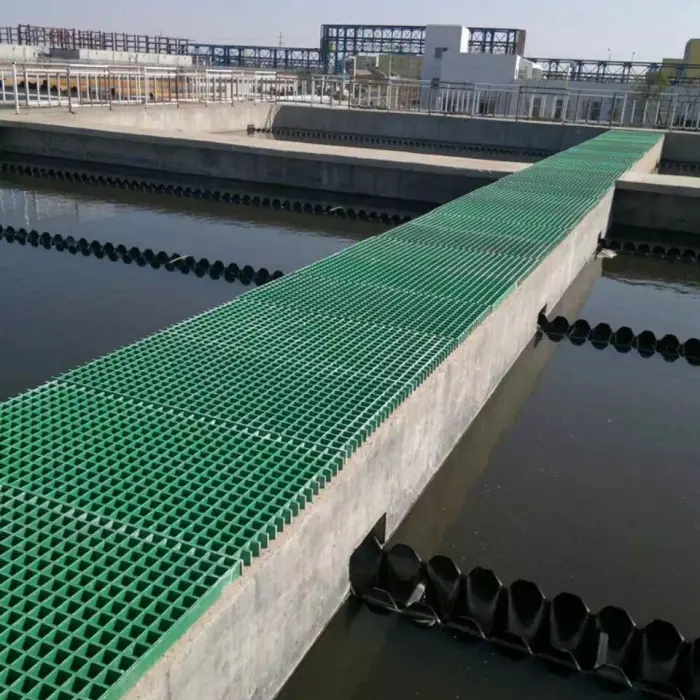
Typical applications where FRP grating outperforms steel include chemical plant platforms, walkways at wastewater treatment plants, offshore platforms, cooling tower areas, and any operating platform exposed to corrosive conditions. The key difference between FRP grating and standard steel grating is not just strength; it is long-term structural stability in corrosive settings. If your environment involves acids, alkalis, salt spray, or constant moisture, FRP grating is almost always the better long-term solution.
2. Does FRP grating age or degrade in long-term outdoor use?
FRP grating will never rust like steel, but prolonged outdoor exposure does bring performance challenges from UV radiation, temperature swings, and rain erosion.
High-quality FRP grating includes dedicated UV-resistant design features, such as weather-resistant resins and a protective surface layer. For seaside, rooftop, or outdoor platform installations, always confirm that the FRP grating is rated for long-term exterior use. This specification check is critical to ensuring maximum service life and reliable long-term performance.
3. Does FRP grating resist acids and alkalis? Can it be used in chemical plants?
Yes, FRP grating is widely specified for chemical environments because it delivers far better corrosion resistance than metal flooring materials. It is commonly installed in pickling lines, electroplating shops, wastewater treatment plants, and chemical storage areas.
However, different resin systems offer different levels of chemical resistance. A general-purpose FRP grating may work well in a mild industrial atmosphere, but strong acids or strong alkalis require a higher-grade resin system. Always match the resin grade of your FRP grating to your exact chemical exposure conditions for reliable long-term performance.
4. Why do FRP gratings come in different colors? Does color affect performance?
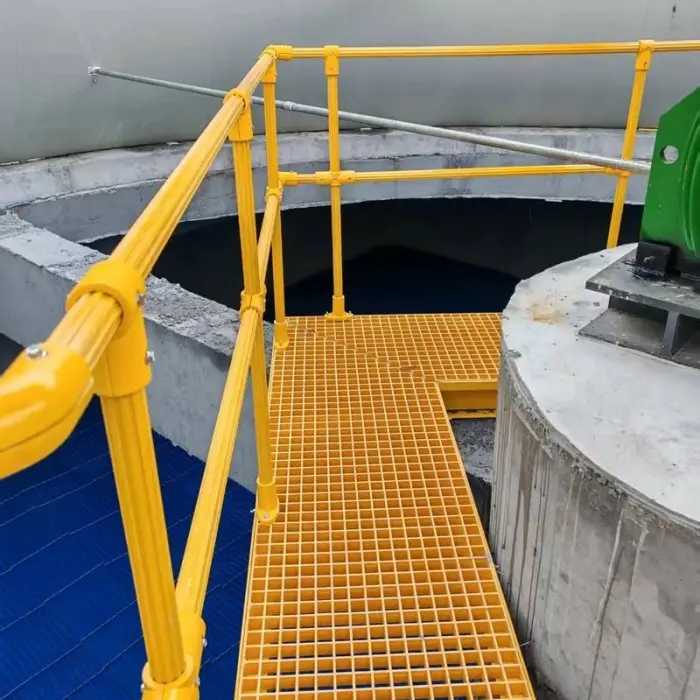
Common FRP grating colors such as yellow, green, and gray are used primarily for zone identification, improving on-site safety visibility, and meeting project design requirements.
Color does not determine the load-bearing capacity of FRP grating. What truly governs performance is the glass fiber content, resin type, manufacturing process, and panel thickness. When specifying FRP grating, focus on these core technical parameters rather than selecting based on color alone.
5. Can FRP grating be cut on site? Is installation straightforward?
Yes, FRP grating panels can be cut and trimmed on site to fit custom field dimensions, making installation highly flexible for irregular shapes and layouts.
Common installation methods include support beam fixing, specialized hold-down clips, and bolted connections. Because FRP grating is significantly lighter than steel, on-site handling and positioning are much faster and easier. Note that cutting produces fine fiberglass dust, so workers must wear appropriate PPE such as dust masks, goggles, and gloves.
6. How long before FRP grating needs replacement?
The actual service life of FRP grating depends on the operating environment, product quality, installation quality, and maintenance practices.
In typical industrial settings, a properly specified and installed FRP grating can serve reliably for many years, and often outperforms coated steel in corrosive areas. For harsh chemical exposure, coastal salt spray, or high-temperature applications, always select an FRP grating product engineered specifically for those conditions to maximize its lifespan.
7. What is the difference between molded FRP grating and pultruded FRP grating?
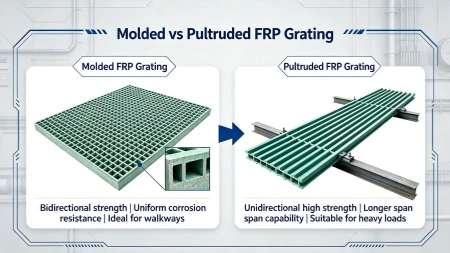
The two main types of FRP grating — molded and pultruded — serve different load and application needs.
Molded FRP grating is integrally formed, offers uniform corrosion resistance in all directions, and is well-suited for walkways.
Pultruded FRP grating features a directional load-bearing design, delivers higher strength in the span direction, and is ideal for longer spans or heavier loads.
Your choice should be based on load requirements, support spacing, and the operating environment. Many industrial projects benefit from using a combination of both FRP grating types across different zones.
8. Why does FRP grating cost more than standard steel grating?
The upfront price of FRP grating is often higher than basic steel grating, but its true value lies in lower total lifecycle cost.
FRP grating eliminates the need for rust-proofing treatments and repainting, drastically reduces ongoing maintenance, delivers longer and more stable service life in corrosive environments, and often lowers installation costs due to its lighter weight. In dry, non-corrosive indoor settings, steel grating may be the more economical choice. However, in corrosive, wet, or chemical-exposed environments, FRP grating almost always delivers better value when evaluated over the full service life.
Every project has unique requirements, and the right FRP grating specification depends on your environment, loads, and performance expectations. Whether you need molded or pultruded FRP grating, or help matching resin grades to your chemical exposure, reach out to our technical team. We provide tailored FRP grating solutions built to fit your application and budget.
