

When sourcing high-performance polymer components, few materials appear on purchase orders as often as PTFE. Short for polytetrafluoroethylene — and widely recognized under the brand name Teflon™ — this fluoroplastic is also referred to in trade documents simply as PTFE resin, virgin PTFE, or modified PTFE. For procurement professionals and engineers across chemical, semiconductor, optical, and high-temperature industries, a clear understanding of PTFE product forms and their selection criteria can shorten sourcing cycles and reduce application risk. This guide covers the essential properties, common product configurations, and practical purchasing considerations for PTFE film, PTFE plate, PTFE sheet, PTFE rod, PTFE tube, PTFE tape, PTFE gland packing, and PTFE gaskets.
1. What Is PTFE? A Quick Overview for Procurement Teams
PTFE is a fully fluorinated polymer with a backbone of carbon-fluorine bonds. In practical terms, that means a solid material that resists practically all industrial chemicals, operates continuously from -200 °C to +260 °C, and exhibits an extremely low coefficient of friction. Buyers may encounter it as skived PTFE film, compression-molded PTFE plate, extruded PTFE rod or tube, expanded PTFE tape, braided PTFE gland packing, or die-cut PTFE gaskets. The same base polymer can be supplied in virgin, reprocessed, or filled grades (glass fiber, carbon, graphite, bronze), and each grade addresses different mechanical, thermal, or budgetary requirements. Knowing the difference between these forms and grades is what turns a generic material inquiry into a precise RFQ.
2. Core Properties That Influence Purchasing Decisions
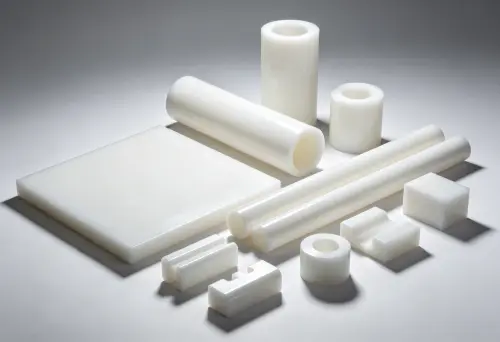 For B2B buyers, performance data drives specification. The following properties repeatedly surface in technical evaluations and supplier qualification processes.
-
Purity
Virgin PTFE offers extremely low extractable levels, making it the standard choice for semiconductor wet benches, analytical instrumentation, and food-contact applications. When a specification calls for “clean” PTFE sheet or PTFE tube, verify whether the supplier can provide certification of raw resin grade and absence of recycled content. -
Thermal Resistance
PTFE retains useful mechanical properties from cryogenic temperatures to approximately 260 °C. In high-temperature processing environments, PTFE film is often used as a release liner, and PTFE sheet is selected for heat-resistant gaskets. Buyers should confirm whether the upper service limit quoted is for continuous or intermittent exposure. -
Chemical Resistance
PTFE withstands nearly all acids, bases, solvents, and process fluids except molten alkali metals and elemental fluorine at elevated temperature and pressure. This makes PTFE tube, PTFE gasket, and PTFE gland packing reliable choices for chemical processing lines where fluid compatibility is non-negotiable. -
Optical Transmission (Selective)
Thin PTFE film exhibits good optical transmission in the UV and visible range, especially UV‑C and UV‑B wavelengths. This property is exploited in protective windows for UV curing systems and in certain analytical instrument light paths. When optical transmission matters, request spectral transmittance data at the specific wavelengths of interest. -
Dimensional Tolerance
Machined PTFE plate and PTFE rod can hold tolerances commonly within ±0.05 mm or tighter, depending on geometry. Skived PTFE sheet and film are typically supplied with thickness tolerances of ±10 % or better. Clarify acceptable tolerance band during quotation to avoid downstream fitment issues. -
Low Friction and Non-Stick Behavior
The dynamic coefficient of friction of PTFE on polished steel can be as low as 0.05–0.10. This characteristic is valued in bearing-grade PTFE rod and in self-lubricating PTFE gland packing used for rotating and reciprocating shafts.
3. Key Industrial Applications Across Sectors
PTFE products are found across a wide range of industrial settings. The following examples highlight typical procurement contexts.
-
Chemical Processing
PTFE tube and lined pipe systems convey corrosive media. PTFE gaskets seal flanged connections, while PTFE gland packing provides dynamic sealing on pumps and valves. Virgin PTFE sheet is often cut to size for custom flange gaskets in aggressive service. -
High-Temperature Processing
PTFE film and PTFE sheet serve as release media in composite lamination, heat-press cycles, and thermoforming. PTFE plate can be used as thermal insulation pads or machined into heat-resistant fixtures. In many of these cases, buyers also evaluate glass‑filled PTFE plate for improved dimensional stability. -
Laboratory Equipment
PTFE rod is CNC-machined into stopcocks, connectors, and sample holders. PTFE tube finds use in peristaltic pumps and gas transfer lines, where chemical inertness and flexibility matter. PTFE tape (thread seal tape) ensures leak-free assembly of analytical fluid paths. -
Optics and UV Applications
Thin PTFE film functions as a UV-transmissive protective window or as a non-stick cover in UV curing ovens. For these applications, procurement typically specifies film thickness, optical clarity at target wavelengths, and mechanical integrity under UV exposure. -
Semiconductor and Analytical Instruments
High-purity PTFE rod, PTFE tube, and custom-machined PTFE plate components are standard in wafer processing, chemical delivery modules, and sample introduction systems. Purity certification (ppb-level metallic impurities) is often mandatory. PTFE gland packing may also be selected for ultrapure water pumps where low contamination risk is essential.
4. PTFE Product Forms and How to Specify Them
Understanding the typical formats and specification parameters for each product form helps buyers issue more accurate RFQs and compare supplier offerings efficiently.
4.1 PTFE Film, PTFE Sheet, and PTFE Plate
-
PTFE Film
Thin, often skived or cast, available in thicknesses from 0.0125 mm up to approximately 0.5 mm. Used where flexibility, optical transmission, or high dielectric strength is required. Commonly supplied in rolls; specify width, thickness, surface finish, and whether pin-hole-free grade is needed. -
PTFE Sheet
General-purpose flat stock ranging from about 0.5 mm to 10 mm in thickness. PTFE sheet is widely used for cutting gaskets, lining tanks, and fabricating insulators. Buyers often select between skived (rolled) sheet, which provides cost efficiency, and compression-molded sheet for heavier sections. -
PTFE Plate
Thick sections, typically above 10 mm and up to 100 mm or more, produced by compression molding. PTFE plate is machined into structural components, large-diameter gaskets, and load-bearing pads. When ordering, indicate thickness, sheet size (e.g., 1000 × 1000 mm), and whether filled or virgin grade is required.
4.2 PTFE Rod
Extruded or molded PTFE rod is stocked in diameters from a few millimeters up to 300 mm or more. It serves as raw material for CNC turning and milling of bushings, seals, insulators, and custom mechanical parts. Key purchasing parameters: diameter tolerance, length (typically 1 m or 2 m), material grade (virgin or filled with glass, carbon, etc.), and any specific color requirements.
4.3 PTFE Tube
PTFE tube is manufactured by paste extrusion or ram extrusion and is available in a broad range of inner and outer diameters. Thin-wall tube is used for fluid transfer and electrical sleeving; thick-wall tube may be machined into fittings. When sourcing, provide inner diameter, outer diameter or wall thickness, tolerance class, maximum working pressure, and whether the tube must meet food-grade or USP Class VI standards.
4.4 PTFE Tape
In industrial procurement, PTFE tape most often refers to thread seal tape (PTFE thread sealing tape) used for sealing pipe threads in pneumatic, hydraulic, and chemical systems. It is supplied in spools of standard width and density grades. Less common but also available are PTFE adhesive tapes, which combine a PTFE film surface with a silicone or acrylic adhesive for release and masking applications. For thread seal tape, buyers typically specify density (e.g., 0.4 g/cm³, 1.0 g/cm³), width, thickness, and length per roll.
4.5 PTFE Gland Packing
PTFE gland packing is a braided or twisted compression packing used to seal pump shafts, valve stems, and rotating equipment. It can be made from pure PTFE yarn, PTFE-impregnated fibers, or expanded PTFE filament. The material’s self-lubricating property helps reduce friction and shaft wear. Procurement points include packing cross-section (square or rectangular), braid type, lubricant addition, and temperature/pressure limits. For high-speed services, some buyers opt for PTFE-filled aramid or graphite packing to combine thermal dissipation with chemical inertness.
4.6 PTFE Gasket
PTFE gaskets are produced by die-cutting from PTFE sheet, water-jet cutting from PTFE plate, or direct molding. They are widely used in chemical, pharmaceutical, and food-processing pipelines. Filled PTFE gaskets (with glass microspheres, barium sulfate, or silica) offer improved creep resistance and are preferred for flanged connections subjected to thermal cycling. When requesting a quote, provide gasket profile (with dimensions), thickness, bolt load constraints, and the process fluid and temperature range to ensure the grade is properly selected.
5. Sourcing Parameters Every Buyer Should Check
When preparing an inquiry or evaluating a supplier, the following checklist helps align expectations and reduce quality discrepancies.
-
Material Grade and Purity – Specify whether virgin PTFE, reprocessed, or a specific filled grade is required. Request material certifications if the application is in semiconductor, food, or pharmaceutical sectors.
-
Thermal Performance Confirmation – Verify maximum continuous service temperature and whether short-term excursions are allowable without loss of mechanical integrity.
-
Chemical Compatibility – While PTFE is broadly resistant, confirm resistance to the specific process stream, particularly if it contains fluorine-containing compounds at elevated temperatures.
-
Optical Requirements – For PTFE film used in UV or optical paths, define transmittance levels at key wavelengths (e.g., 254 nm) and whether UV-stabilized grade is needed.
-
Dimensional Tolerances – Reference applicable standards (such as ISO 1302 for surface finish or ASTM D3294 for PTFE sheet) and agree on acceptable tolerances before production.
-
Certification and Traceability – In regulated industries, ask for lot traceability, Certificate of Compliance, and when relevant, USP Class VI, FDA, or EC 1935/2004 compliance statements.
-
Custom Fabrication Capability – If the part requires machining, welding, or bonding, confirm the supplier’s experience with converting PTFE plate, PTFE rod, or PTFE tube into finished goods.
-
Packaging and Handling – Thin PTFE film and PTFE tape can be prone to creasing or electrostatic attraction; clean packaging helps preserve product quality during transit.
6. Why B2B Buyers Rely on PTFE Products Over Alternative Materials
While other fluoropolymers such as PFA, FEP, and PVDF each offer their own processing or temperature advantages, PTFE remains the default choice for many industrial purchasing decisions because of its unmatched breadth of chemical resistance, widest continuous temperature window among common fluoroplastics, and favorable cost profile when compared with fully melt-processable perfluoropolymers. Add to this the availability of a comprehensive range of prefabricated shapes — PTFE film, PTFE sheet, PTFE plate, PTFE rod, PTFE tube, PTFE tape, PTFE gland packing, and PTFE gaskets — and buyers can often consolidate multiple requirements with a single material platform. The ability to source custom-machined components from the same polymer further simplifies supply chain management and quality assurance.
7. Summary and Next Steps
PTFE is far more than a generic non-stick material. Its unique combination of chemical inertness, thermal endurance, low friction, and, in selected forms, optical transmission makes it a strategic material for chemical processors, equipment OEMs, semiconductor fabs, and optical system builders. A well-documented inquiry that accounts for purity, thermal requirements, dimensional tolerance, and application-specific demands allows suppliers to respond with an accurate quotation. Whether you need standard PTFE sheet for gasket cutting, high-clarity PTFE film for UV optics, or durable PTFE gland packing for pump maintenance, starting with a clear specification accelerates procurement and reduces sourcing risk.
To explore detailed product specifications and available grades of PTFE film, PTFE plate, PTFE sheet, PTFE rod, PTFE tube, PTFE tape, PTFE gland packing, and PTFE gaskets, browse our product resource pages or contact our applications team with your technical requirements.
FAQ
What is the difference between PTFE sheet and PTFE plate?
The distinction is mainly thickness. PTFE sheet typically refers to flat material below 10 mm, often supplied in rolls or cut panels, while PTFE plate usually indicates thick sections above 10 mm, produced by compression molding and used for machining large parts.
Can PTFE film be used in high-temperature and UV applications simultaneously?
Yes. Thin PTFE film is thermally stable up to 260 °C and transmits UV light effectively, making it suitable for UV curing systems that also involve elevated temperatures. Buyers should request optical transmission curves for the exact film thickness and wavelength range of interest.
What makes PTFE gland packing self-lubricating?
PTFE inherently possesses a low coefficient of friction. In a braided packing form, this translates to reduced friction on rotating or reciprocating shafts, often eliminating the need for an external lubricant and lowering maintenance requirements.
How do I choose between virgin PTFE and filled PTFE for a gasket application?
Virgin PTFE offers maximum chemical resistance and purity. Filled PTFE gaskets (e.g., glass‑filled or silica‑filled) provide better dimensional stability under load and thermal cycling. The choice depends on whether chemical inertness or creep resistance is the dominant requirement.
Does PTFE tape always mean thread seal tape?
In most industrial settings, PTFE tape refers to PTFE thread seal tape for pipe joints. However, PTFE adhesive tape is also available for release and masking uses. Always clarify the specific product form in a purchase order to avoid confusion.
Are there standard dimensional tolerances for PTFE rod and PTFE tube?
Tolerances vary by manufacturing method. Ram-extruded PTFE rod is commonly supplied to DIN or ASTM standards, and PTFE tube is often produced to specifications like ASTM D3295. Buyers should agree on tolerance bands with their supplier before order placement.
