Product Overview
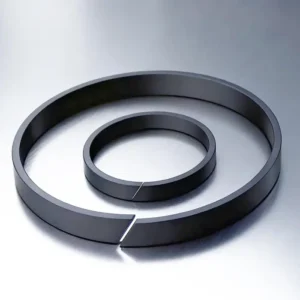
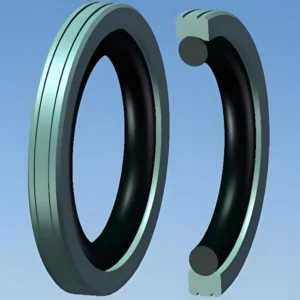
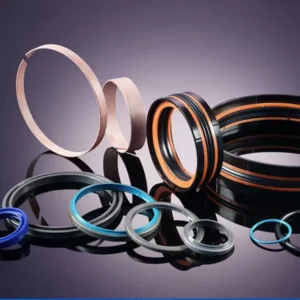
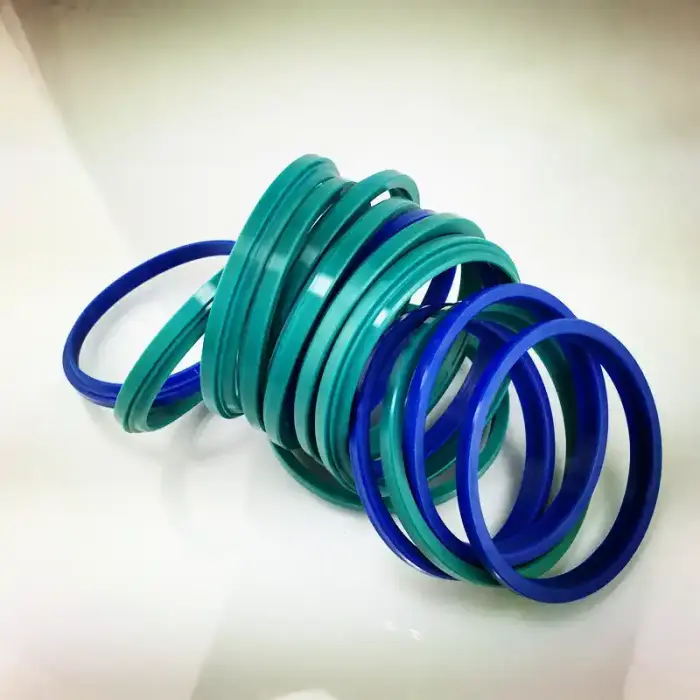
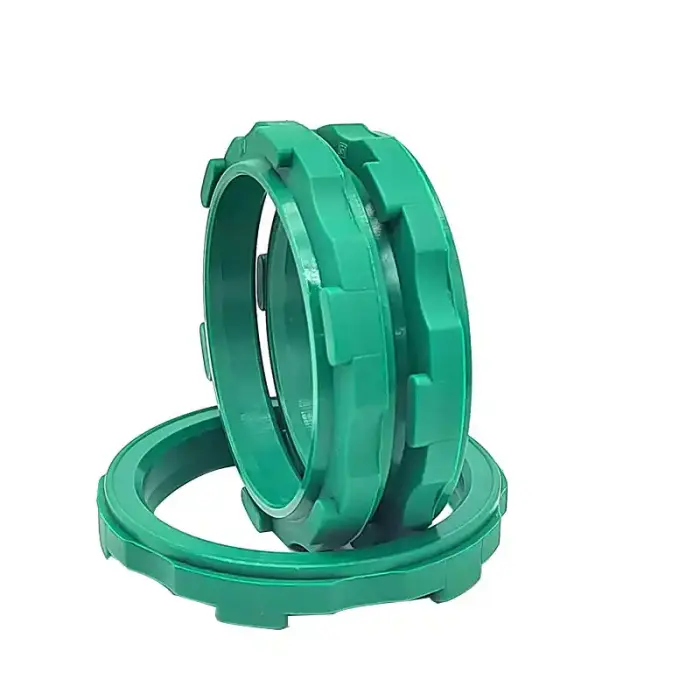
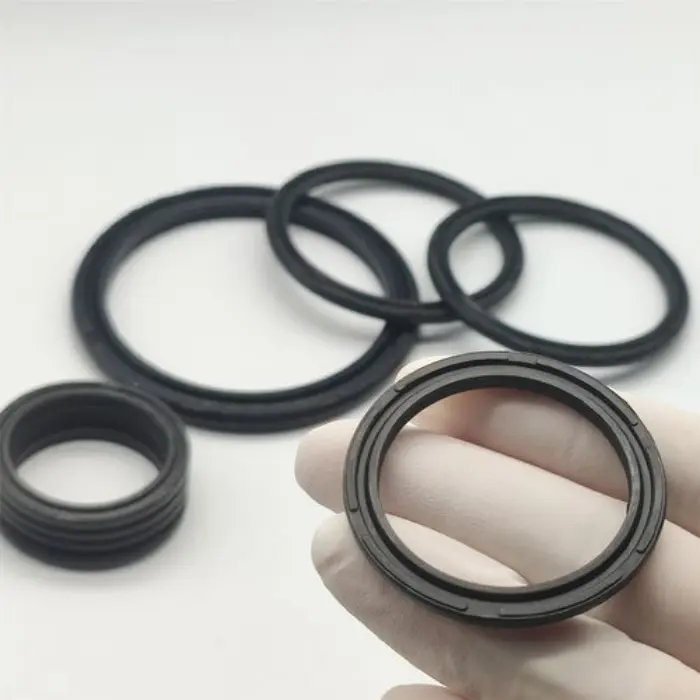
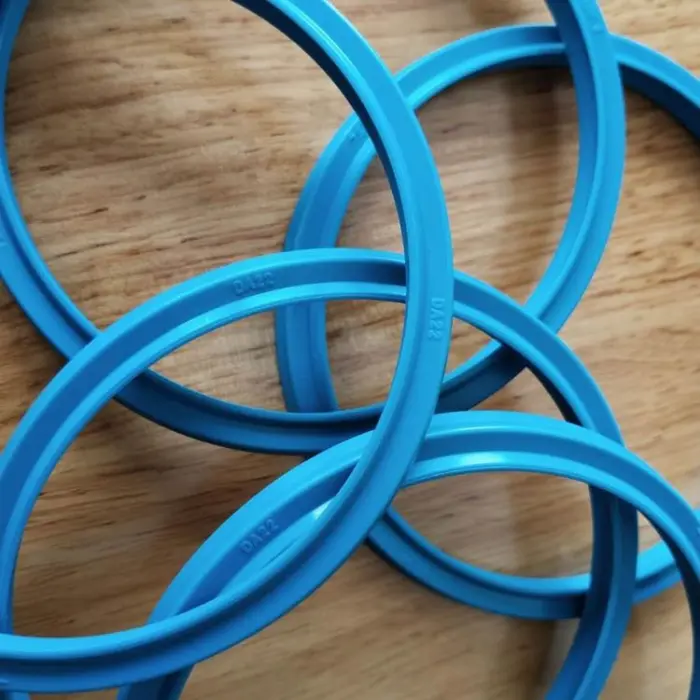
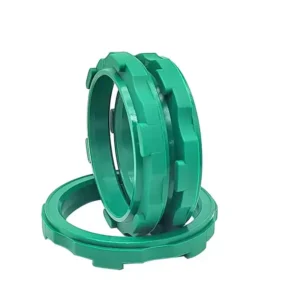
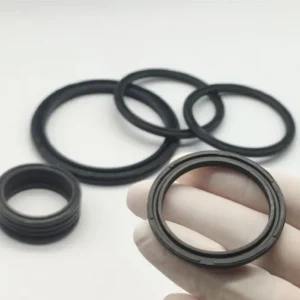
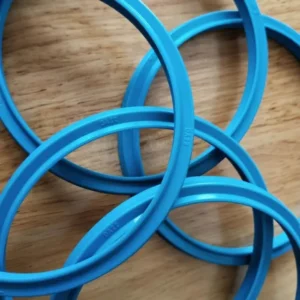
PU oil seals for hydraulic cylinders are sealing and guiding elements manufactured from engineered polyurethane elastomers. Compared with conventional elastomers, polyurethane offers markedly higher tear and abrasion resistance, higher tensile strength and longer service life in abrasive or high-load applications. Common product forms: U-cup piston seals, rod seals, U-packing sets, wear rings, wipers, backup rings and molded/custom profiles.
Common procurement aliases: PU oil seals, polyurethane seals, urethane seals, PU piston seals, PU rod seals, PU wipers, urethane gaskets.
Key Features
-
Exceptional abrasion resistance for long life in contaminated or high-cycle environments.
-
High tensile strength and tear resistance — suitable for high side loads.
-
Wide hardness availability (typical Shore A 85–95) to match static vs dynamic sealing needs.
-
Compatible with standard hydraulic fluids, many lubricants and engineered greases (compound dependent).
-
Available as standard stocked sizes (metric & imperial) and as custom molded or machined parts for OEM projects.
Detailed Description & Procurement Guidance
Polyurethane is a family of polymers whose mechanical properties can be engineered through formulation to prioritize abrasion resistance, load capacity, flexibility or low-temperature performance. For purchasing, specify: (1) application type (rod seal, piston seal, guide/wear ring, wiper), (2) operating temperatures, (3) working pressure and media, (4) rod/piston diameters and groove geometry, and (5) expected service life or cycle rate. We provide material selection guidance (compound grade), sample parts and short-run prototypes for fit and wear testing prior to full production.
Typical Material Properties (industry typical ranges)
Note: exact properties depend on the selected polyurethane grade and processing. Values below are representative for common cast or injection-molded PU sealing grades used in hydraulic applications.
| Property | Typical range / value |
|---|---|
| Hardness (Shore A) | 85 – 95 A |
| Tensile strength | 40 – 80 MPa |
| Elongation at break | 200% – 600% |
| Operating temperature (continuous) | −30°C to +80°C (typical), short-term up to ~100°C depending on compound |
| Density | 1.1 – 1.3 g/cm³ |
| Abrasion (volume loss, DIN-type test) | Low (excellent resistance vs NBR/EPDM) |
| Recommended rod/piston surface finish | Ra ≤ 0.4 μm (better life with Ra 0.1–0.2 μm) |
Engineering note: polyurethane exhibits excellent fatigue and tear resistance but is sensitive to some hot aromatic hydrocarbons and certain solvents — compound selection must consider the fluid/media chemistry.
Specifications & Application Ranges
Pressure & Speed Guidance
-
Hydraulic pressure: PU oil seals are used in systems from low pressure up to high-pressure hydraulics. Actual pressure rating depends on seal design (piston vs rod), groove geometry and backup elements; many PU piston/rod seal assemblies are used in systems up to 35–40 MPa (≈5,000–6,000 psi) when correctly designed.
-
Relative sliding speed: Suitable for reciprocating velocities common in hydraulic cylinders (typical up to several m/s for short duty; consult engineering for continuous high-speed applications).
-
Media: Mineral hydraulic oils, many phosphate ester fluids, synthetic esters and lubricants; provide fluid specification for confirmation.
Surface & Installation Recommendations
-
Rod/piston finish: Ra ≤ 0.4 μm recommended; plating (hard chrome) or nitriding greatly extends life in abrasive environments.
-
Groove tolerances: follow standard gland tables for PU oil seals; tight tolerances improve performance but require precision machining.
-
Temperature derating: above +80°C expect reduced life; below −30°C verify compound flexibility.
Common Forms & Stock Sizes
We maintain inventories of the most commonly ordered sizes and cross-sections. Below are typical stocked ranges; exact part selection must match groove geometry.
Common cross-section profiles
-
U-cup piston seals: cross-sections 3 mm – 12 mm.
-
Rod seals (U & V profiles): diameters matching rod sizes 6 mm – 100 mm.
-
O-rings (PU): AS568 (imperial) sizes and metric cross-sections 1.5 mm – 5 mm.
-
Wear rings / guide rings: thickness 2.5 mm – 10 mm; custom widths available.
-
Wipers / scrapers: profiles for rod diameters 6 mm – 100 mm; bonded flange and snap-in variants.
Representative stocked diameters
Metric (rod/piston Ø): 6, 8, 10, 12, 16, 20, 25, 32, 40, 50, 63, 80, 100 mm.
Imperial (in): 1/4″, 3/8″, 1/2″, 5/8″, 3/4″, 1″, 1¼”, 1½”, 2″.
Advantages — Why choose PU oil seals from us
-
Experience: proven supply to OEMs in construction, agriculture, material handling and industrial hydraulics.
-
Expertise: in-house material specialists select compound grade to balance abrasion resistance, flexibility and media compatibility.
-
Authoritativeness: dimensional control, batch traceability and test reports are available for production runs.
-
Trustworthiness: pre-shipment inspection, sample runs and small-lot pilot production reduce integration risk for purchasers.
Differentiators vs typical suppliers: we offer micro-textured PU faces for improved lubricant retention, blended PU compounds that balance low-temperature flexibility with abrasion resistance, and short-run molded prototypes for fast validation.
Material Comparison
| Property / Material | PU (Polyurethane) | NBR (Buna-N) | FKM (Viton) | PTFE |
|---|---|---|---|---|
| Abrasion resistance | Excellent | Fair | Good | Good |
| Load / tear strength | High | Medium | Medium | Low-Medium |
| Friction coefficient | Medium | Low | Low | Very Low |
| High temp resistance | Moderate (≤100°C) | Moderate (≤100°C) | High (to 200°C) | Very high |
| Chemical resistance | Good to many oils | Good to oils | Excellent | Excellent |
| Typical use case | High-wear, heavy-load seals | General purpose seals | High-temp / chemical | Low friction / chemical exposure |
Applications
-
Mobile hydraulics: excavators, loaders, cranes and graders.
-
Agricultural cylinders and implements.
-
Industrial presses, compactors and vibration equipment.
-
High-cycle pneumatic actuators (with properly chosen PU compound).
-
Material handling equipment and mining machinery where abrasive ingress is present.
Quality, Testing & Traceability
-
Material certificates (raw material mill certs) and batch numbers included on request.
-
Dimensional inspection: OD/ID/width tolerances verified per order; critical tolerances reported on inspection certificates for OEMs.
-
Sample validation: small sample runs available for fit, friction and wear testing prior to production tooling.
FAQ
Q1: Are PU oil seals compatible with hydraulic oil HLP46?
A: In most cases yes — PU compounds used for hydraulic seals are formulated for mineral hydraulic oils such as HLP types. Provide fluid formulation for final compound confirmation.
Q2: Can PU oil seals be used in food or potable water applications?
A: Standard PU compounds are not food-grade. Food-grade polyurethane compounds exist but must be explicitly requested and certified; alternative materials (e.g., FDA-approved elastomers) are commonly used for food contact.
Q3: What is the expected service life improvement vs NBR?
A: In abrasive or high-load applications, polyurethane typically provides multiple times the wear life of NBR seals; actual life gain depends on operating conditions, seal design and maintenance.
Q4: Do you offer custom molded seals and bonded assemblies?
A: Yes — we provide molded parts, bonded assemblies (PU bonded to metal flanges), and machining from solid stock for prototype and OEM production.
Q5: How quickly can I get samples?
A: Stock standard sizes: samples can ship in 3–7 business days. Custom molded prototypes: lead time varies (typically 1–4 weeks). Confirm at RFQ.
Product Catalog & Downloadable Specs
Available downloadable files (placeholders — host on your server):
(We can produce branded, print-ready PDFs with your logo and company codes — provide logo and exact contact details to generate.)
Ordering, Samples & Terms
-
How to order: submit RFQ with part type (rod/piston/wiper), diameter(s), groove dimensions, quantity and operating conditions. For legacy parts provide sample or drawing.
-
MOQ: stocked common sizes ship in small quantities; custom molded tooling may require MOQ.
-
Lead time: stocked parts typically 3–10 business days depending on quantity; custom tooling and compounds require project lead time to be quoted.
E-E-T-A Statement
Our sealing product line is backed by engineering teams experienced in polyurethane materials and hydraulic system integration. We perform material selection driven by field experience, supply batch traceability and supply inspection documentation for OEM procurement. Technical support for material choice, gland geometry and lifetime prediction is provided with every RFQ.
Contact & Company Information
Hengshui Aohong— Mechanical Seals Division
-
Email: sales@aohongglobal.com (for datasheet requests and fast quotes)
-
Phone: +(86) 153 7318 1024 (please replace with your official number)