
1. Methods of securing plate heat exchanger gaskets
In general, gasket re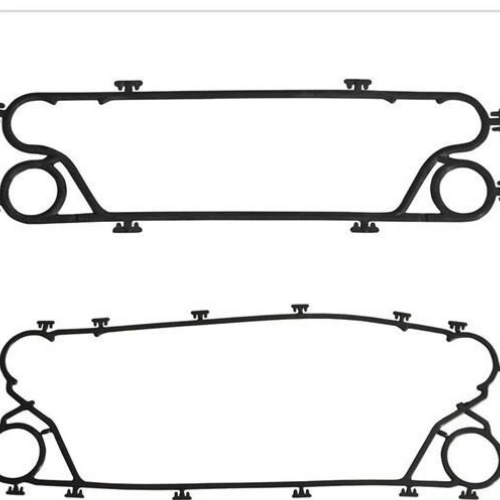 tention methods fall into three types: adhesive (bonded), inserted, and snap-fit. The sealing gasket and the gasket groove of a plate heat exchanger must match exactly in order to achieve an effective seal.
-
Adhesive (bonded) type: A sealant is applied to the gasket groove and the gasket is bonded directly into the plate’s mounting groove.
-
Inserted type: The heat-exchanger plate is designed with assembly holes and the gasket edge is molded with locking pins. After placing the gasket into the groove, the locking pins are inserted into the assembly holes.
-
Snap-fit type: The gasket edge features a ridge-shaped snap; the gasket is secured to the plate by the snap mechanism.
2. Gasket materials and typical applications
-
Nitrile rubber (NBR): −10°C to 110°C; suitable for water, seawater, mineral oils, brine, and similar media.
-
EPDM (ethylene-propylene diene monomer): −25°C to 150°C; suitable for hot water, steam, acids and alkalis, etc.
-
Fluoroelastomer (FKM, e.g., Viton®): −5°C to 180°C; suitable for many acidic and alkaline media.
-
FEPM (tetrafluoroethylene-propylene rubber, e.g., AFLAS®): 0°C to 160°C; suitable for concentrated acids and alkalis, high-temperature oils, steam, etc.
-
Hydrogenated nitrile rubber (HNBR): −10°C to 150°C; suitable for high-temperature mineral oils, hot water, and for applications where HNBR is preferred over conventional NBR.
 3. How to choose gasket material for a plate heat exchanger
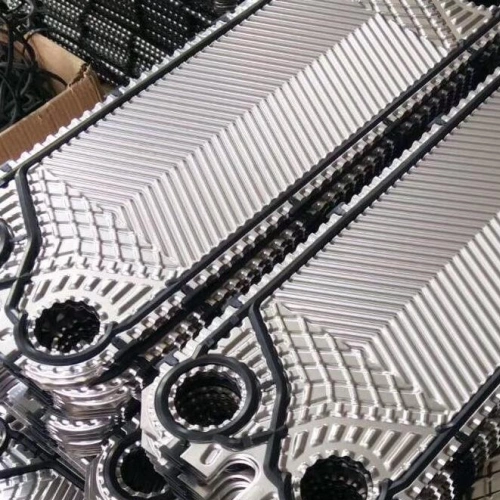 3. How to choose gasket material for a plate heat exchanger
-
Verify that the gasket has sufficient toughness and will not be damaged by clamping forces and pressure.
-
The gasket should have good elasticity and softness so it can accommodate temperature and pressure fluctuations and will not shrink at low temperatures.
-
It should not adhere excessively to the sealing face (i.e., easy to remove), yet be soft enough to conform well to the contact surface.
-
Good machinability and compressibility for reliable clamping and easy installation.
-
Cost-effective with long service life.
-
Chemically inert toward the process medium (will not contaminate the process fluids).
 4. Gasket replacement procedure
 4. Gasket replacement procedure
-
Remove the old gasket(s). Take care not to scratch the gasket groove while removing them.
-
Use acetone, methyl ethyl ketone (MEK), or another ketone-based solvent to remove adhesive residue from the gasket groove.
-
Clean the gasket grooves and replacement gaskets with a clean cloth or lint-free cotton cloth.
-
Apply adhesive evenly inside the gasket groove (if using a bonded installation).
-
Fit the new, clean gaskets onto the plate.
-
Allow the plates with newly bonded gaskets to dry naturally in a flat, cool, and well-ventilated place before final installation and use.
