
What are Virgin PTFE Gaskets?
Definition & Material
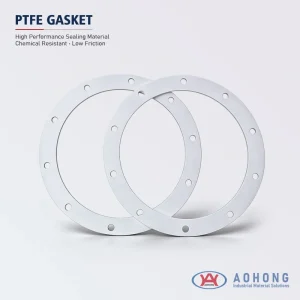
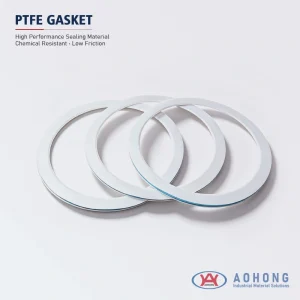
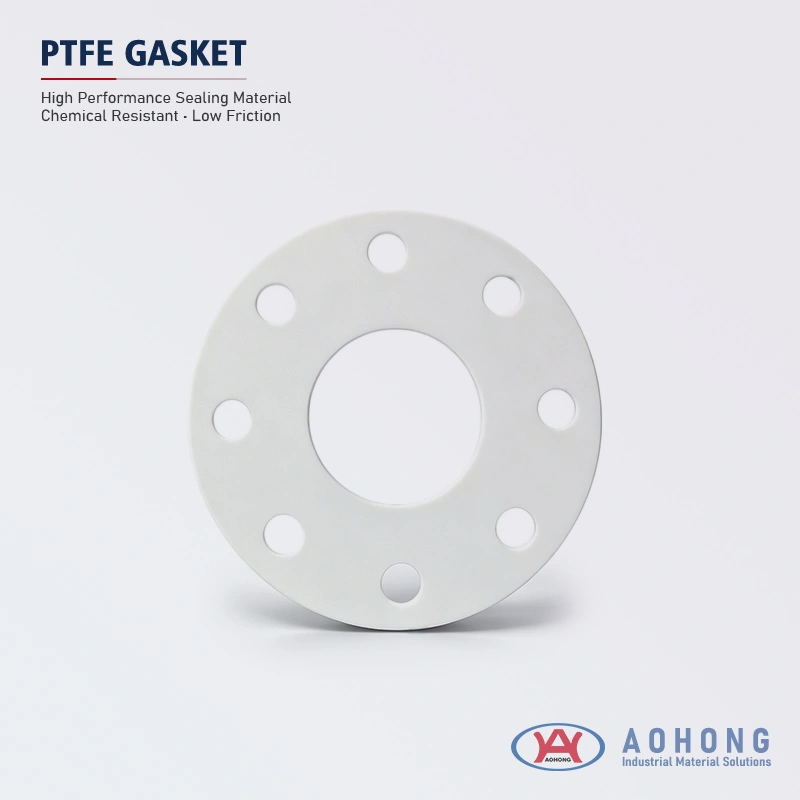
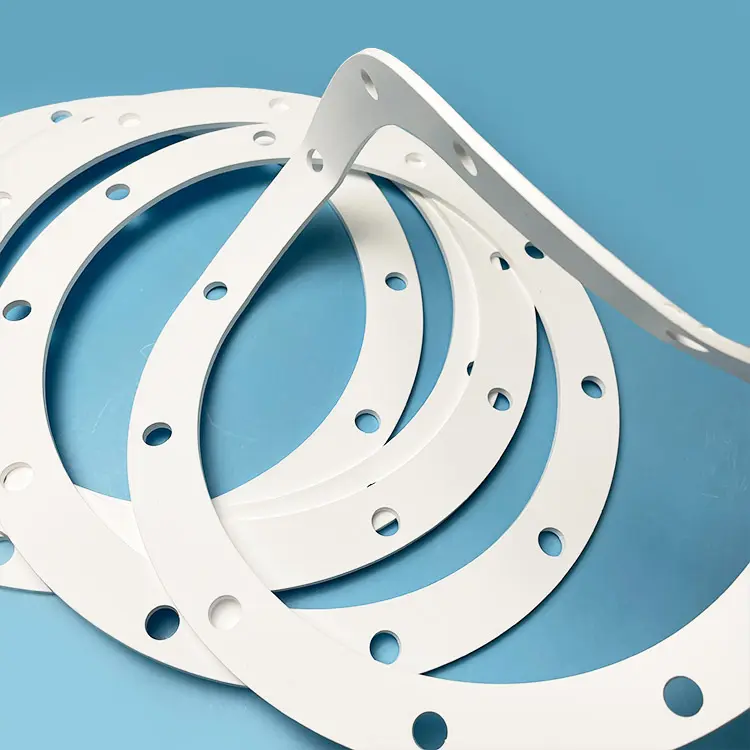
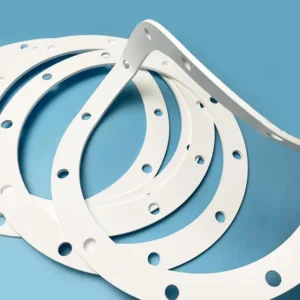
Virgin PTFE gaskets are produced from unfilled PTFE sheet or molded PTFE (no mineral or polymer fillers). Compared with filled PTFE, virgin PTFE keeps maximum chemical inertness and the lowest coefficient of friction. Expanded PTFE (ePTFE) is an alternative PTFE construction with different density and compressibility — often used where very low gasket stress or biocompatibility is required.
Typical Forms
-
Flat cut gaskets (ASME/EN full face, ring-type, ID/OD cut).
-
Ring type joint (RTJ) liners and washers.
-
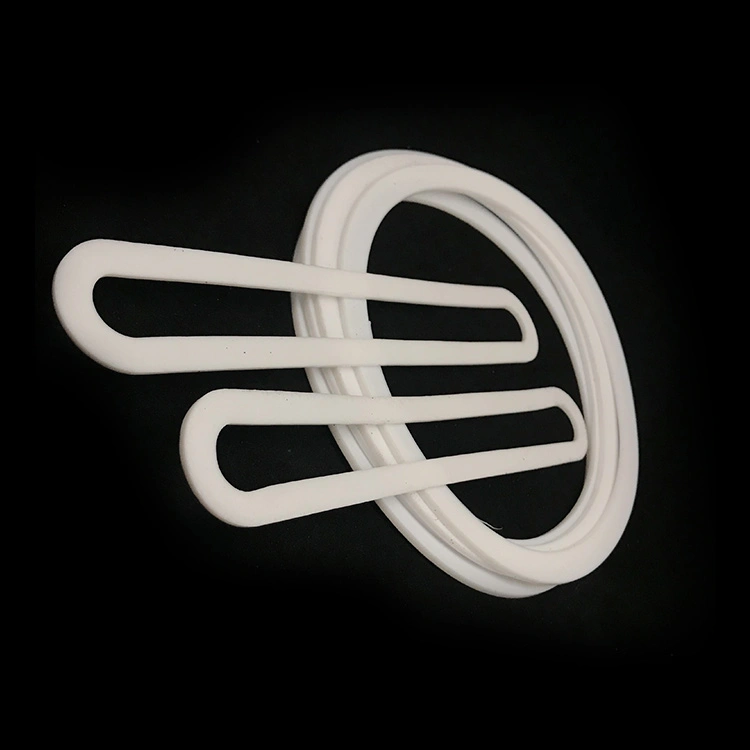
Precision-cut bespoke shapes for sanitary fittings and flanged joints.
Key Technical Parameters (Realistic & Industry-Used Values)
-
Material: 100% Virgin PTFE (unfilled).
-
Color: White (typical for virgin PTFE) / Off-white for some grades.
-
Density: ~2.13 g/cm³ (solid virgin PTFE).
-
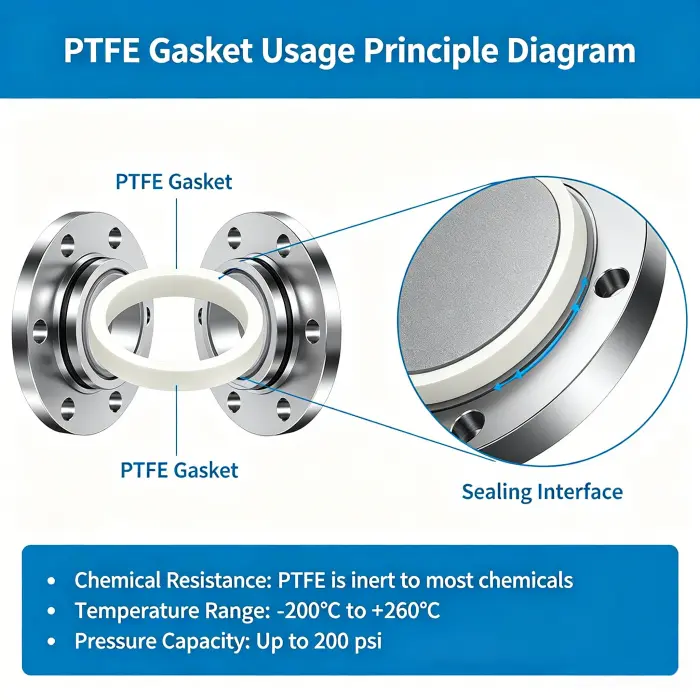
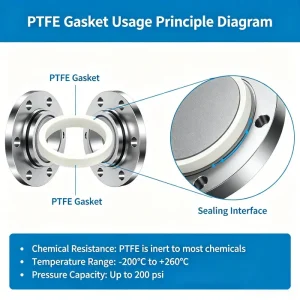
Temperature Range: −200°C → +260°C (typical).
-
Chemical Compatibility: Resistant to virtually all acids, alkalis and solvents (except molten alkali metals and elemental fluorine). Suitable for pH 0–14 in most cases.
-
Density (solid virgin PTFE sheets): typically ~2.13 g/cm³ (virgin PTFE grades), whereas expanded PTFE has much lower apparent density (~0.9 g/cm³).
-
Typical Sheet Thicknesses: common gasket sheet thicknesses: 1.5 mm (1/16″), 3.0 mm (1/8″), 4.5–6.0 mm (3/16″–1/4″); ePTFE gaskets often supplied in 3 mm and 6 mm for flange standards.
-
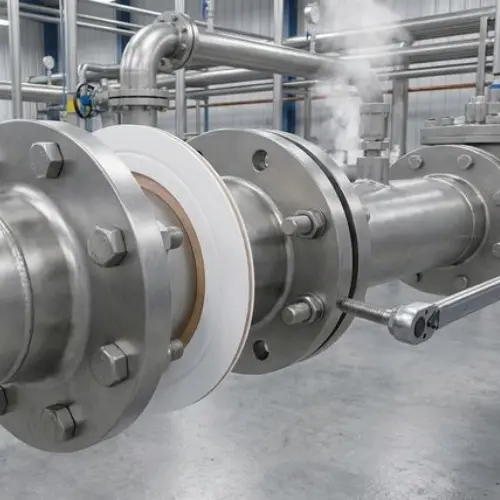
Standards / Flange Compatibility: commonly cut to ASME B16.21 / B16.5 flat gaskets and DIN/EN sizes for pipe flanges. Example: 6″ 150# ring gasket data: 1/16″ thickness with ID/OD per ASME spec.
These values are typical industry references — please consult the product datasheet for a selected part number prior to specification.
Typical Applications (Where Virgin PTFE Excels)
-
Chemical & petrochemical plants — aggressive acids, alkalis and solvents.
-
Pharmaceutical & biotech equipment — ePTFE variants with diffusion barriers meet low-contamination needs.
-
Food & beverage processing — FDA-grade PTFE sheets for sanitary sealing (white PTFE grades available).
-
Semiconductor & electronics — high purity and low outgassing properties.
-
Cryogenic services — virgin PTFE retains sealing at very low temperatures.
Product Variants & Custom Options
-
Virgin (unfilled) PTFE sheet gaskets — maximum chemical inertness and low friction.
-
Expanded PTFE (ePTFE) gaskets — low gasket stress, superior conformability, food/pharma grades with diffusion barrier available.
-
PTFE with diffusion barriers / reinforced layers — for low seating stress applications and flange protection.
-
Sanitary-grade white PTFE — FDA/USP options and traceable clean-room cutting for pharma/food.
-
Die-cut, CNC-cut and waterjet-cut custom shapes and multi-layer laminates on request.
Advantages — Why Choose Our Virgin PTFE Gaskets (Differentiation)
(These selling points are written to differentiate from generic competitor copy — focus on traceability, engineering support and real-world reliability.)
-
100% virgin resin sourcing & mill traceability — we document resin batch and processing lot for high-purity installations (semiconductor / pharma).
-
Controlled machining in clean areas — reduces particulate contamination for sanitary and high-purity plants.
-
ePTFE diffusion barrier options — unique for low flange stress connections and damaged flanges where cold-flow may otherwise cause leakage.
-
Flange protection & anti-cold-flow treatment — we offer thin metal shim backing or PTFE/carbon laminates to limit cold-flow under high bolt loads.
-
Application engineering support — we advise gasket factors, bolt torque, surface finish and recommend material selection based on actual service conditions (not just generic part numbers).
Comparison Table — Virgin PTFE vs ePTFE vs Filled PTFE vs Graphite
| Feature | Virgin PTFE (pure) | Expanded PTFE (ePTFE) | Filled PTFE (carbon/glass) | Flexible Graphite |
|---|---|---|---|---|
| Chemical resistance | Excellent (max). | Excellent | Good–Excellent (depends on filler) | Good for many chemicals, less vs strong oxidizers |
| Temperature range | −200°C → +260°C (typical). | −240°C → +270°C (varies) | −200°C → +260°C (depends) | Up to ≈450°C (dry service) |
| Cold flow tendency | High (can creep under load) | Lower effective creep due to microstructure | Reduced cold flow (fillers) | Negligible cold flow but needs flange protection |
| Food/Pharma suitability | Widely available in FDA grades. | Best for low contamination; diffusion barrier options | Depends on filler (select food-grade fillers) | Not typically used for direct food contact |
| Best for | Ultimate chemical inertness & low friction | Low gasket stress / damaged flange sealing | Wear resistance / lower creep under load | High temp, steam, oil, hydrocarbon services |
 Installation & Handling Tips
 Installation & Handling Tips
-
Ensure flange faces are clean and flat; check surface finish per datasheet (Ra recommendations).
-
Use correct gasket thickness for flange class and bolt load to avoid over-compression and cold flow.
-
For high bolt loads or soft PTFE, consider thin metallic backup or filled PTFE to reduce extrusion.
-
Store sheets flat and in original packaging — avoid UV/direct sunlight and solvents.
-
For sanitary/pharma parts, request clean-room cutting and traceable packaging.
Frequently Asked Questions (FAQ)
Q1: What is the MOQ (minimum order quantity)?
A1: For standard sheet sizes and common ring gaskets we can supply samples and small quantities (1–5 pcs or single sheet) through distribution. Factory direct MOQ for custom-cut runs or private label is typically 50–200 sheets / 100–500 ring gaskets depending on size and finish. Contact us with part sizes for exact MOQ.
Q2: What are typical lead times?
A2: In-stock standard ring gaskets or sheets: 5–15 business days (small orders). Custom die-cut or ePTFE diffusion-barrier products: 2–4 weeks depending on quantity and certification needs. Expedited options available for urgent orders.
Q3: How is the product shipped and are there transport restrictions?
A3: PTFE gaskets are non-hazardous and shipped by sea/air/express in cartons/pallets. For food/pharma shipments we provide clean-packaging and required certificates. Documentation (COO, MSDS, compliance certificates) included on request.
Q4: Do you provide FDA or USP certifications for food/pharma applications?
A4: Yes — we supply FDA-compliant virgin PTFE grades and can provide relevant certificates (Declaration of Conformity, test reports). For biotech/pharma please request ePTFE diffusion-barrier grades and clean-cut service.
Q5: Can you customize thicknesses, shapes or add reinforcement?
A5: Yes — we offer custom thickness, laminated PTFE (metal/graphite backing), PTFE with fillers for anti-cold-flow, and precision CNC/waterjet cutting. Tooling fees may apply for very small bespoke runs.
Q6: What about chemical compatibility with strong oxidizers / molten alkali metals?
A6: PTFE is broadly inert, but exceptions include elemental fluorine and molten alkali metals — consult our chemical compatibility chart for specific media and temperatures before specifying.
Q7: How to reduce PTFE “cold flow” in high bolt load joints?
A7: Options: use filled PTFE grades, ePTFE with diffusion barriers, thin metallic backing (shim), or higher hardness composite PTFE laminates. We will advise per flange class and service conditions.
Q8: Are there common misspellings or search variants we should consider?
A8: Yes — buyers sometimes search for “vrgin PTFE gaskets” (typo), “pure PTFE gasket”, “white PTFE gasket”, or “non-filled PTFE gasket”. We include these variants in metadata and product tags to improve discoverability.