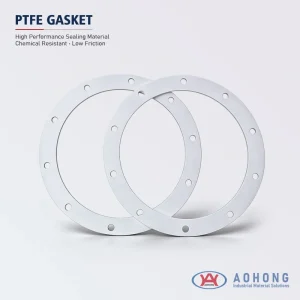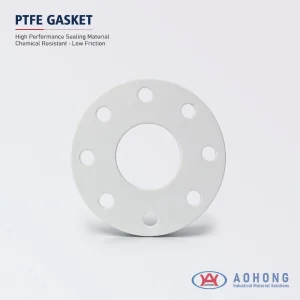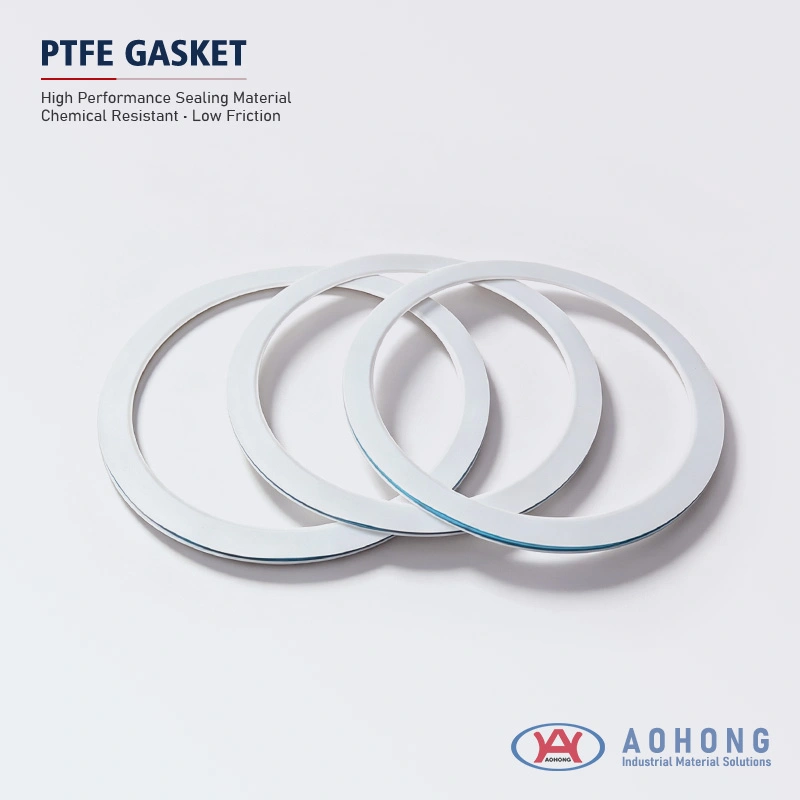
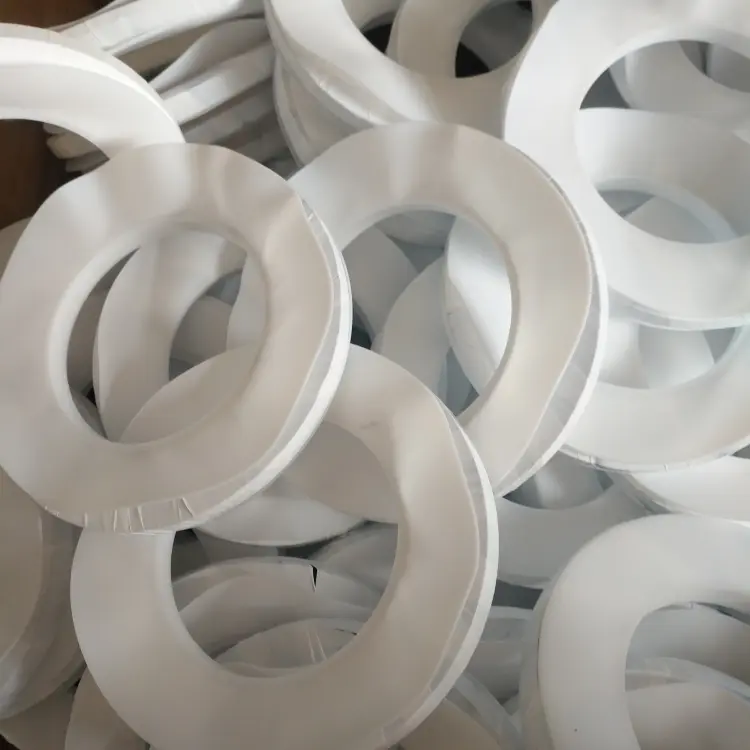
What is a PTFE Envelope Gasket?
Short description:
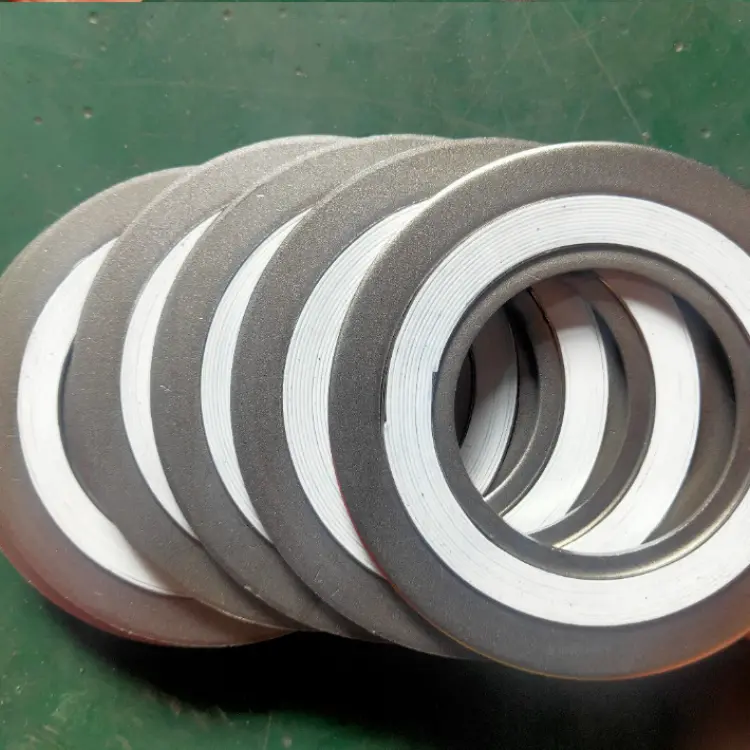
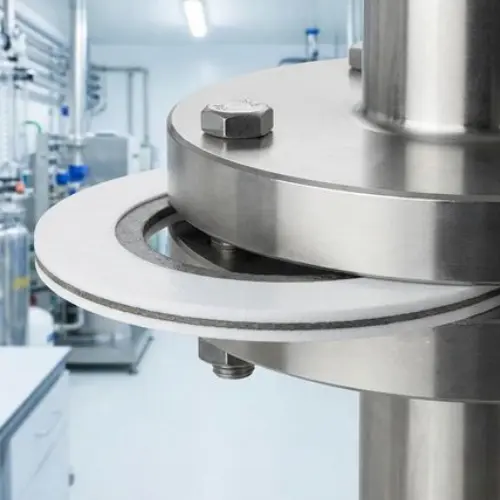
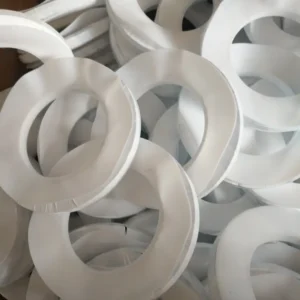
A PTFE envelope gasket is produced by encasing a soft or rigid filler inside a seamless PTFE jacket. This construction combines PTFE’s exceptional chemical inertness with the compressibility and sealing resilience of the selected core (elastomeric, graphite or metal), delivering a leak-tight gasket suitable for aggressive medias and hygienic systems.
Key features & benefits
-
100% PTFE jacket: Excellent resistance to almost all chemicals and solvents; prevents core migration or contamination.
-
Customizable core options: Viton (FKM), EPDM, graphite/fiber, metal or non-asbestos fillers to match temperature/pressure and flange conditions.
-
Low extractables & FDA/USP options: Available formulations meet sanitary and pharmaceutical requirements when requested.
-
Improved stress relaxation resistance: Filled PTFE jackets (e.g., microspheres/fillers) and engineered cores reduce cold-flow and improve sealing over time.
-
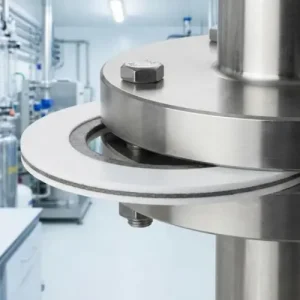
Wide compatibility: Suitable for glass-lined, enamelled, stainless,-lined and other sensitive flange faces.
Typical construction & variants
-
Standard construction: Seamless PTFE envelope heat-sealed/ultrasonically welded around a soft filler (EPDM, Viton) or semi-rigid insert (graphite/steel).
-
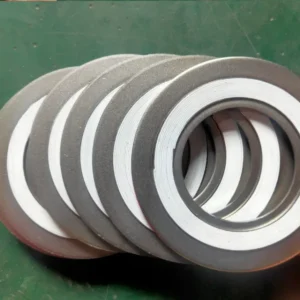
Variants: Full-face envelope, ring/IBC (inner bolt circle) envelope, Tri-clamp hygienic envelope gaskets, corrugated ring with PTFE jacket, and machined PTFE envelopes for high-pressure ratings.
-
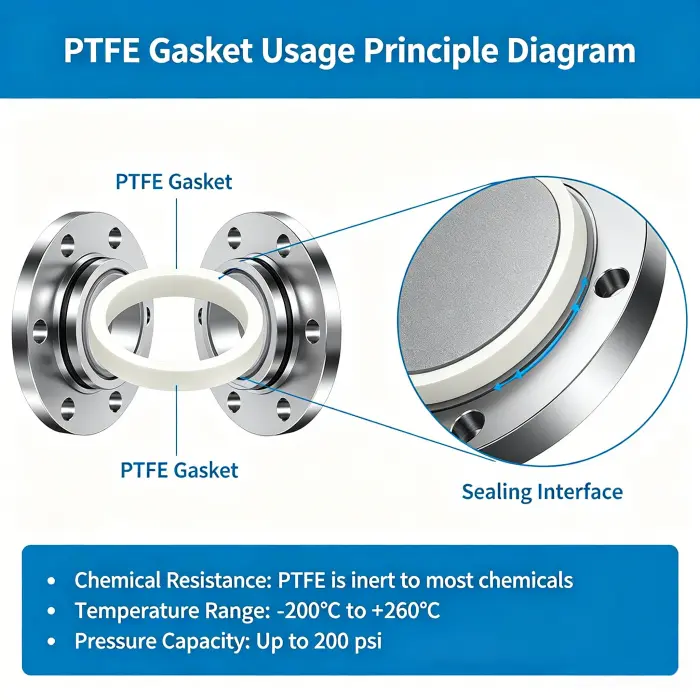
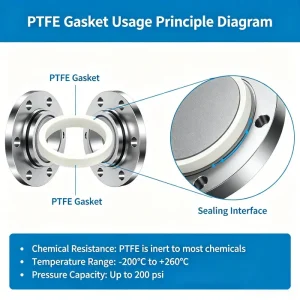
PTFE continuous service temperature: approximately -200°C to +260°C (−328°F to +500°F). Use the insert material rating as limiting factor for some variants (e.g., EPDM lower limit, FKM higher).
-
Chemical resistance: PTFE is broadly inert to acids, bases and solvents—suitable for most aggressive chemicals.
-
Common gasket thicknesses: 1.5 mm (0.059″), 3.0 mm (0.118″), and custom thicknesses as requested. (Standard flange gasket thicknesses and applications reference).
 Typical applications & industries
 Typical applications & industries
-
Chemical processing and storage (acid/base handling) — PTFE resists aggressive chemical attack.
-
Pharmaceutical, biotech & food processing — low contamination, FDA/USP options and sanitary Tri-clamp variants.
-
Glass-lined reactors, enamelled tanks and fragile flanges — soft cores protect flange faces.
-
Analytical, semiconductor and high-purity systems requiring minimal extractables.
-
Marine, petrochemical and general industrial applications where chemical resistance and seal longevity are needed.
Specifications & standard sizes
Below are commonly supplied sizes and thicknesses. For ring/IBC (raised face) and full face gaskets we follow ASME/DIN/ANSI standards for flange dimensions.
Common flange gasket examples (NPS / OD × ID in mm — sample table)
(Representative sizes — final part dimensions manufactured per ASME/DIN drawing or customer drawing)
| NPS (inch) | Typical ID × OD (mm) |
|---|---|
| 1/2 | 48 × 21 |
| 3/4 | 57 × 27 |
| 1 | 67 × 33 |
| 1 1/4 | 76 × 42 |
| 1 1/2 | 86 × 48 |
| 2 | 105 × 60 |
| 3 | 137 × 89 |
| 4 | 175 × 114 |
| 6 | 222 × 168 |
| 8 | 279 × 219 |
Standard thicknesses and formats
-
Sheet/ring thickness: 1.5 mm / 3.0 mm commonly used; other thicknesses available on request.
-
Jacket thickness (PTFE): typical jacket wall 0.7–1.0 mm on many machined PTFE envelope designs (varies by maker).
Advantages vs other gasket materials
Advantages of PTFE envelope gaskets
-
Unmatched chemical inertness vs elastomers or graphite.
-
Lower contamination / extractables than filled elastomer gaskets — important for pharma/food.
-
Can protect fragile flange faces due to soft inner fillers.
Comparison table (PTFE envelope vs common alternatives)
| Feature | PTFE Envelope Gasket | Solid PTFE Gasket | Graphite Gasket | Rubber/Elastomer Gasket |
|---|---|---|---|---|
| Chemical resistance | Excellent. | Excellent | Good to excellent (depends) | Poor to moderate |
| Conformability to damaged flanges | Very good (soft insert) | Moderate | Good | Excellent |
| High-temperature capability | Depends on insert (PTFE jacket itself to +260°C) | High (to PTFE limits) | Very high (graphite) | Limited |
| Sanitary / low extractables | High (PTFE jacket) | High | Low (not ideal for pharma) | Not ideal for pharma |
| Damage to flange face | Minimal | Potential | May abrade | Minimal |
How to choose the right PTFE envelope gasket
-
Match the core to operating temperature & pressure: use EPDM for lower temp aqueous systems, Viton (FKM) for higher temps/oils/solvents, graphite or metal cores for high temp/high pressure.
-
Choose the correct flange profile: full-face vs ring (IBC) based on flange type (raised face, flat face, RTJ).
-
Sanitary needs: request FDA/USP or 3-A compliant materials and Tri-clamp envelope forms.
Installation recommendations
-
Inspect flange faces for nicks/corrosion; use soft insert variants for fragile finishes.
-
Torque bolts in an even star pattern to recommended torque for flange class; re-torque after initial warm cycle if required.
-
Avoid over-compression of thin PTFE jackets — select proper thickness to prevent extrusion.
Why choose our PTFE envelope gaskets
(These are suggested differentiators you can use to stand out from competitors)
-
Large-format machining & custom jacket tolerances for better flatness and lower leak rates.
-
Custom core engineering (multi-layer cores, anti-cold-flow fillers) — we offer graphite-reinforced or microsphere-filled PTFE jackets to reduce creep.
-
Sanitary production line & traceability for pharma/food orders (batch trace, material certificates).
-
On-demand ASME/DIN/ANSI drilling & cut-to-drawing services for retrofit projects.
Specifications table
Note: Final SKU dimensions & materials will be provided on quotation/drawing. Below are representative SKU specs for reference.
| SKU | Type | ID (mm) | OD (mm) | Thickness (mm) | Core | Jacket |
|---|---|---|---|---|---|---|
| PEG-01 | IBC Ring (150#) | 21 | 48 | 1.5 | NA filler (non-asbestos) | PTFE 100% |
| PEG-04 | Full-Face (1″) | 33 | 108 | 3.0 | Viton core | PTFE 100% |
| PEG-TRI-25 | Tri-Clamp 1.5″ | — | — | 3.0 | EPDM core (sanitary) | PTFE 100% |
(These sample SKUs illustrate format — exact sizes follow ASME/DIN/ANSI drawings.)
FAQ
Q1 — What is the minimum order quantity (MOQ)?
A: Typical MOQ is 20–100 kilogram for standard small sizes; MOQ depends on size, material and custom machining. For high-volume standard items MOQ can be lower; for fully machined large gaskets MOQ is negotiable. (We recommend including an MOQ policy that you can adjust per customer.)
Q2 — How long is lead time?
A: Typical lead times: 7–15 working days for standard stock sizes; 10–30 working days for custom machined or certified sanitary orders. Urgent/express manufacturing can be quoted. (Lead time varies by order size, certification and inspection needs.)
Q3 — What shipping methods are available?
A: We ship worldwide via express (DHL/UPS), air freight, and sea freight. For small orders express is fastest; large projects typically use sea freight. Packaging uses anti-static / sanitary packaging on request.
Q4 — Can you manufacture to my drawing / custom sizes?
A: Yes — we accept DWG/PDF/SKETCH for custom envelope gaskets and will provide a drawing confirmation before production. Custom materials (FDA/PTFE grades, filled PTFE, special core stacks) are available.
Q5 — Do you provide material & compliance certificates?
A: Yes — material certificates (EN 10204 2.1/3.1), FDA/USP declarations and test reports can be supplied on request for qualifying orders.
Q6 — Are PTFE envelope gaskets suitable for high-pressure service?
A: Performance in high-pressure applications depends on core choice (metal cores or corrugated/seal rings perform better than soft elastomer cores). For high-pressure/high-temperature service, choose metal-reinforced or specially engineered cores.
Q7 — How should I store PTFE envelope gaskets?
A: Store flat in original packaging; avoid direct sunlight, high heat or hydrocarbons that might attack some cores. Keep in dry conditions.
Q8 — What is the expected service life?
A: Service life varies by operating temperature, chemical exposure and flange conditions. Proper selection of insert material and correct installation maximize lifetime; many installations operate years without replacement when conditions are appropriate.